
Skillet Focaccia Bread & Dinner Rolls
Whip up this beautifully rich, olive oil-enriched dough ahead of time, allowing it a leisurely double rise while you gather your other delightful culinary provisions. The generous premium olive oil infuses a tender, elastic crumb that wonderfully contrasts with the glorious, shatteringly crisp crust forged by the hot cast iron. Serve the grand focaccia directly from its rustic skillet, alongside its golden dinner roll companions, to grace your table with shared abundance and a truly unhurried Southern elegance.
Elevating a foundational yeast bread into an estate-quality centerpiece requires a rigorous understanding of structural hydration and lipid enrichment. Unlike lean, water-based breads, this highly versatile dough relies on a massive influx of premium extra virgin olive oil. This fat coats the flour proteins during the mechanical knead, yielding a profoundly tender, elastic gluten matrix that resists drying out during the intense thermal bake.
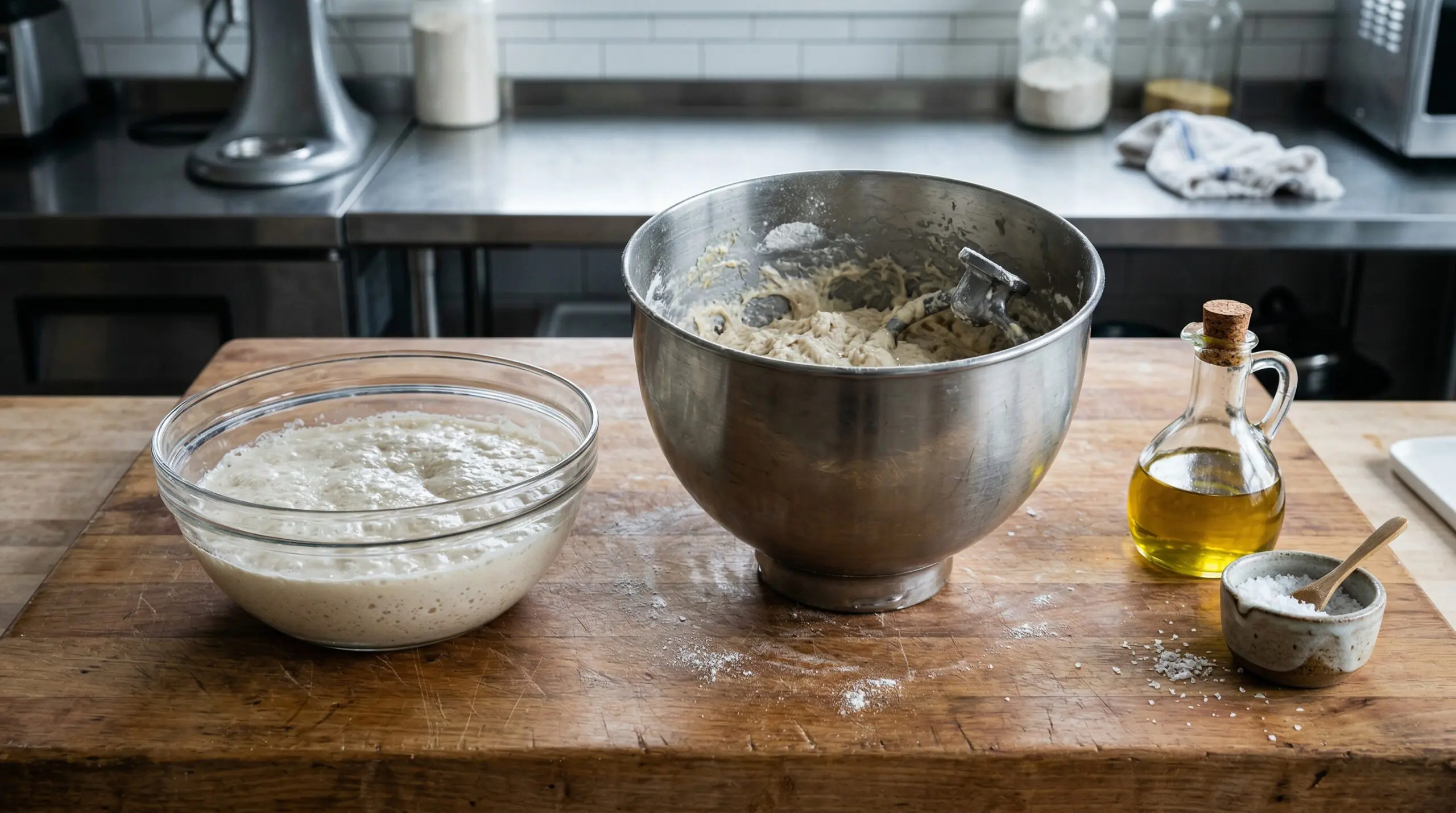
The architectural success of the rise depends entirely on the initial yeast bloom. Introducing active dry yeast to a precisely warmed, sugar-laced water bath initiates rapid fermentation. This frothy, highly active biological foundation guarantees a vigorous primary proof, establishing the expansive air pockets necessary for a light, airy crumb.
The Mechanics of Dimpling and Thermal Baking
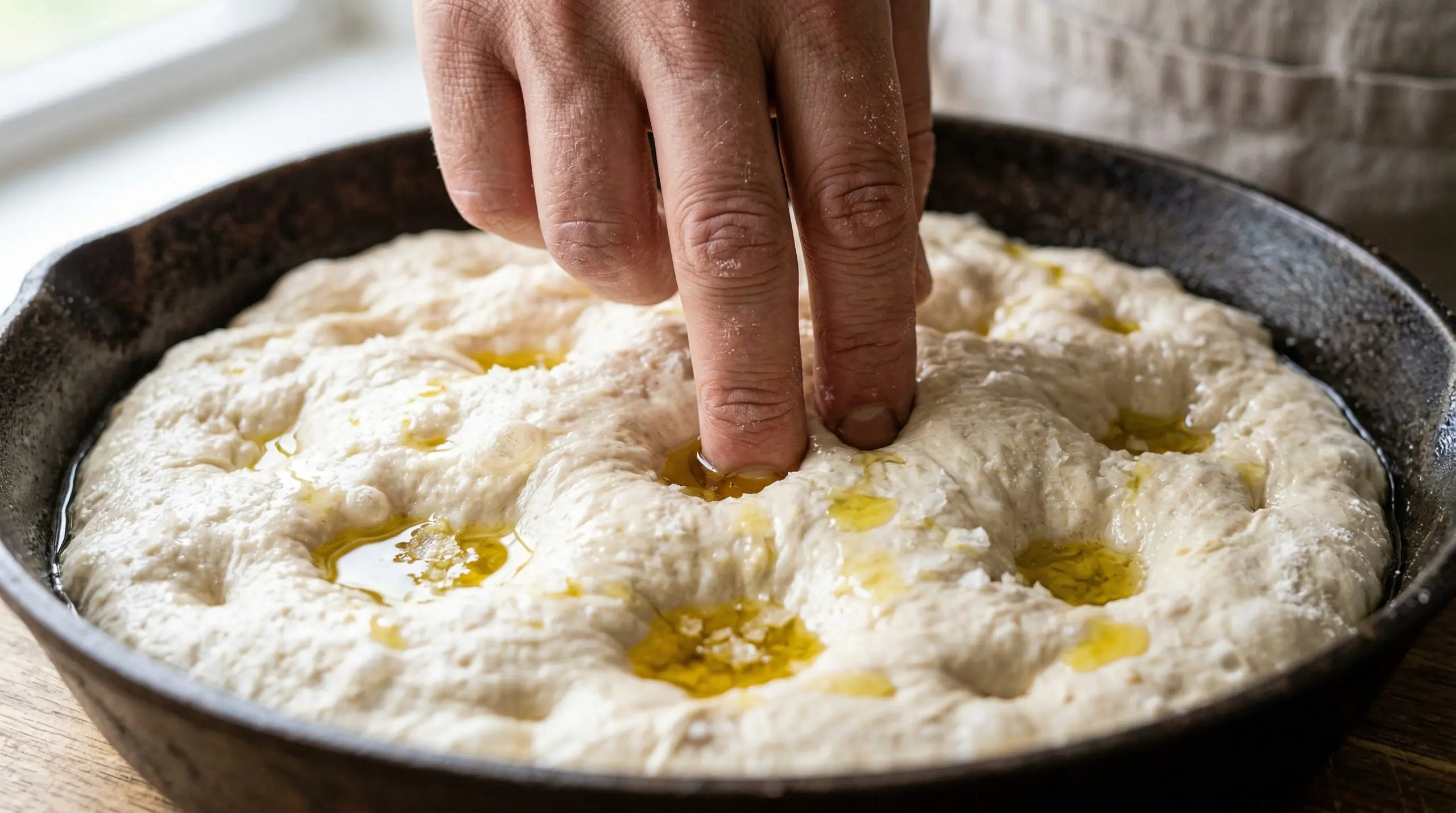
After dividing the dough to serve dual purposes, the focaccia undergoes a critical mechanical manipulation. Pressing the proofed dough deeply with your fingertips creates structural indentations across the entire surface. These dimples prevent the bread from doming drastically in the oven, while simultaneously acting as highly efficient reservoirs for pooling olive oil, flaky sea salt, and fresh herbs.
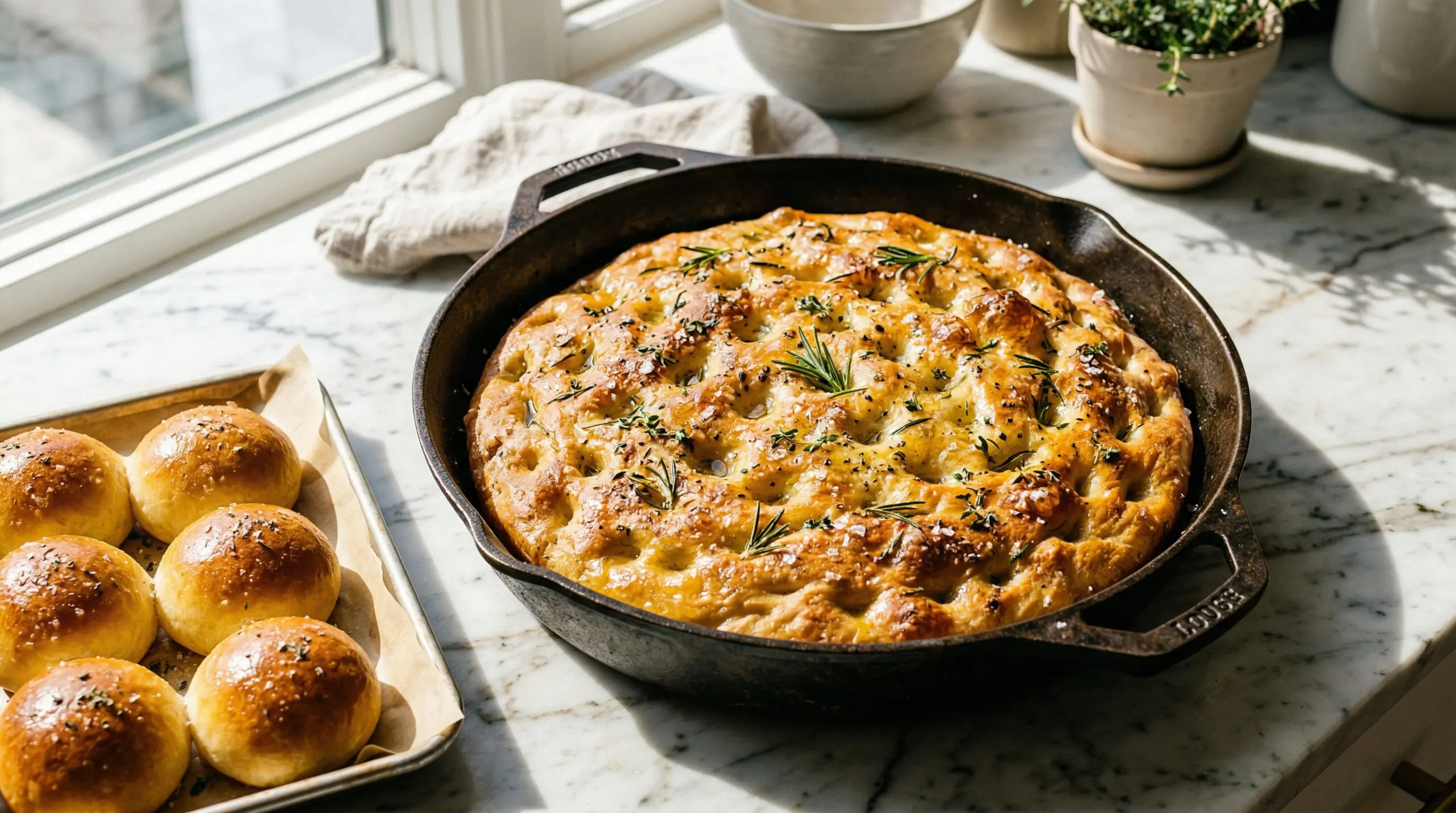
Executing the bake in a heavy cast-iron skillet provides an unparalleled thermal advantage. The searing-hot metal essentially flash-fries the bottom and sides of the focaccia in the pooled olive oil, establishing a deeply caramelized, shattered crust that brilliantly contrasts with the pillowy interior and the delicate, golden-washed dinner rolls baking alongside it.
Skillet Focaccia Bread & Dinner Rolls
Ingredients
Method
- In a small glass bowl, combine the active dry yeast and the natural cane sugar. Pour the warm water directly over the top and stir gently.
- Cover with a clean kitchen towel and let the mixture rest undisturbed for 10 minutes. The yeast will feed on the sugar and bloom, creating a thick, frothy cap. (If it does not bubble, the water was too hot or the yeast is dead; you must start over).
- In the bowl of an electric stand mixer, vigorously whisk the all-purpose flour and kosher salt.
- Pour the ½ cup of olive oil and the active yeast-water directly into the flour. Use a spatula to quickly bring the ingredients together into a wet, shaggy dough.
- Fit the mixer with the dough hook attachment. Knead the dough on medium speed until it pulls cleanly away from the sides of the bowl and forms a smooth, highly elastic, shiny ball, about 3 to 5 minutes.
- Transfer the dough to a lightly floured marble surface. Form it into a tight, structural sphere.
- Place the dough ball into a large, lightly oiled glass bowl. Cover tightly with plastic wrap and set in a warm, draft-free environment to proof until exactly doubled in volume, about 1 hour.
- Punch down the proofed dough to aggressively deflate the gases. Use a bench scraper to divide the dough strictly in half.
- Generously coat the bottom of a large, heavy cast-iron skillet with 2 to 3 tablespoons of olive oil. Transfer one half of the dough into the skillet, stretching it gently with your fingertips to fill the pan entirely. Turn the dough over once so both sides are heavily coated in the oil.
- Using your fingertips, press deep, structural dimples entirely across the surface of the dough. (These indentations will pool with olive oil and prevent the bread from rising into a dome). Cover and let proof for 30 minutes.
- Cut the remaining half of the dough into 6 to 8 equal pieces. Roll them tightly into uniform spheres and arrange them on a parchment-lined baking sheet. Cover and let proof for 30 minutes.
- Preheat the oven to 400°F.
- Garnish the dimpled focaccia heavily with flaky sea salt and fresh herbs. Brush the proofed dinner rolls evenly with the prepared egg wash.
- Bake both the skillet and the baking sheet in the hot oven until the tops are deeply golden brown and the crust shatters upon tapping, about 15 to 20 minutes. Cool briefly on wire racks before serving.
The Heart of the Table
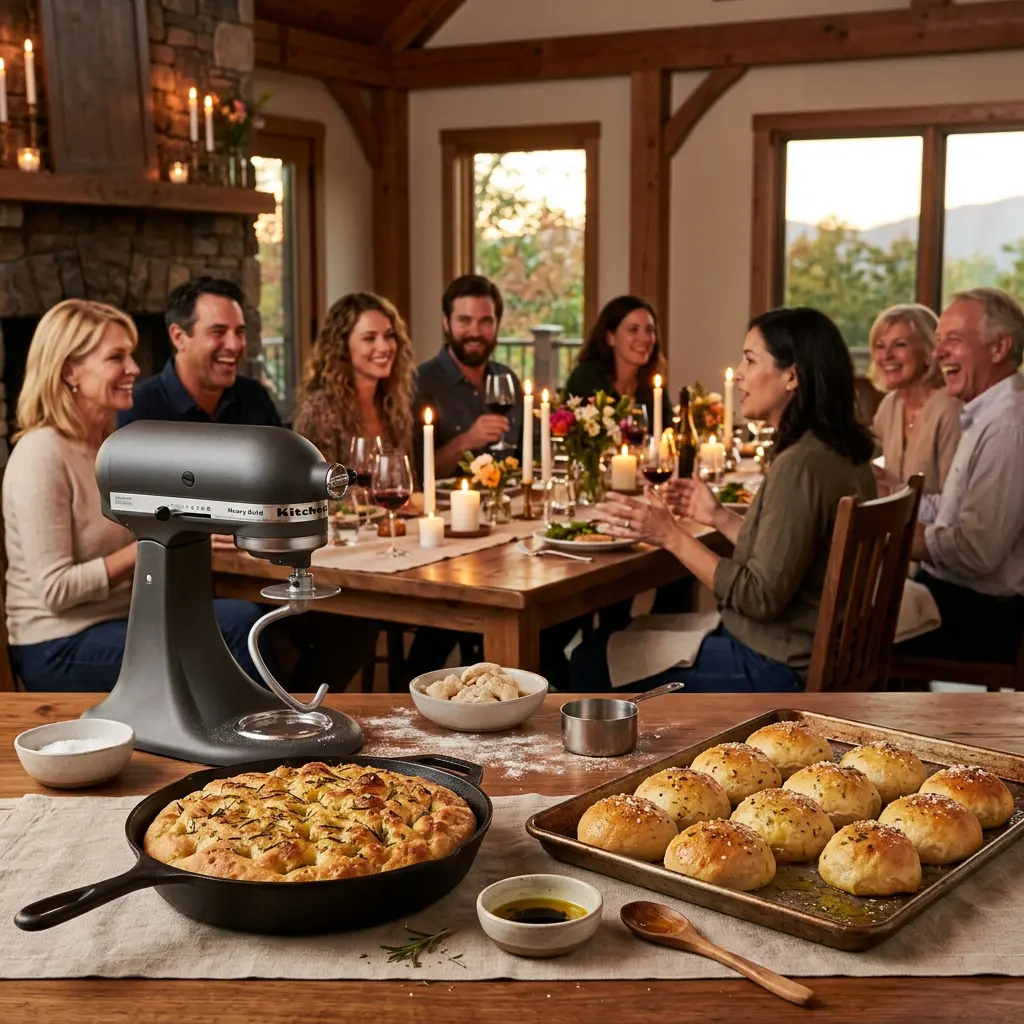
Baking fresh, artisan bread is the ultimate gesture of unhurried hospitality. Presenting a massive, steaming cast-iron skillet of dimpled focaccia directly to the center of the table instantly anchors the room. It bypasses formal plating, inviting guests to tear off crusty pieces, share the abundance, and ground the evening in a deeply comforting, communal rhythm.
The Art of the Host
- Heavy-duty electric stand mixer with dough hook
- Large, heavy-bottomed cast-iron skillet
- Heavy-duty metal baking sheet (for the rolls)
- Professional stainless steel bench scraper (for dividing dough)
- Silicone pastry brush (for egg wash)
- Precision serrated bread knife
Neighborly Grace
- THE PRESENTATION: Do not serve the bread immediately upon removing it from the oven. Allow the loaves to rest on a wire rack for 10 minutes to ensure the steam dissipates and the crumb sets perfectly. Serve the focaccia directly from the rustic cast-iron skillet alongside a small crystal bowl of high-quality, peppery olive oil for dipping.
- THE POUR: A crisp, mineral-forward Italian white like a Vermentino, or a light, earthy Chianti provides the essential acidic lift needed to brilliantly cut through the rich, olive-oil-soaked crust of the artisan bread.
- THE VIBE: Cultivate a warm, deeply inviting evening sanctuary. Keep the dining room glowing with ambient candlelight, clear the kitchen of any flour or mixing bowls, and curate a background of slow, acoustic Italian guitar to match the rustic, European soul of the bakery.