Access the Series: Enrolling now in The Estate Registry. →

Chicken Liver Mousse

The Art of the Host

Chicken Liver Mousse

The Strategy:

A masterclass in offal searing and mechanical lipid emulsion. By browning chicken livers in rendered bacon fat and deglazing with dry sherry, this highly sophisticated, velvety pâté is mechanically pureed with heavy cream, softened butter, and a bright apricot glaze for a flawless, estate-quality appetizer.

Elevating a deeply traditional chopped liver into a high-prestige, French-inspired mousse requires absolute mastery over offal execution and thermal management. The architectural foundation begins by rendering thick-cut bacon, utilizing its smoky, savory lipid base to aggressively sear the chicken livers. The critical technical discipline is temperature control; the livers must achieve a deep, caramelized crust while retaining a distinct, pink, medium-rare center to prevent the final emulsion from turning dry, chalky, and bitter.

Building the aromatic profile demands a sharp, sweet-and-savory tension. Sweating shallots and diced Granny Smith apples in the residual pork fat extracts their natural sugars. Violently deglazing this mixture with dry sherry lifts the intense, caramelized fond from the skillet, establishing a highly concentrated, complex syrup that anchors the rich proteins.

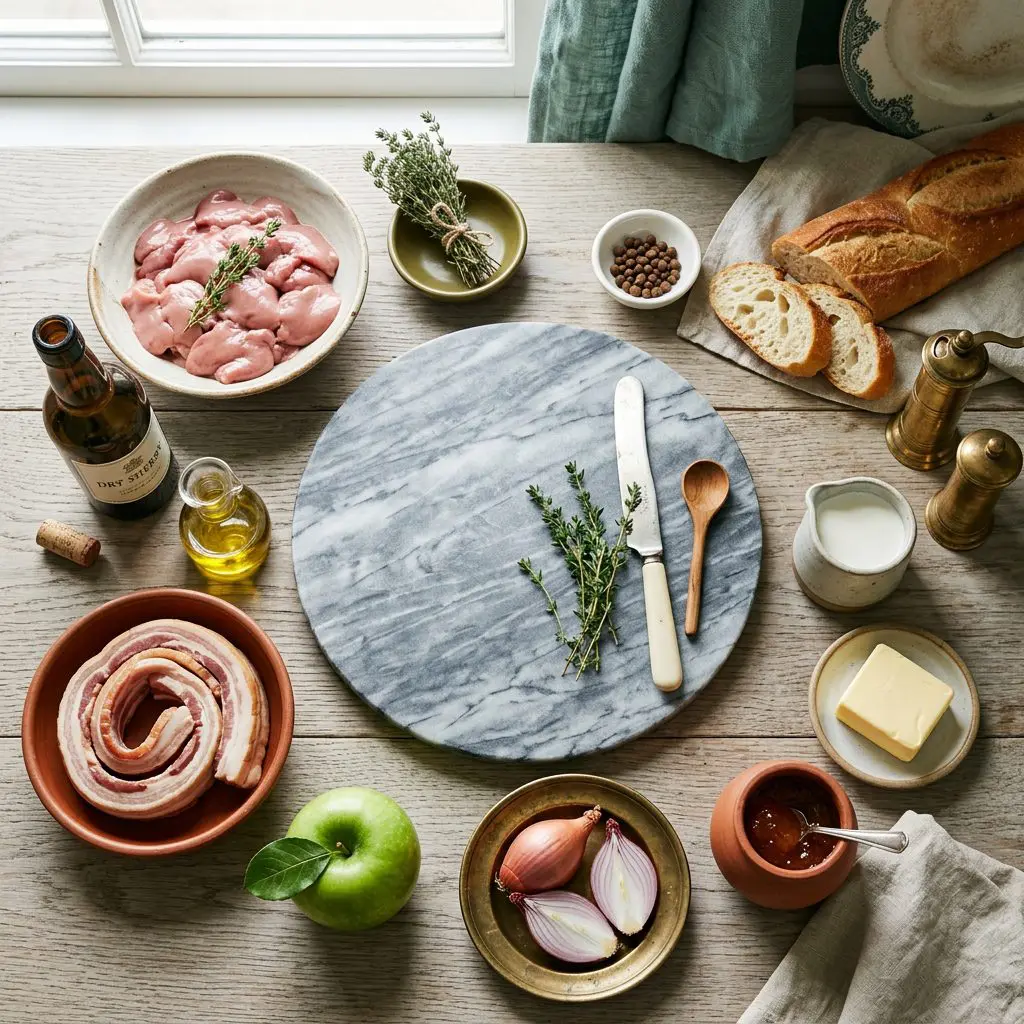
Fresh chicken livers resting next to thick slices of raw maple bacon, a diced Granny Smith apple, chopped shallots, and a glass measuring cup filled with dry amber sherry on a heavy wooden prep board

The Mechanics of an Oxidative Barrier

The structural transformation of the dish relies entirely on a mechanical dairy emulsion. Transferring the hot, seared livers and the sherry reduction to a high-capacity food processor rapidly pulverizes the solids. Slowly streaming heavy half-and-half and softened butter into the running machine shears the fats and proteins together, forcing them to bind into a perfectly smooth, luxurious, velvety paste.

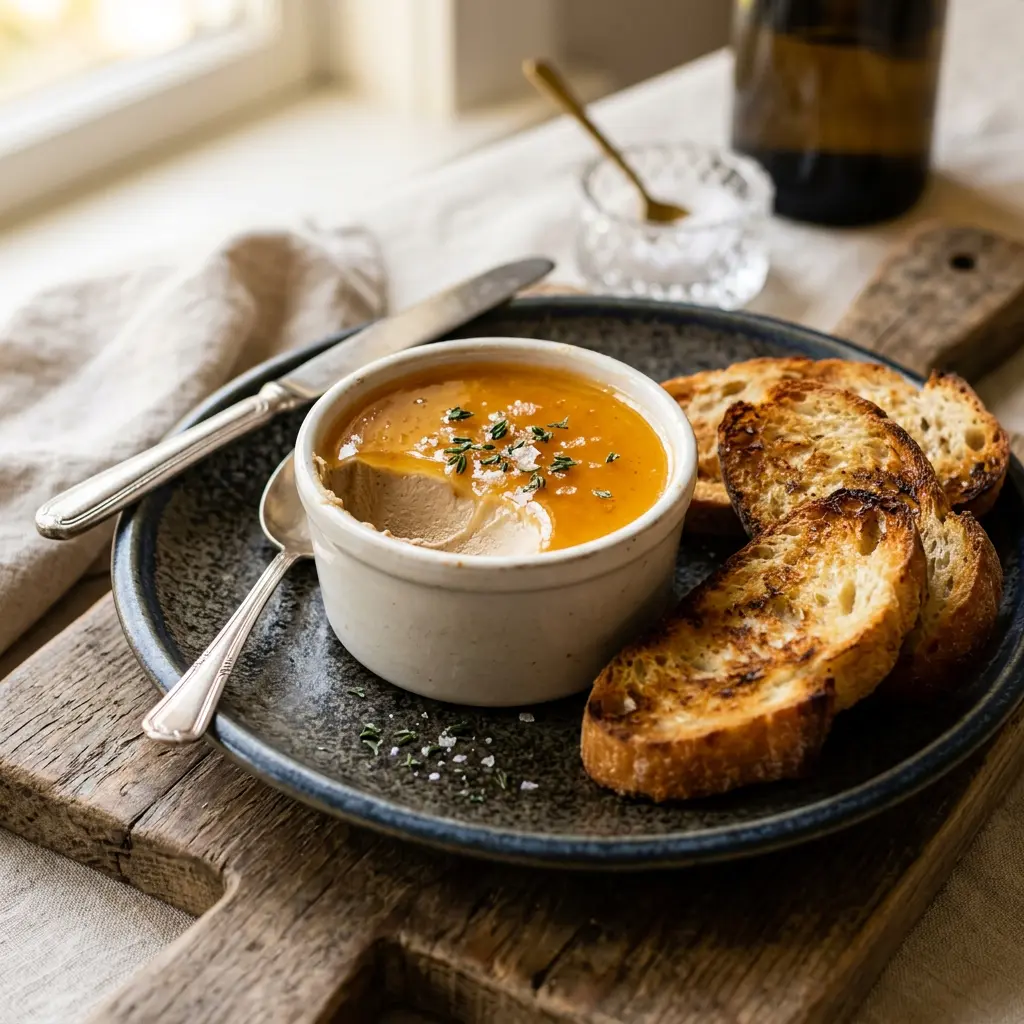
Because liver oxidizes and turns an unappetizing gray when exposed to air, the mousse requires a structural seal. Pouring a thin, melted layer of bright apricot jam directly over the mousse in the ramekin creates an airtight, oxidative barrier. This brilliant culinary stroke not only preserves the pristine color of the pâté during its mandatory thermal chill, but introduces a sharp, tart-sweet contrast that flawlessly balances the profound richness of the dish.

Macro detail of seared chicken livers, crisp bacon, and caramelized shallots actively whirling into a perfectly smooth, velvety mousse inside a high-capacity glass food processor bowl

Chicken Liver Mousse

A masterclass in offal searing and mechanical lipid emulsion. By browning chicken livers in rendered bacon fat and deglazing with dry sherry, this highly sophisticated, velvety pâté is mechanically pureed with heavy cream, softened butter, and a bright apricot glaze for a flawless, estate-quality appetizer.
Prep Time 15 minutes
Cook Time 20 minutes
Wait Time (Chilling) 4 hours
Total Time 4 hours 35 minutes
Servings: 8 servings
Course: Appetizer

Ingredients
  

The Aromatic Base & Render
  • 4 slices thick-cut bacon maple-smoked preferred
  • 2 tablespoons olive oil if needed for the shallots
  • 2 large shallots peeled and finely diced
  • 1 Granny Smith apple peeled, cored, and finely diced
The Protein Sear & Deglaze
  • 1 pound fresh chicken livers trimmed of connective tissue
  • 1 teaspoon kosher salt
  • 1 teaspoon coarse black pepper
  • ½ cup dry sherry
  • 1 teaspoon dried thyme
  • ½ teaspoon ground allspice
The Emulsion & Structural Finish
  • 4 tablespoons unsalted butter softened to room temperature (½ stick)
  • ½ cup half-and-half or heavy cream
  • ¼ cup high-quality apricot jam for the oxidative seal
  • Toasted baguette slices or artisanal crackers for serving

Method
 

The Fat Render & Protein Sear
  1. In a large, heavy-bottomed skillet over medium heat, cook the thick-cut bacon until deeply browned and crisp, about 5 minutes. Use a slotted spoon to transfer the bacon to a paper towel-lined plate, leaving the rendered pork fat in the skillet.
  2. Increase the heat to medium-high. Add the trimmed chicken livers directly to the hot bacon fat.
  3. Sear aggressively until deeply browned on the outside but still slightly pink in the absolute center, about 6 to 8 minutes. (Overcooking the liver will result in a dry, chalky, and bitter mousse). Season heavily with the kosher salt and coarse black pepper.
  4. Use a slotted spoon to transfer the seared livers directly into the bowl of a high-capacity food processor.
The Aromatic Deglaze
  1. If the skillet is dry, add 2 tablespoons of olive oil. Add the diced shallots and the diced Granny Smith apple to the residual hot fat.
  2. Pour the ½ cup of dry sherry into the skillet to deglaze, violently scraping up the caramelized fond from the bottom.
  3. Season the mixture with the dried thyme and ground allspice. Cook until the sherry reduces into a thick syrup and the shallots and apples are completely soft, about 6 to 8 minutes.
The Mechanical Emulsion
  1. Transfer the entire shallot, apple, and sherry reduction into the food processor with the livers. Add the reserved crispy bacon. Pulse the machine repeatedly until the ingredients are finely pulverized.
  2. Add the softened unsalted butter to the processor.
  3. With the machine running continuously, slowly stream the half-and-half through the feed tube. The mechanical friction will bind the fats and proteins into a perfectly smooth, highly spreadable, velvet-like emulsion. (If the mixture is too stiff, add a slight splash of extra cream).
The Oxidative Seal & Thermal Chill
  1. Divide the warm mousse evenly into small ceramic ramekins or glass jars.
  2. To prevent the liver from oxidizing and turning an unappetizing gray color, gently heat the apricot jam until fluid, and spread a thin, protective layer directly over the top of the mousse in each ramekin.
  3. Cover tightly with plastic wrap and chill in the refrigerator for at least 4 hours, or ideally overnight, to allow the mousse to structurally firm up and the complex flavors to marry. Bring to room temperature 15 minutes before serving with toasted baguettes.

The Heart of the Table

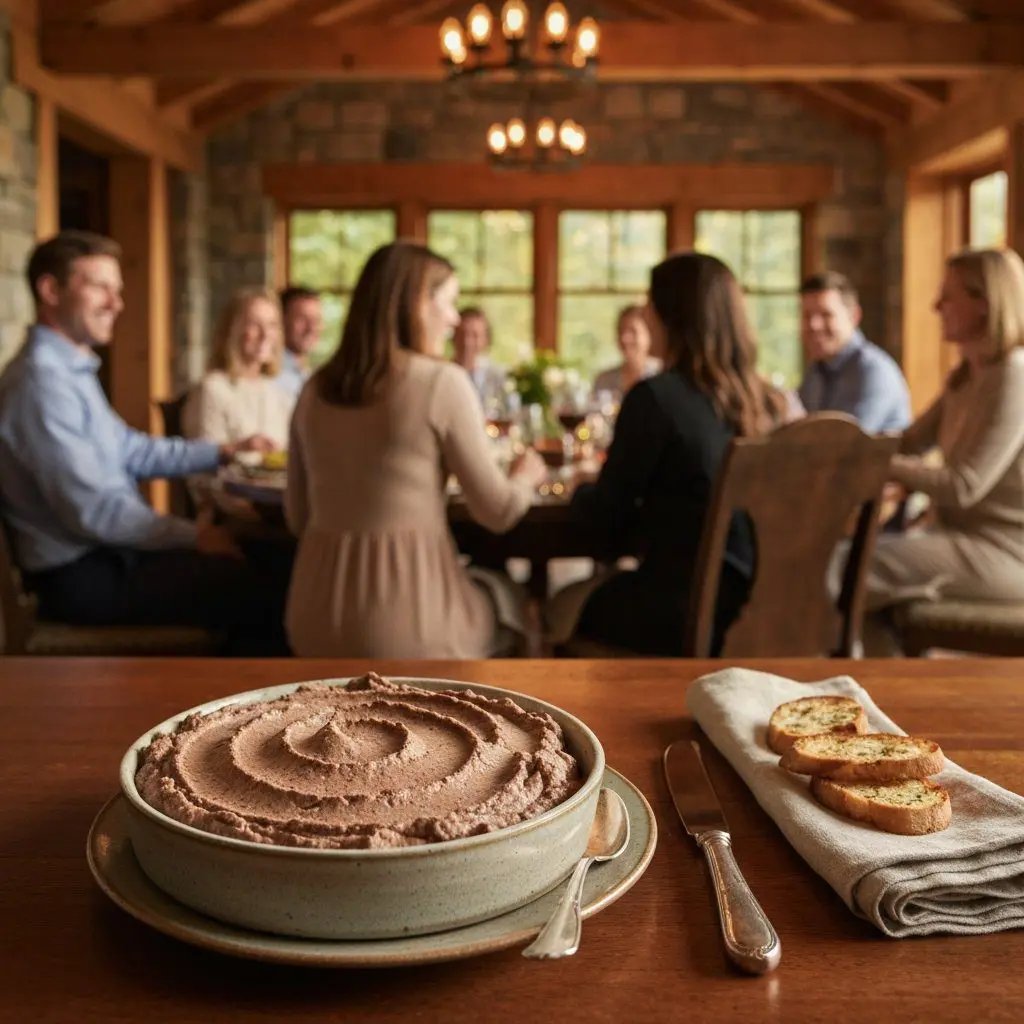
Presenting a meticulously crafted, elegant pâté invites guests to step outside their culinary comfort zones. Offering a highly sophisticated, spreadable appetizer immediately elevates the cocktail hour, signaling deep, unhurried hospitality and anchoring the start of the evening in shared, adventurous discovery.

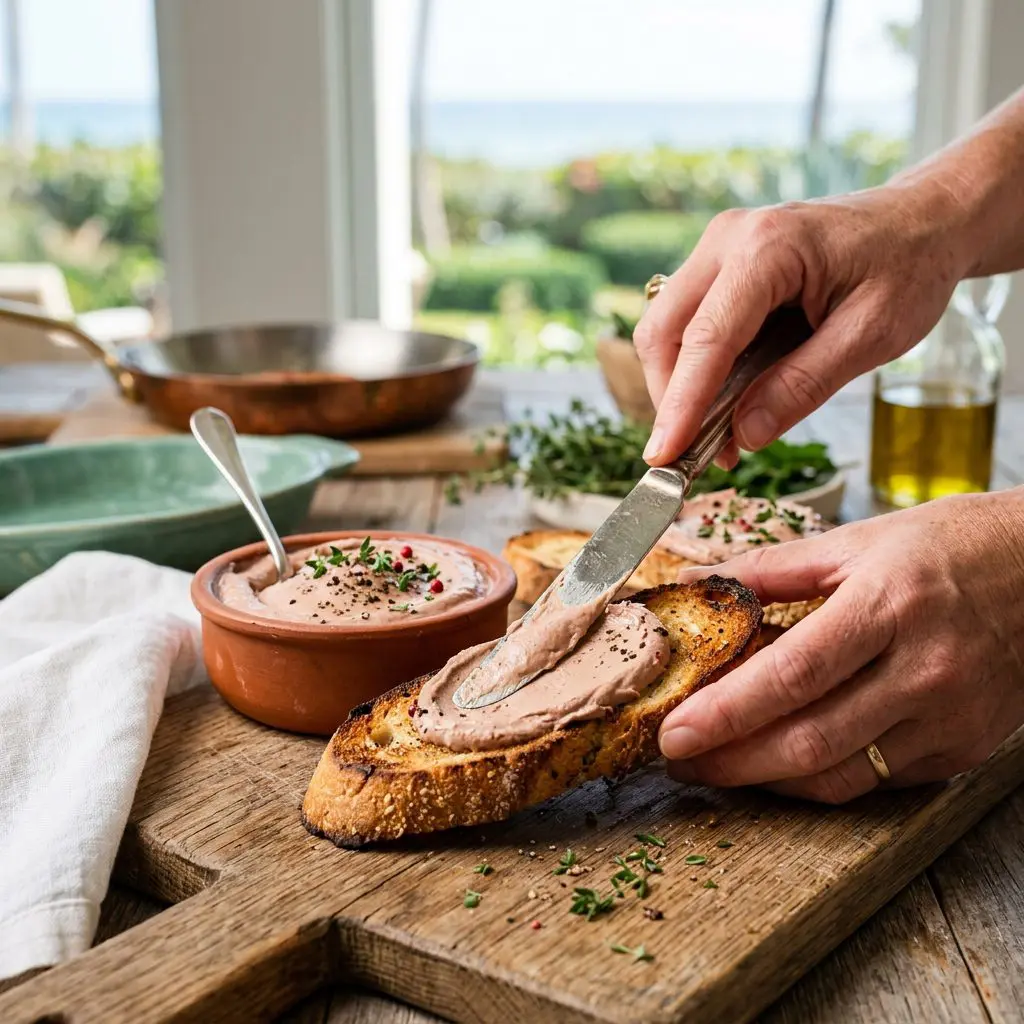
A high-capacity food processor bowl, a silver spreading knife, and a small ramekin of liver mousse in sharp focus in the foreground, with an elegant softly lit evening cocktail hour blurred in the background

The Art of the Host

  • Large, heavy-bottomed cast-iron skillet
  • High-capacity food processor
  • Professional stainless steel slotted spoon
  • Small Gracious Linen ceramic ramekins or glass jars
  • Polished silver spreading knives
  • Heavy wooden prep board

Neighborly Grace

  • THE PRESENTATION: The mousse must be allowed to rest and solidify in the refrigerator overnight to allow the complex flavors to fully marry. However, serving it ice-cold mutes its richness. Pull the ramekins from the refrigerator exactly 20 minutes before guests arrive to bring the pâté to a spreadable room temperature. Serve flanked by warm, toasted baguette slices and sharp cornichons.
  • THE POUR: A crisp, bone-dry Champagne, a highly acidic Chablis, or a dry, chilled Fino Sake provides the absolute essential palate-cleansing contrast needed to seamlessly cut through the heavy butter, cream, and dense iron-rich proteins.
  • THE VIBE: Cultivate a highly sophisticated, worldly evening sanctuary. Dim the primary lighting to rely entirely on the warm glow of ambient lamps and taper candles, clear the kitchen island to establish an elegant grazing station, and curate an upbeat, acoustic Parisian jazz or bossa nova soundtrack to perfectly match the upscale, European soul of the menu.