
Signature Citrus Cake
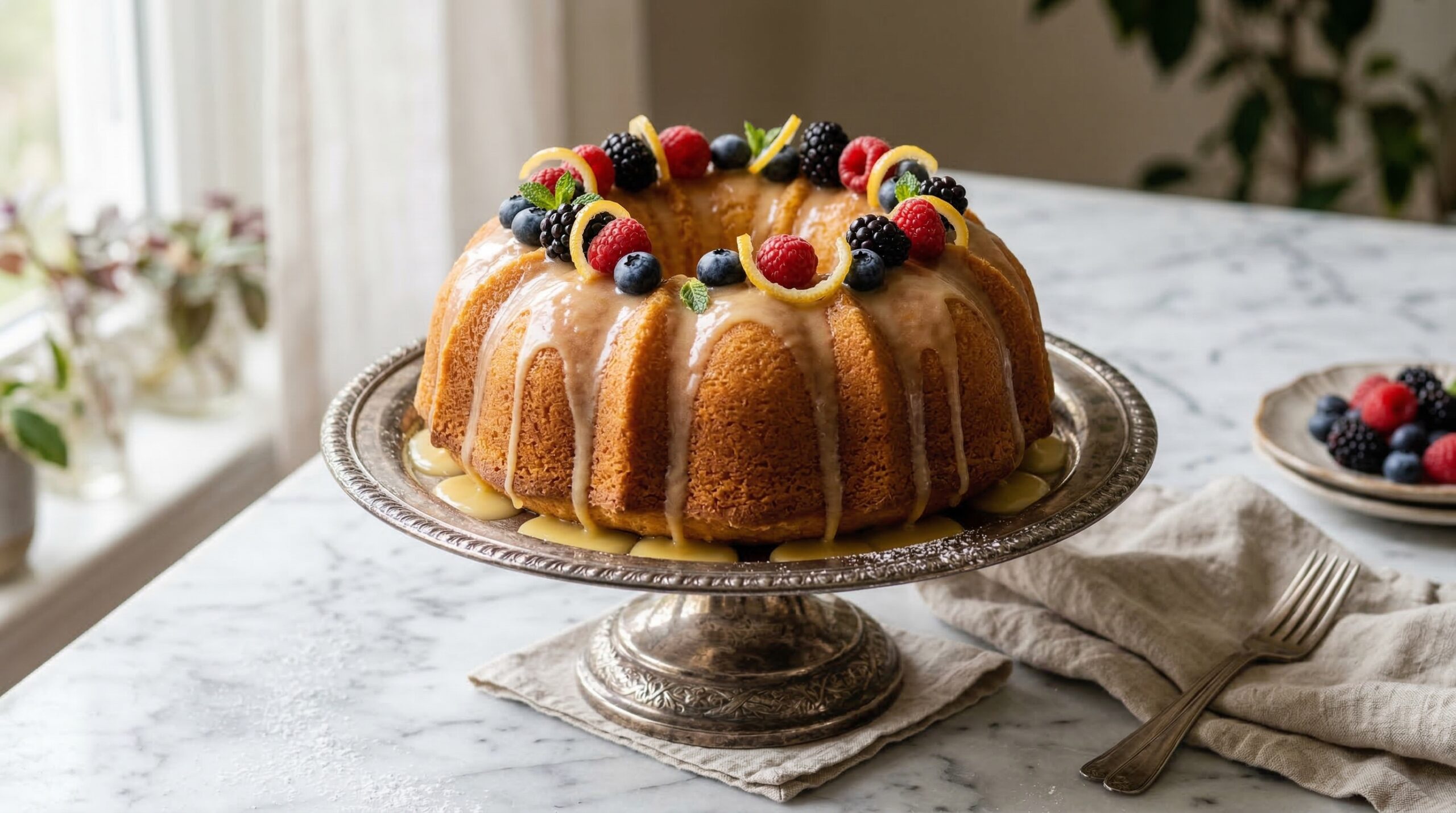
A high-prestige citrus cake relies on acidic moisture and the extraction of essential oils. By utilizing buttermilk to tenderize the crumb and creaming fresh zest directly into the fats, we distribute vibrant flavor deeper than juice alone. Finished with a liqueur-laced "poked" syrup, this technique achieves a sophisticated, damp texture that defines southern afternoon elegance.
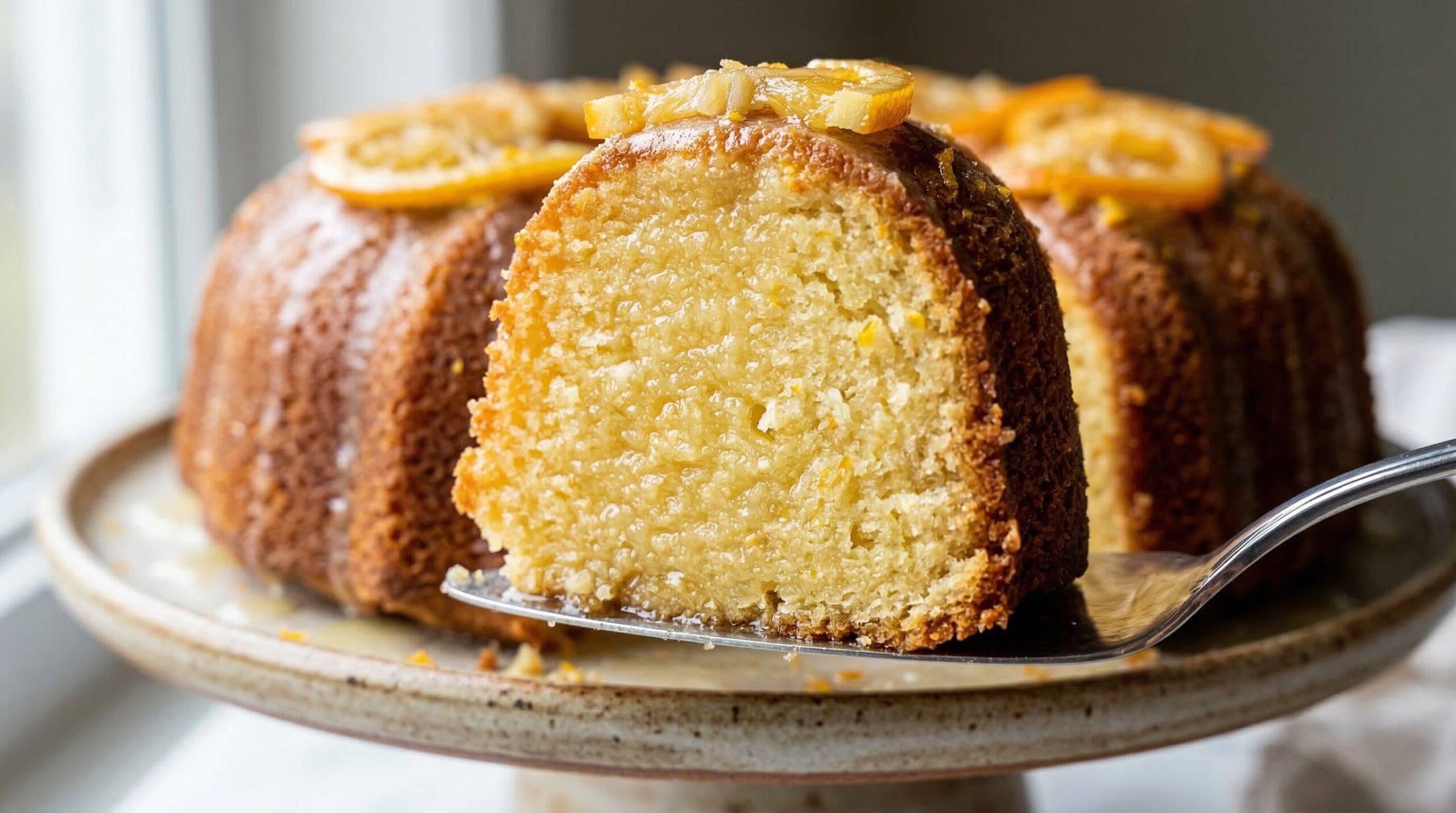
A truly great citrus cake shouldn't just be sweet; it should be a vibrant burst of light. The secret to achieving a moist, bakery-quality crumb lies in two foundational techniques: acidic moisture and essential oil extraction. By utilizing buttermilk as the primary liquid, the natural acids tenderize the gluten while yielding a dense, rich texture that refuses to dry out. It is a technical discipline that ensures the cake remains remarkable days after baking.
The Art of the Essential Oil
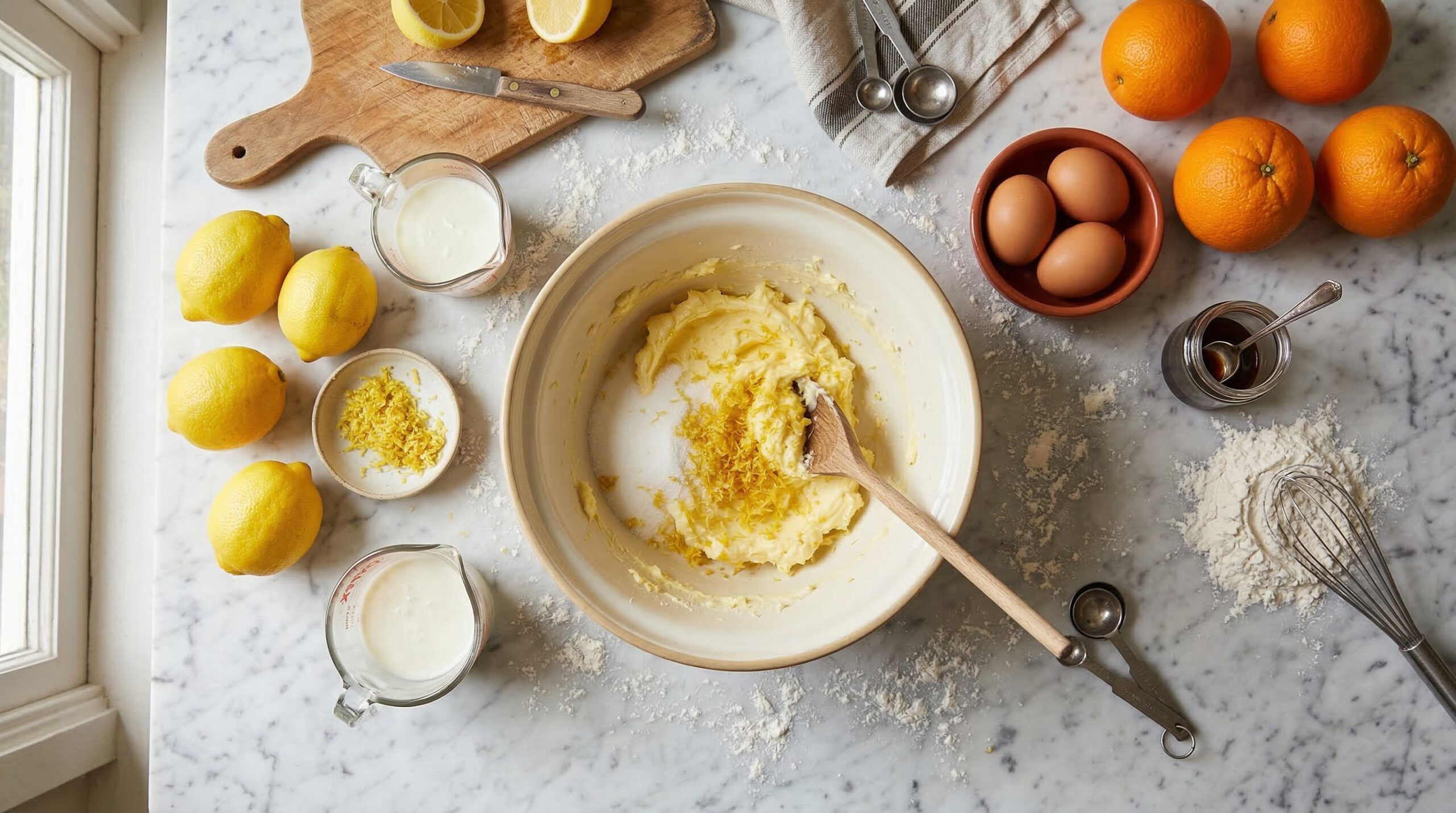
Flavor distribution is the host's primary objective. Adding fresh citrus zest directly to the butter and sugar during the creaming process forces the natural lemon or orange oils to bind with the fats. Once you master this foundational batter, the variations are endless—swapping traditional lemons for the warmer profile of navel oranges or sweet Meyer lemons. For a truly unforgettable afternoon tea, the ultimate upgrade is the "Boozy Finish," where a premium liqueur-laced syrup is poured over the warm cake to create a sophisticated, syrup-soaked crumb.
Signature Citrus Cake Masterclass
Ingredients
Method
- Preheat your oven to 350 degrees Fahrenheit and generously grease and flour a bundt or small layer cake pan.
- In a large bowl, cream the softened butter, granulated sugar, and the fresh citrus zest together for several minutes until light and fluffy.
- Add the eggs one at a time, beating well after each addition to fully incorporate the citrus oils directly into the fats.
- Alternate adding the all-purpose flour and the buttermilk into the creamed butter mixture, mixing until just combined.
- Stir in the fresh citrus juice.
- Pour the batter into the prepared pan and bake until a cake tester inserted into the center comes out clean, about 35 to 45 minutes.
- While the baked cake is still warm, whisk together the powdered sugar and the Limoncello or Grand Marnier to create a smooth, thin glaze.
- Use a toothpick or skewer to poke small holes all over the top of the warm cake.
- Slowly pour the boozy glaze over the cake, allowing it to seep directly into the crumb for a sophisticated, damp texture.
- Allow the cake to cool completely before inverting onto a platter to serve.
The Heart of the Table
An afternoon tea is a celebration of unhurried elegance. By mastering the technical moisture of a signature cake and presenting it with unpretentious grace, we provide our guests with a bright, restorative moment that anchors the day in hospitality and light.
The Art of the Host
- Vintage silver cake stand
- Professional stainless citrus zester
- Silver cake serving set
- Stack of vintage side plates
- Glass syrup pitcher
- Individual ceramic prep bowls
Neighborly Grace
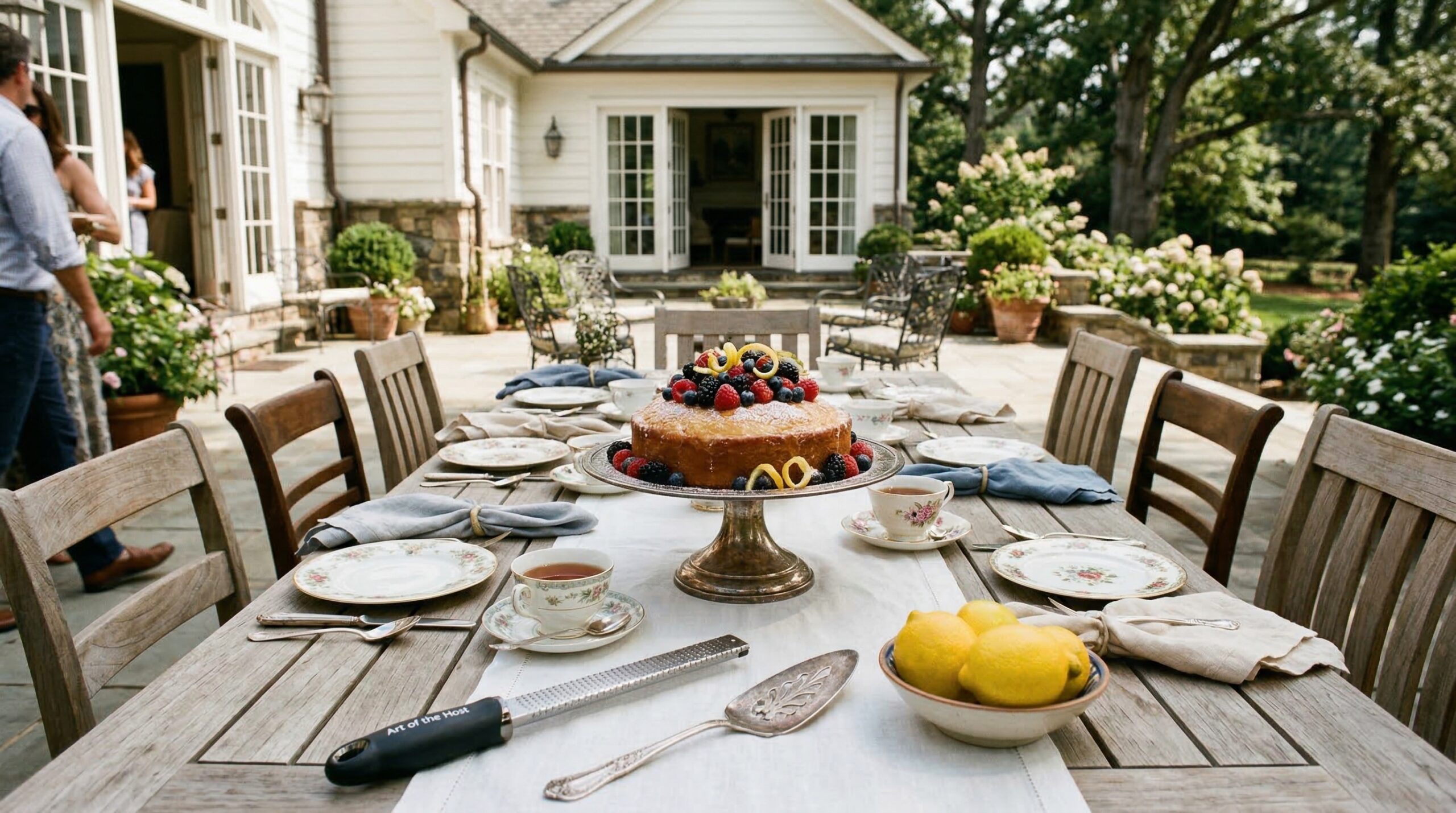
- The Presentation: Display the cake as a grand centerpiece on a vintage silver or glass stand, garnishing heavily with fresh berries and citrus curls to allow the food to provide the primary color of the table.
- The Pour: Offer a delicate, floral cup of hot Earl Grey tea or a glass of chilled Champagne. The effervescence and aromatics perfectly complement the bright citrus oils of the cake.
- The Atmosphere: Lean into the unpretentious elegance of the South. Serve generous slices on mismatched vintage side plates to add a warm, personal touch to your afternoon gathering.