
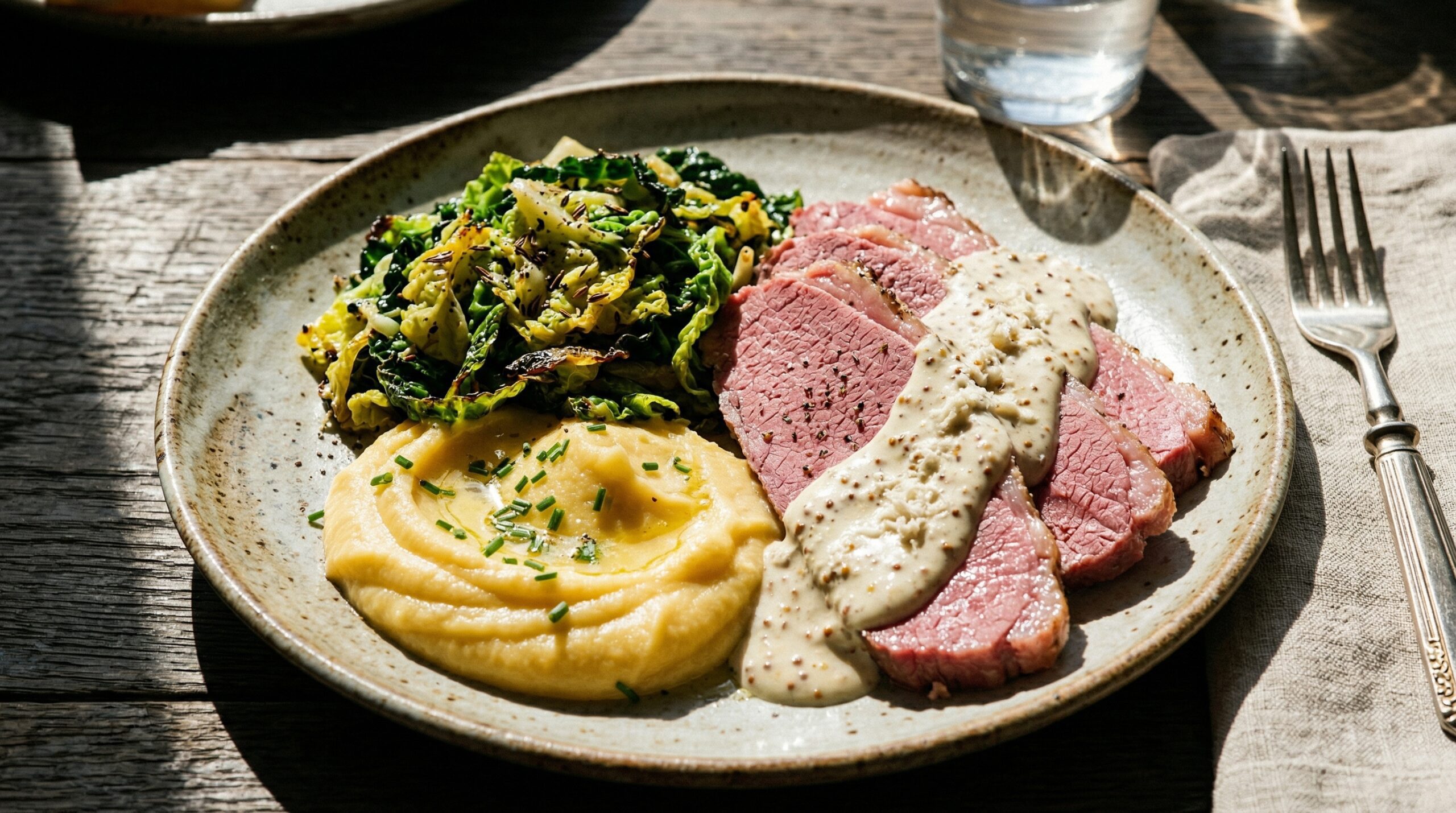
Slow-Cooked Corned Beef and Cabbage
The objective is the successful execution of long-duration thermal extraction to achieve a tender, moisture-rich brisket while managing the volatile aromatic compounds of the brassica family. By utilizing a dark-beer braise for the protein and a secondary Maillard-driven sauté for the cabbage, we achieve a high-prestige Irish feast that avoids the pitfalls of over-extraction and olfactory overload.
In the architecture of a sophisticated Irish holiday, the traditional boiled dinner is elevated through a dual-stage thermal process. A prestigious corned beef preparation requires a deep, malt-forward braising liquid, provided here by dark stout beer. This medium allows for a sustained 8-hour extraction period, where the connective tissues of the brisket undergo a complete structural breakdown, resulting in a protein that yields effortlessly to a transverse slice while retaining its internal hydration.
A critical technical differentiator in this preparation is the separation of the protein and the vegetables. While rustic methods suggest boiling all components in a single vessel, our protocol utilizes the braising liquid for the brisket and root vegetables, while subjecting the Savoy cabbage to a high-heat sauté. This prevents the "odiferous" release of sulfur compounds common in long-boiled cabbage, replacing it with the savory depth of rendered bacon lipids and caramelized onions.
The Mechanics of Maillard-Driven Cabbage and Lipid Emulsion
The successful transition from a simple side dish to a prestigious accompaniment relies on the Maillard reaction. By searing the Savoy cabbage in bacon fat over medium-high heat, we achieve a light caramelization of the vegetable's natural sugars, preserving its structural integrity and bright flavor. This is paired with a dense root vegetable puree, where parsnips, rutabagas, and potatoes are mechanically pulverized with unsalted butter to create a smooth, starch-stabilized foundation for the plate.
The final architectural layer is the horseradish emulsion. A high-prestige corned beef requires a sharp, acid-driven condiment to cut through the rich lipids of the brisket and root puree. By whisking together horseradish, sour cream, and Dijon mustard—fortified with a small volume of the warm braising liquid—we create a stable, velvety sauce that provides the necessary piquant finish to this authoritative Irish composition.
Slow-Cooked Corned Beef and Cabbage
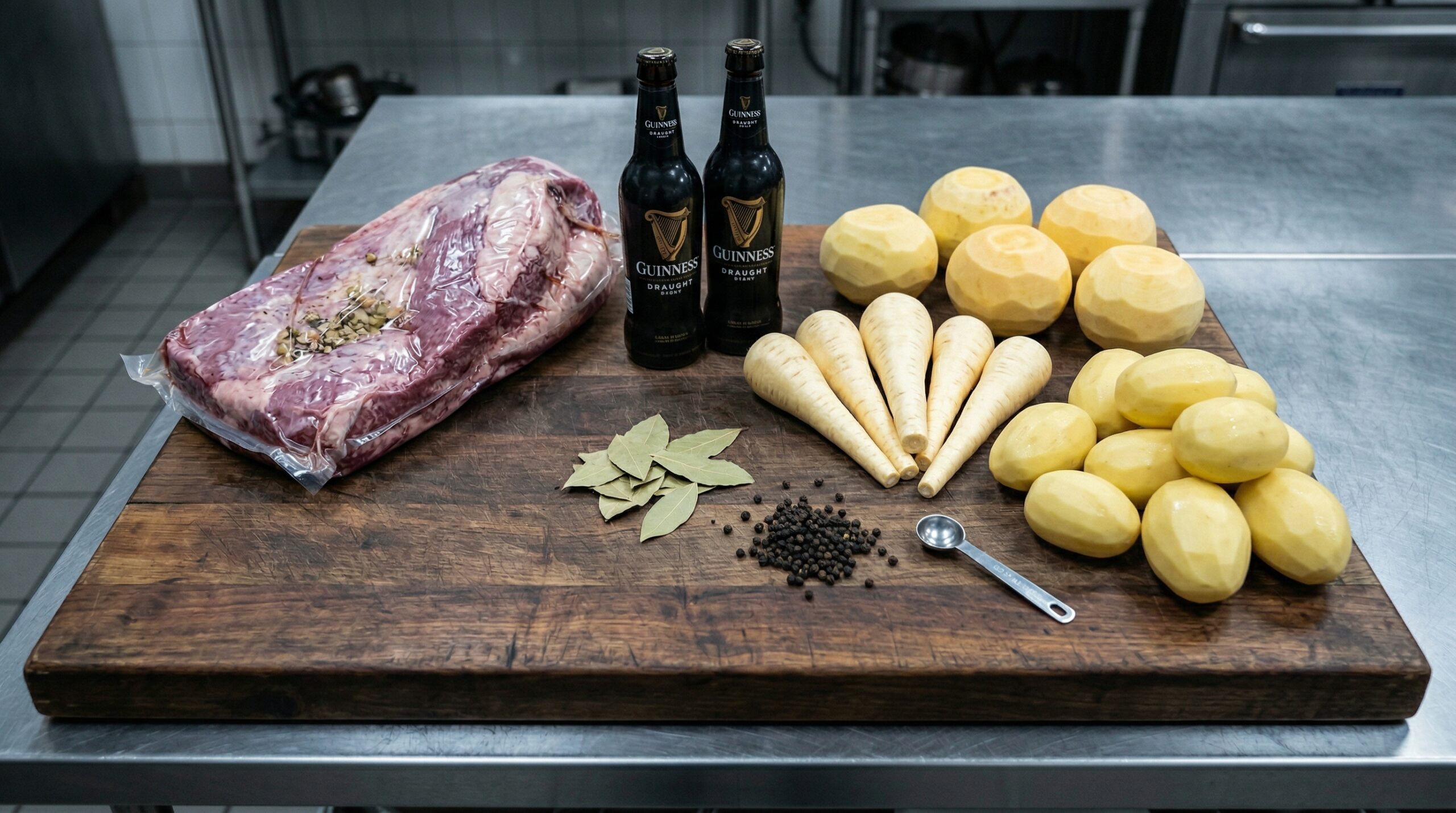
Ingredients
Method
- Place the raw corned beef brisket into a large slow cooker.
- Introduce the dark beer, bay leaves, peppercorns, and mustard seeds. Set to high and initiate thermal extraction for 7 to 8 hours.
- During the final 2 hours of the cycle, add the potatoes, rutabagas, parsnips, and onions to the vessel. Cook until the vegetables reach a state of full fork-tenderness.
- Using a slotted spoon, extract the vegetables from the slow cooker and transfer to a high-speed food processor.
- Add the butter and pulse until a smooth, dense puree is achieved. Season with salt and pepper, then stabilize in a warm environment.
- In a large skillet, heat the olive oil over medium-high heat. Cook the bacon pieces until they reach a crisp state and the lipids are rendered.
- Remove bacon and drain on paper towels.
- Introduce the sliced onion to the skillet, sautéing until soft.
- Add the Savoy cabbage and cook for 8 to 10 minutes until the edges are just soft but maintain structural integrity. Fold the bacon back into the mixture.
- Whisk together the horseradish, sour cream, and Dijon mustard in a small vessel. If needed, incorporate a tablespoon of the warm braising liquid to thin the emulsion.
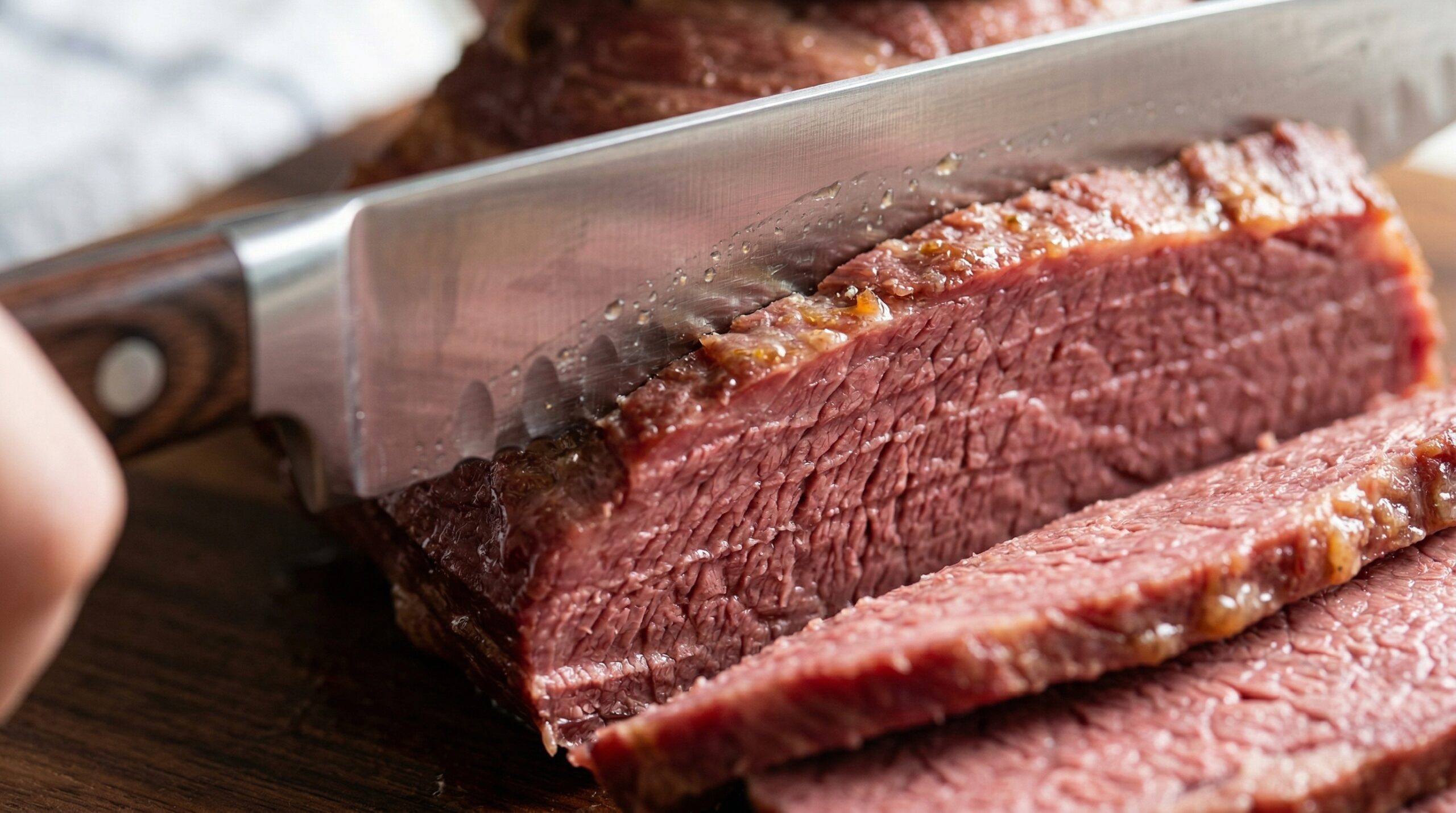
- Execute a transverse slice of the corned beef, cutting across the grain into thin, uniform strips.
- Plate a generous foundation of root puree followed by the sautéed cabbage.
- Layer the corned beef on top and finish with a dollop of the horseradish emulsion. Serve immediately.
The Heart of the Table
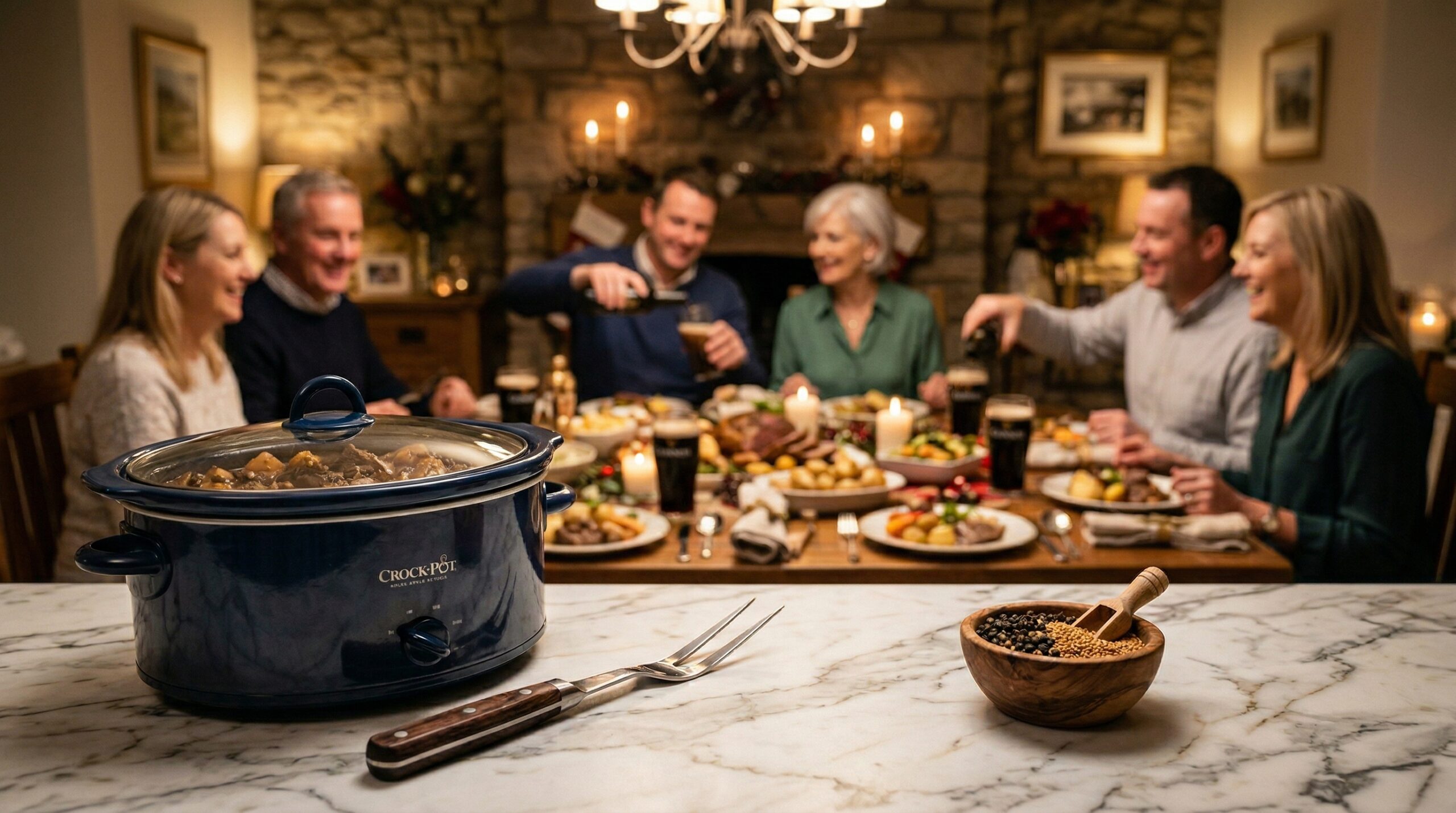
Traditional holiday gatherings are the structural pillars of communal resilience and neighborly grace. To host a meal that is both technically rigorous and thermally comforting is an act of proactive hospitality. In the Estate Library, we recognize that the care taken to manage the aromatic and structural qualities of a feast reflects a deeper commitment to the psychological well-being of the guest, fostering an environment of shared joy and enduring social connection.
The Art of the Host
- Heavy-duty ceramic slow cooker
- Professional stainless steel carving fork
- High-speed food processor for pureeing
- Stainless steel slotted extraction spoon
- Cast iron or heavy stainless sauté pan
- Precision transverse carving knife
Neighborly Grace
- THE PRESENTATION: Layer the transverse slices of beef atop a generous mound of the root puree and sautéed cabbage, finishing with a precise dollop of the horseradish emulsion.
- THE POUR: A chilled, dark Irish stout or a peaty, aged Irish whiskey will mirror the malt-forward braise and the smoky notes of the bacon.
- THE VIBE: Festive and resilient; the aroma of toasted spices and sautéed onions should signal a night of warm, high-prestige Irish hospitality.