
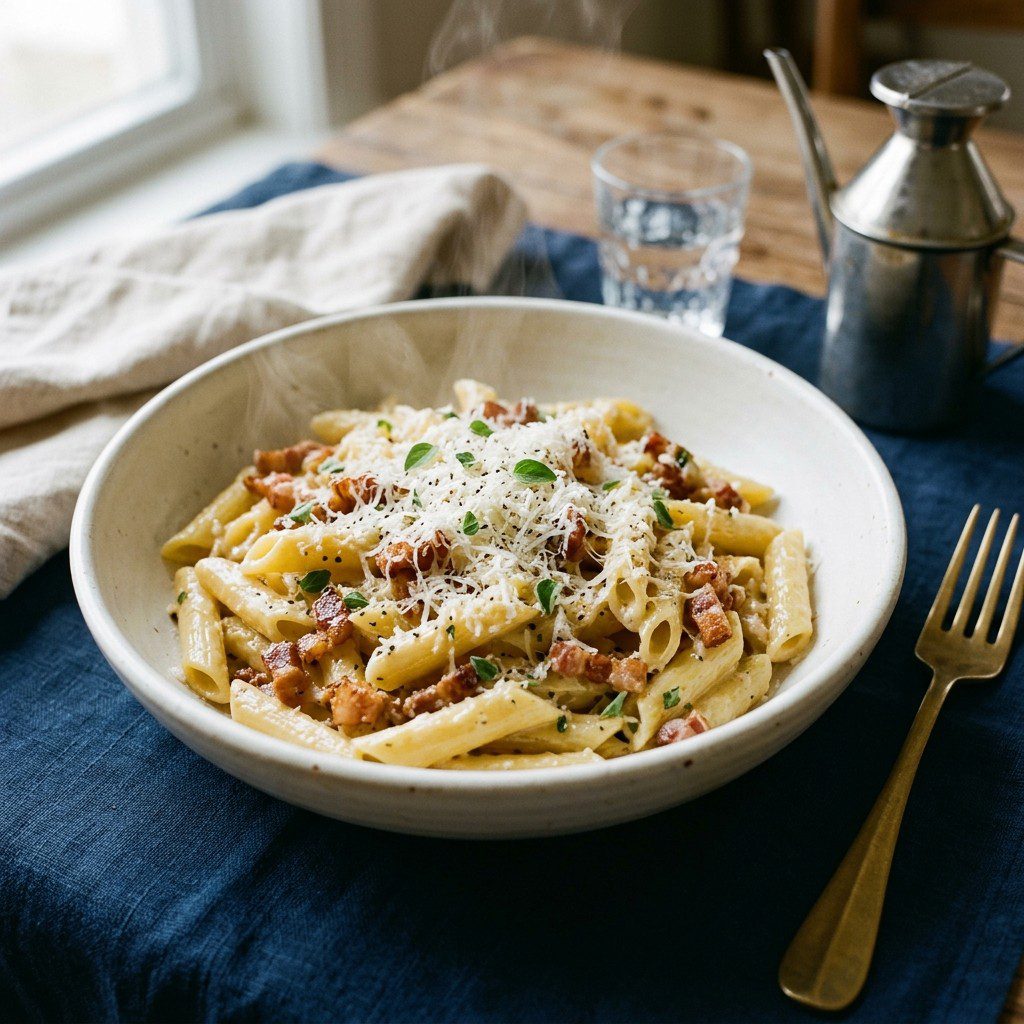
Penne Pasta Carbonara
There is no cream in a proper carbonara — the silky sauce comes from whisking eggs and Parmesan into hot pasta off the heat, loosened with starchy pasta water until it comes together into a glossy, silky coat. Pull the pan from the burner before the egg mixture goes in and it turns to luxurious sauce instead of scramble. That single move is the whole art of the dish.
Carbonara frightens home cooks into one of two mistakes: reaching for a carton of cream it never needed, or scrambling the eggs into curds against a screaming-hot pan. Both miss what makes the dish magic. The creaminess is an illusion built from eggs, cheese, and the starchy water the pasta cooked in — and mastering that mixture turns a handful of pantry staples into something that tastes like a restaurant plate.
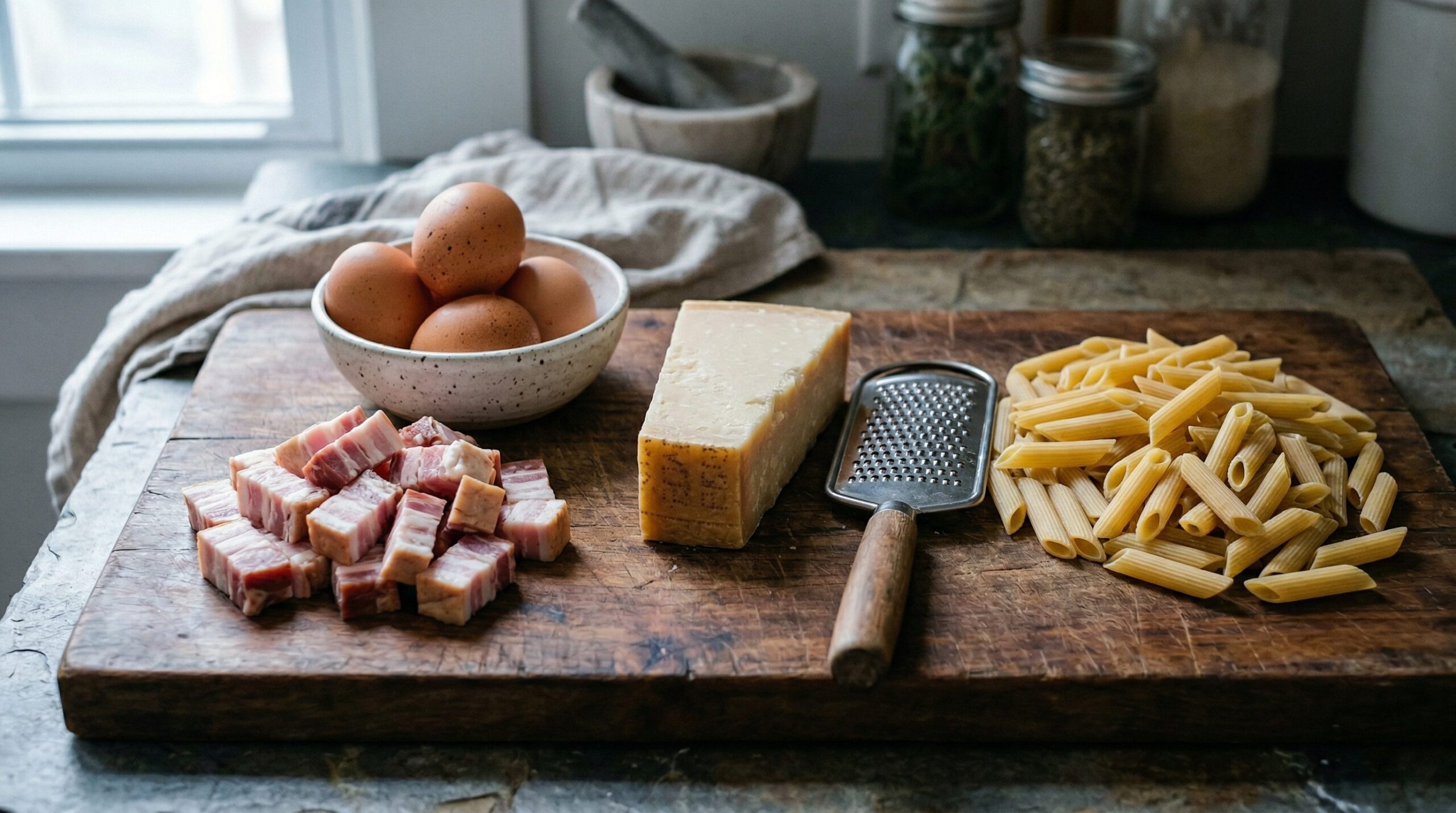
No Cream — Just Eggs, Cheese, and Starch
The sauce is three things: eggs, grated Parmesan, and a ladle of the water the pasta boiled in. Whisk the eggs and cheese into a thick paste, and reserve at least a cup of that cloudy, starchy cooking water before you drain — it's the ingredient most people pour down the sink and then miss. The starch is what lets the egg and fat come together into a smooth, clingy cream with no dairy at all.
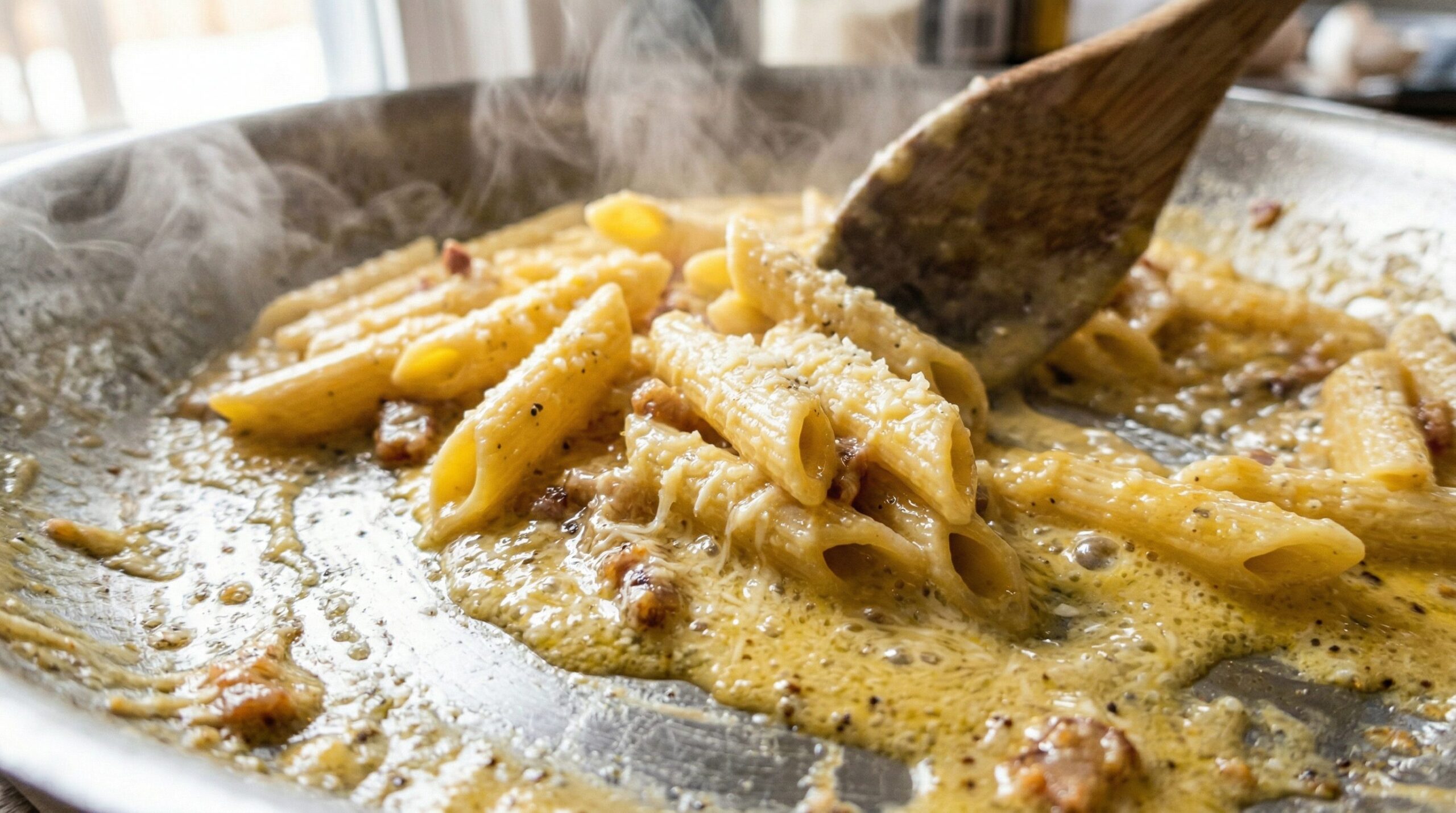
Off the Heat Is Everything
Timing is the difference between silk and scramble. Transfer the hot pasta into the pan with the bacon and onions, then take the skillet off the burner entirely before the egg paste goes in — the residual heat of the pasta and pan is plenty to gently cook the eggs without seizing them. Toss rapidly, ladling in splashes of the hot starchy water as you go, and watch it transform into a glossy, luxurious sauce right before your eyes.
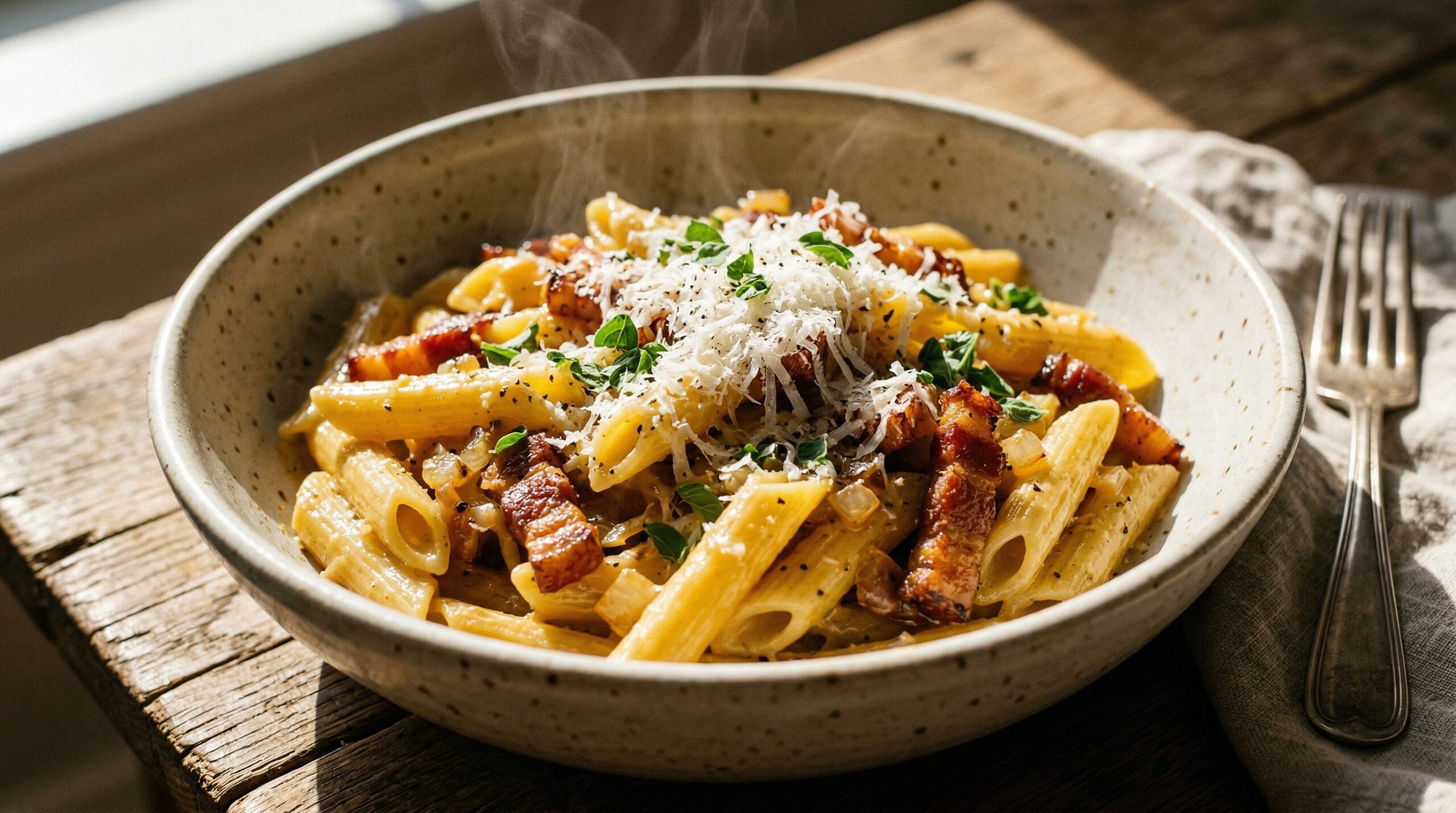
Penne Pasta Carbonara
Ingredients
Method
- Bring a large pot of heavily salted water to a rolling boil.
- Cook the penne pasta according to the package directions until exactly al dente, about 10 minutes.
- Before draining, carefully reserve at least 1 cup of the highly starchy pasta cooking water. Drain the pasta and set aside.
- While the pasta cooks, heat the olive oil in a large, deep skillet over medium-high heat.
- Add the 1-inch bacon pieces to the skillet and cook until the fat renders and the edges begin to crisp, about 5 minutes.
- Add the diced white onion to the rendered bacon fat.
- Cook over medium-high heat until the onions are completely soft, translucent, and just beginning to caramelize and brown.
- Season the bacon and onion mixture with the kosher salt and coarse black pepper.
- In a small ceramic mixing bowl, vigorously whisk together the 3 large eggs and the grated Parmesan cheese until fully combined into a thick paste.
- Transfer the hot, drained penne pasta directly into the skillet with the bacon and onions.
- Remove the skillet from the direct heat to prevent the eggs from scrambling.
- Pour the egg and cheese paste directly over the hot pasta and toss rapidly.
- Slowly ladle 1 to 2 splashes of the reserved, hot pasta water into the skillet while continuing to toss. The hot water will gently cook the eggs and blend the fat into a smooth, luxurious cream sauce.
- Toss the fresh chopped oregano into the pan, folding it into the glossy sauce.
- Serve the pasta immediately, directly from the warm skillet, heavily garnished with additional grated Parmesan cheese.
The Heart of the Table
Few dishes deliver so much pleasure from so little. Carbonara is weeknight alchemy — pasta, eggs, cheese, and a bit of bacon spun into something that feels genuinely indulgent — and there is a real generosity in knowing how to make people feel spoiled without a special trip to the store. It is the quiet confidence of a cook who can turn the everyday into an occasion.

The Art of the Host
A large pot for the pasta and a deep, wide skillet for the toss are the essentials — the skillet's broad surface makes it easy to keep everything moving fast. Whisk the eggs and cheese in a small bowl ahead of time, and above all, set a mug beside the pot as a reminder to scoop out the starchy water before draining. That mug of water is the secret to the sauce.
Neighborly Grace
- The Preparation: There's no cream in a proper carbonara — the silky sauce comes from whisking eggs and Parmesan into hot pasta off the heat, loosened with starchy pasta water. Pull the pan from the burner before the eggs go in so they turn glossy, never scrambled.
- The Pour: A crisp Italian white like Frascati or a light Pinot Grigio suits the rich egg-and-pancetta sauce. For a non-alcoholic option, a sparkling water with lemon cuts the richness cleanly.
- The Vibe: This is Roman comfort at its purest — toss it fast, plate it glossy, and eat it immediately with plenty of black pepper and Parmesan.