
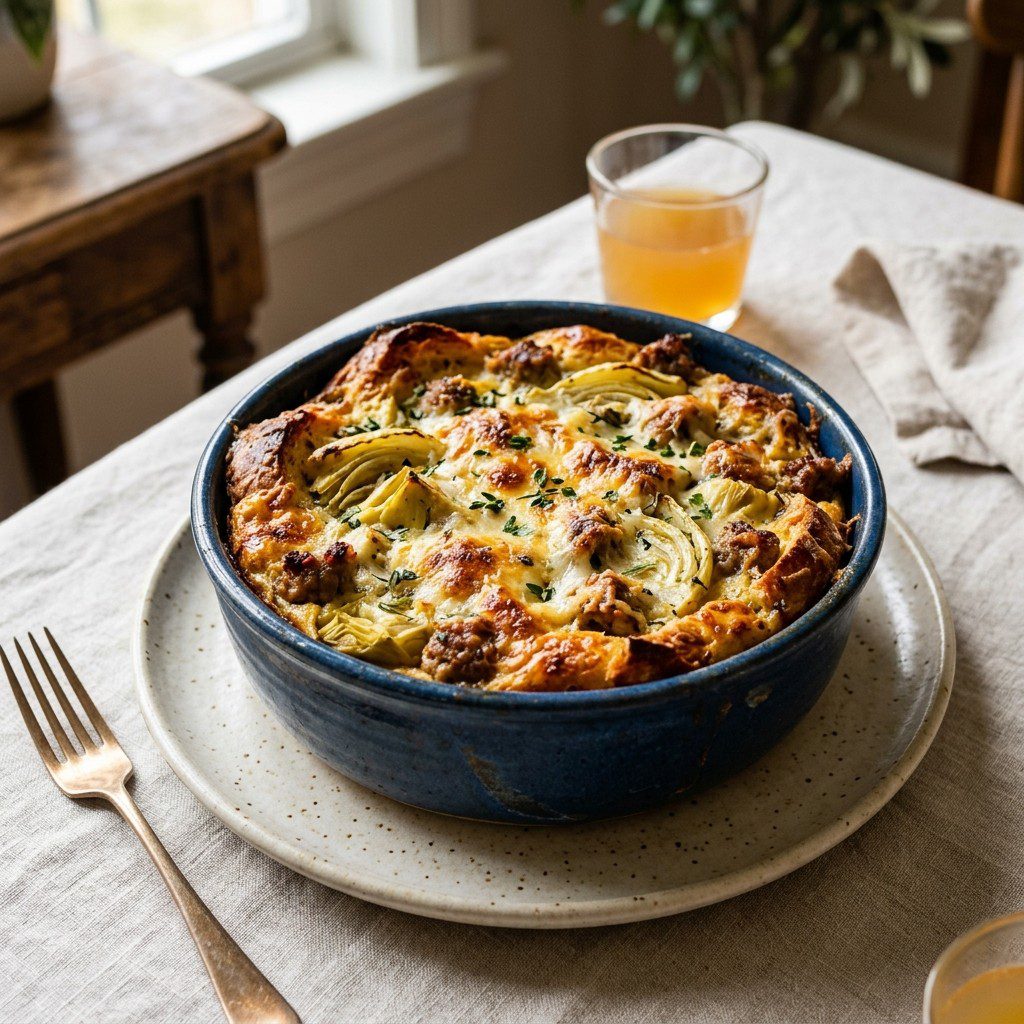
Artichoke & Fennel Strata
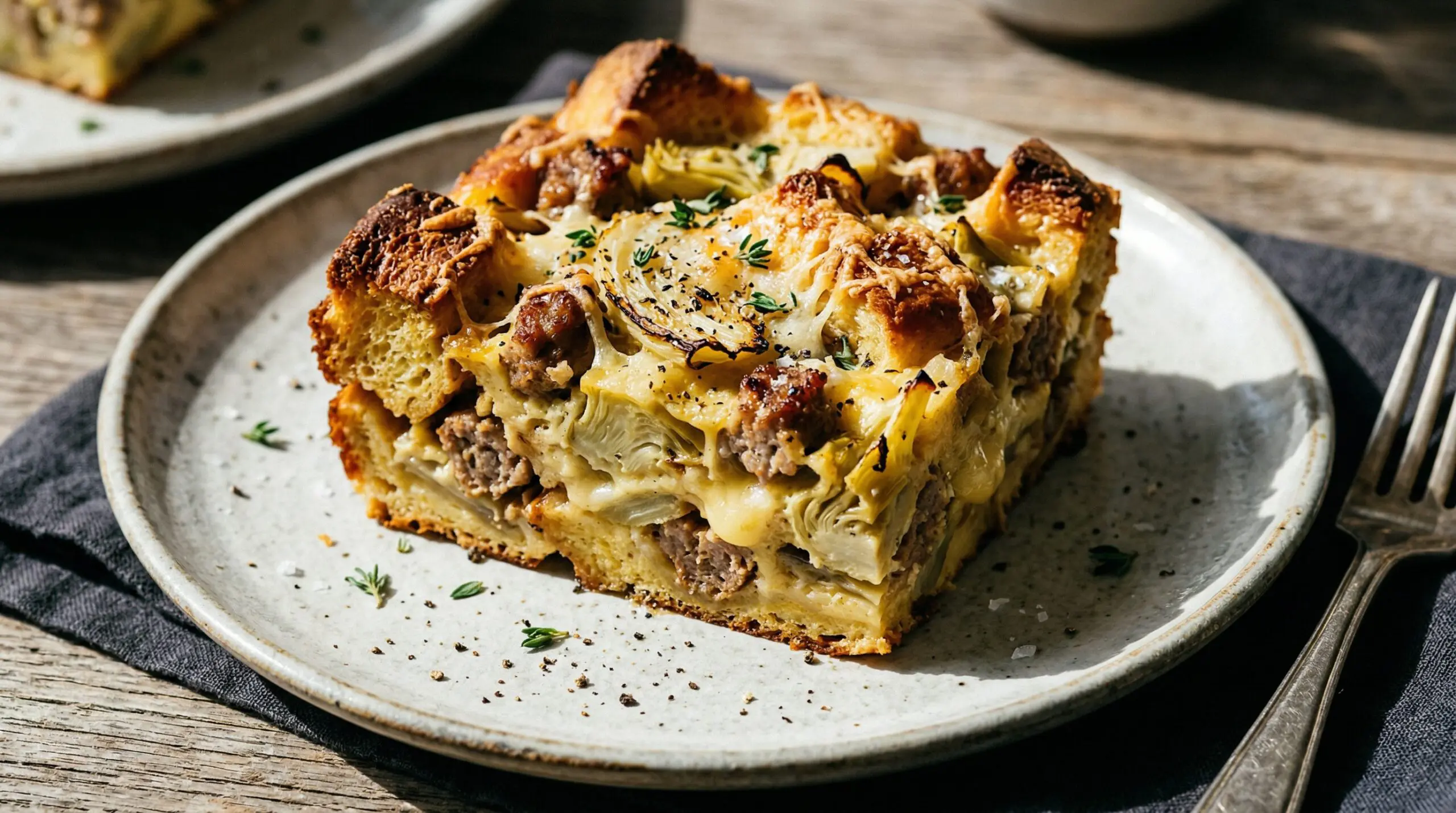
Assemble this strata the night before, refrigerate it so the brioche can drink up the custard, and bake it straight from cold — you get a puffed, golden centerpiece and a host who never had to leave the table. The overnight soak is the whole secret: given hours to absorb eight eggs and two cups of whole milk, dense brioche sets into something closer to a savory soufflé than a casserole.
There is a particular kind of morning a strata was made for — the slow one, where guests drift into the kitchen on the smell of browned sausage and toasted brioche, coffee already poured, and the oven quietly finishing the work you did the night before. This is brunch built for company: put together in advance, baked while you pour the first round, and carried to the table tall and burnished.
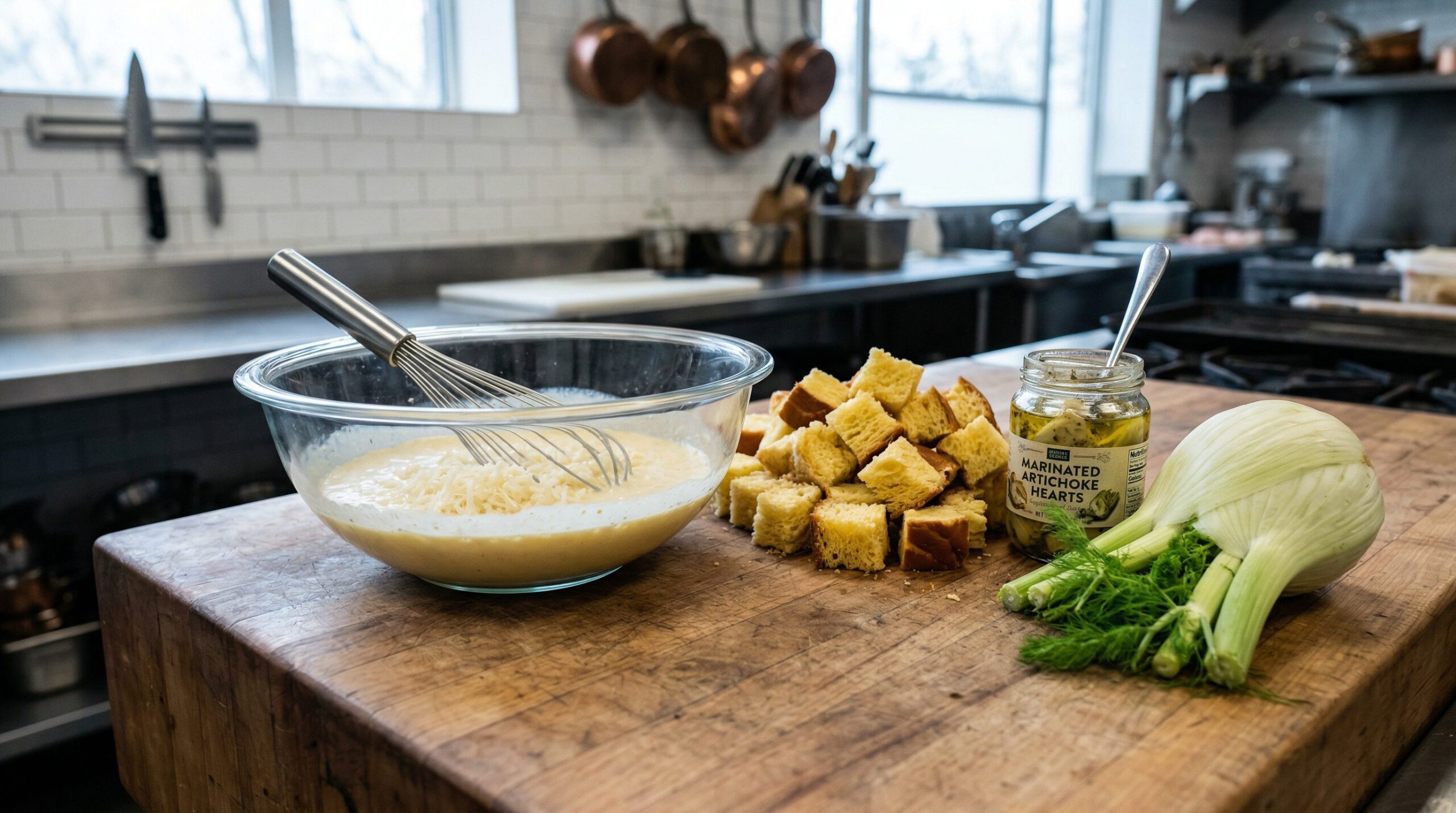
The Custard Ratio
The difference between a strata that slices clean and one that weeps is the custard. Eight large eggs to two cups of whole milk gives you a liquid rich enough to set firm but never rubbery, and folding freshly grated Gruyère and Parmigiano-Reggiano into it before it ever touches the bread seasons every layer from the inside. A tablespoon of Dijon and a teaspoon of Herbes de Provence keep all that dairy from turning flat.
Why the Overnight Rest Matters
Brioche is enriched, dense, and slow to absorb — which is exactly why it makes the best strata and the worst rushed one. Push the top layer down until every cube is submerged, cover it, and give it a minimum of two hours; overnight is better still. That patience is what lets the interior bake into one unified custard instead of dry bread floating over a wet bottom. Straight from the refrigerator it goes under foil first, then bakes uncovered until the top shatters, puffs, and turns deeply golden.
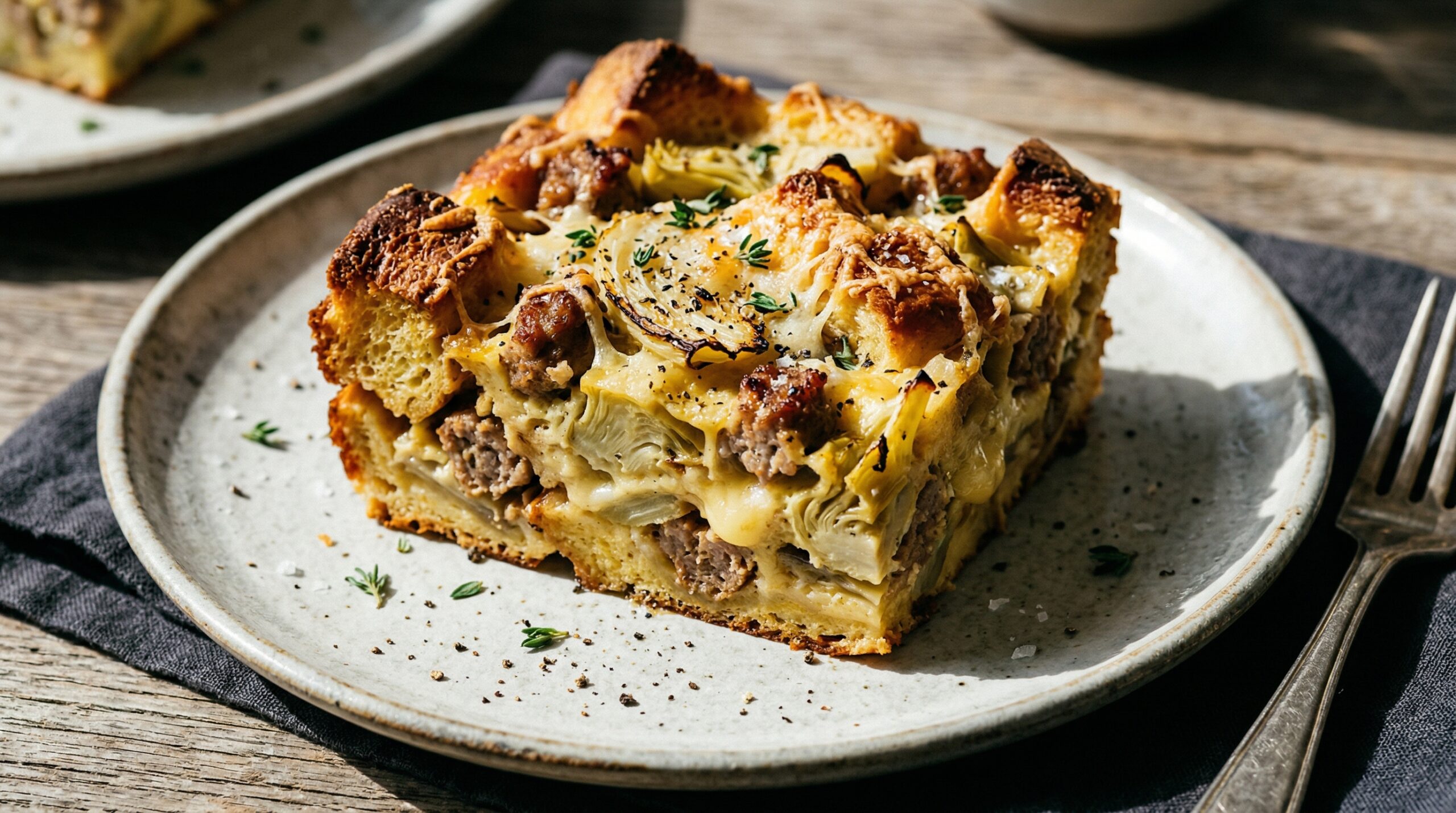
Artichoke & Fennel Strata
Ingredients
Method
- Heat the 1 tablespoon of olive oil in a large skillet over medium-high heat.
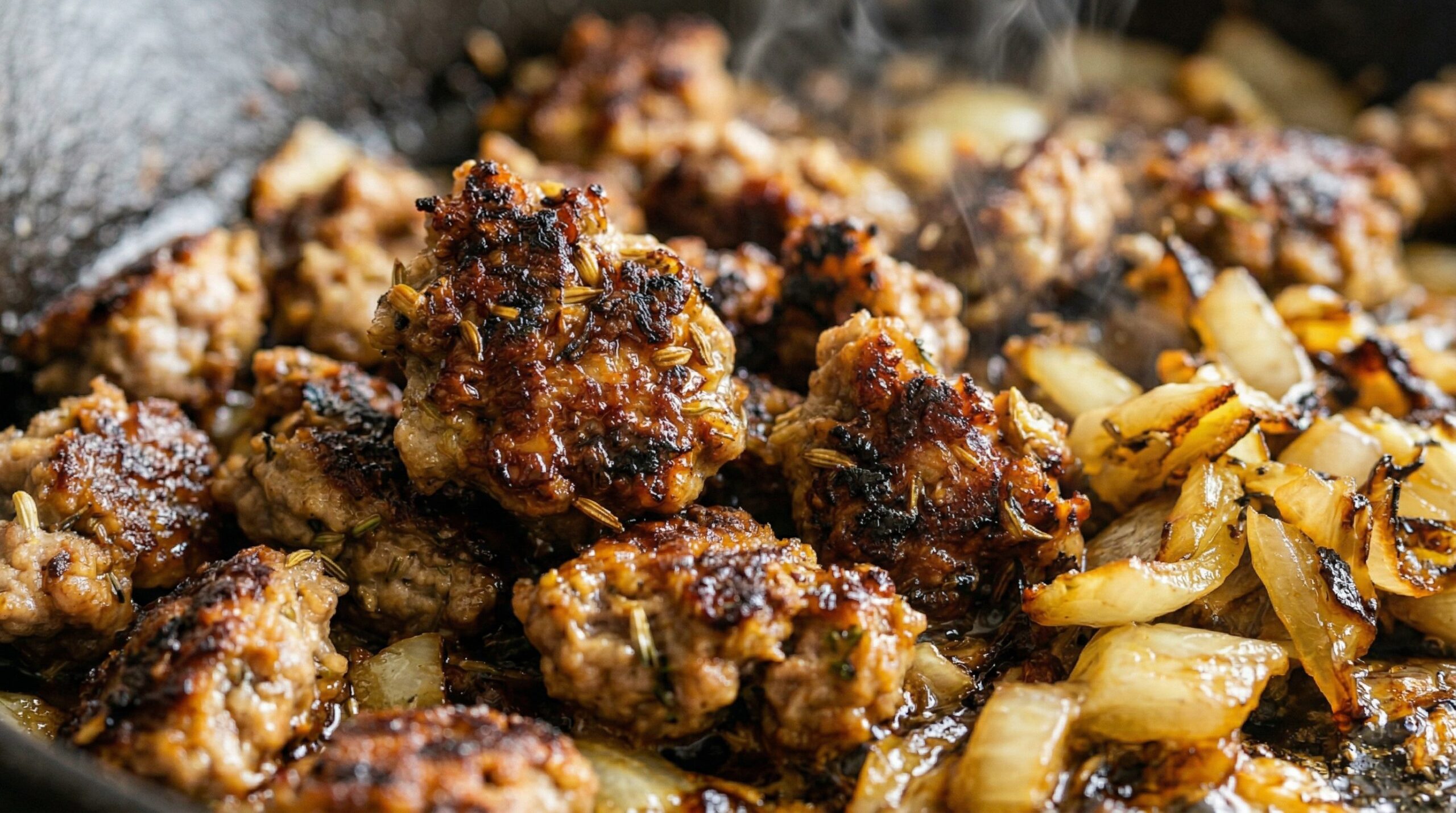
- Add the bulk Italian sausage and the chopped fennel. Cook, breaking the sausage up with a wooden spoon into fine crumbles, until the meat is deeply browned and the fennel is soft and fragrant, about 5 minutes. Remove from the heat.
- Generously coat a large, deep ceramic baking dish with vegetable oil spray or butter.
- Place exactly half of the brioche bread cubes in an even layer across the bottom of the dish.
- Cover the bread uniformly with the caramelized sausage and fennel mixture.
- Scatter the chopped, dry artichoke hearts evenly over the meat. Top with the remaining half of the brioche bread cubes.
- In a large, heavy glass or ceramic mixing bowl, vigorously whisk together the beaten eggs and whole milk until unified.
- Stir in the grated Gruyere, Parmigiano-Reggiano, sliced green onions, Dijon mustard, fresh parsley, and Herbes de Provence. Season aggressively with the kosher salt and coarse black pepper.
- Carefully pour this rich custard evenly over the layered bread cubes. Use your hands or a spatula to firmly push the top layer of bread down, ensuring every piece is completely submerged in the liquid.
- Cover the baking dish tightly with plastic wrap and chill in the refrigerator for a minimum of 2 hours (or up to overnight). This critical resting phase allows the dense brioche to fully absorb the liquid, preventing a dry, rubbery bake.
- When ready to serve, preheat the oven to 350°F. Remove the strata from the refrigerator and discard the plastic wrap.
- Cover the baking dish tightly with aluminum foil. Bake for 20 minutes to heat the dense interior and set the edges.
- Remove the foil and continue baking uncovered for an additional 20 to 30 minutes. The strata is finished when the custard is fully set in the center, and the top is puffed, shattered, and deeply golden brown.
- Allow the strata to rest for exactly 10 minutes before slicing to ensure the molten cheese and custard stabilize.
The Heart of the Table
A strata is a generous dish in the oldest sense — one pan that feeds the whole table, built from good bread and the last of the cheese, meant to be shared slowly on a morning when no one is in a hurry to leave. It carries the warmth of a house that plans ahead precisely so it can be fully present when the people it loves arrive.
The Art of the Host
You need very little to do this well: a large, deep ceramic baking dish that travels from refrigerator to oven and lands handsomely on the table, a heavy skillet to brown the sausage and fennel, a big whisk, and a box grater for the Gruyère and Parmigiano. A sheet of foil for the first half of the bake is the only other essential — it heats the dense center through before the top is allowed to color.
Neighborly Grace
- The Preparation: Assemble it the night before so the brioche can drink up the custard overnight, then bake it straight from the cold refrigerator — that long soak is the whole secret to a puffed, golden centerpiece, and it means you never have to leave the table.
- The Pour: A dry sparkling wine like Cava or Prosecco suits a brunch strata and echoes the fennel's brightness, and a light Pinot Grigio works too. For a non-alcoholic option, a blood-orange spritzer or a good pot of coffee rounds out the morning.
- The Vibe: This is a leisurely-brunch dish — bring it out tall and golden, set it in the center of the table, and let everyone linger over seconds as the morning unspools.