
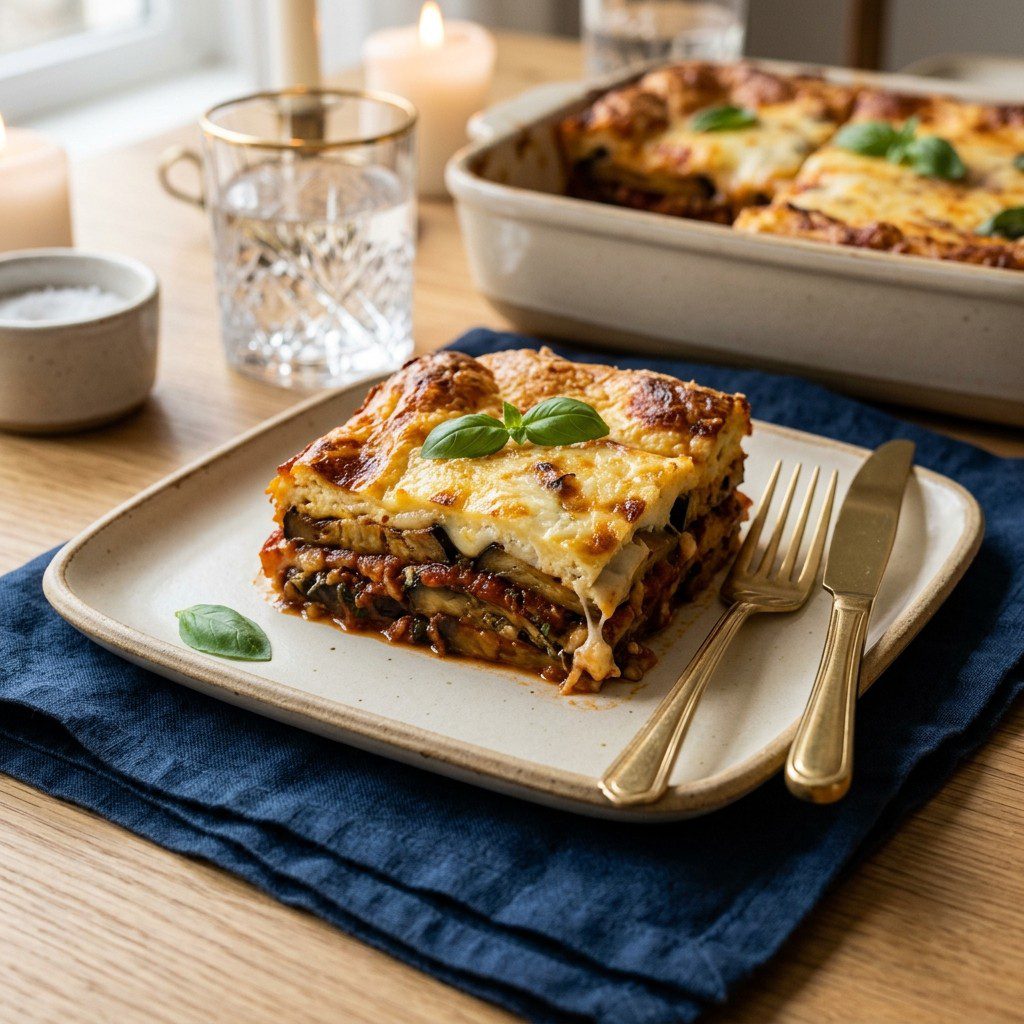
Baked Eggplant & Ricotta Casserole
Salt the eggplant slices and let them drain a full hour before frying — that step draws out the bitter moisture that turns a casserole soggy, so the layers bake up firm and golden instead of watery. Bread and fry, layer with marinara and fresh mozzarella, and crown it with a nutmeg-scented ricotta custard broiled to a puffed, golden finish.
Eggplant casseroles have a way of disappointing — bitter, watery, the slices gone to mush beneath the sauce. The failure almost always traces to one skipped step, and once you know it, this dish becomes the deeply comforting, layered centerpiece it was always meant to be: crisp-fried eggplant, molten mozzarella, and a ricotta crown that bakes like a savory custard over the top.
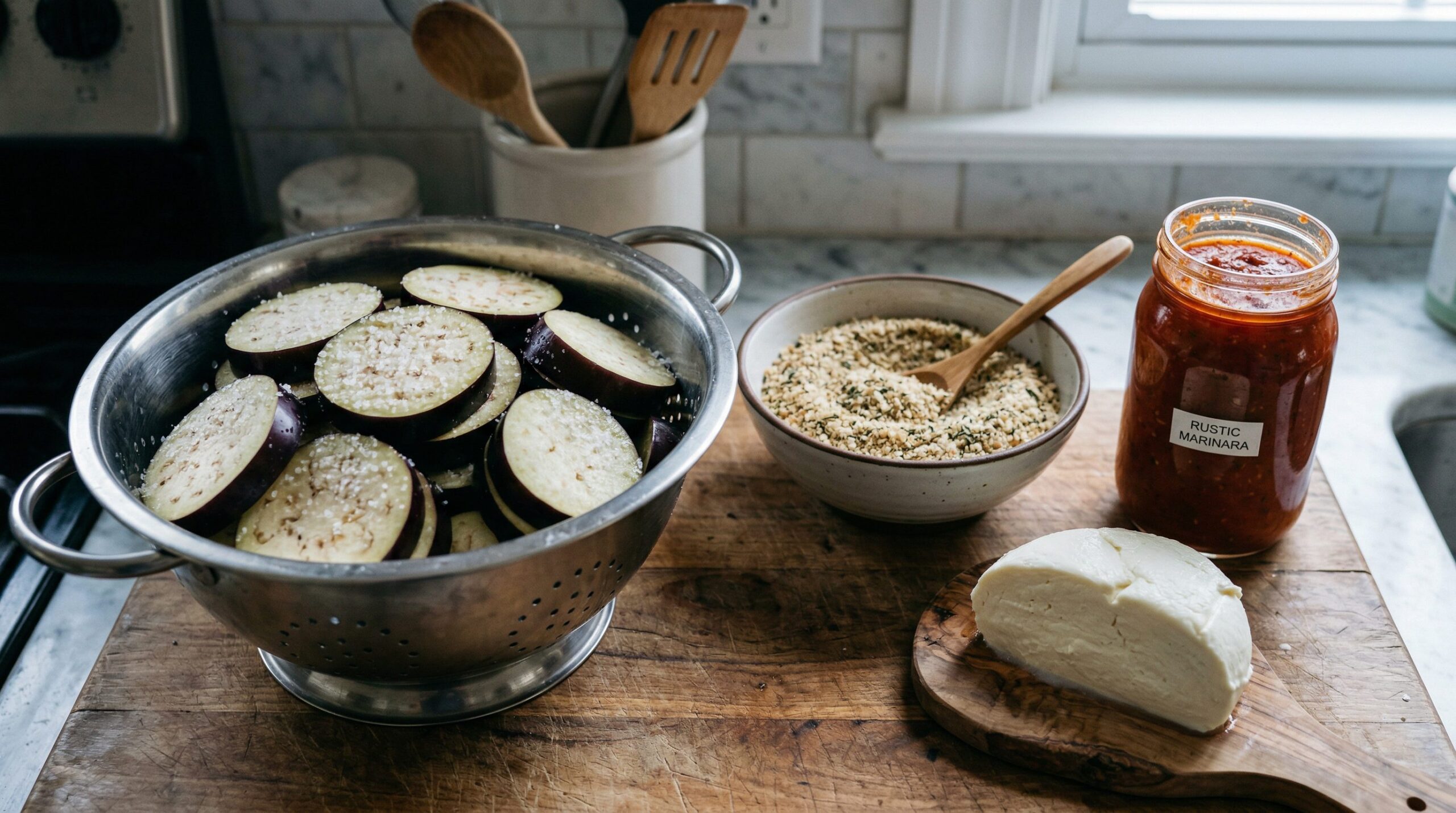
Salt First, Then Fry
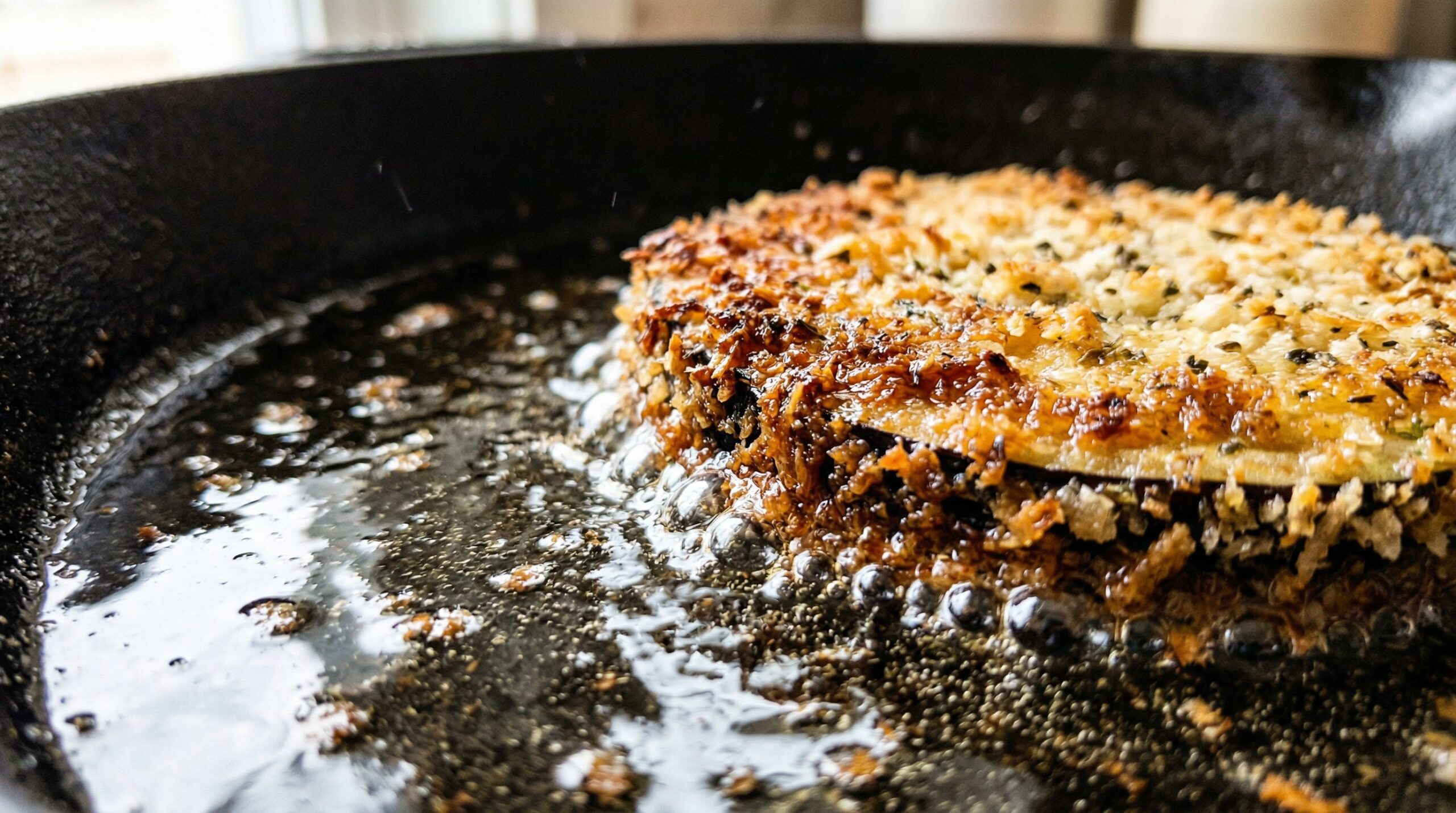
The single non-negotiable is salting. Season the quarter-inch rounds aggressively and let them rest in a colander for a full hour — the salt draws the bitter, excess water out of the flesh, which is exactly what prevents a soggy bake. Rinse the salt away, pat the slices bone-dry, then bread and fry them in batches until deep golden. The eggplant drinks oil at first and releases it as it crisps, so patience at the pan pays off in structure later.
Layering and the Ricotta Crown
Build it like a lasagna: a thin bed of marinara, a tight single layer of fried eggplant, sauce and mozzarella, and repeat until you finish with a third layer of eggplant. The signature is the crown — ricotta whisked smooth with half-and-half, egg, Parmesan, and nutmeg, spread over the whole surface. It bakes into a light, custardy top, and a final two or three minutes under the broiler puffs it golden. Rest it fifteen minutes before slicing so the layers set and cut clean.
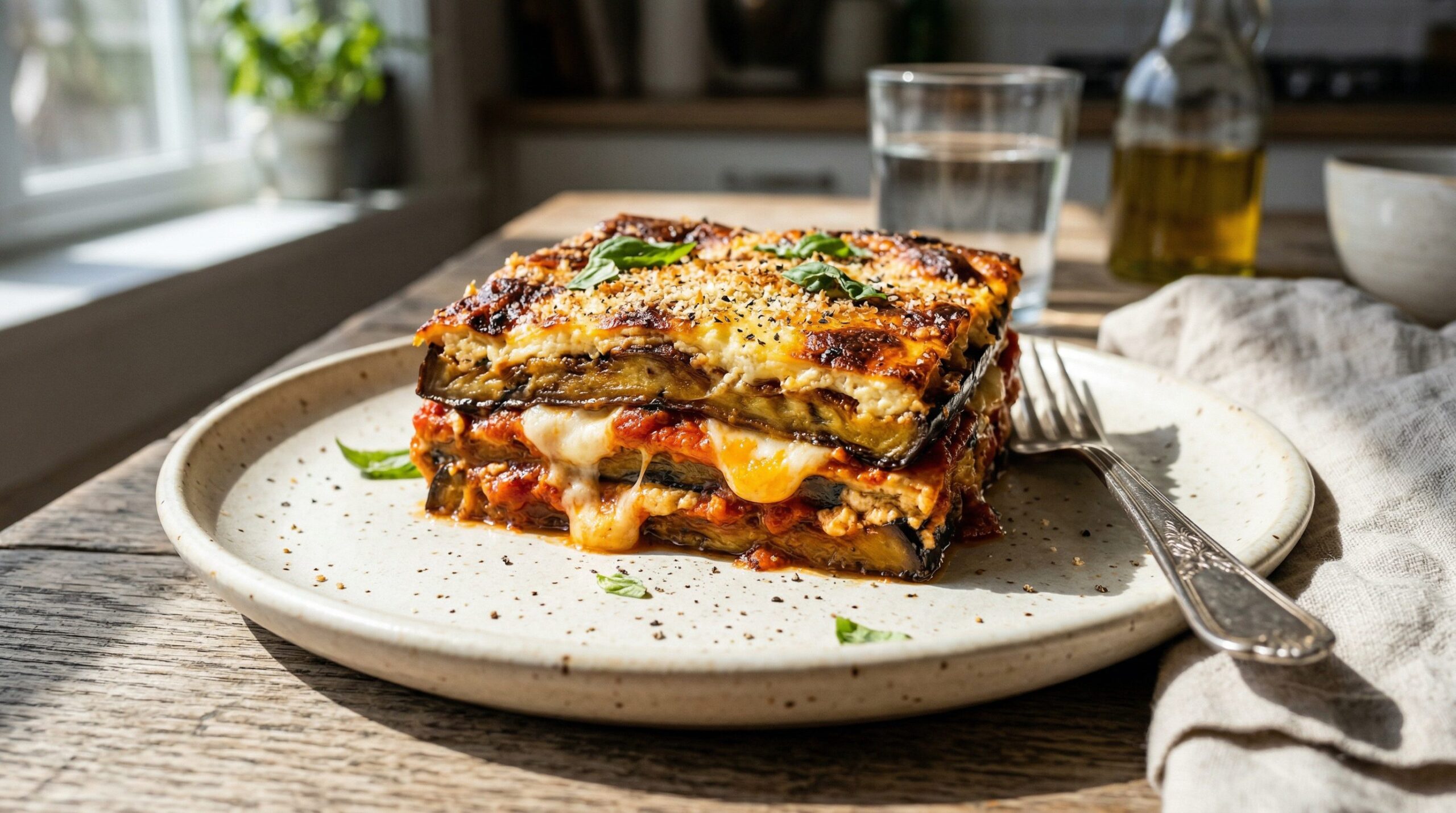
Baked Eggplant & Ricotta Casserole
Ingredients
Method
- Place the ¼-inch eggplant rounds into a large colander set in the sink.
- Season the slices aggressively and evenly with the 1 teaspoon of kosher salt.
- Allow the eggplant to rest undisturbed for 1 hour. This salting draws out the bitter, excess water, preventing a soggy casserole.
- Thoroughly rinse the salt from the slices and pat them completely bone-dry with paper towels.
- Place the Italian breadcrumbs into a wide, shallow dish. Firmly press each dried eggplant slice into the breadcrumbs until completely coated.
- Heat 2 tablespoons of canola oil in a large non-stick skillet over medium-high heat.
- Fry the breaded eggplant slices in batches (do not overcrowd the pan) until deep golden brown on both sides. The eggplant will absorb oil initially and release it as it finishes cooking.
- Transfer the fried slices to a baking sheet lined with paper towels to drain, seasoning lightly with salt and pepper. Add more oil to the skillet as needed for subsequent batches.
- In a medium mixing bowl, vigorously whisk together the ricotta cheese, half-and-half, large egg, grated Parmesan, and ground nutmeg until completely smooth and unified.
- Preheat the oven to 350°F. Generously coat an 11x7-inch ceramic baking dish with vegetable oil spray.
- Spoon ½ cup of the marinara sauce into the bottom of the dish, spreading it into a thin, even layer.
- Place a tightly packed, single layer of the fried eggplant slices over the sauce.
- Top the eggplant with 1 cup of marinara sauce, followed by exactly half of the thinly sliced fresh mozzarella.
- Add a second layer of eggplant, followed by another 1 cup of marinara and the remaining mozzarella slices.
- Finish with a final, third layer of eggplant slices. Pour any remaining marinara over the top.
- Spoon the smooth ricotta and nutmeg mixture evenly across the entire surface of the casserole.
- Bake uncovered in the preheated oven for 30 minutes, until the casserole is bubbling heavily around the edges.
- Increase the oven temperature to the Broil setting. Broil for 2 to 3 minutes, watching closely, until the ricotta topping is puffed and deeply golden brown.
- Remove from the oven and allow the casserole to rest for exactly 15 minutes before slicing. This critical resting phase allows the layers to set.
The Heart of the Table
A layered casserole carried to the table is one of the oldest gestures of welcome — abundant, unhurried, meant to be cut into and shared. This is comfort food with a little elegance, the kind of dish that fills a house with the smell of marinara and browning cheese and tells everyone who walks in that they arrived at exactly the right time.

The Art of the Host
A large colander is quietly the most important tool — it's what lets you salt and drain the eggplant properly. Beyond that, a wide non-stick skillet handles the frying, a mixing bowl the ricotta custard, and an 11x7 ceramic baking dish takes it from oven to broiler to table. Fry in unhurried batches without crowding the pan, and the slices crisp instead of steam.
Neighborly Grace
- The Preparation: Salt the eggplant and let it drain a full hour before frying so the casserole bakes up firm rather than watery. You can fry the slices and assemble the whole dish a day ahead, then bake it straight from the refrigerator.
- The Pour: A medium Italian red like Chianti or Sangiovese is the natural match for the marinara and ricotta. For a non-alcoholic option, a sparkling red grape or a San Pellegrino with lemon keeps it Italian.
- The Vibe: This is Sunday-supper comfort — bubbling, golden, and layered, set it in the middle of the table and let everyone dig into cheesy, saucy squares.