
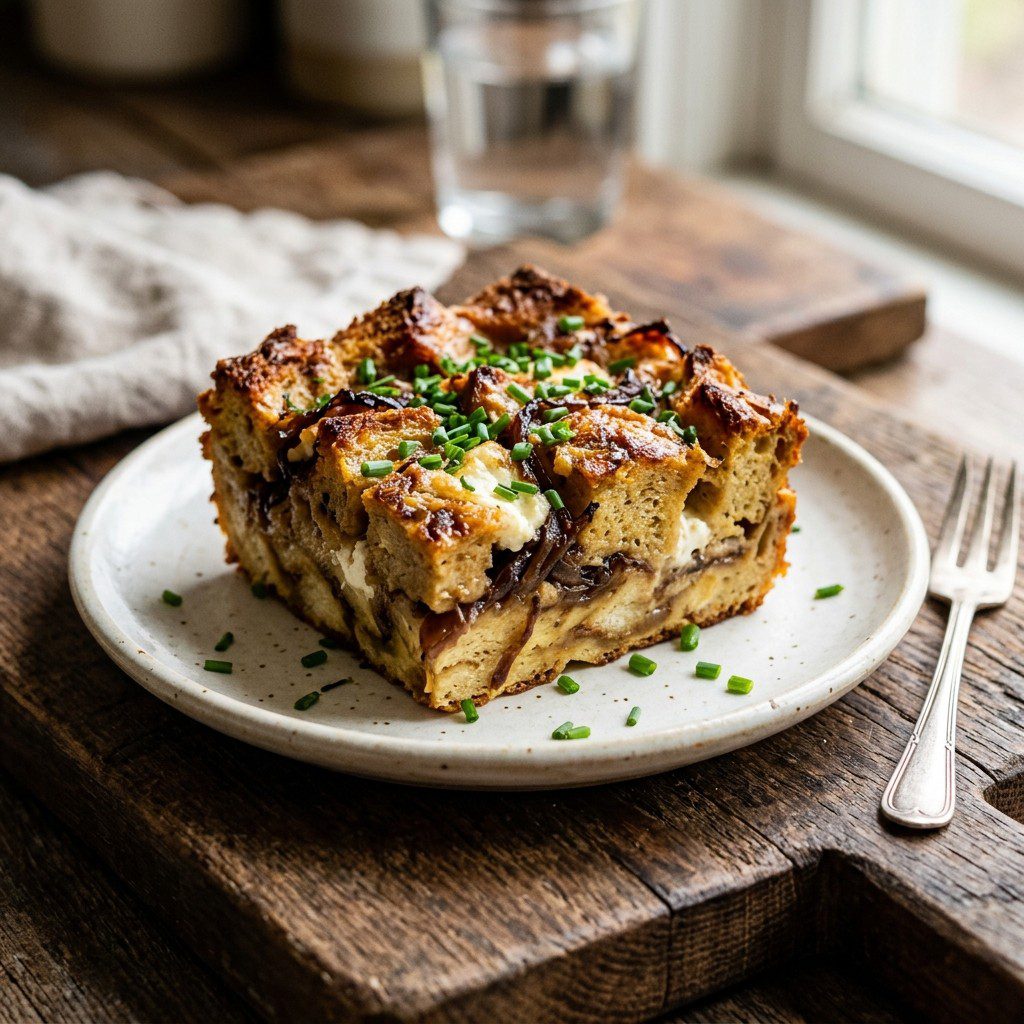
Caramelized Onion & Goat Cheese Bread Pudding
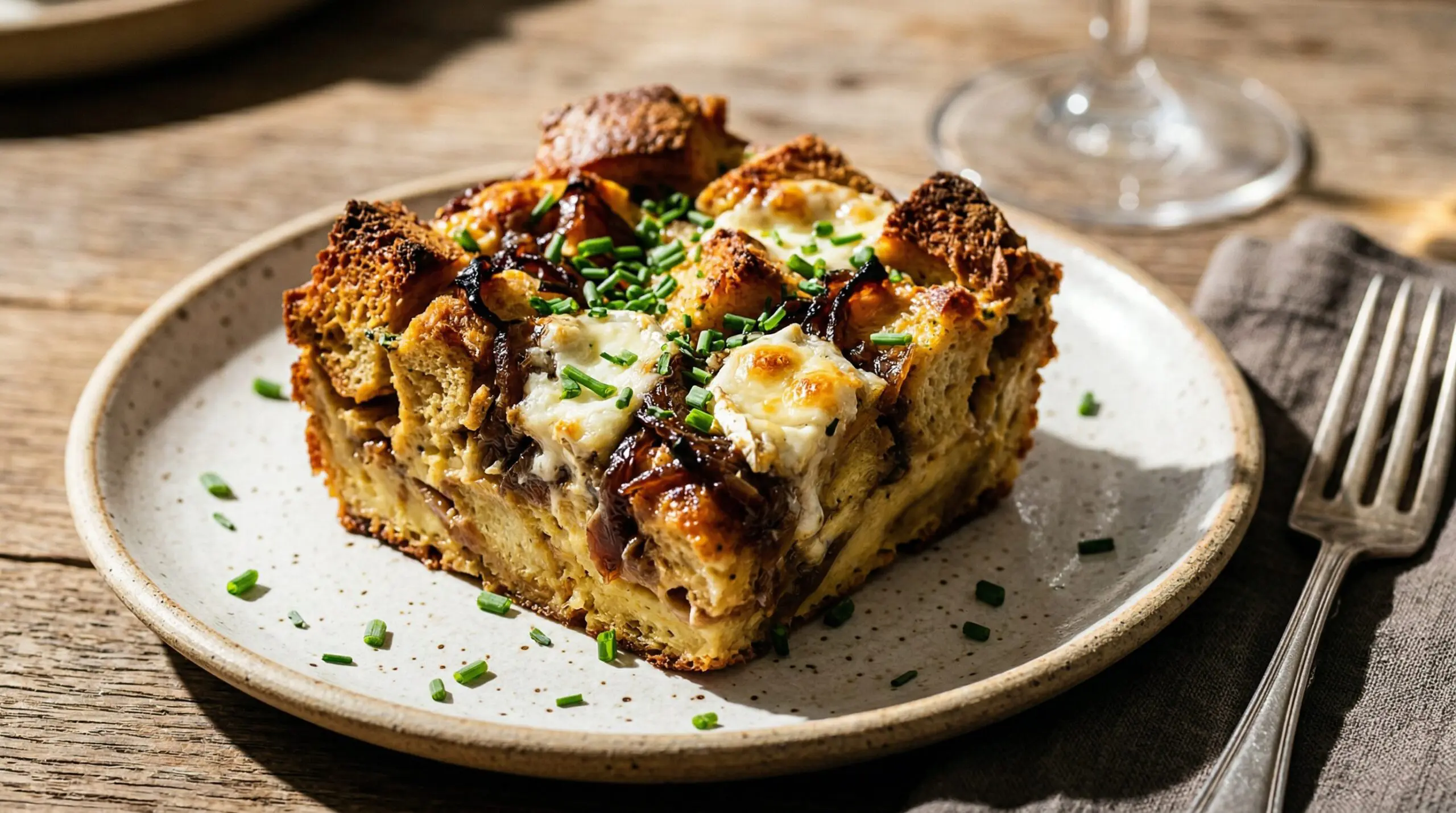
Give the onions the twenty unhurried minutes they need to caramelize into a dark, balsamic-sticky tangle, and give the bread a full soak in the egg custard before it bakes — those two waits are the entire difference between a savory bread pudding that's rich and one that's bland or dry. Crown it with goat cheese and bake until the top shatters golden.
Savory bread puddings so often disappoint — underseasoned, soggy in the middle, a good idea gone slack. The failures almost always trace to two skipped patiences: onions rushed before they truly caramelize, and bread barely dampened instead of properly soaked. Honor both and the dish transforms into something soulful: sweet-tart onions, tangy goat cheese, and a custardy interior under a crackling crust.
The Slow Caramelization
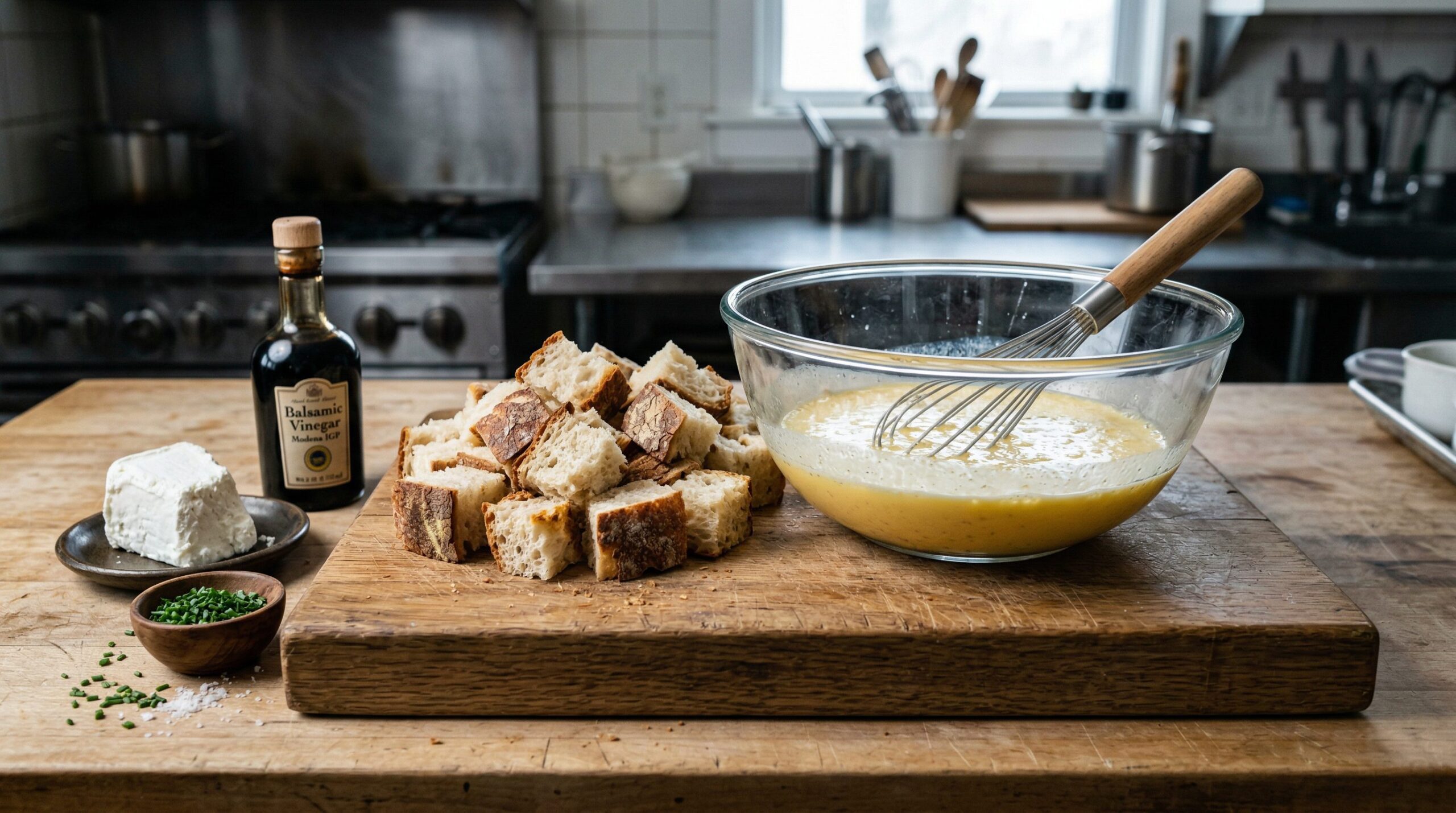
Caramelizing onions is a matter of low heat and refusing to hurry. Fifteen to twenty minutes of slow cooking coaxes out their sugars until they turn deeply golden and soft; only then do the balsamic vinegar and chives go in, reducing down into a dark, syrupy tangle. Push the heat and you get scorched, bitter onions that taste nothing like the sweet-savory backbone this dish depends on. This is the one step you cannot rush.
Soaking the Bread
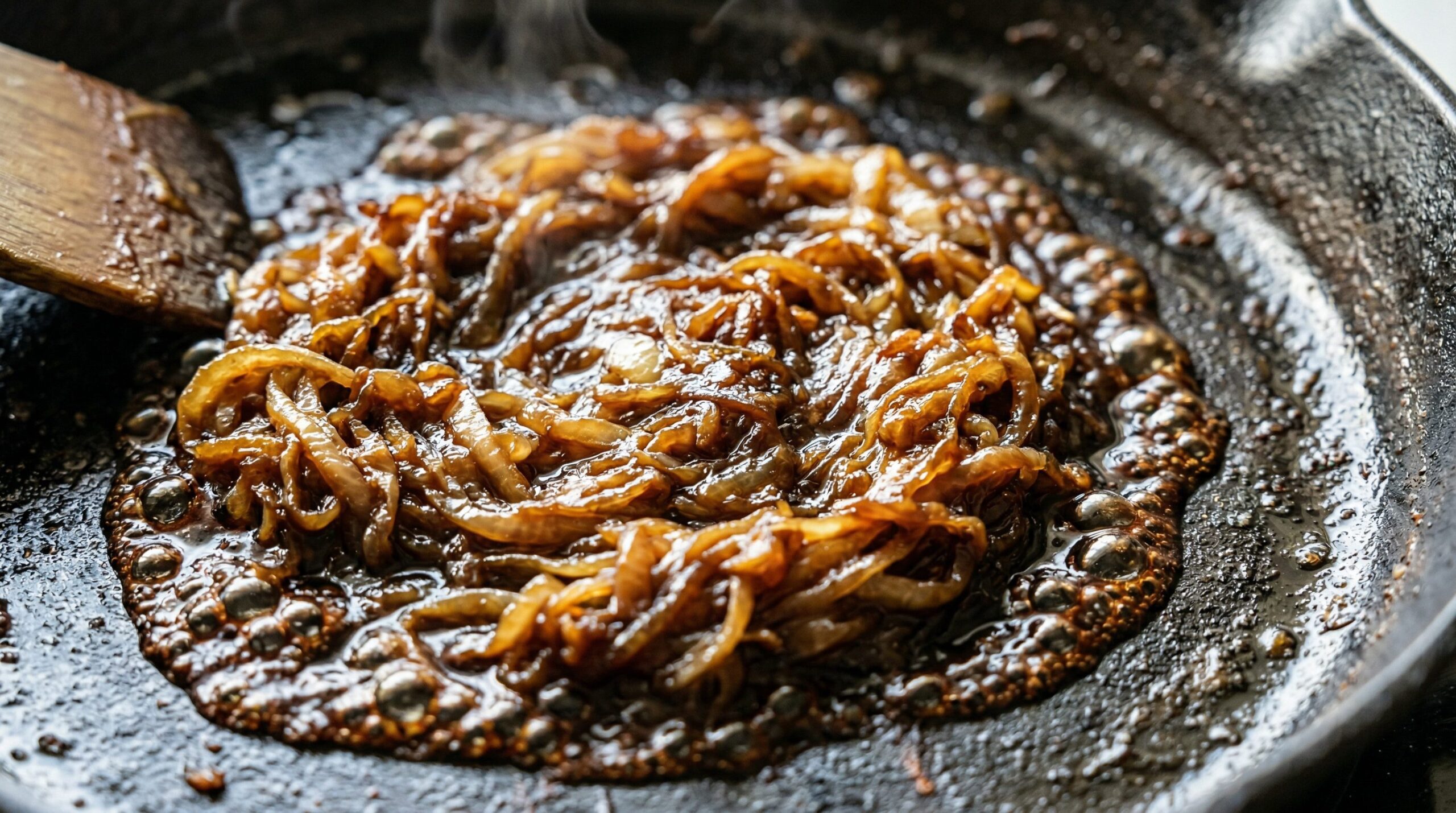
Crusty artisanal bread needs time to drink the custard, so submerge every cube in the egg and half-and-half and let it rest fifteen to twenty minutes until the liquid disappears into the bread. That soak is what lets the interior bake into a unified, custardy pudding rather than dry cubes over a wet bottom. Fold the syrupy onions in gently once the bread has swelled, scatter goat cheese across the top, and bake until the center is set and the edges are shattered and brown.
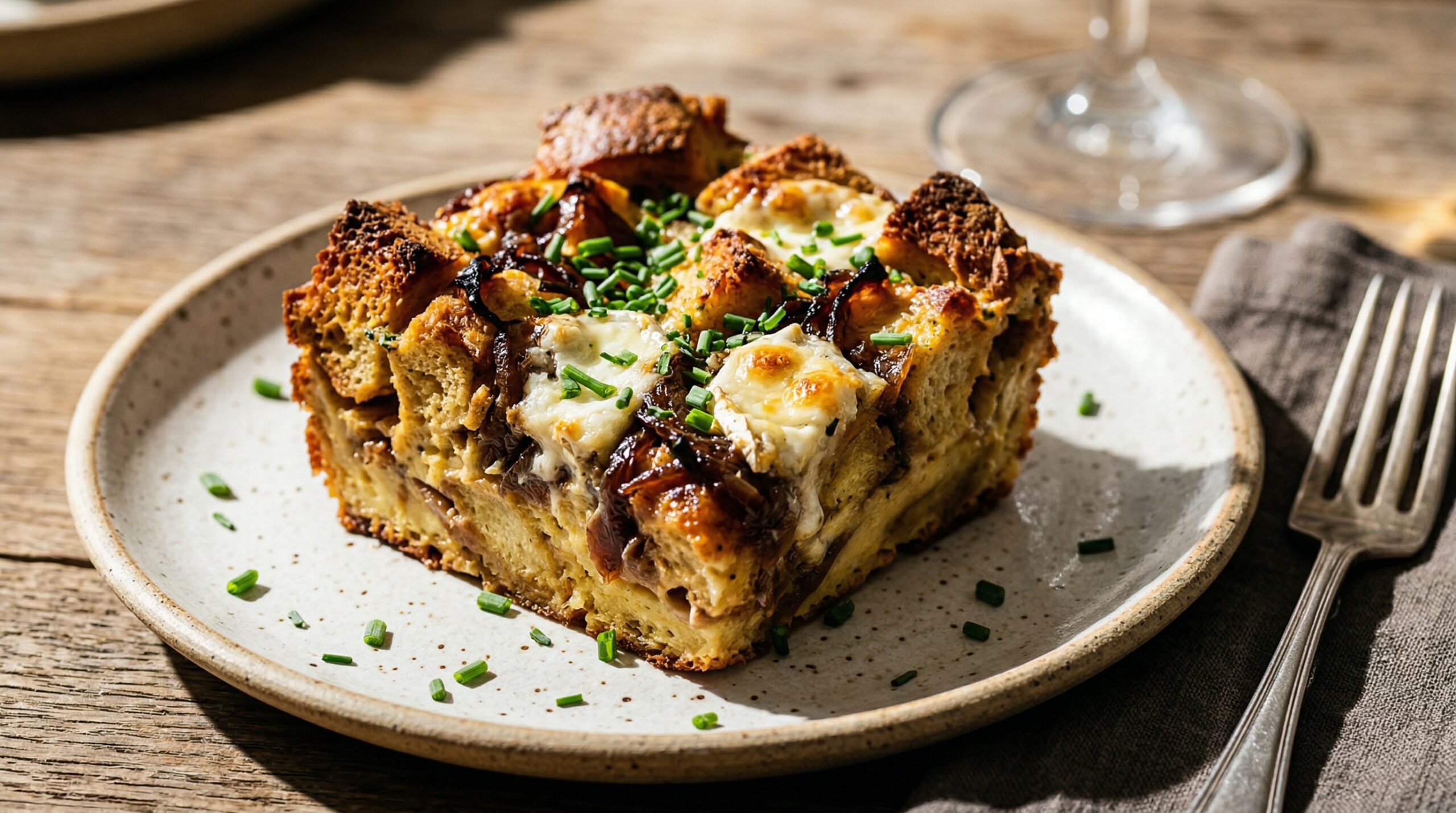
Caramelized Onion & Goat Cheese Bread Pudding
Ingredients
Method
- Preheat the oven to 400°F. Generously coat a 9x9-inch ceramic baking dish with vegetable oil spray or butter.
- Heat the olive oil and unsalted butter in a large skillet over medium-low heat until melted and foaming.
- Add the thinly sliced yellow onion and cook slowly, stirring occasionally, until deeply soft and completely translucent, about 15 to 20 minutes.
- When the onions begin to turn golden and deeply caramelize, aggressively stir in the chopped fresh chives and the balsamic vinegar. Season with the kosher salt and coarse black pepper.
- Cook until the balsamic reduces and the onions transform into a dark, sticky, syrupy tangle, about 5 minutes more. Remove the pan from the heat.
- In a large, heavy glass or ceramic mixing bowl, vigorously whisk the half-and-half and the beaten eggs until completely unified and pale yellow.
- Drop the 1-inch bread cubes directly into the wet custard. Use a wooden spoon to firmly push the bread down, ensuring every cube is entirely submerged in the liquid.
- Let the bread rest undisturbed to fully absorb the custard, about 15 to 20 minutes. (This critical resting phase allows the starches to swell, preventing a dry or rubbery bake).
- Once the majority of the liquid has been absorbed into the bread, gently fold the syrupy, caramelized onions into the bowl, taking care not to shred the softened bread cubes.
- Transfer the heavily saturated bread pudding mixture evenly into the prepared 9x9-inch baking dish.
- Scatter the crumbled goat cheese generously and evenly across the absolute top of the pudding.
- Bake in the preheated 400°F oven for 30 to 40 minutes, until the custard is fully set in the center, the goat cheese is melted, and the exposed bread edges are deeply golden brown and shattered.
- Allow the dish to rest for 10 minutes to stabilize the custard before slicing. Garnish with additional fresh chives and serve hot.
The Heart of the Table
This is generous cooking — humble bread and slow-cooked onions turned into something that eats like a splurge, one dish that stretches to feed eight without a hint of thrift showing. It carries the quiet confidence of a host who knows that abundance is less about expense than about care, and that a golden, bubbling pan set in the middle of a table says welcome louder than almost anything else.
The Art of the Host
A large skillet does the caramelizing, a big mixing bowl handles the soak, and a 9x9-inch ceramic baking dish takes it into the oven and onto the table. Keep a wooden spoon on hand for folding the onions through the softened bread — gently, so the cubes stay whole rather than shredding into paste. Everything here rewards a light touch and a slow clock.
Neighborly Grace
- The Preparation: Give the onions their full twenty unhurried minutes to caramelize and the bread a long soak in the custard — both waits can happen ahead, and the assembled pudding bakes straight from cold.
- The Pour: A medium red like Pinot Noir loves the sweet onions and tangy goat cheese, and a dry rosé works too. For a non-alcoholic option, a sparkling grape or a pomegranate spritzer adds a bright counterpoint.
- The Vibe: Savory and rich, this is a dish for a relaxed brunch or a cozy supper — set it out golden and let its deep, oniony warmth do the welcoming.