Estate Dinners
Slow-Roasted Pork Belly with Collard Greens
The Strategy:
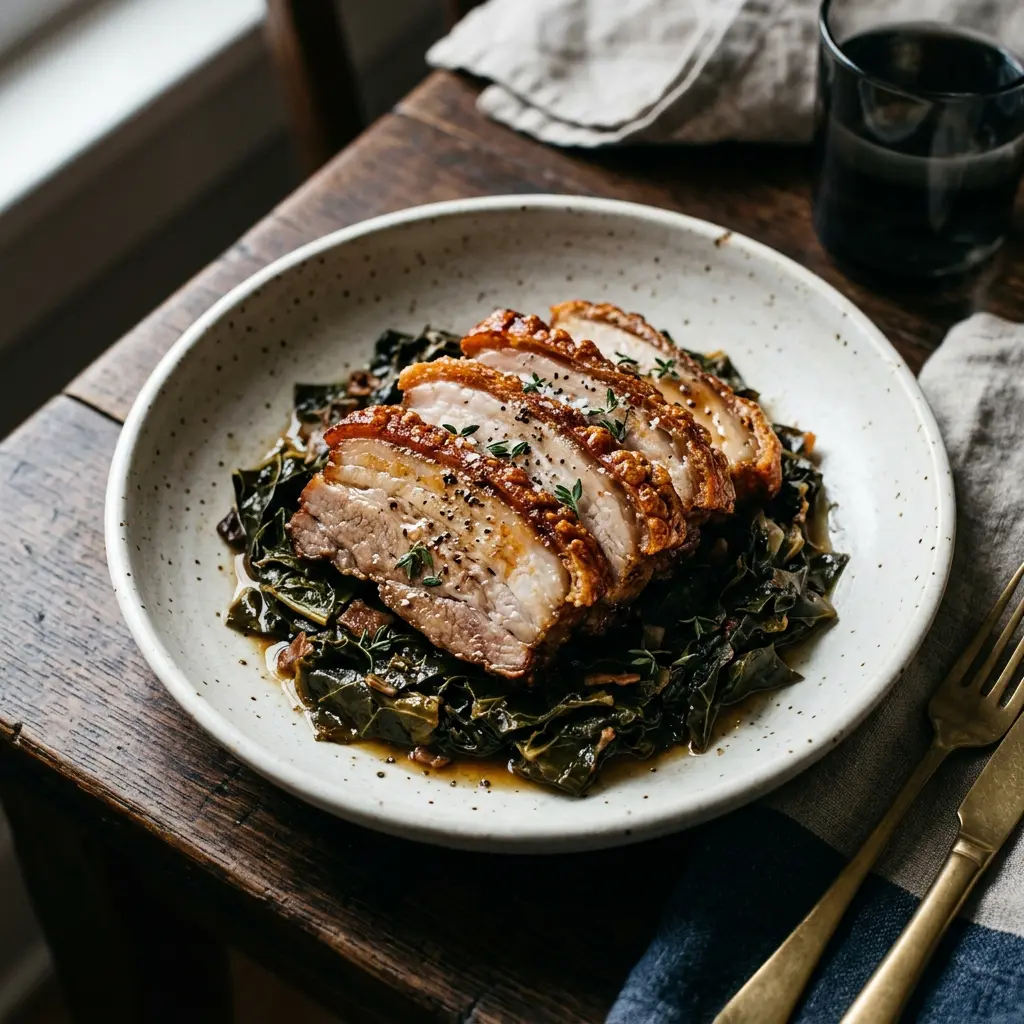
We are demystifying an ingredient often reserved for high-end dining and returning it to its rustic roots. By slow-roasting heavily spiced pork belly under foil, we gently render the thick layers of fat without burning the dark, caramelized crust. Serving these incredibly rich, meltingly tender slices over a bed of slow-simmered, syrupy collard greens creates a brilliant contrast of textures, while a final hit of balsamic vinegar cuts straight through the richness of the plate.
Ingredients
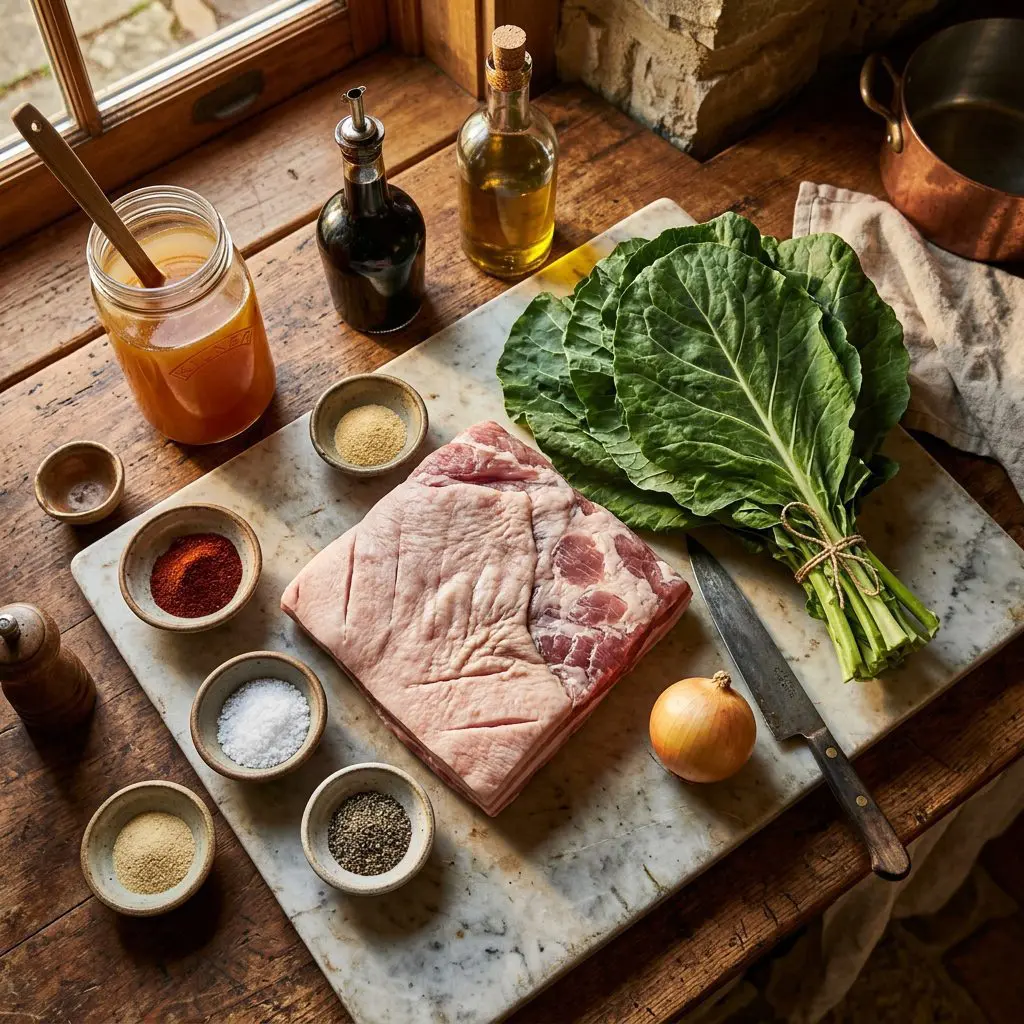
- 1 tablespoon onion powder
- 1 tablespoon garlic powder
- 1 tablespoon chili powder
- 1 tablespoon kosher salt
- 1 tablespoon black pepper
- 1 (1 ½-pound) piece pork belly
- 2 tablespoons olive oil
- 1 medium onion, peeled and diced, about 1 cup
- 1 bunch collard greens, stemmed, rolled, and chopped, about 6 cups
- 3 to 4 cups chicken stock
- 2 tablespoons balsamic vinegar

Instructions
- Mix the onion, garlic, and chili powder with salt and pepper.
- Coat the pork belly with this seasoning, reserving about a tablespoon for the collards.
- Transfer the pork belly into a baking dish.
- Cover with aluminum foil and cook on low heat (about 275° to 300°) until the meat begins to fall apart when poked with a fork and reaches an internal temperature of 155°, about 1 ½ to 2 hours.
- Heat olive oil in a skillet over medium heat.
- Add the onion and cook until soft.
- Add the chopped collard greens and stir.
- Season with the remaining spice mix.
- Add 2 cups of the chicken stock.
- Bring the liquid to a boil.
- Reduce the heat and cover with the lid.
- Continue cooking, adding more liquid as needed to produce soft, syrupy greens.
- Before serving, stir in the balsamic vinegar.
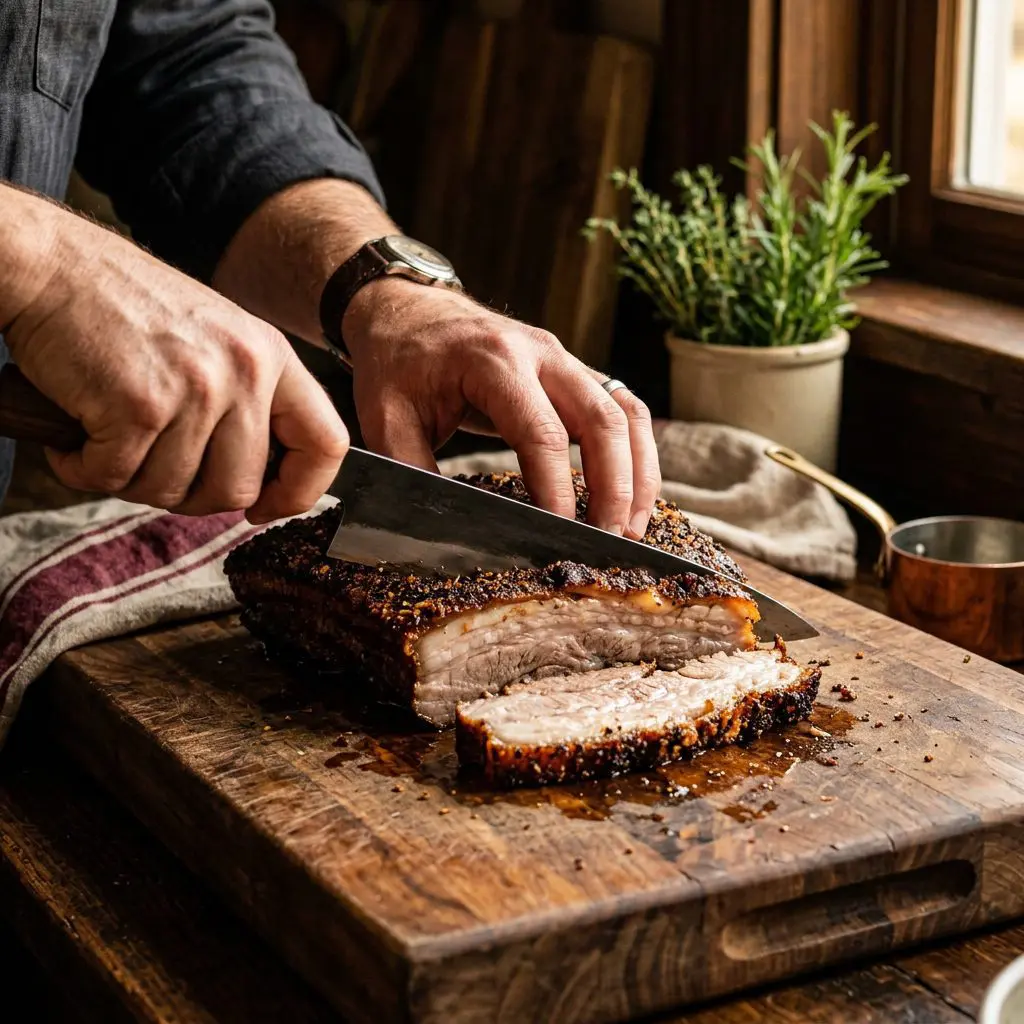
- Remove the pork belly from the baking dish and cut into thin slices.
- Serve slices of pork belly over a bed of greens. Drizzle on juices from pan.
Thing to Note: Pork Belly
We can’t talk about pork without talking about uncured bacon … pork belly, a rich, subtle, and absolutely delicious THING. Although it appears on menus in high-end restaurants, it’s a humble ingredient that’s not as complicated to cook as you think. Give it a try.
The full recipe lives in the Vault
Ingredients, method and every chef-tested detail are in the Vault. Join the Estate Registry for $79 a year: six printed dinner-party editions mailed to you, and the Vault opens as our gift.
Join the Registry · $79What’s included · Member Sign In
The Heart of the Table
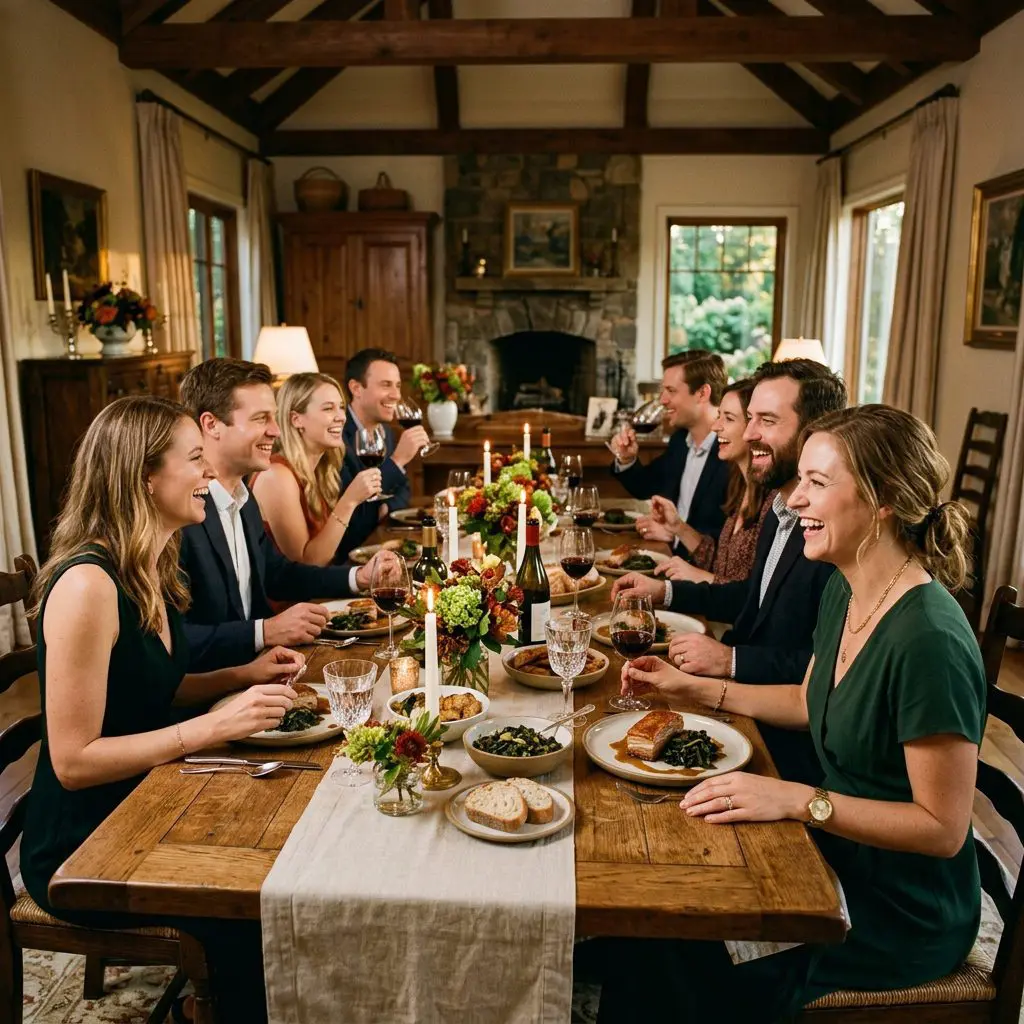
Pork belly is decadent, and slow-cooked collard greens require patience. Serving this deeply traditional, time-intensive meal is a powerful way to show your guests that they are worth your time and effort. It transforms a simple weeknight into a luxurious, deliberate occasion.
Neighborly Grace
- THE PRESENTATION: Contrast is everything here. Serve a generous mound of the dark, syrupy collard greens in the center of a shallow, wide bowl. Fan three or four thin, crispy-edged slices of the pork belly over the greens, and carefully spoon the rich, rendered pan juices directly over the meat.
- THE POUR: The extreme richness of the pork belly and the earthy bitterness of the collards require a wine that can cleanse the palate without getting lost. A bright, acidic Pinot Noir or a slightly chilled, fruit-forward Beaujolais provides the perfect counterpoint.
- THE VIBE: Elevated yet deeply comforting. This is an elegant Sunday supper meant for a beautifully set table, good wine, and an appreciation for the slower, finer things.