
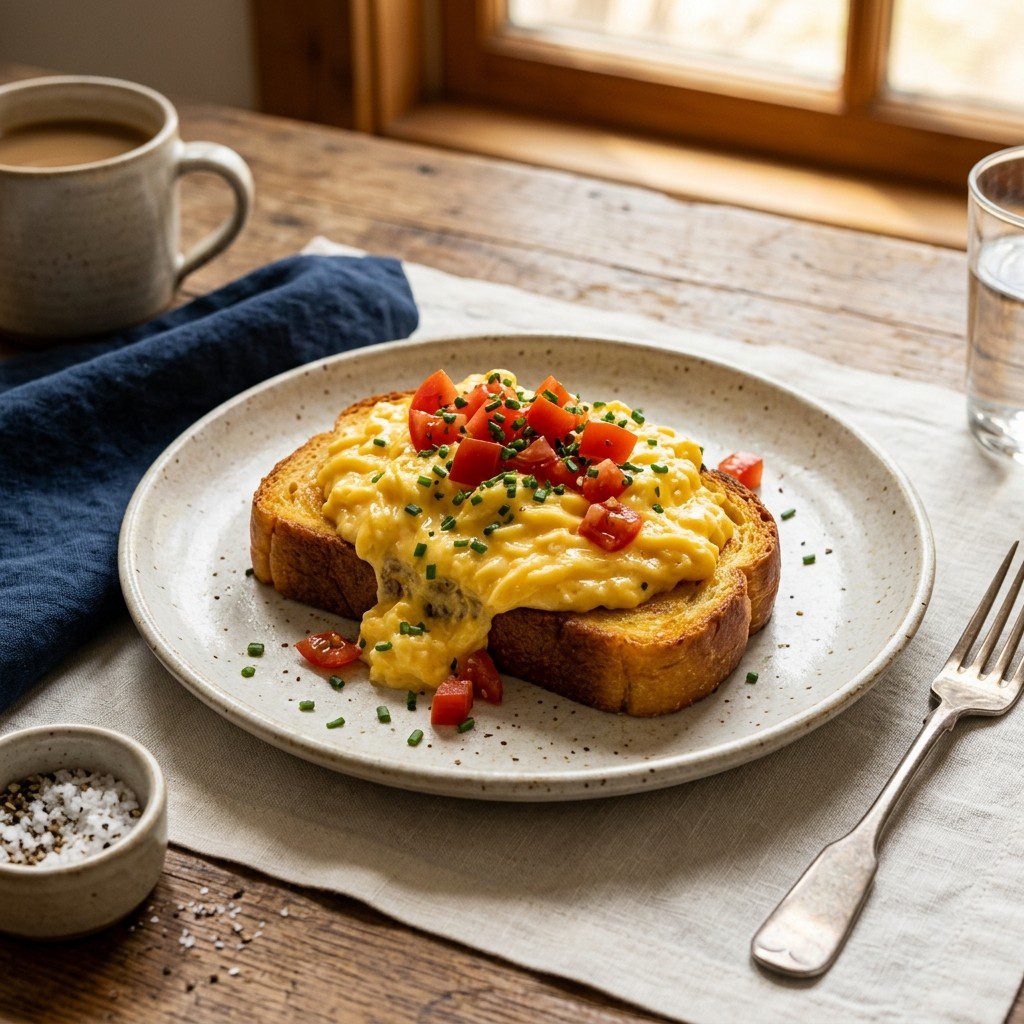
French-Style Soft-Scrambled Eggs with Heavy Cream
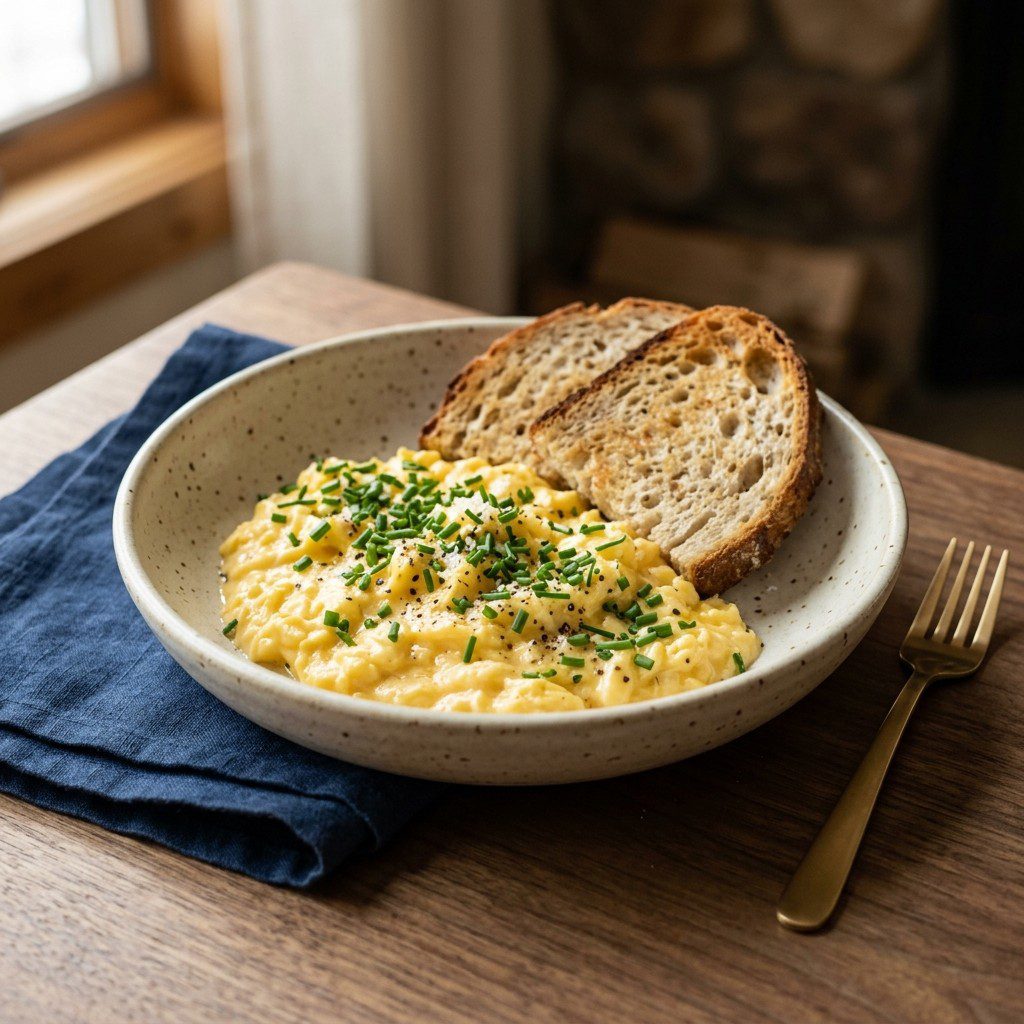
Beat the eggs thoroughly with a whisk or fork until pale, frothy and smooth, then whisk in the heavy cream, salt and pepper. Melt the butter in a small non-stick skillet over medium-low heat until frothy but not browned. Add the eggs and move them constantly with a wooden spoon or spatula over low heat for 3 to 5 minutes, removing the pan from the heat as soon as they reach a soft, set state. Fold in the sour cream, spoon onto toasted brioche, and garnish with diced plum tomato and chives.
The French have long understood that scrambled eggs are less a breakfast than a discipline. Where the American diner scrambles hot and fast into fluffy, dry curds, the French method insists on patience — the lowest heat, a constant hand, and the willingness to coax rather than cook. What it yields is something closer to a savory custard: glossy, loose, impossibly tender, and worth every unhurried minute.
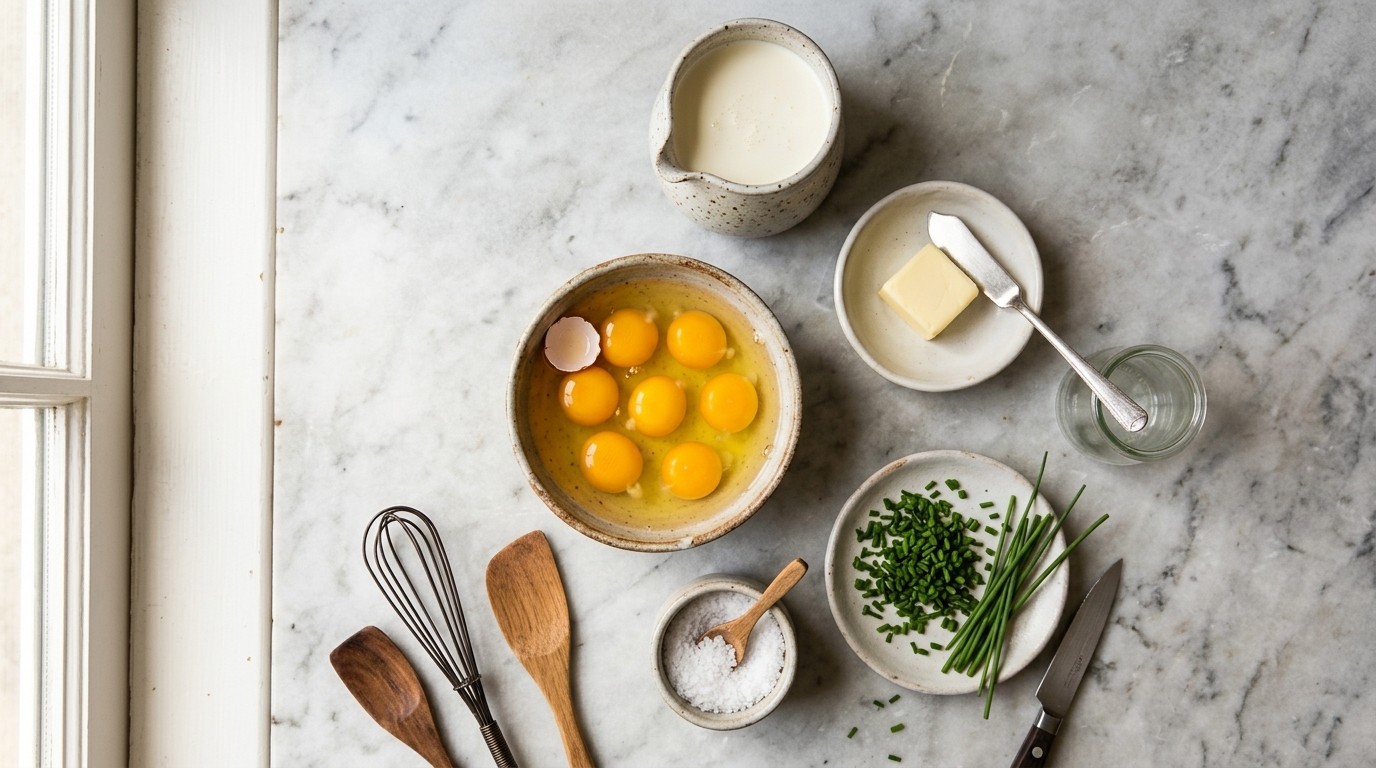
Low and Slow for Silky Curds
Everything depends on restraint at the stove. Beat the eggs with heavy cream until pale and frothy, then pour them into gently foaming butter over medium-low heat and keep them moving with a spatula, constantly, for the full three to five minutes. The low heat and steady motion build small, silky curds suspended in a custardy sauce — the moment you rush it with higher heat, you trade that delicacy for the dry, rubbery texture the technique exists to avoid.
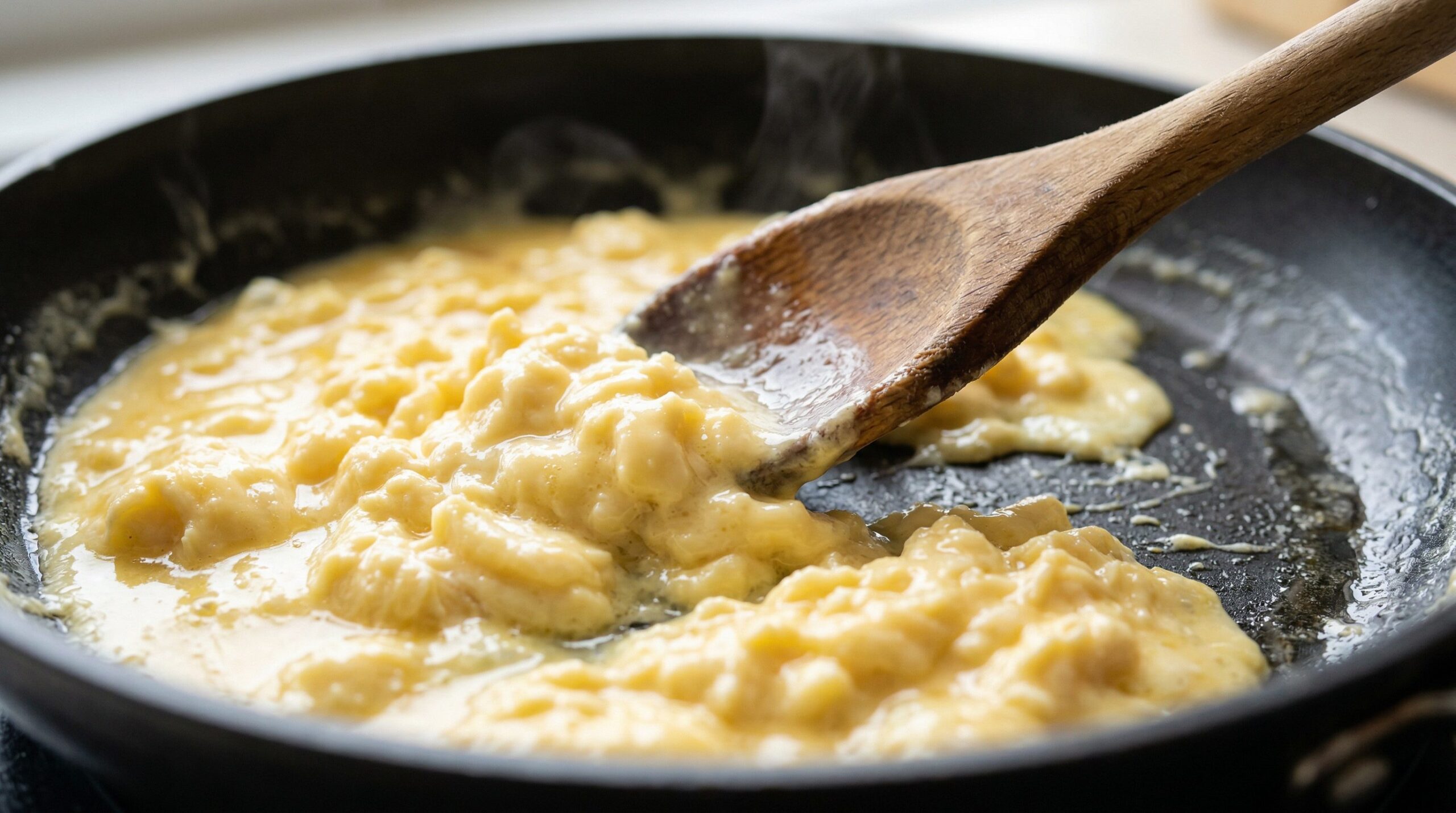
The Sour-Cream Finish
Eggs carry their own heat and keep cooking after they leave the pan, which is how a perfect scramble turns overdone on the plate. The French answer is to pull them off the stove while they're still a touch softer than you want, then fold in a spoonful of cold sour cream. It stops the residual cooking on contact and adds a final layer of tang and richness — a two-second move that guarantees the eggs stay exactly as silky as you intended.
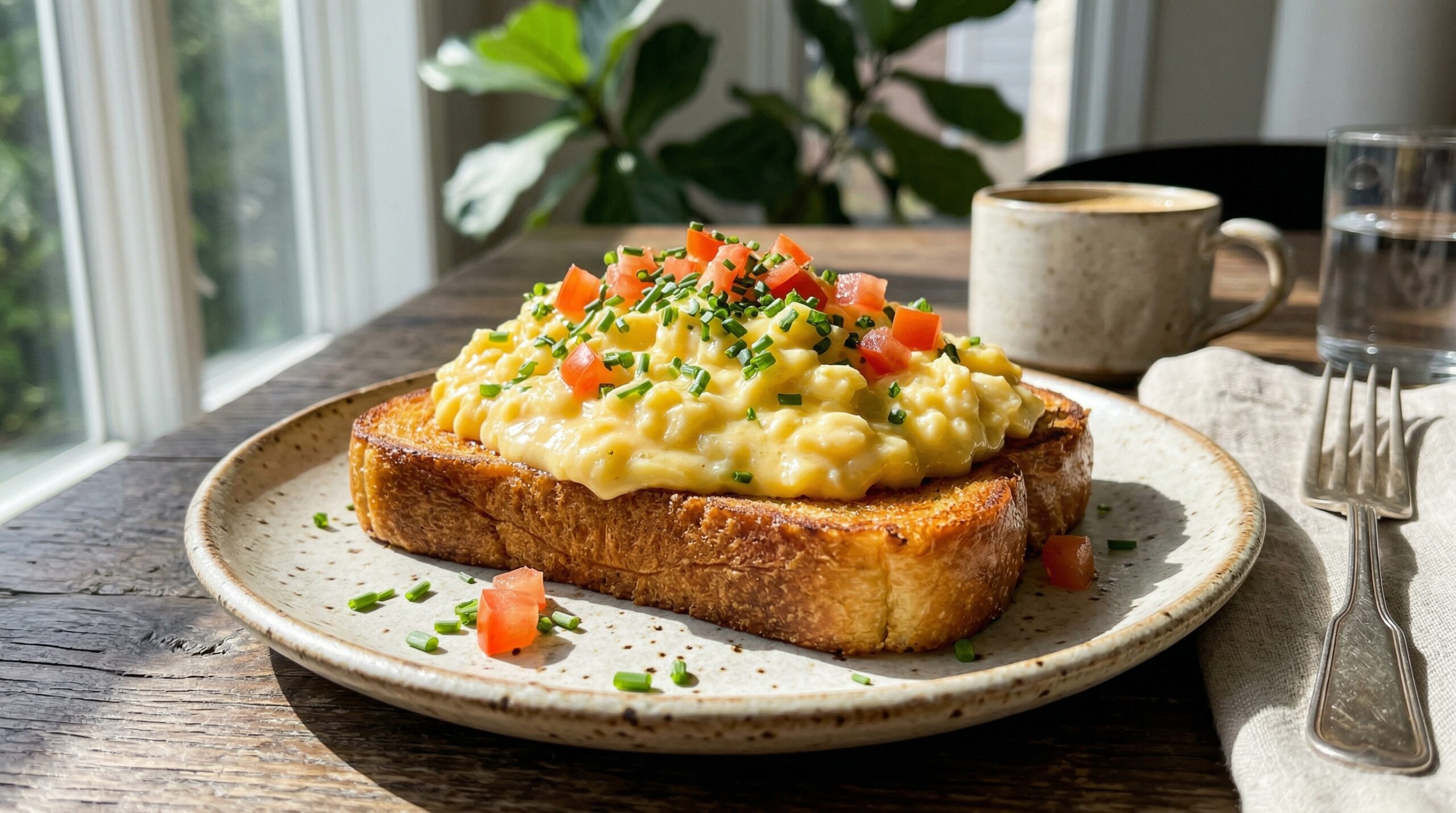
French-Style Soft-Scrambled Eggs with Heavy Cream
Ingredients
Method
- Crack the eggs into a glass vessel and beat thoroughly with a whisk or fork until a pale, frothy, and smooth mixture is achieved.
- Incorporate the heavy cream, salt, and pepper, whisking until the cream is entirely blended with the eggs.
- Melt the butter in a small non-stick skillet over medium-low heat until it becomes frothy but not browned.
- Pour the egg mixture into the skillet. Use a wooden spoon or heat-resistant spatula to move the eggs constantly, creating small, silky curds.
- Maintain a low, gentle heat; this process should take between 3 to 5 minutes to ensure a custardy, "French-style" finish rather than a dry, rubbery texture.
- Just as the eggs reach a soft, set state, remove the pan from the heat.
- Gently fold in the sour cream to stop the residual cooking process and add a final layer of richness and tang.
- Arrange the silky eggs atop the toasted bread slices.
- Garnish immediately with the diced plum tomatoes and fresh chives. For a special variation, consider a topping of caviar or peppered strawberries. Serve warm.
The Heart of the Table
There is a quiet luxury in cooking something this careful for one or two people — no crowd, no occasion, just the small ceremony of standing over a pan and making something beautiful for someone who matters. A plate of French scrambled eggs is a reminder that hospitality scales all the way down, and that attention itself is the most generous ingredient.
The Art of the Host
A small non-stick skillet and a heat-resistant spatula are the whole toolkit — the non-stick surface lets you keep the eggs moving without a single curd catching and overcooking. The real equipment here is patience and low heat; there is no shortcut and no substitute for staying at the pan and stirring until the eggs come together.
Neighborly Grace
- The Preparation: Cook the eggs low and slow, stirring constantly, so they set into tiny custardy curds, then pull them off the heat while still soft and fold in a spoon of sour cream to stop the cooking. Serve them right away, while they're glossy.
- The Pour: A glass of Champagne makes soft scrambled eggs feel luxurious. For a non-alcoholic option, a fresh orange juice or a café au lait keeps the French-morning mood.
- The Vibe: This is quiet luxury on a plate — silky, tender, and unhurried, best spooned onto buttered toast for a slow, gentle start to the day.