
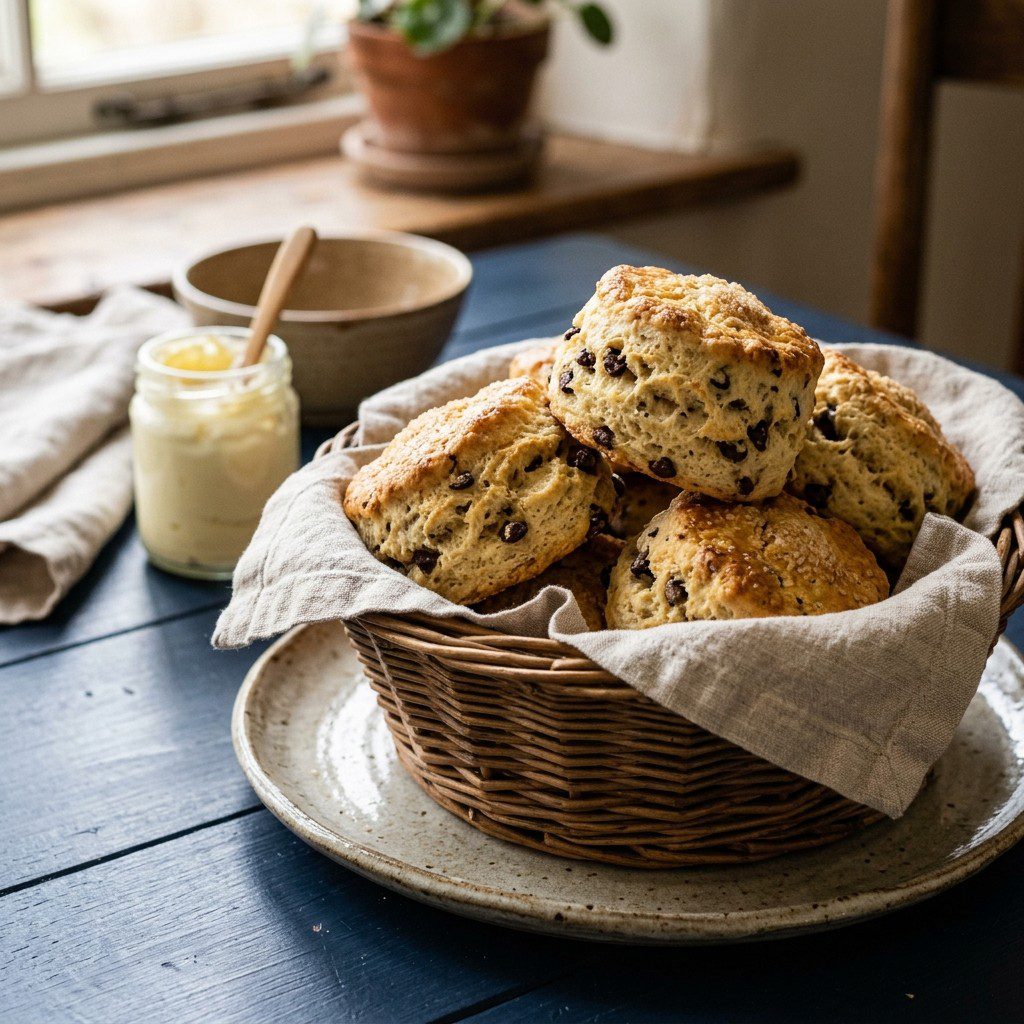
Heavy Cream & Chocolate Chip Scones
Make tender, flaky chocolate chip scones enriched with heavy cream — a bakery-worthy morning treat that comes together fast and turns breakfast into a small indulgence.
Scones have a reputation for being dry and dull, but a scone made right — tender, flaky, and rich — is one of the great pleasures of the morning. These lean on heavy cream for their moisture and richness, studded with chocolate chips for a touch of indulgence, and they come together remarkably fast. They are the kind of scone that makes a plain morning feel special, bakery-worthy without the trip to the bakery.
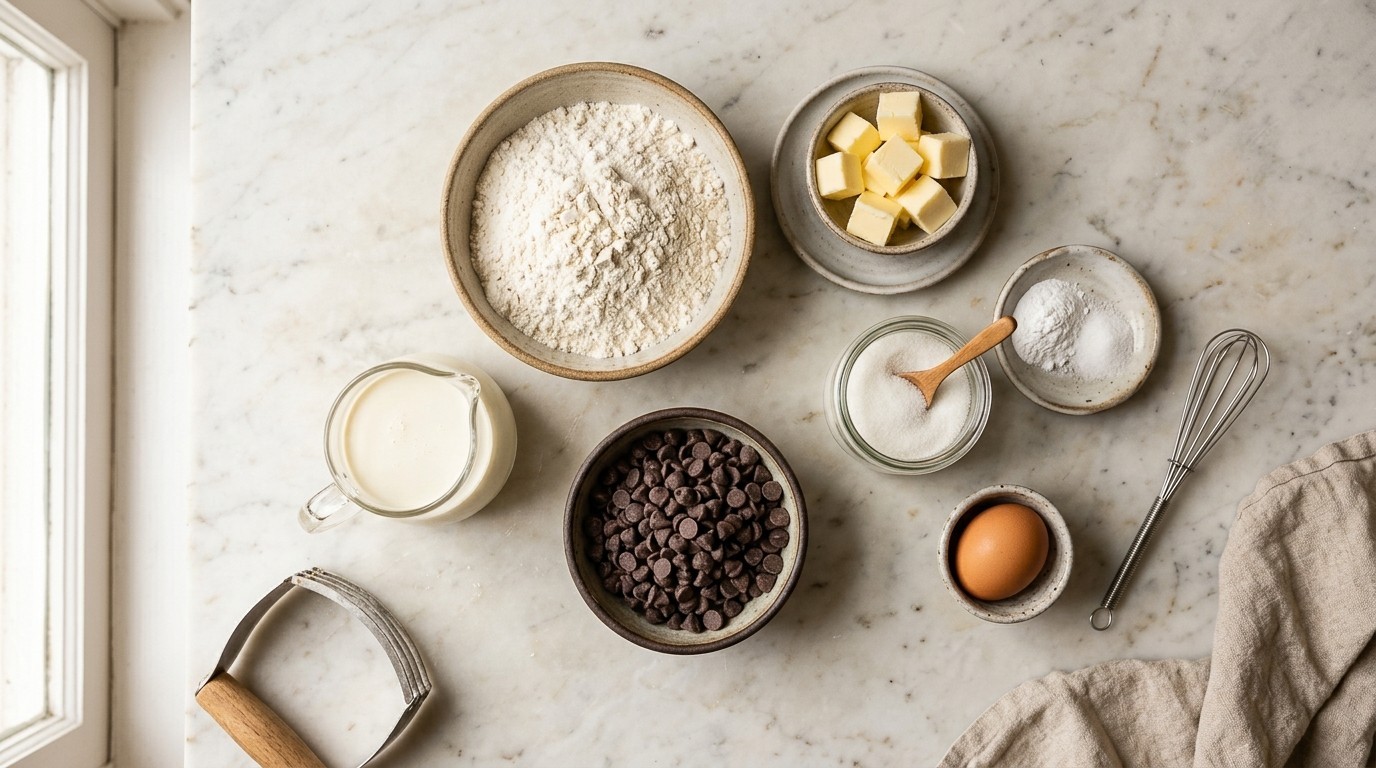
The Tender Cream Dough
Work the cold butter into the dry ingredients and bring the dough together with heavy cream, handling it as little as possible. The cream is the secret to a rich, tender scone, and a gentle hand keeps them flaky rather than tough — stop mixing the moment the dough holds together.
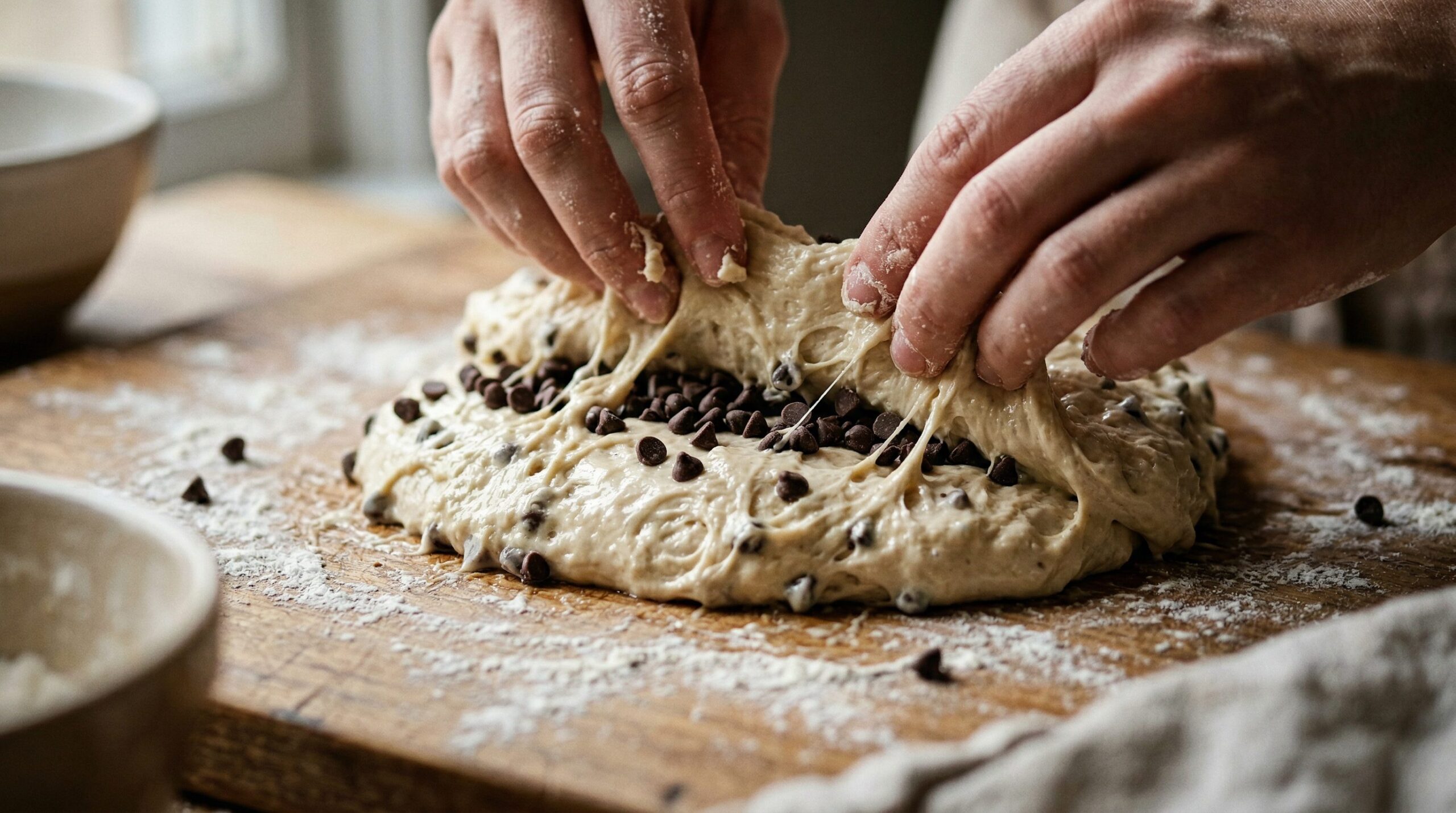
Folding in Chocolate and Baking
Fold the chocolate chips through the dough, shape and cut the scones, and bake them until golden. Keeping the dough cold and the shaping quick ensures they rise tall and bake up flaky, with melting pockets of chocolate throughout — best served warm, when the chocolate is still soft.
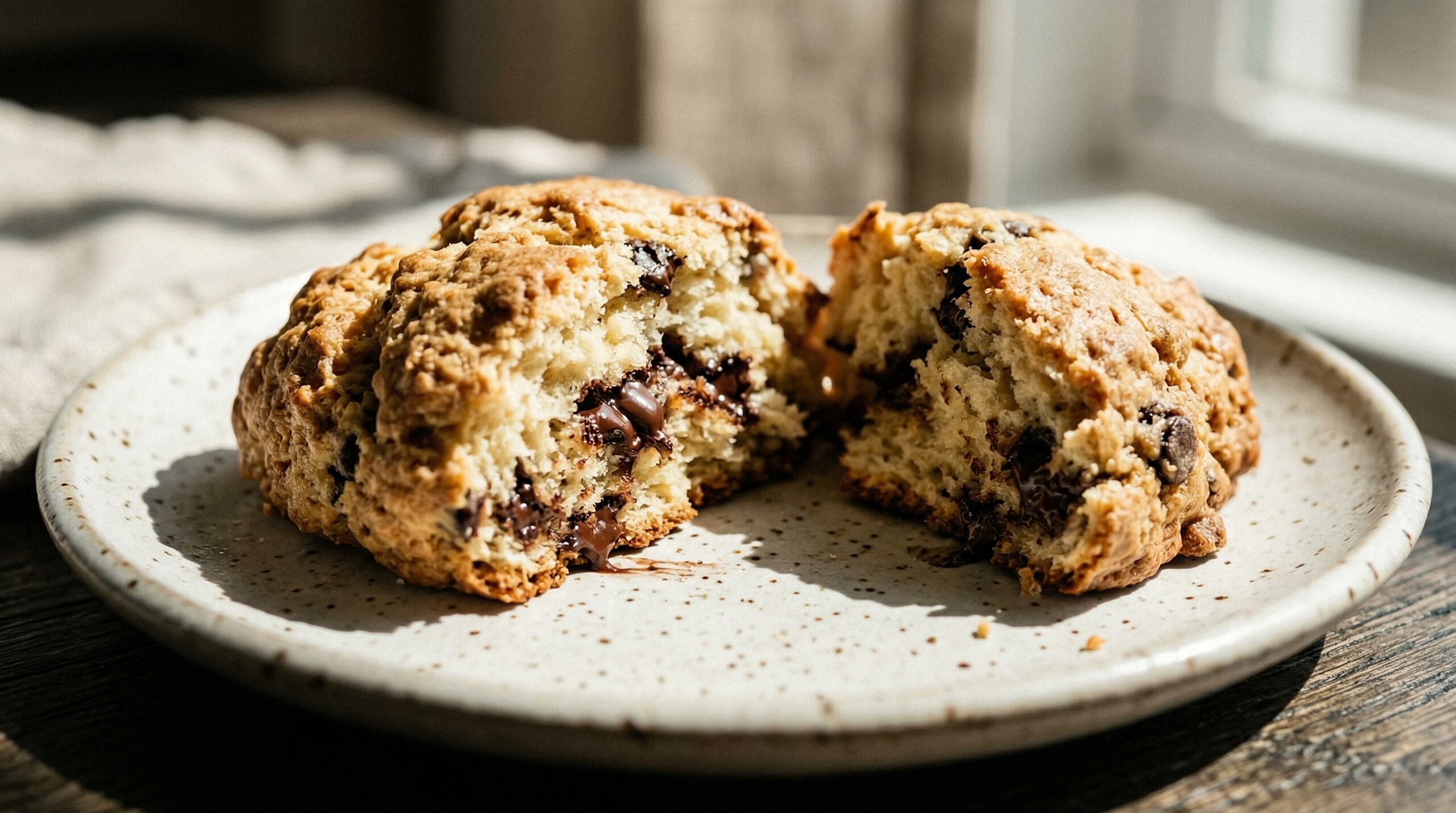
Heavy Cream & Chocolate Chip Scones
Ingredients
Method
- Preheat the oven to 375°F. Line a heavy-duty metal baking sheet with parchment paper.
- In a large ceramic or glass mixing bowl, vigorously whisk together the all-purpose flour, granulated sugar, baking powder, and kosher salt.
- Create a well in the center of the dry ingredients. Pour in the heavy whipping cream and the full-fat sour cream.
- Using a wooden spoon or rubber spatula, gently fold the wet and dry ingredients together strictly until the dough just comes together. It will be an exceptionally sticky, shaggy mess—do not overmix or the gluten will toughen the pastry.
- Generously dust a clean work surface with flour. Turn the sticky dough out onto the board.
- Gently pat the dough out with floured hands into a rough 2-inch thick rectangle.
- Scatter the miniature chocolate chips evenly across the surface of the dough.
- Gently fold the dough in half over the chocolate chips to encase them, pressing down lightly to combine. (Using miniature chips ensures an even distribution without weighing down the delicate crumb structure).
- Gently pat the folded dough out into a uniform 1-inch thick rectangle.
- Using a floured 3-inch round stainless steel biscuit cutter, punch out the scones by pressing straight down without twisting the cutter (twisting seals the edges and prevents a high rise).
- Transfer the cut scones to the prepared parchment-lined baking sheet, leaving 2 inches of space between each. Gather the scraps gently, re-pat, and cut the remaining dough.
- Bake in the preheated 375°F oven for 10 to 12 minutes, or until the edges are just beginning to turn a pale, delicate golden brown.
- Allow the scones to cool on the baking sheet for 2 minutes before transferring them to a wire rack to set the crumb. Serve warm.
The Heart of the Table
A warm scone offered with morning coffee is a quiet, gracious kind of hospitality — it says the morning is worth a small indulgence. There is a homey generosity in baking something fresh for breakfast, the kind of treat that makes a guest feel genuinely welcomed and a slow morning feel like a gift.

The Art of the Host
Keep the dough and butter cold and handle it as little as possible for the flakiest scones, and serve them warm from the oven when the chocolate is still melting. A brush of cream and a sprinkle of sugar on top gives them a golden, bakery-worthy finish.
Neighborly Grace
- The Preparation: You can shape the scones and freeze them unbaked, then bake them straight from frozen for a fresh morning treat. The baked scones are best the day they are made, so a freeze-and-bake approach keeps them at their freshest.
- The Pour: A pot of coffee or a good black tea is the natural morning companion; for a non-alcoholic pairing, a glass of cold milk suits the chocolate chips beautifully.
- The Vibe: Serve them warm on a plate for breakfast, brunch, or an afternoon tea, split and buttered if you like. These are tender, indulgent morning treats — quick to make and made to turn an ordinary breakfast into a small pleasure.