
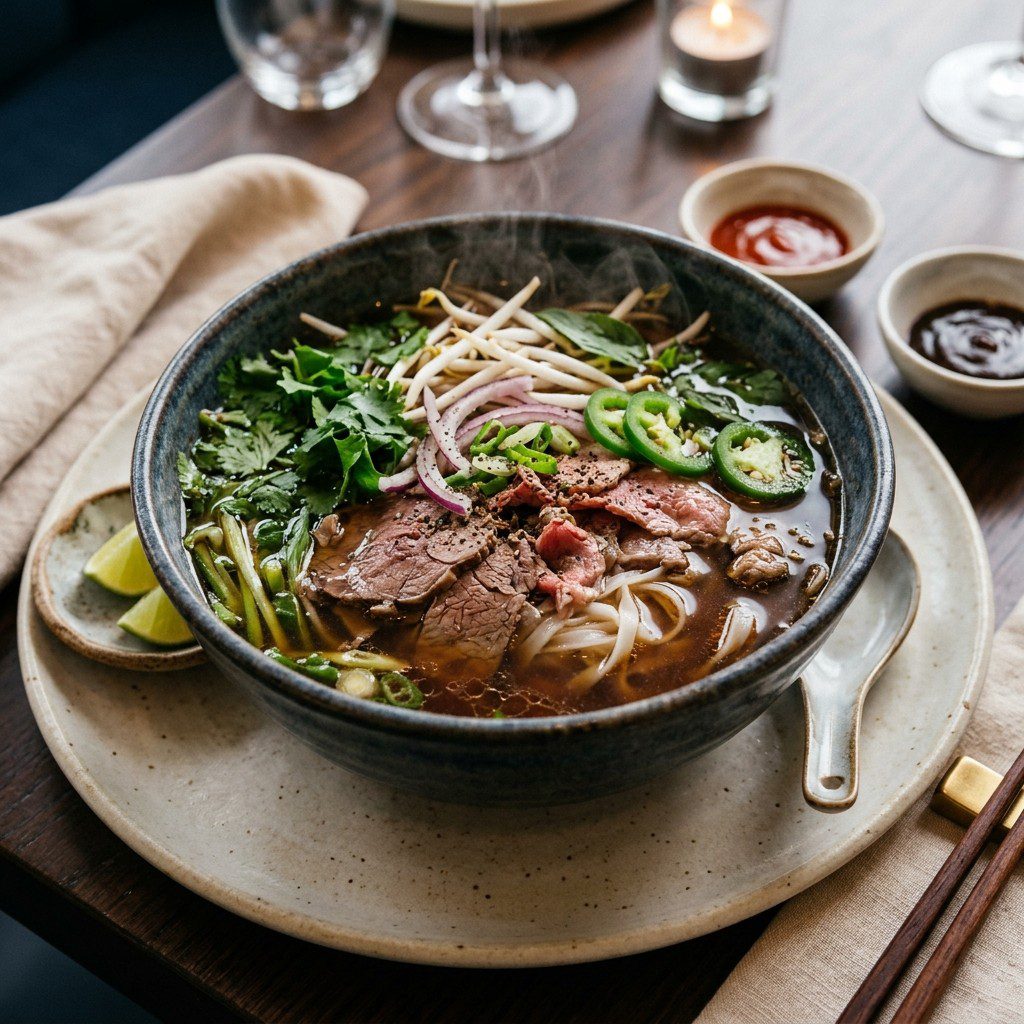
Traditional Vietnamese Beef Pho
Roast beef shanks with onion, garlic, ginger, and turmeric until deeply caramelized, then simmer them for hours with star anise, cinnamon, and clove into a broth so dark and fragrant it defines the dish. Cook the rice noodles right in the broth, pile the shank over them shredded into tender threads, and finish with fresh cilantro, lime, and chili. Pho is patience rewarded with the most restorative bowl in the world.
Pho is Vietnam's soul in a bowl — a deep mahogany beef broth, perfumed with whole spice and roasted aromatics, poured steaming over silky rice noodles and shreds of shank grown tender through the long simmer. The magic is in the broth, and the broth is in the patience: a hot oven for the char, then a couple of unhurried hours of the gentlest simmer. What arrives at the table is fragrant, deeply nourishing, and endlessly customizable with the herbs and lime each person adds themselves.
The Broth Is the Dish
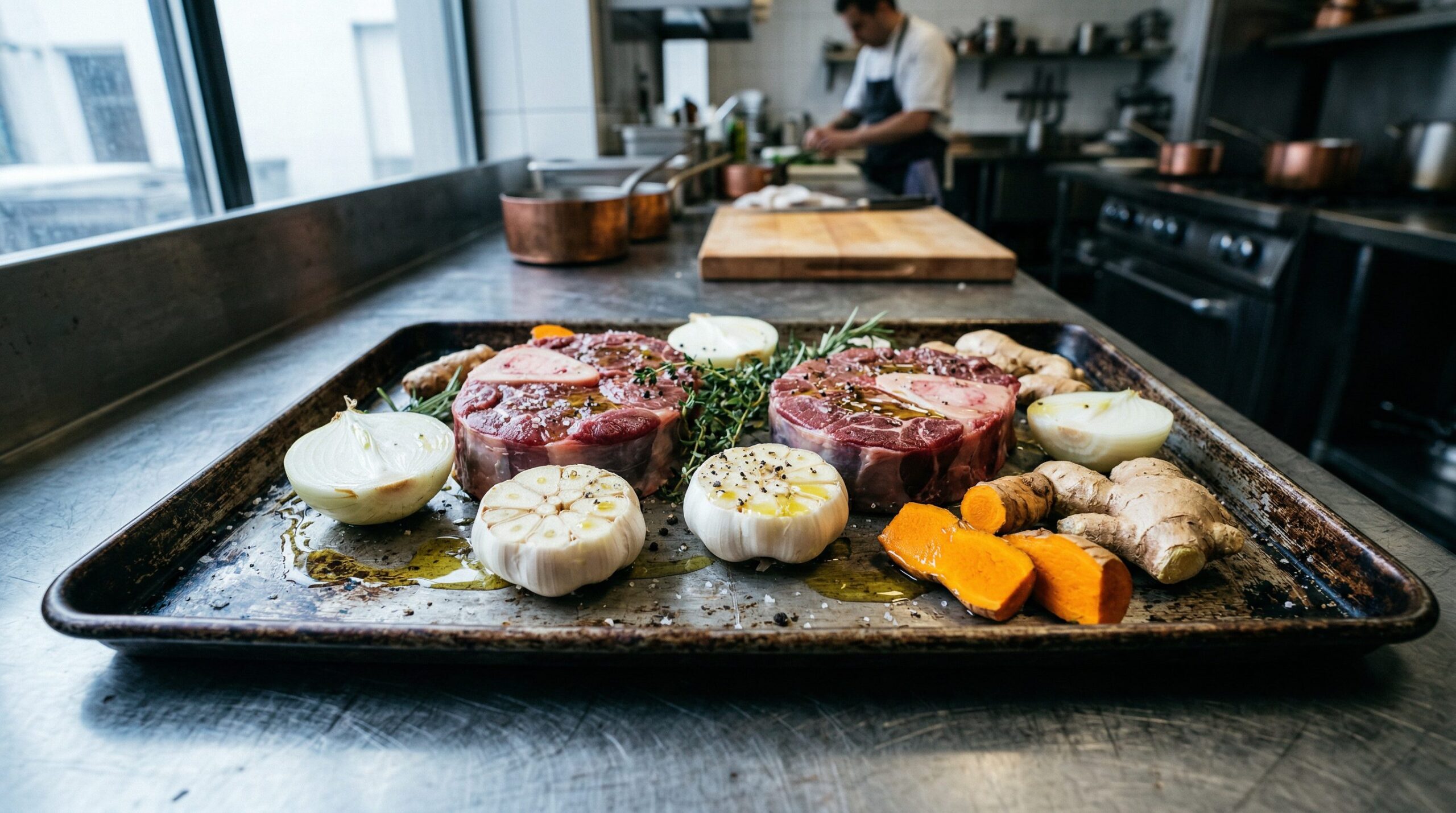
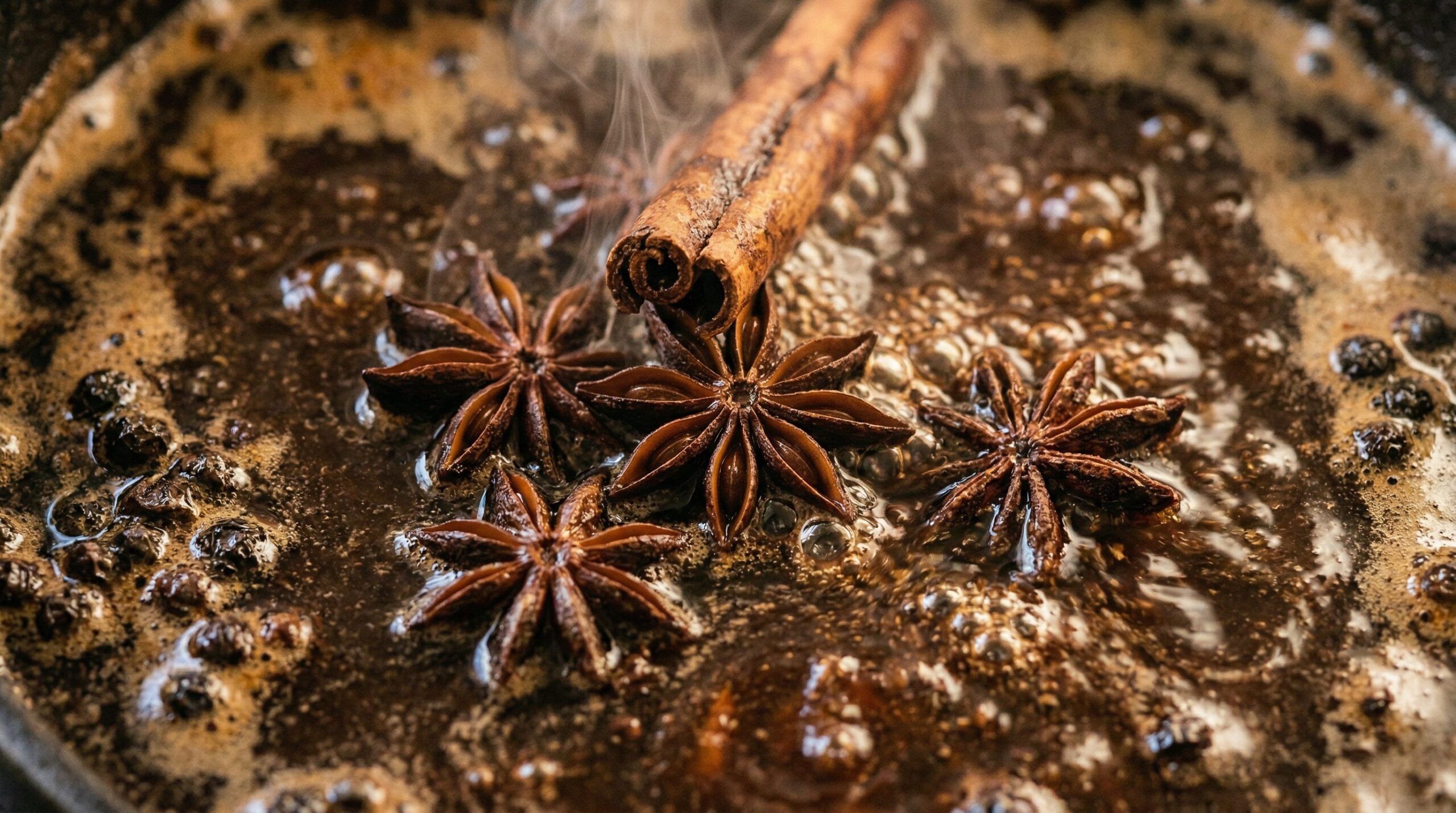
Everything rests on the broth, and it begins with fire. Roast the halved onions and garlic heads, the ginger, and the turmeric alongside the beef shanks at 450F until deeply caramelized — that smoky depth is unmistakable in the finished bowl. Add the whole spices — star anise, cinnamon, peppercorns, and clove — straight to the pot with the roasted shanks and every last drop of their drippings, and let it all simmer low and slow until the liquid reduces by half. Season it with fish sauce going in and kosher salt at the end, tasting until it is balanced, savory, and alive.
Assembling the Bowl
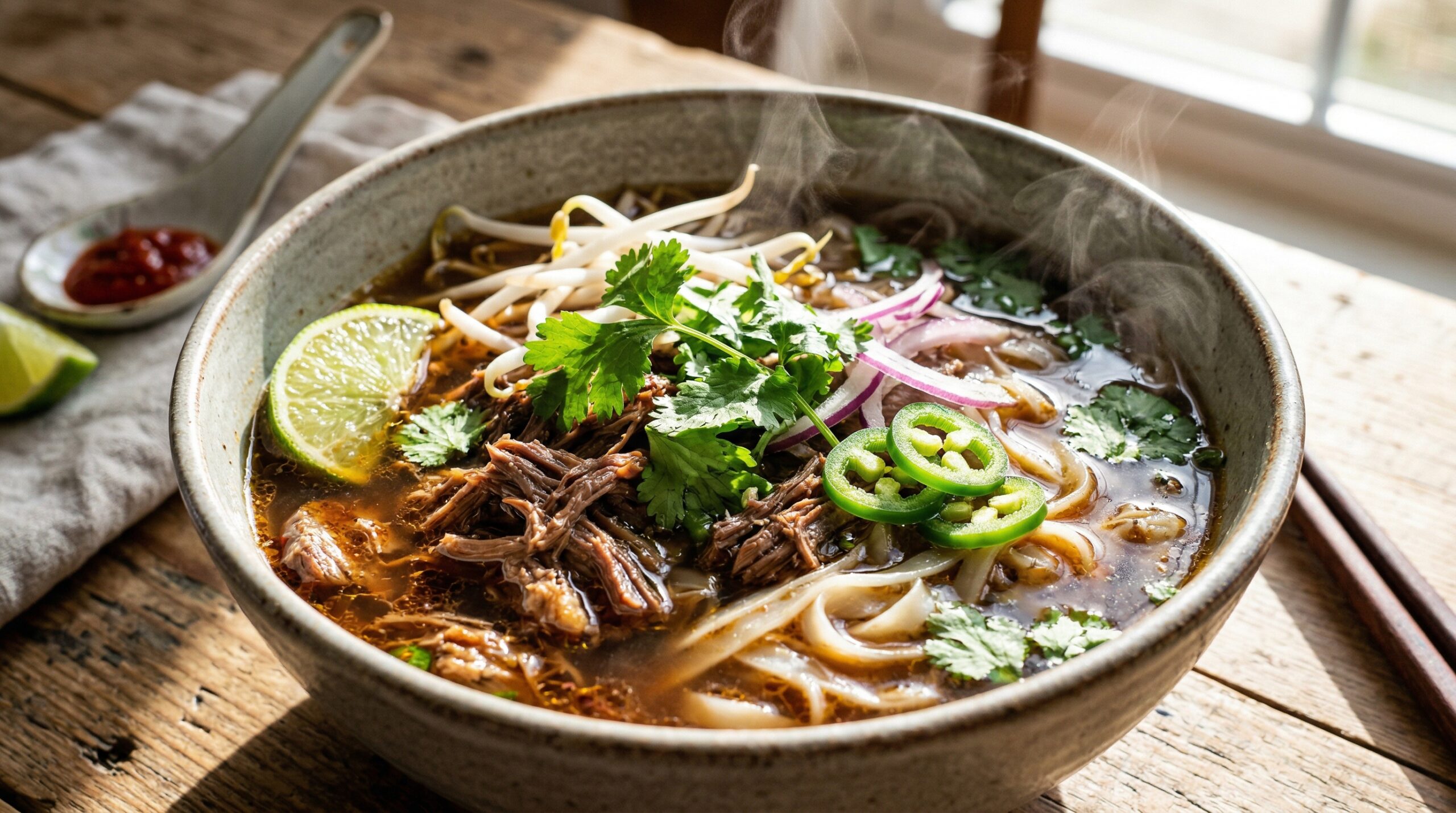
Pho comes together fast once the broth is ready. Cook the rice noodles right in the boiling broth and lift them into warm bowls, then shred the simmered shank into very thin, tender pieces with two forks. Lay the shredded beef over the noodles and ladle the boiling broth generously on top; it comes to the table steaming, tender, and ready to eat. Send it out with a platter of cilantro, bean sprouts, sliced jalapeño, and red onion, with lime wedges, hoisin, and toasted sesame oil alongside for each bowl.
Traditional Vietnamese Beef Pho
Ingredients
Method
- Preheat the oven to 450°F.
- Arrange the beef shanks, halved onions, garlic heads, ginger, and turmeric pieces onto a large, heavy baking sheet. (Leave the skins on the vegetables to deepen the broth's color).
- Drizzle the proteins and aromatics evenly with the olive oil.
- Roast in the hot oven until the beef and vegetables achieve a deep, caramelized char, about 30 minutes.
- Transfer the roasted beef, vegetables, and all rendered pan drippings into a large, heavy-bottomed soup pot.
- Pour in the quart of beef broth and the 3 quarts of water.
- Submerge the cinnamon stick, star anise pods, black peppercorns, and whole cloves directly into the liquid.
- Stir in the fish sauce to establish the umami base.
- Bring the liquid to a rolling boil over high heat, then immediately reduce the temperature to low.
- Simmer the broth gently for 1 ½ to 2 hours, allowing the liquid to reduce by half and absorb the complex aromatics. (If the broth reduces too rapidly, add a splash of water and lower the heat further).
- Set a large colander over a clean holding bowl and carefully pour the contents of the pot through it to strain the broth.
- Return the clarified, dark mahogany broth to the soup pot and season with kosher salt to taste.
- Retrieve the beef shanks from the strainer; discard the bones, spent vegetables, and spices.
- Using two forks, shred the reserved beef into very thin, tender pieces and set aside.
- Bring the clarified broth back to a boil over high heat.
- Cook the flat rice noodles directly in the boiling broth according to the package directions, then carefully remove the noodles with a spider or slotted spoon and divide them among shallow serving bowls.
- Reduce the broth heat to a low simmer to keep warm.
- Place a portion of the shredded beef over the noodles in each bowl.
- Ladle the steaming broth generously over the beef and noodles.
- Serve immediately, allowing guests to garnish their bowls heavily with bean sprouts, cilantro, jalapeño slices, red onion, lime juice, hoisin sauce, and a drizzle of dark sesame oil.
The Heart of the Table
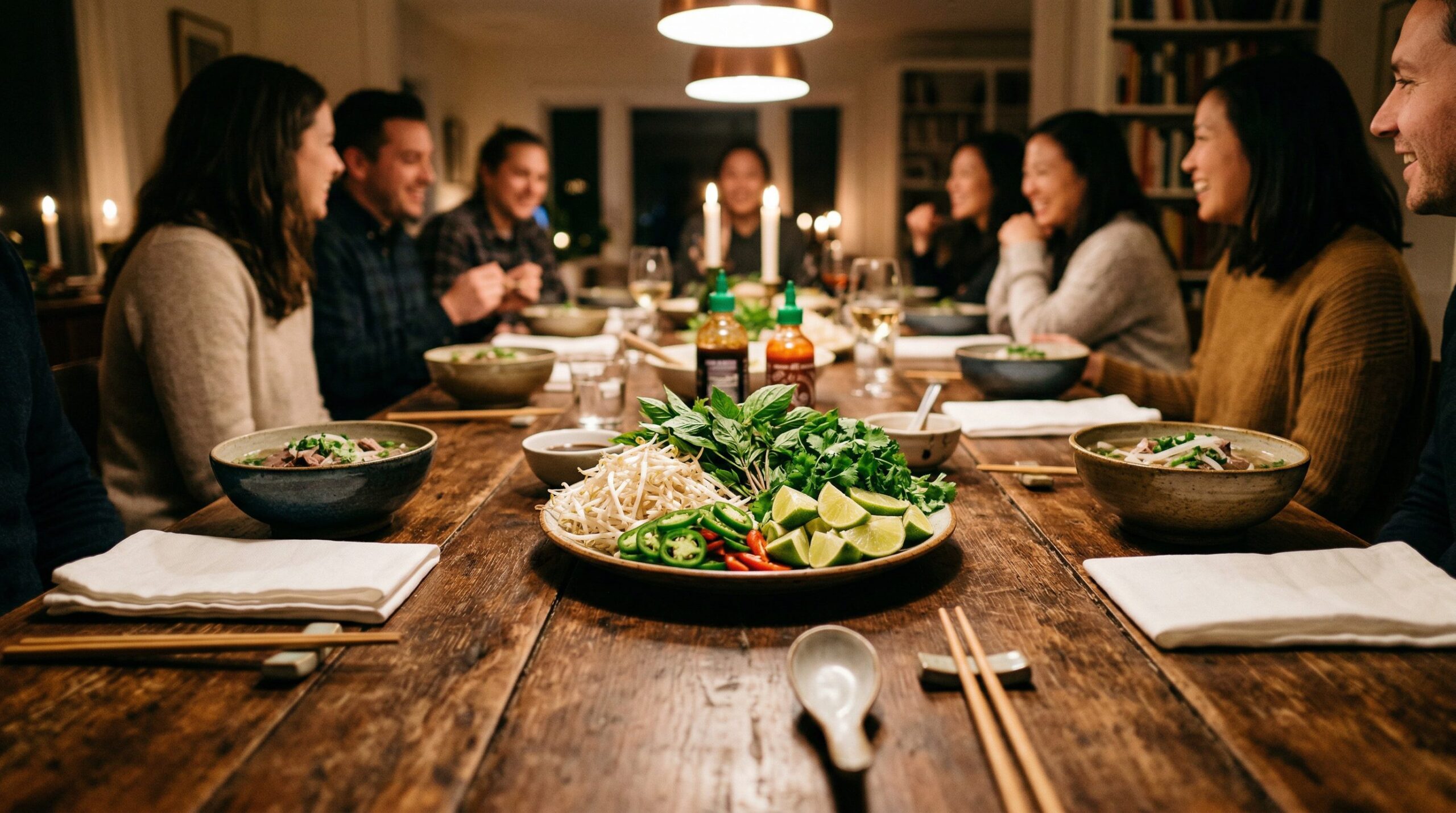
To roast and simmer a broth for the better part of an afternoon and set it before someone is one of the most nourishing gifts a cook can give — a bowl that warms from the inside and asks the eater to slow down. There is real hospitality in the ritual of pho, in the platter of herbs and sprouts passed around the table and the invitation for everyone to make the bowl their own.
The Art of the Host
A heavy baking sheet for the roast and a large, heavy-bottomed pot for the simmer are what this broth requires — bring it to a rolling boil, then drop it straight to low. Char the aromatics well; it is the single biggest flavor decision in the pot. Shred the shank straight from the strainer for the finest threads, warm the bowls before serving so the broth stays piping hot, and always taste and adjust the salt at the end until it sings.
Neighborly Grace
- The Preparation: The broth is happy to be made ahead — roast, simmer, and strain it a day early, then shred the beef and keep it with the broth; it only deepens. With the broth waiting, assembling bowls is a quick job once it is back at a boil, so pho is far more relaxed for a gathering than its long simmer suggests.
- The Pour: A crisp lager or a floral, off-dry Riesling stands up to the aromatic broth and chili. For a non-alcoholic option, a bright limeade alongside, or a Vietnamese iced coffee to finish, echoes the meal's fresh-and-deep balance.
- The Vibe: This is generous, communal comfort — set out the steaming bowls with a great platter of cilantro, sprouts, lime, and chili in the middle, and let everyone build and slurp at their own pace. It is a bowl made for a relaxed, convivial table on a day that calls for warmth.