
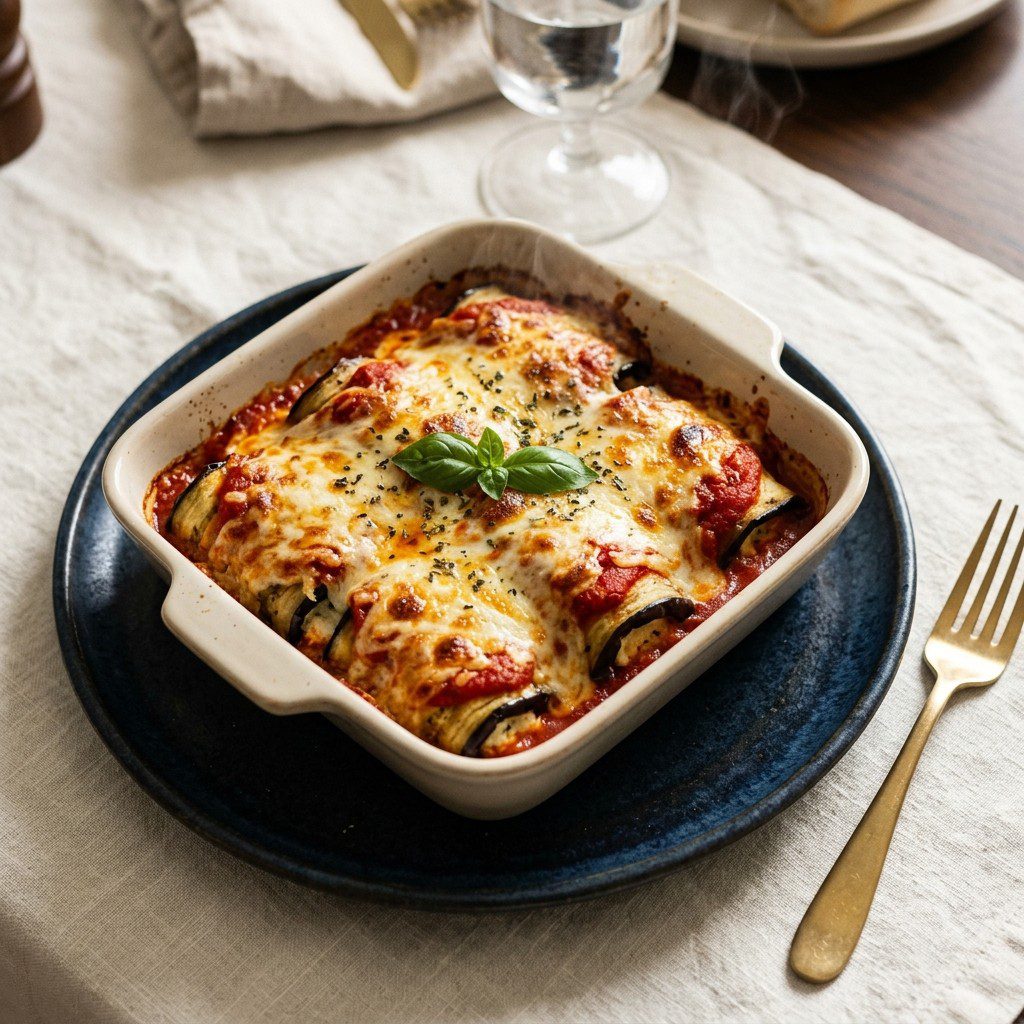
Eggplant Rollatini
Roast the eggplant into pliable ribbons instead of frying them, roll each around a spinach-ricotta filling, and bake under marinara and mozzarella. Roasting keeps the dish lighter and more elegant than a fried eggplant parm, and the individual rolls make it a graceful plated portion rather than a heavy scoop. Comfort food with a dinner-party posture.
Eggplant parmigiana is beloved but heavy — breaded, fried, stacked, and rich to the point of a nap. Rollatini is its refined cousin: the same Italian-American soul, made lighter and lovelier by roasting the eggplant rather than frying it and rolling each tender slice around a bright spinach-and-ricotta filling. What arrives at the table is elegant, individually portioned, and every bit as comforting without the weight.
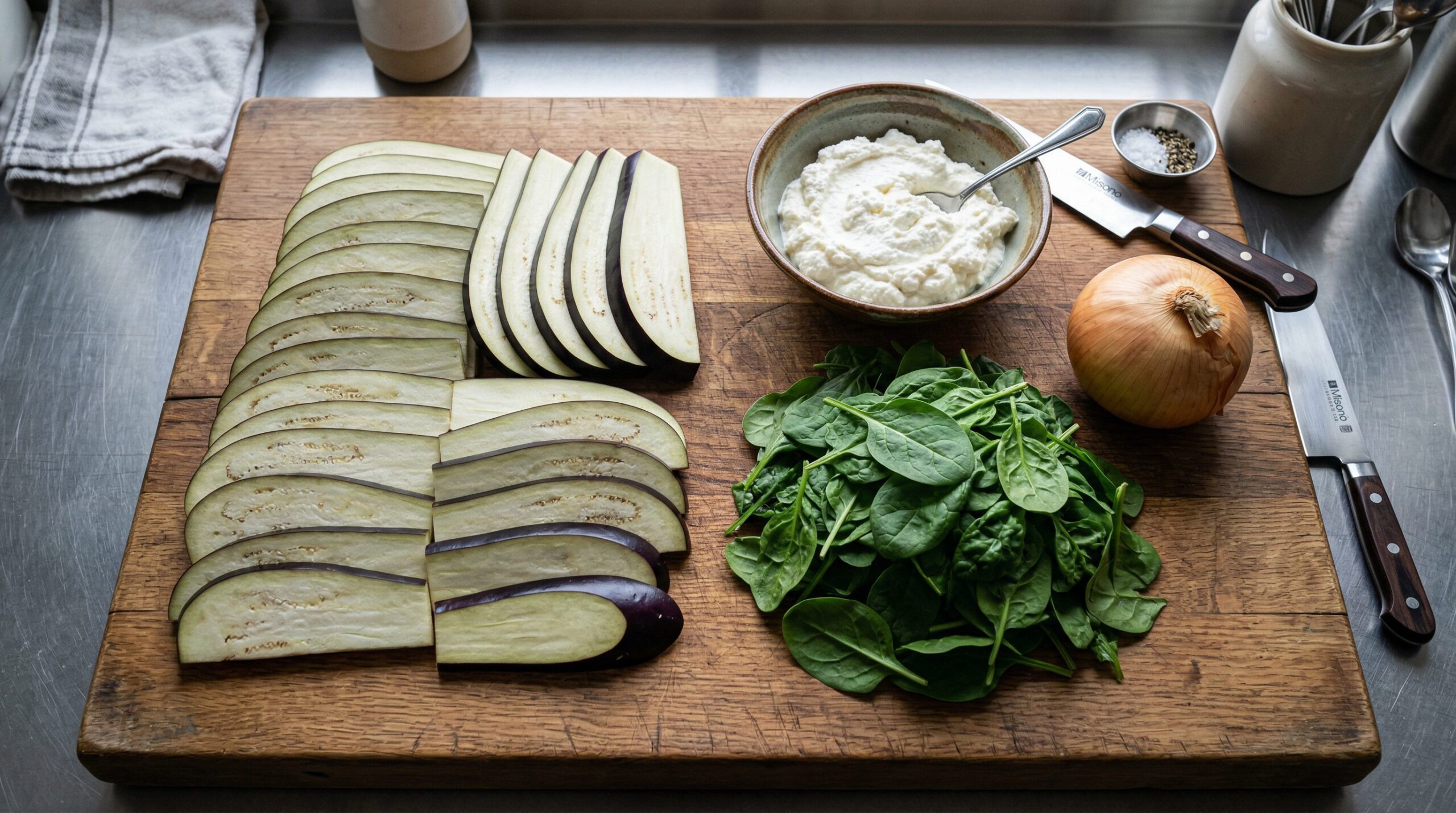
Roast, Don't Fry, for Pliable Slices
Cut the eggplant into long, quarter-inch lengthwise slices, brush them with oil, and roast until tender and pliable — the goal is flexible ribbons that roll without cracking, not crisp planks. Roasting does two things frying can't: it keeps the dish from soaking up oil, and it makes the slices supple enough to wrap snugly around the filling. Let them cool to room temperature so they're easy to handle before you roll.
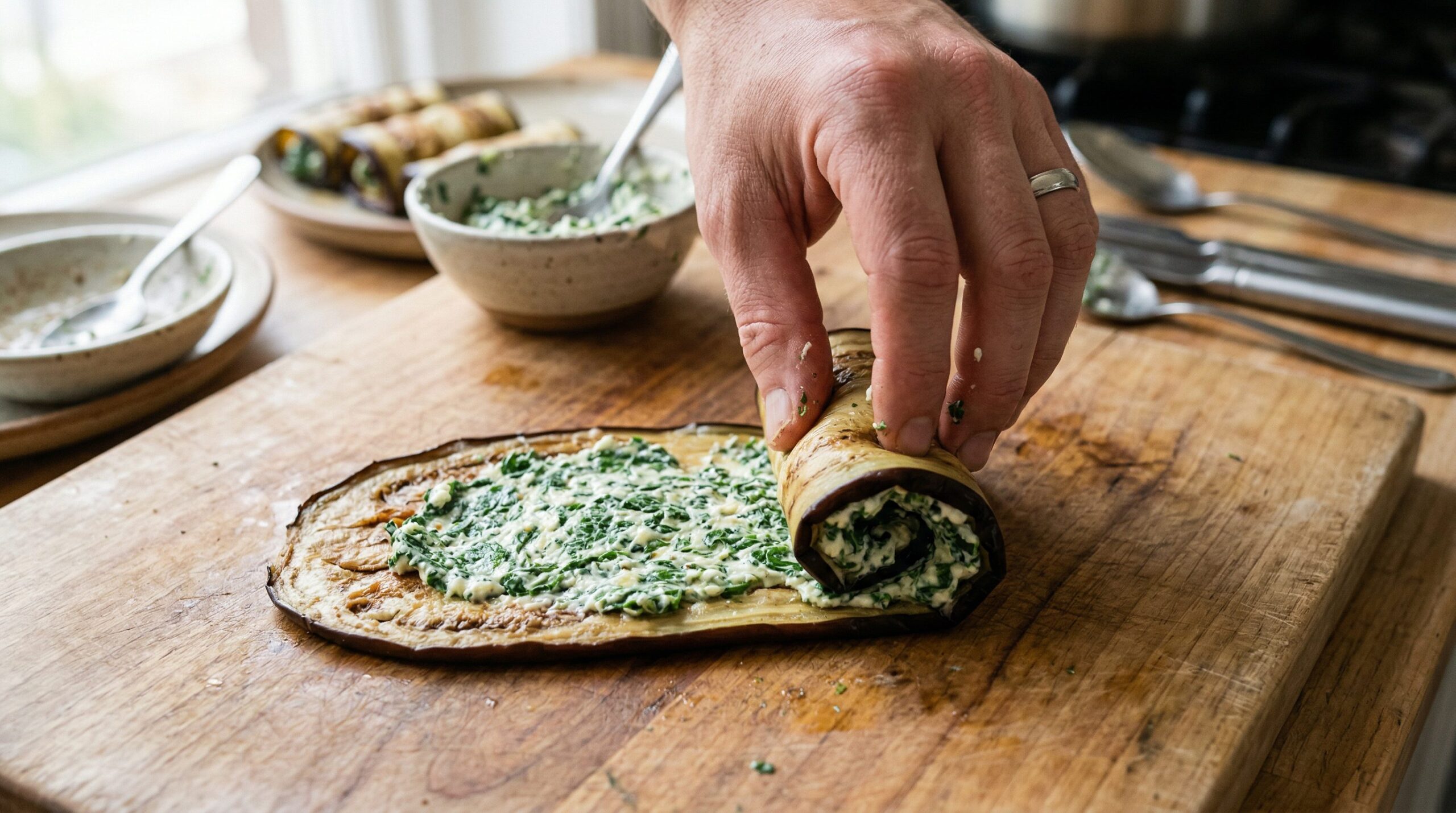
The Spinach-Ricotta Roll
The filling needs one piece of discipline: after wilting the spinach with onion, press it firmly in a colander to wring out every drop of liquid before chopping it fine and folding it into the ricotta and Parmesan. Wet spinach means a watery filling and a soggy bake. A generous spoonful on each slice, rolled into a neat cylinder and set seam-side down over marinara, then blanketed with more sauce and mozzarella — and a twenty-minute bake brings it all bubbling and golden.
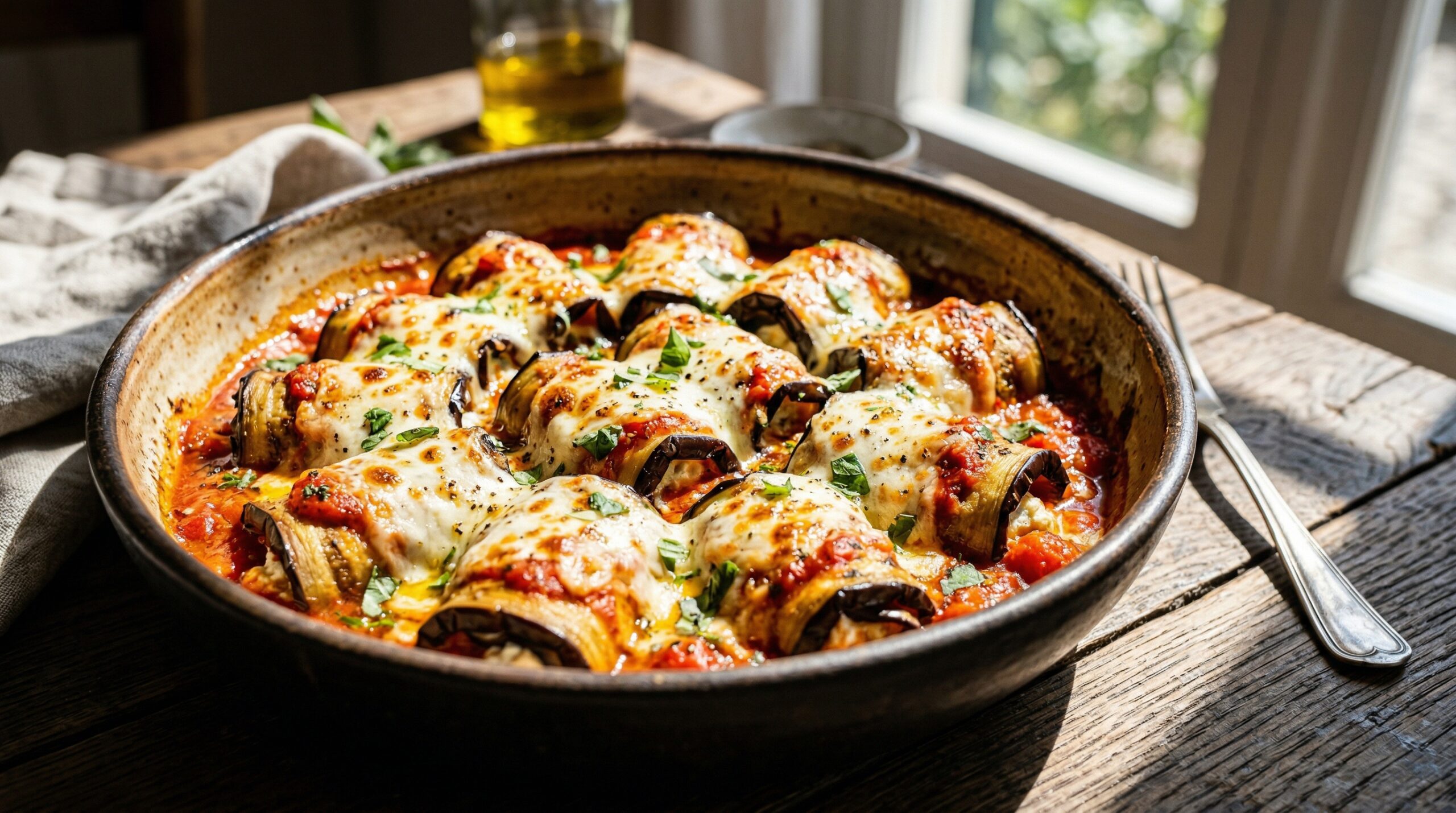
Eggplant Rollatini
Ingredients
Method
- Preheat the oven to 375°F.
- Arrange the longitudinal eggplant slices on a large sheet pan. Drizzle with olive oil and season with salt and pepper on both sides.
- Bake until the slices are tender and pliable, approximately 10 to 15 minutes. Remove from the oven and allow to reach room temperature.
- In a skillet over medium heat, sauté the chopped onion in olive oil until soft.
- Add the spinach leaves in batches, cooking until fully wilted.
- Transfer the spinach and onion mixture to a colander and press firmly to extract all excess liquid.
- Transfer to a cutting board and execute a fine chop.
- In a medium vessel, combine the chopped spinach-onion mixture with the ricotta and Parmesan cheeses. Season with salt and pepper, mixing until a stable, smooth filling is formed.
- Spread a thin layer of marinara sauce across the bottom of a ceramic baking dish.
- Apply a generous volume of the ricotta filling to each pliable eggplant slice.
- Roll each slice into a uniform cylinder and place seam-side down into the baking dish.
- Spoon the remaining marinara sauce over the rollatini and top with shredded mozzarella and additional Parmesan if desired.
- Bake for 20 minutes until the cheese achieves a molten state and the sauce is bubbling. Serve warm.
The Heart of the Table
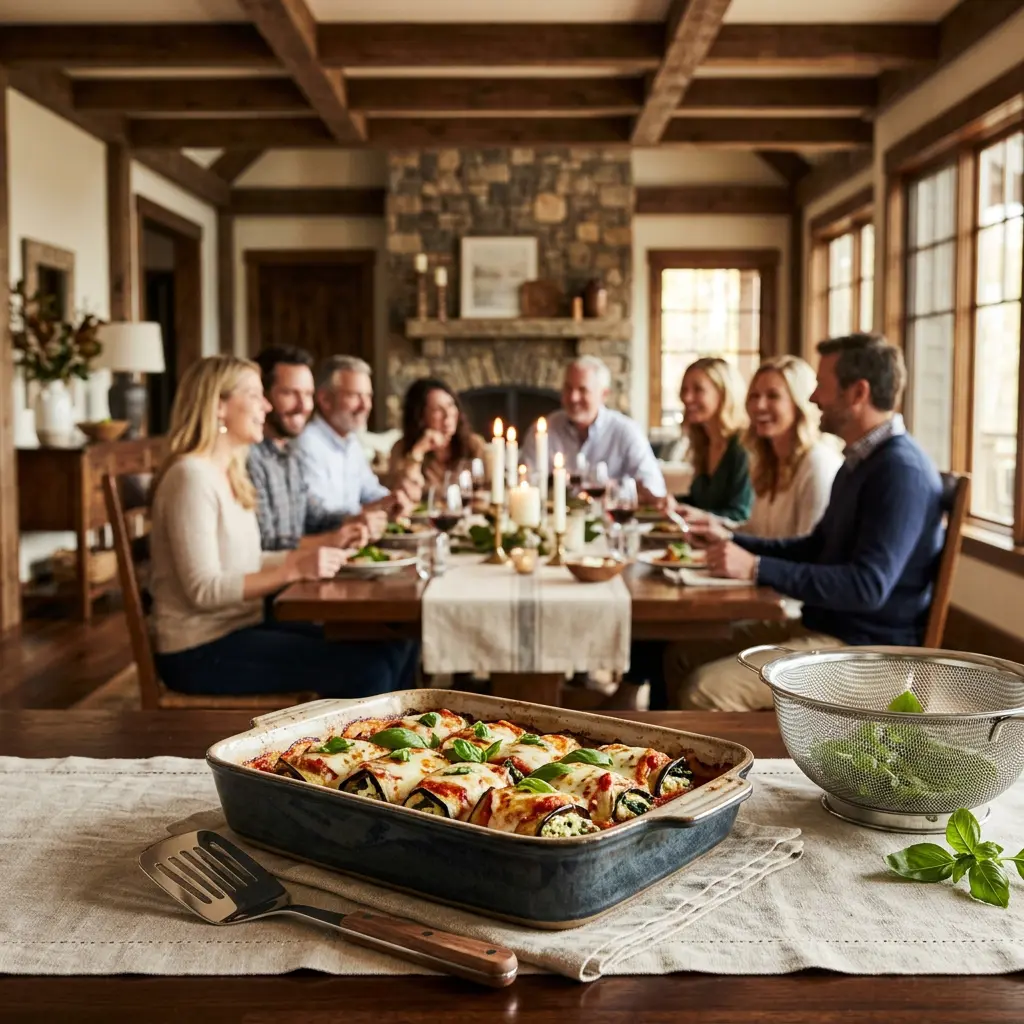
There is a special warmth in a dish plated as individual portions — each guest handed their own neat rolls, sauce pooled just so. Rollatini carries the generosity of Italian home cooking with the grace of a restaurant plate, the kind of dish that makes an ordinary dinner feel like you went to some trouble, because you did, and it was worth it.
The Art of the Host
A large sheet pan roasts the eggplant slices in a single layer, a skillet wilts the spinach, and a colander is the unsung hero — pressing the greens truly dry is what keeps the filling firm. A ceramic baking dish takes the assembled rolls to the oven and the table. Slice the eggplant lengthwise and evenly so every ribbon rolls the same way.
Neighborly Grace
- The Preparation: Roast the eggplant into pliable ribbons instead of frying so the dish stays light, roll each around the spinach-ricotta filling, and bake under marinara and mozzarella. Assemble the rolls ahead and bake just before serving.
- The Pour: A medium Italian red like Chianti flatters the marinara and ricotta. For a non-alcoholic option, a sparkling red grape or a San Pellegrino with lemon keeps it Italian.
- The Vibe: This is elegant red-sauce comfort — the individual rolls make plating effortless, so serve them bubbling and let everyone take their own tidy bundle.