
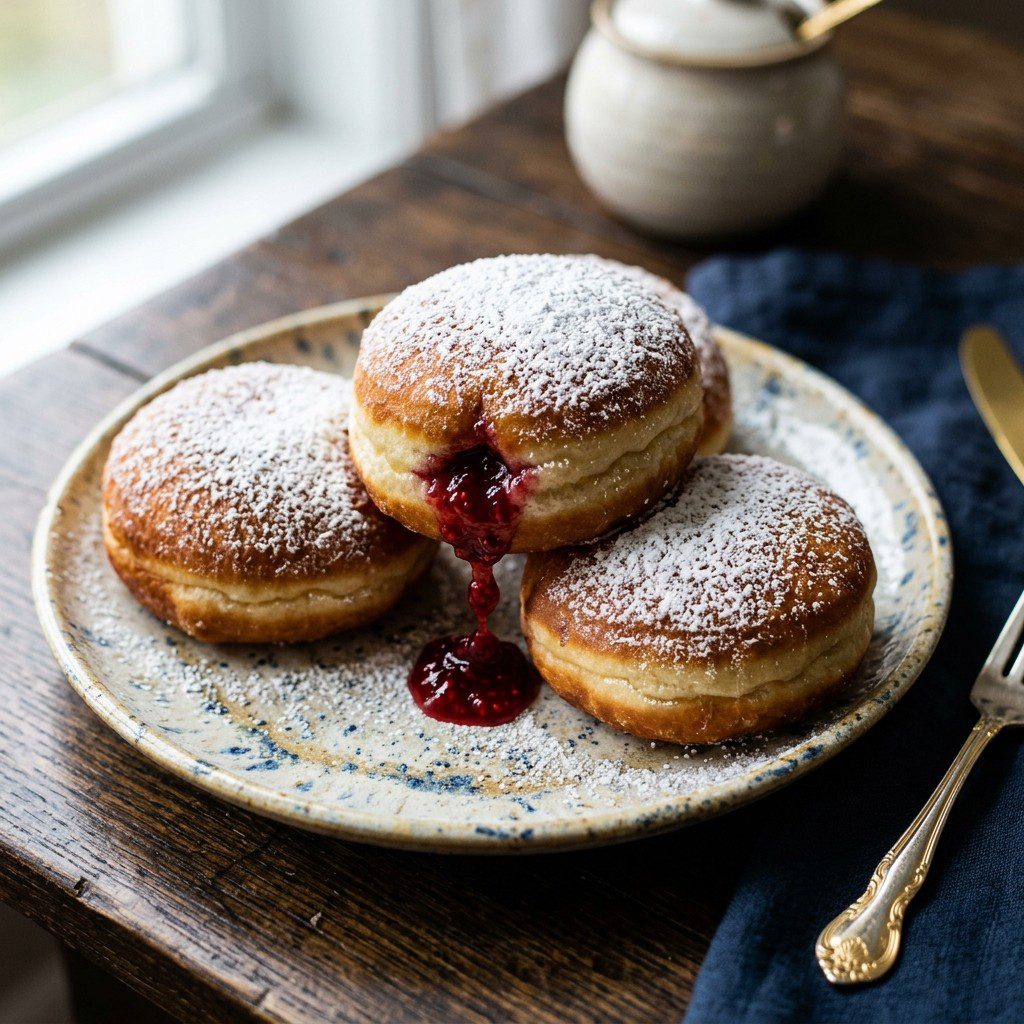
Raspberry Jelly Donuts
Fry pillowy yeasted donuts and fill them with bright raspberry jelly — the classic, sugar-dusted jelly donut made from scratch, worth every minute of the rise.
A homemade jelly donut is a revelation — pillowy, tender, and warm, filled with bright raspberry jelly and rolled in sugar, a world away from anything a shop can offer. These take the patience of a proper yeasted dough and the small adventure of frying, but the reward is a donut so good it justifies every minute. This is heritage baking, the kind that carries the warmth of old kitchens and turns a morning into an occasion.
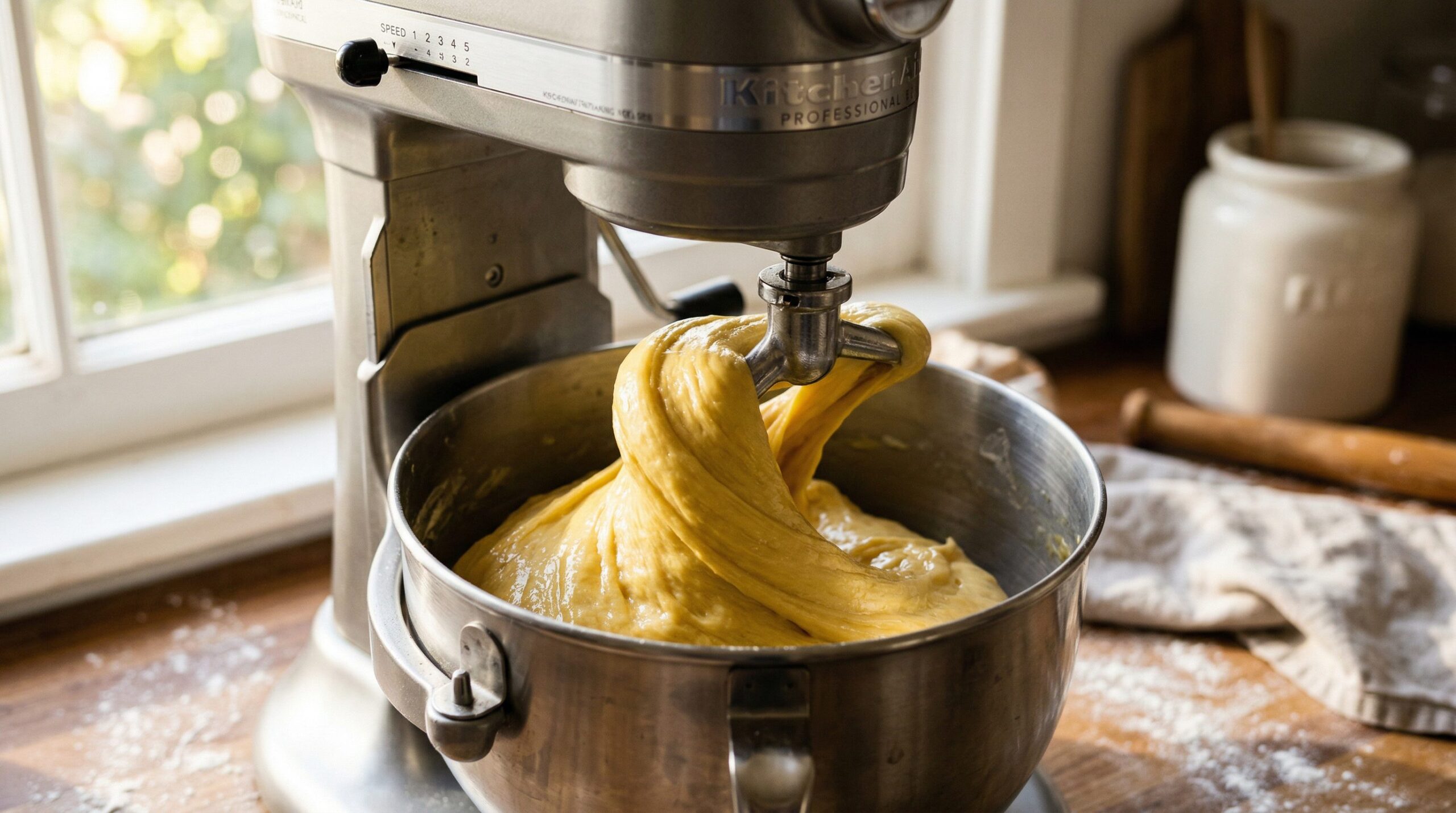
The Yeasted Dough
Build an enriched, yeasted dough with eggs and butter, and give it a full, patient rise until it is soft and puffed. This dough is the foundation of a great jelly donut — a proper proof is what makes them pillowy and light, so give it the time and warmth it needs to double.
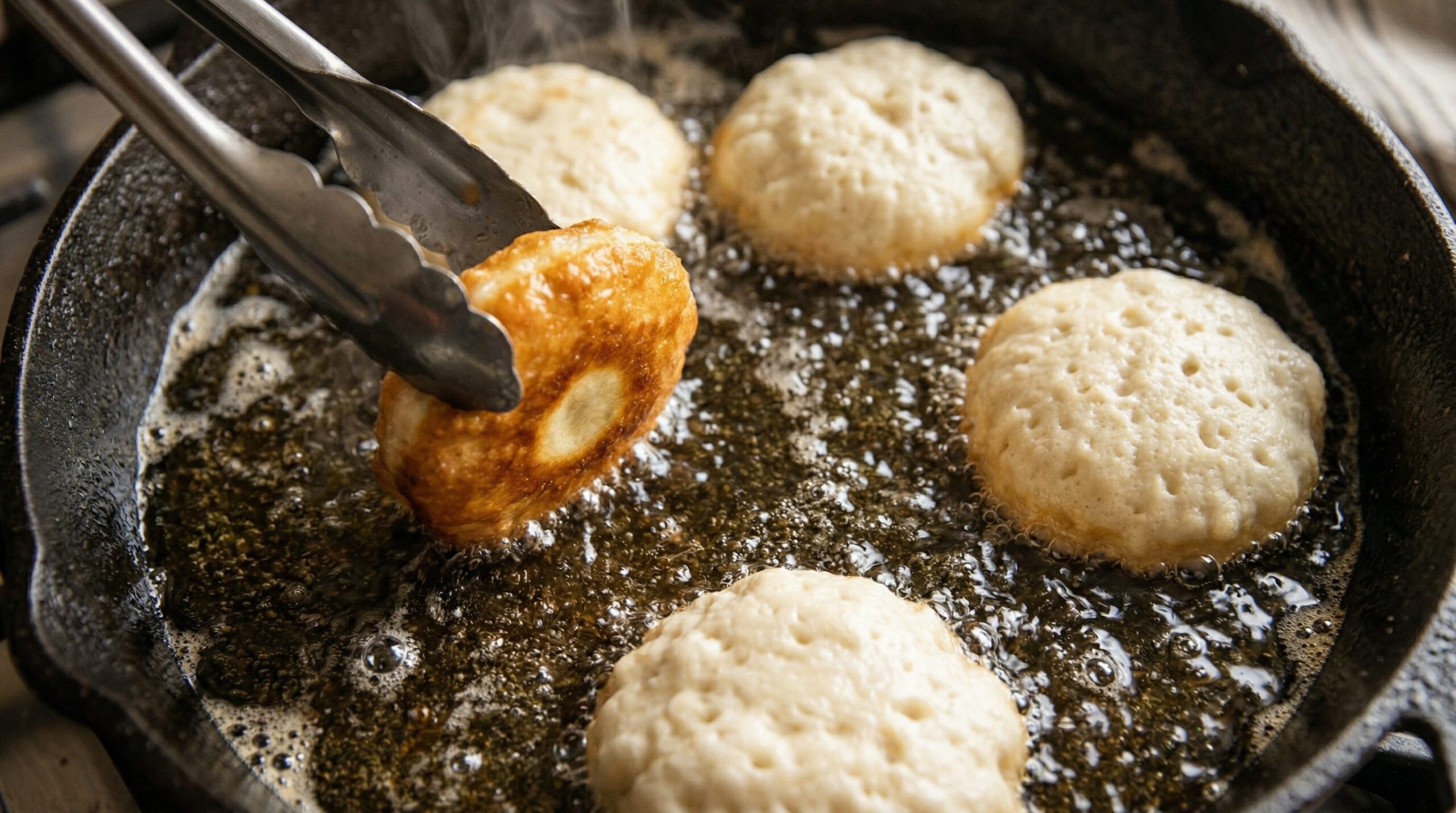
Frying and Filling
Fry the risen donuts until golden and puffed, then fill them with bright raspberry jelly and roll them in sugar while warm. Frying at a steady temperature gives them their tender, even crumb, and filling them generously with jelly makes each bite the classic it should be — sweet, warm, and irresistible.
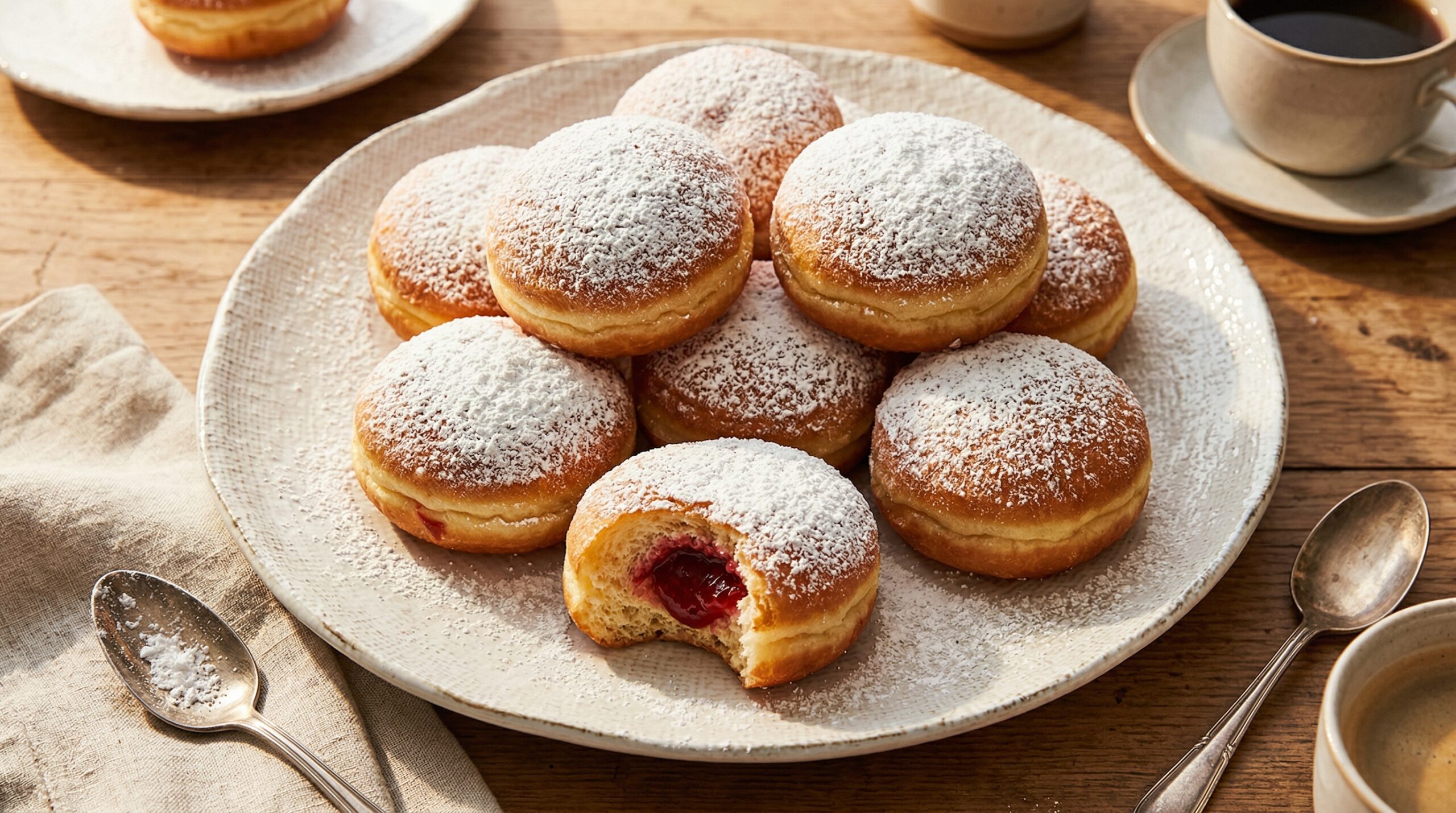
Raspberry Jelly Donuts
Ingredients
Method
- Warm the milk in a saucepan over medium heat until tiny bubbles form around the edges (do not boil).
- Remove the pan from the heat and pour the warm milk into the bowl of an electric mixer.
- Add the active dry yeast and about ¼ teaspoon of the cane sugar, stirring once or twice.
- Let the yeast rest in the warm milk for 5 to 10 minutes until the mixture looks bubbly and highly active.
- Stir in 2 cups of the all-purpose flour, cover the bowl with plastic wrap, and set in a warm place to rise for 30 minutes.
- In a separate bowl, whisk together the 4 whole eggs and 1 egg yolk until pale and frothy.
- Whisk the remaining cane sugar, vanilla extract, and kosher salt into the eggs.
- Using a dough hook attachment on your electric mixer, blend the risen yeast mixture with the egg mixture.
- Pour in the melted butter and mix until fully combined.
- Gradually add 3 more cups of flour, one cup at a time, allowing the dough to come together around the hook. (You may add up to 1 more cup of flour if necessary, but the dough should remain sticky and loose).
- Transfer the dough into a large bowl coated with vegetable oil spray.
- Cover tightly with plastic wrap (sprayed with oil on the inside) and let the dough rise in a warm place until doubled in size, about 1 hour.
- Sprinkle your work surface and rolling pin generously with flour.
- Roll the proofed dough out to about ½-inch thickness.
- Use a 3-inch round cookie cutter to punch out the donuts, placing them onto a parchment-lined baking sheet.
- Gather any dough scraps, re-roll, and cut until all the dough is used.
- Cover the cut donuts lightly with sprayed plastic wrap and let them rise in a warm spot until roughly doubled in size, about 30 minutes.
- Heat the vegetable oil to 350°F in a deep fryer or heavy-bottomed pot (fill the pot only ⅓ full to allow for expansion).
- Carefully lower 2 to 3 donuts into the hot oil so they swim freely without overcrowding.
- Fry until the bottoms are deep golden brown, then use a slotted spoon to flip them and brown the other side (this only takes 1 to 2 minutes per side).
- Transfer the fried donuts to a wire rack or a baking sheet lined with paper towels to drain excess oil.
- Once the donuts are cool enough to handle, use a squeeze bottle or a piping bag fitted with a long tip to gently inject a burst of raspberry preserves into the center of each donut.
- Dust heavily with confectioners' sugar before serving warm.
The Heart of the Table
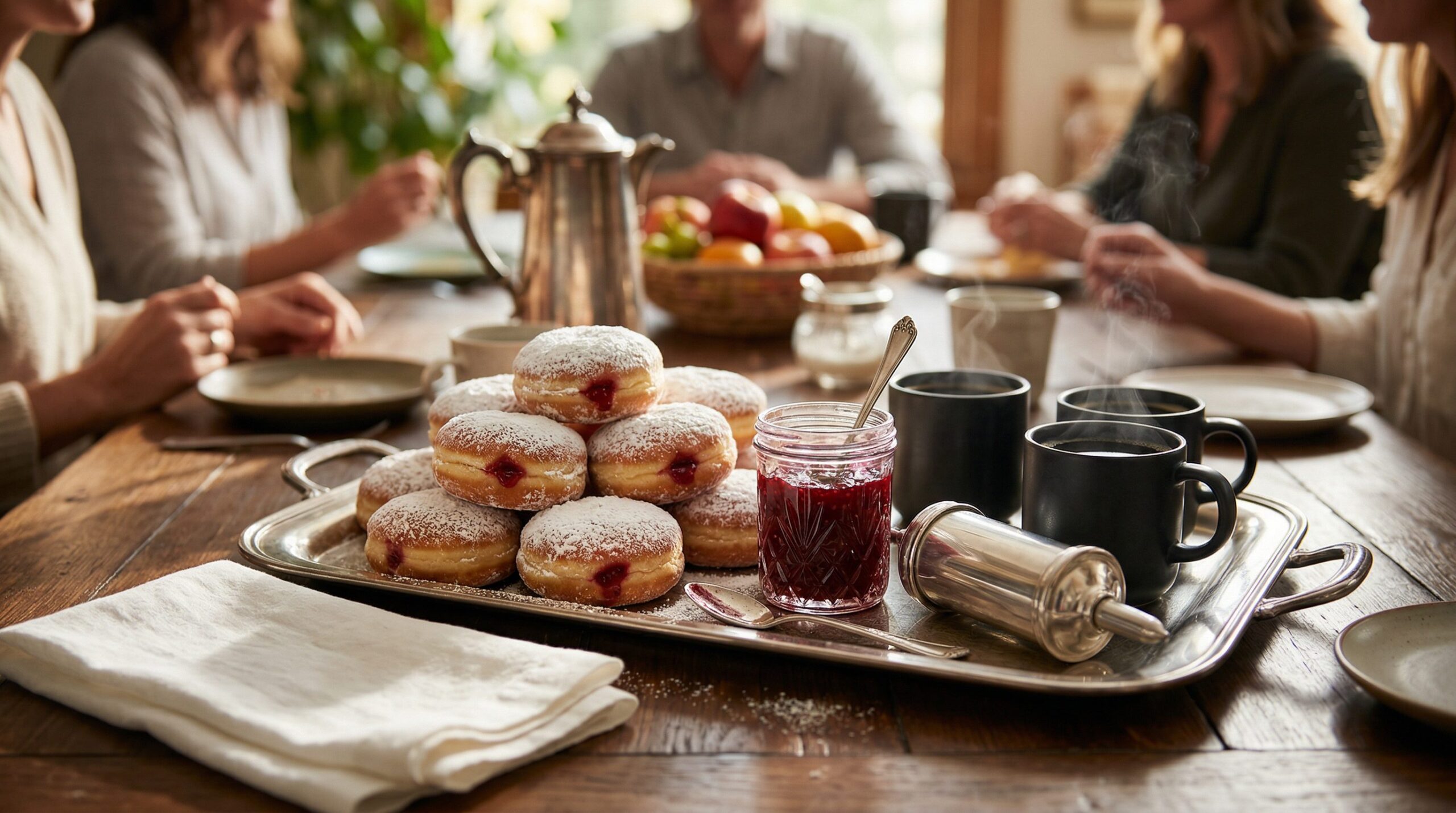
A batch of fresh jelly donuts is pure, warm generosity — the kind of from-scratch treat that makes people feel truly cared for. There is a nostalgic, heartfelt warmth in taking the time to fry donuts by hand, a labor of love that turns an ordinary morning into something people remember.
The Art of the Host
Give the dough a full rise and keep the frying oil at a steady temperature for tender, evenly cooked donuts. Fill and sugar them while they are still warm so the sugar clings and the jelly is soft, and serve them soon after for the best experience.
Neighborly Grace
- The Preparation: The dough can be made and given a slow, overnight rise in the refrigerator so you can fry fresh donuts in the morning. They are truly best eaten the day they are fried, so save the frying and filling for close to serving.
- The Pour: A cup of strong coffee is the timeless partner to a jelly donut; for a non-alcoholic pairing, a glass of cold milk or a raspberry-infused sparkling water echoes the fruit inside.
- The Vibe: Serve them warm and sugar-dusted for a special breakfast or a weekend treat, piled on a plate for eager hands. These are heritage, from-scratch donuts — pillowy and indulgent, made to turn a morning into a small celebration.