
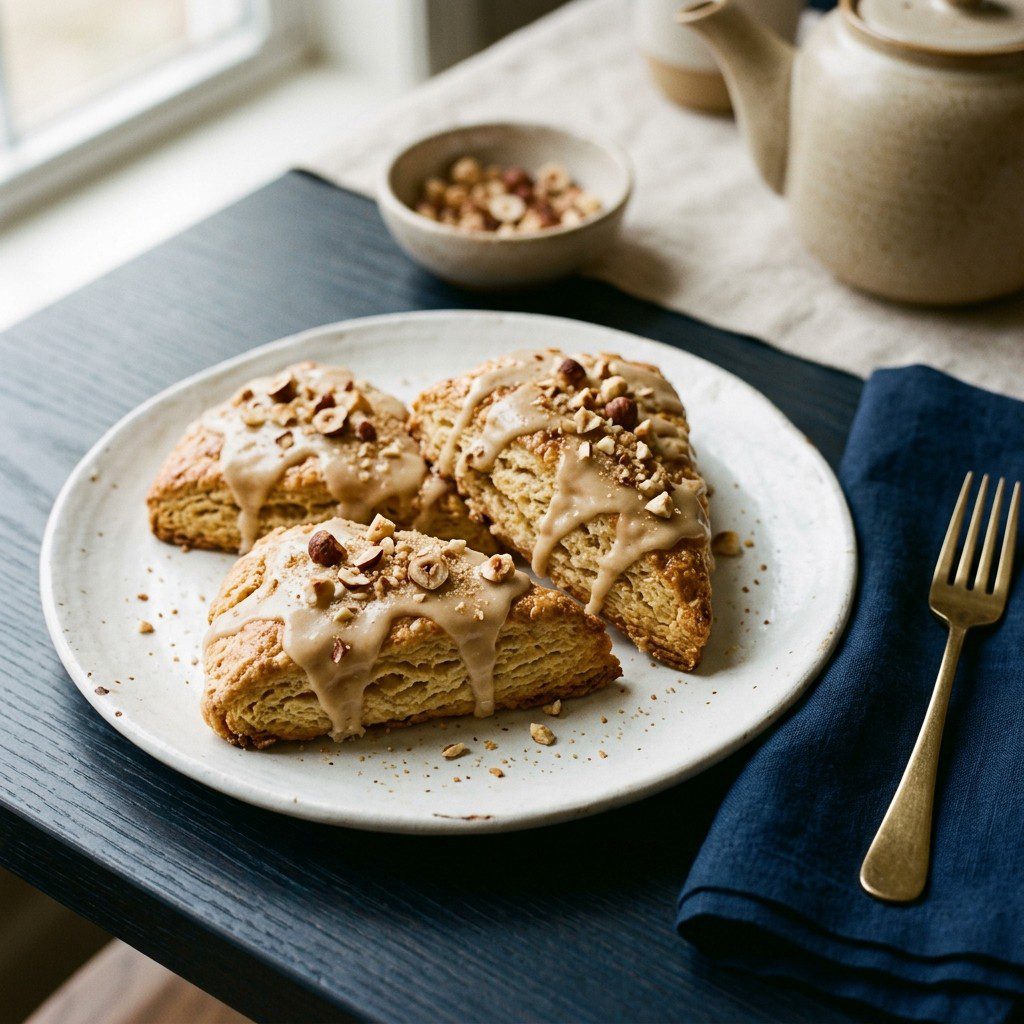
Maple Hazelnut Scones
Bake tender scones rich with hazelnuts and oats and finished with a maple coffee glaze — a cozy, autumnal morning treat that pairs perfectly with a steaming cup.
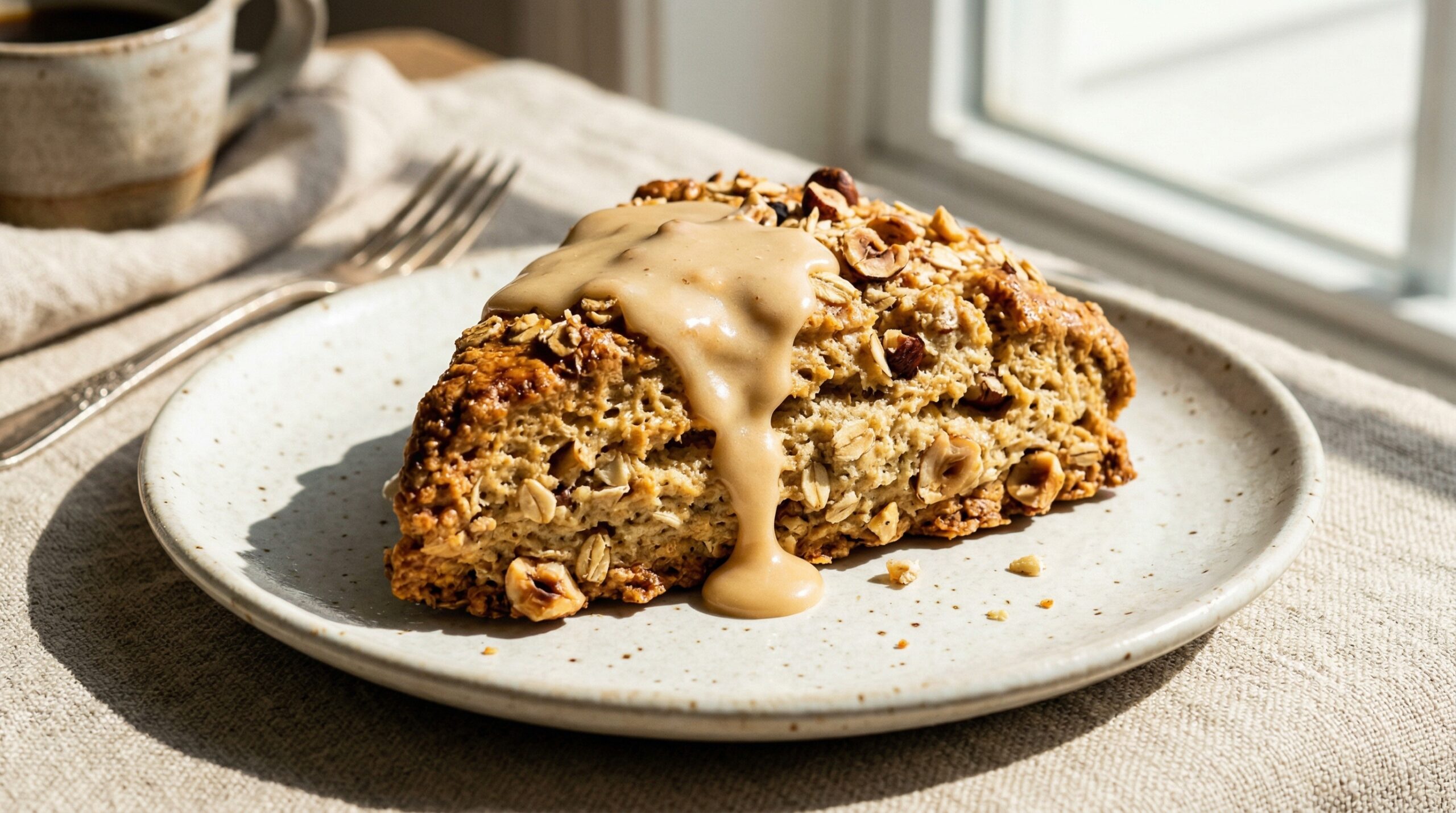
These scones taste like a crisp autumn morning — tender and flaky, nutty with hazelnuts ground into the crumb, and finished with a maple coffee glaze that ties them to the season. They come together quickly but feel special, the kind of bakery-worthy treat that makes a cool morning feel cozy and complete. Split one warm alongside a good cup of coffee, and breakfast becomes something to look forward to rather than rush through.
The Tender Dough and Hazelnuts
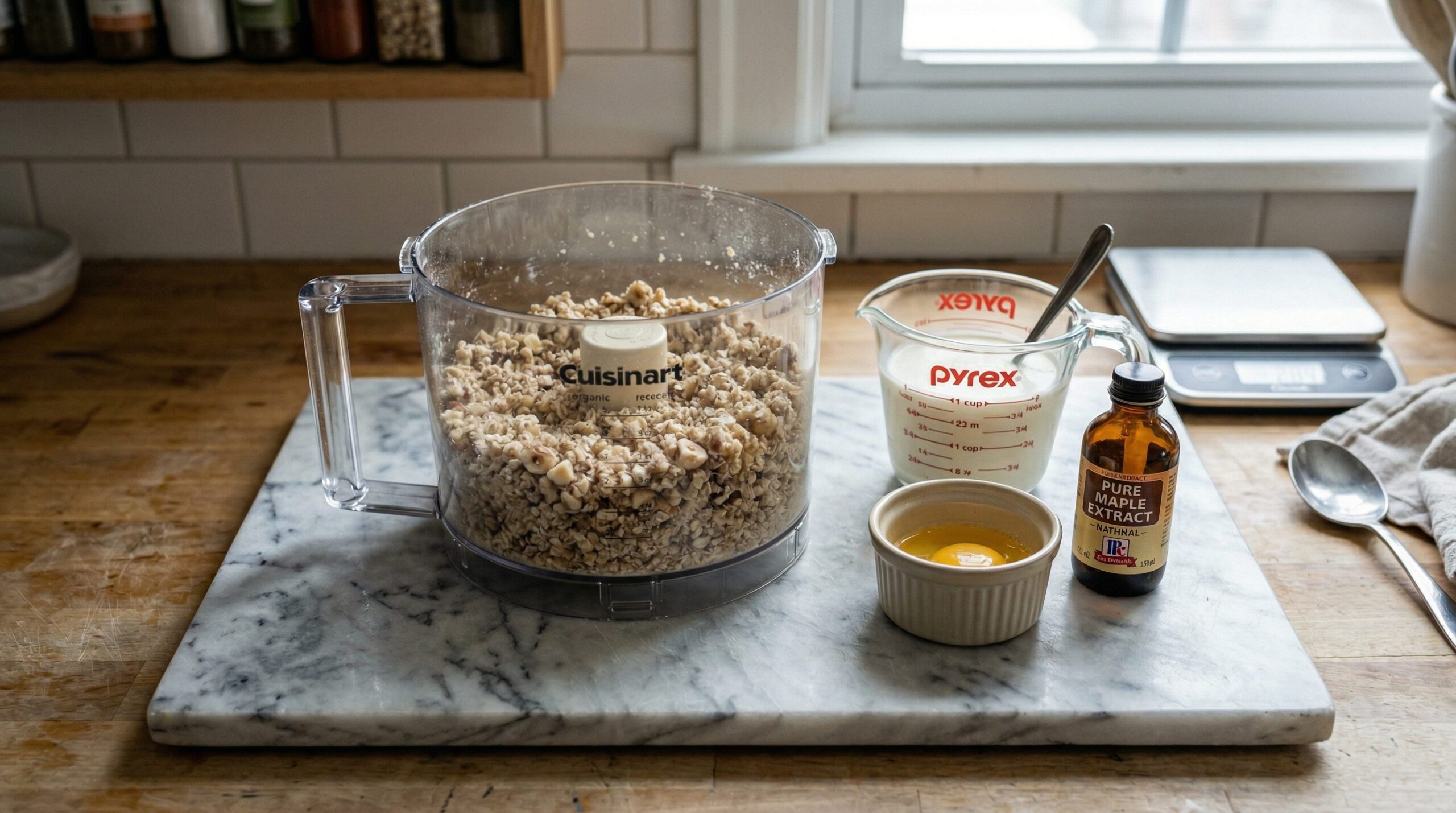
Pulse the hazelnuts with the oats until they are finely chopped, then work the cold butter into the dry ingredients. Keeping the butter cold and the mixing minimal is the key to flaky scones, and grinding the nuts in with the oats carries their rich, warm flavor throughout the crumb.
The Maple Coffee Glaze
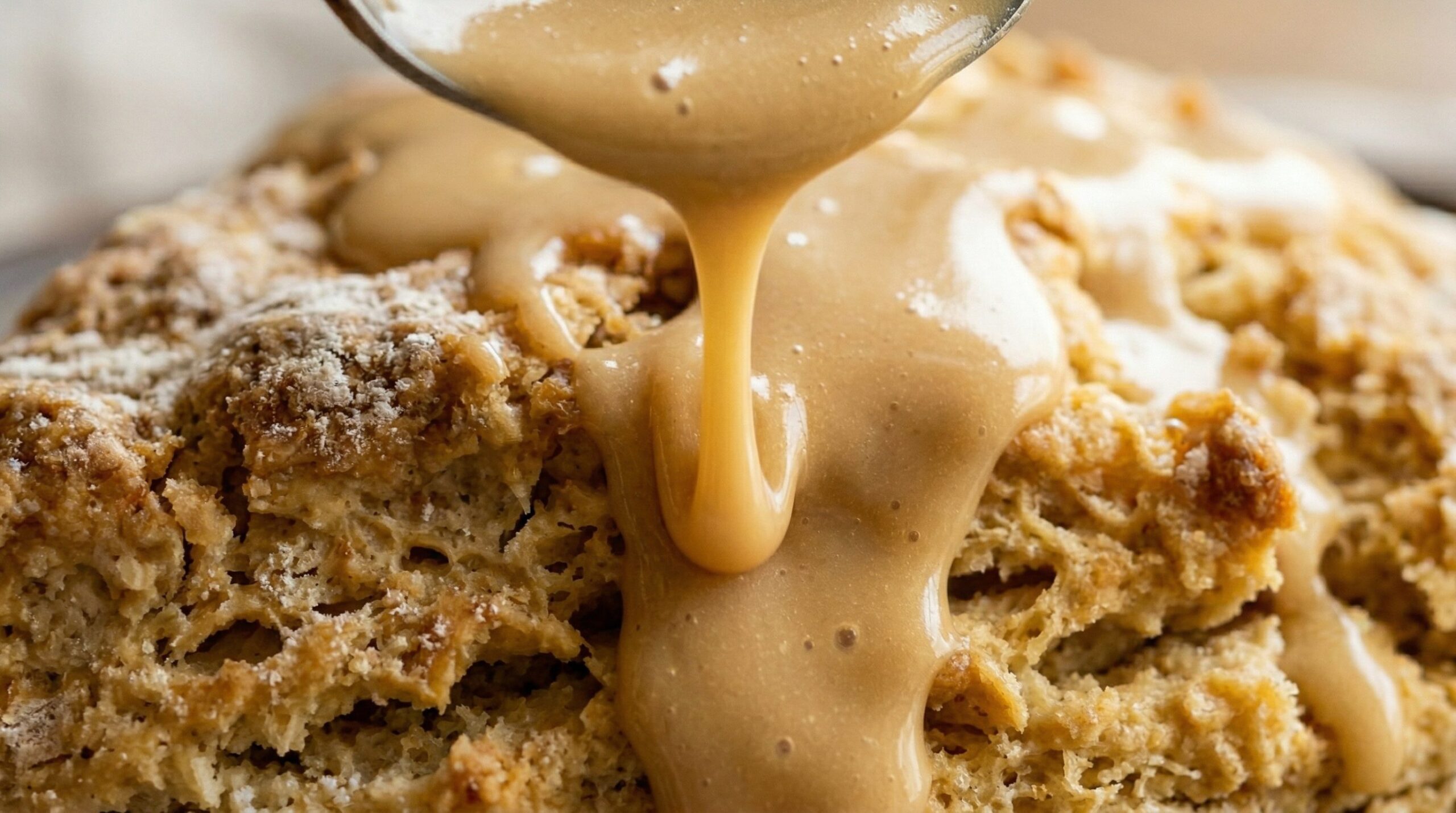
Whisk together a maple and coffee glaze and spoon it over the cooled scones for a cozy, autumnal finish. The maple brings its warm sweetness and the coffee a subtle depth — together they turn a good scone into a seasonal treat, so let the glaze set before serving for a pretty sheen.
Maple Hazelnut Scones
Ingredients
Method
- Preheat the oven to 350°F. Line a large, heavy-duty metal baking sheet with parchment paper.
- Place the rolled oats and chopped hazelnuts into the bowl of a food processor. Pulse several times until the nuts are finely chopped and unified with the oats.
- Add the pastry flour, cane sugar, baking powder, and kosher salt into the bowl. Pulse briefly to distribute the leavening agents. (The massive ratio of 2 tablespoons of baking powder forces a rapid, towering rise in the oven).
- Drop the deeply chilled butter cubes directly over the dry ingredients. Pulse the machine repeatedly until the butter is cut into the flour, creating coarse, pea-sized crumbs. Do not overprocess; preserving distinct, cold butter pockets is critical for a flaky crust.
- In a small bowl or glass measuring cup, vigorously whisk together the heavy whipping cream and the egg.
- With the food processor running, slowly stream the liquid mixture through the feed tube just until the dough rapidly clumps together around the blade. Stop immediately to prevent the gluten from toughening.
- Turn the sticky, shaggy dough out onto a generously floured wooden or marble board.
- Use floured hands to gently pat the dough into an 8x9-inch rectangle, about ¾-inch thick. Do not knead.
- Using a sharp chef's knife, cut the rectangle evenly into 6 squares. Cut each square diagonally in half to form 12 uniform triangles.
- Use a pastry spatula to transfer the triangles onto the prepared baking sheet, leaving 2 inches of space between each.
- Bake in the preheated 350°F oven until the scones puff significantly and the edges just begin to turn golden brown, about 20 to 25 minutes. Cool entirely on the baking sheet.
- While the scones cool, vigorously whisk together the confectioners’ sugar, whole milk, melted butter, pure maple extract, and brewed coffee in a medium bowl.
- The glaze should be thick, opaque, and glossy, but fluid enough to pour. Drizzle heavily over the cooled scones and allow the icing to set into a firm crust before serving.
The Heart of the Table
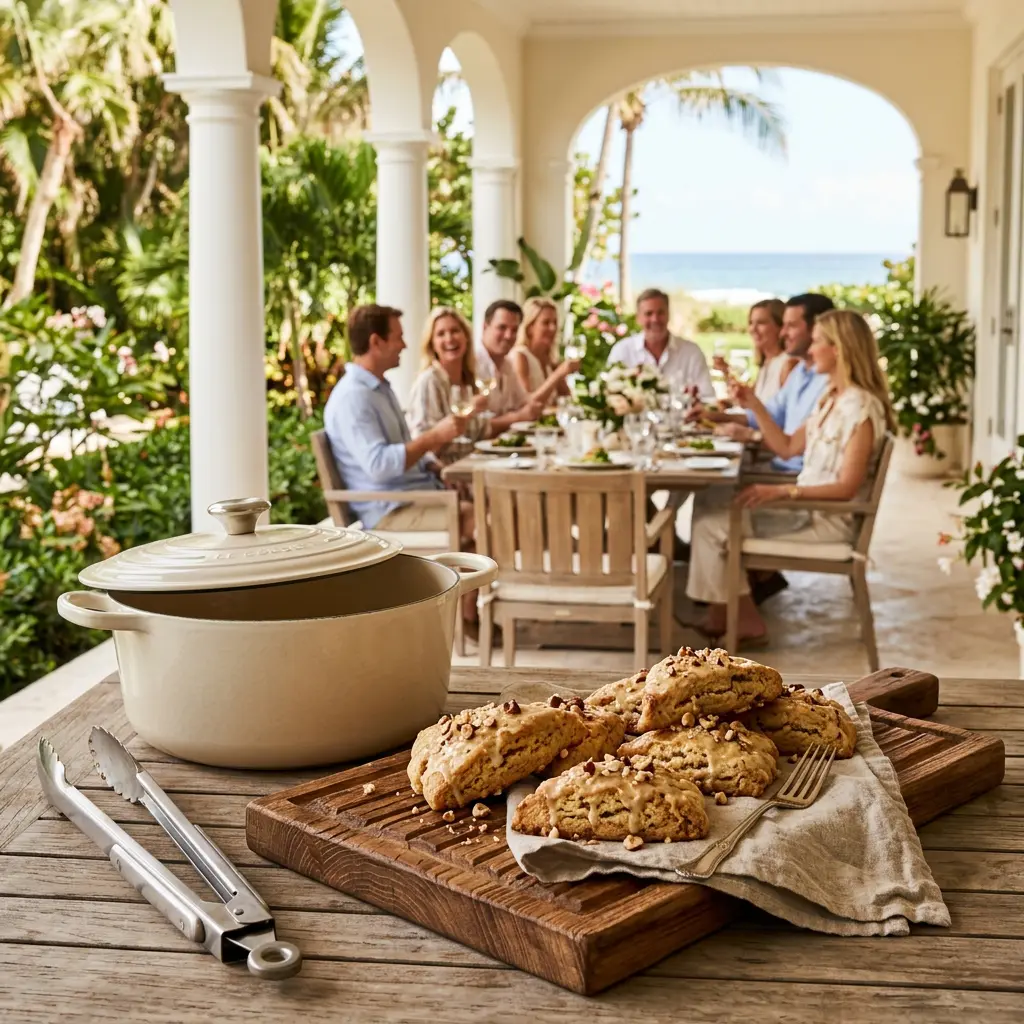
A warm scone with morning coffee is a small, gracious kindness — it says the morning is worth savoring. There is a cozy, generous hospitality in baking something fresh and seasonal for breakfast, the kind of treat that welcomes a guest and makes an autumn morning feel like a gift.
The Art of the Host
Keep the butter cold and handle the dough lightly for the flakiest scones, and let them cool before glazing so the maple sets rather than melts. Serve them warm, split if you like, when the hazelnut and maple are at their most fragrant.
Neighborly Grace
- The Preparation: Shape the scones and freeze them unbaked, then bake from frozen for a fresh treat, or bake ahead and glaze before serving. They are best the day they are made, so a freeze-and-bake approach keeps them freshest.
- The Pour: A cup of coffee or a maple latte is the natural autumnal companion; for a non-alcoholic pairing, a warm hazelnut steamer doubles down on the cozy, nutty flavor.
- The Vibe: Serve them warm for breakfast or an afternoon coffee on a cool day, glaze glistening. These are cozy, seasonal morning treats — nutty and maple-kissed, made to make an autumn morning feel warm and complete.