
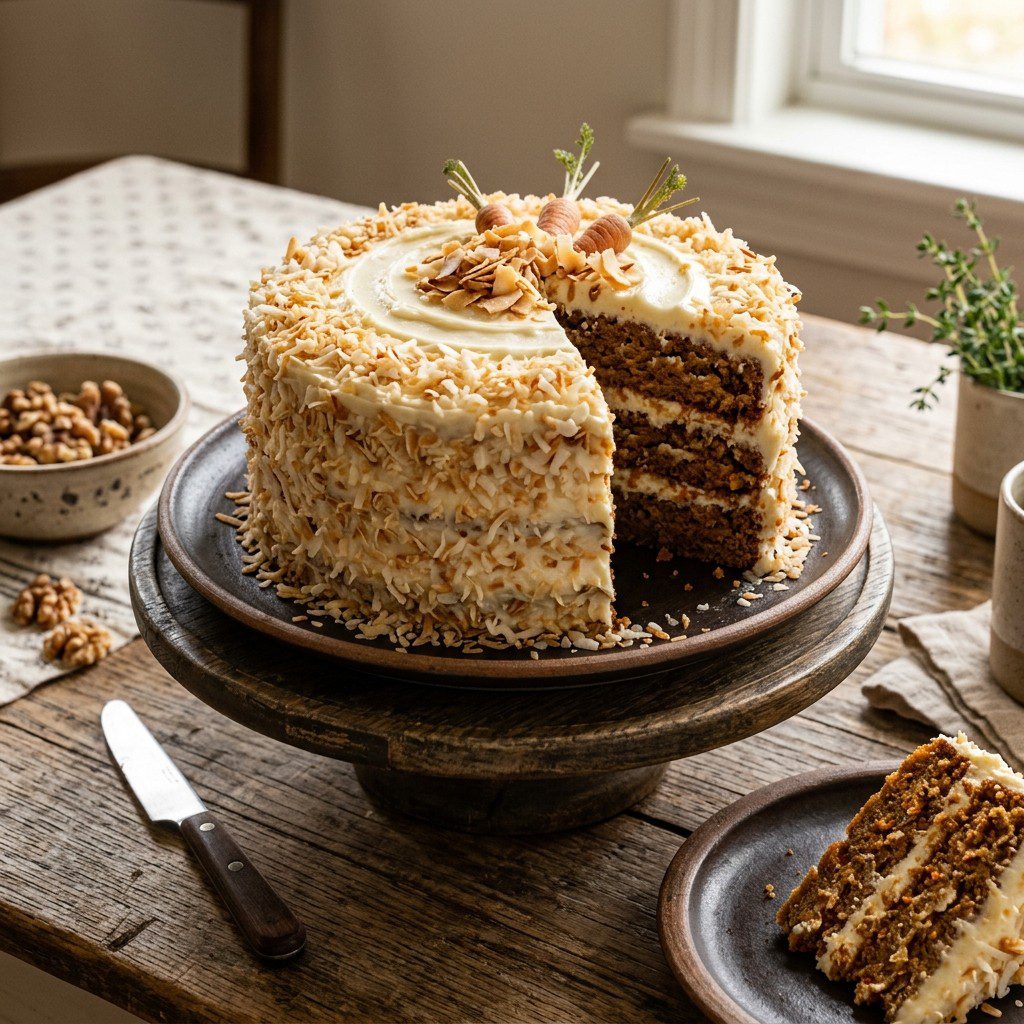
Tropical Carrot & Macadamia Nut Cake
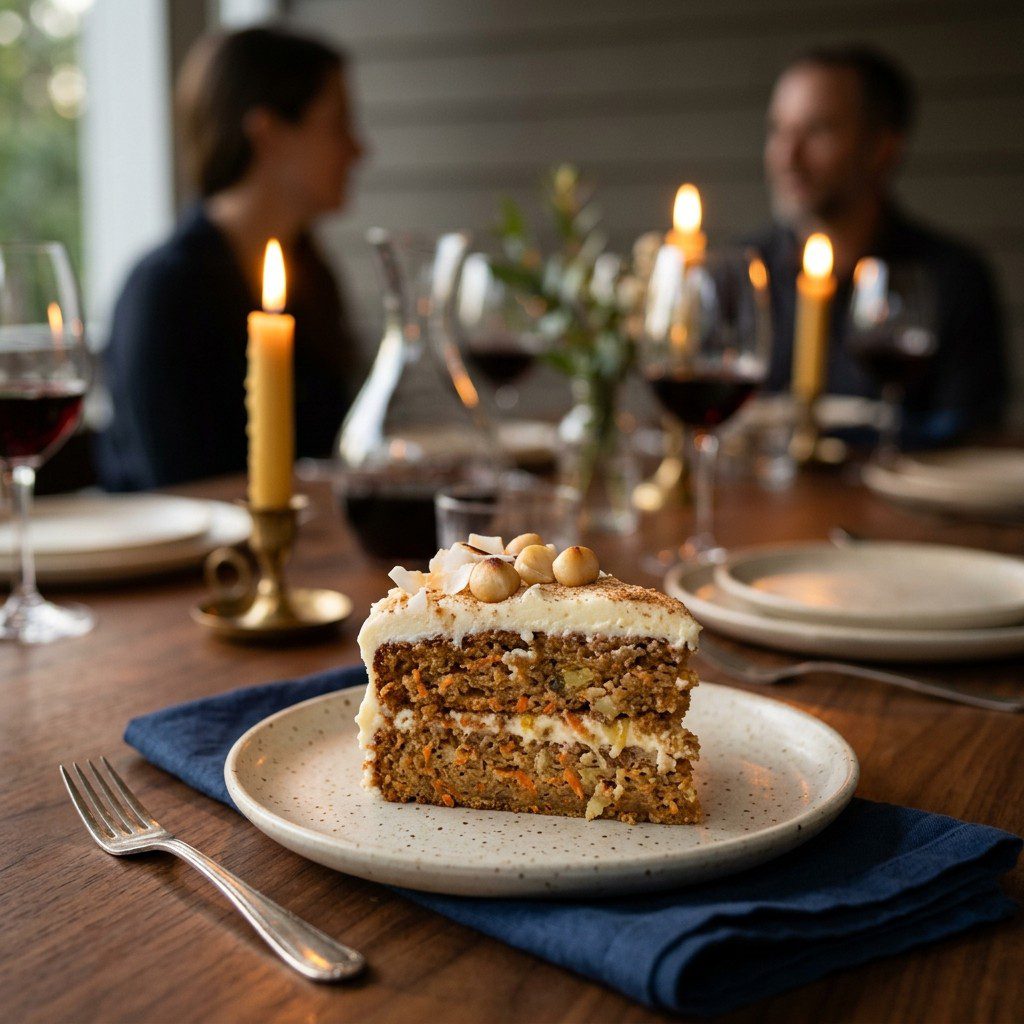
Give classic carrot cake a tropical twist with pineapple, coconut, and buttery macadamias under tangy cream cheese frosting — a moist, richly spiced cake that tastes like a getaway.
Carrot cake is a beloved classic, and this tropical version takes it somewhere sunny and lush. Alongside the carrots and warm spice come sweet pineapple, rich coconut, and buttery macadamia nuts, all baked into an exceptionally moist cake and blanketed in tangy cream cheese frosting. It is the familiar comfort of carrot cake with a getaway's worth of tropical flavor woven through — the kind of cake that feels both nostalgic and refreshingly new in every bite.
The Spiced Batter and Tropical Inclusions
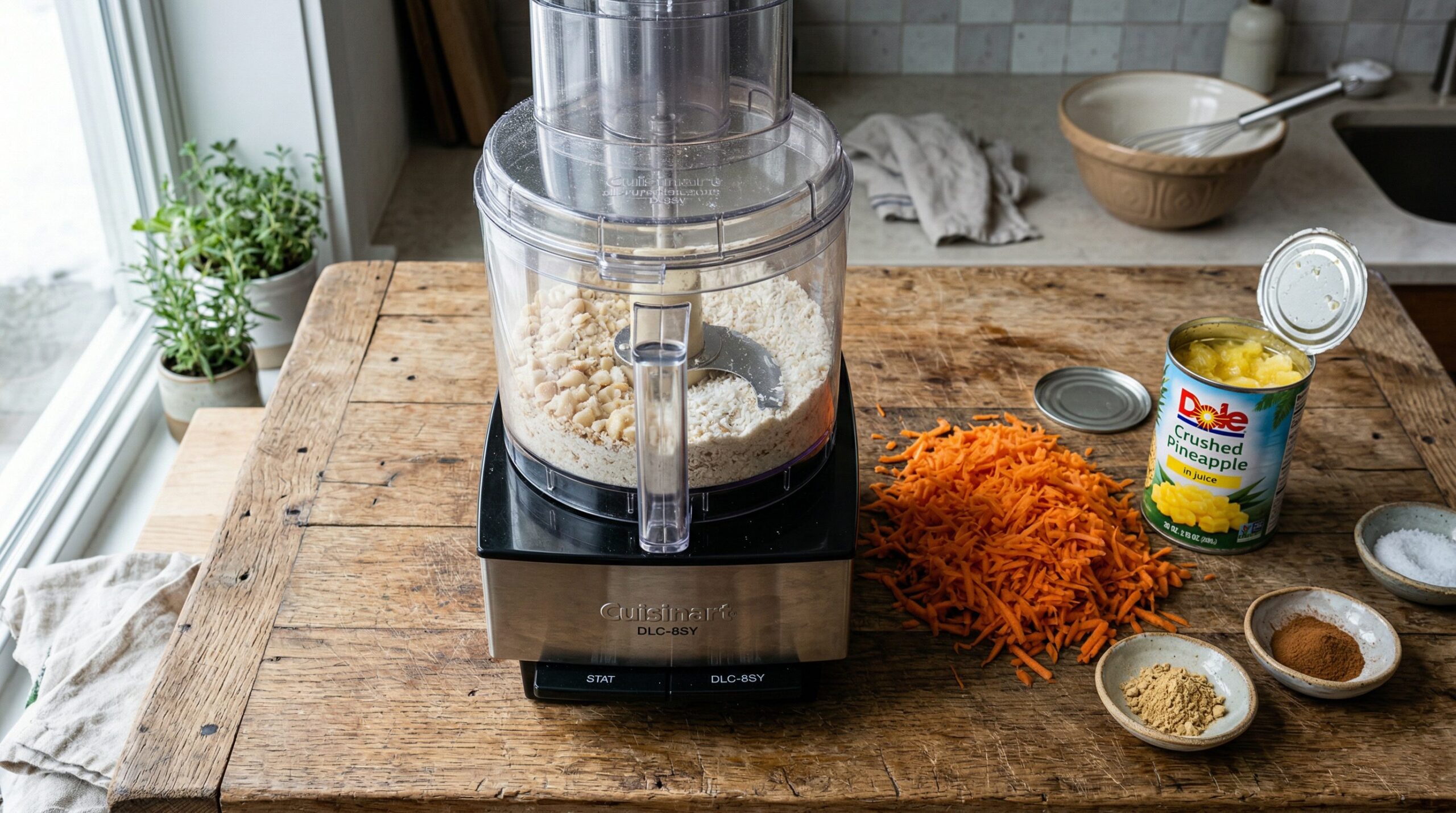
Build a warmly spiced carrot cake batter and fold in the pineapple, coconut, and macadamia nuts. The pineapple keeps the cake wonderfully moist, the coconut adds richness, and the macadamias bring a buttery crunch — together they give the classic a lush, tropical character in every forkful.
The Tangy Cream Cheese Frosting
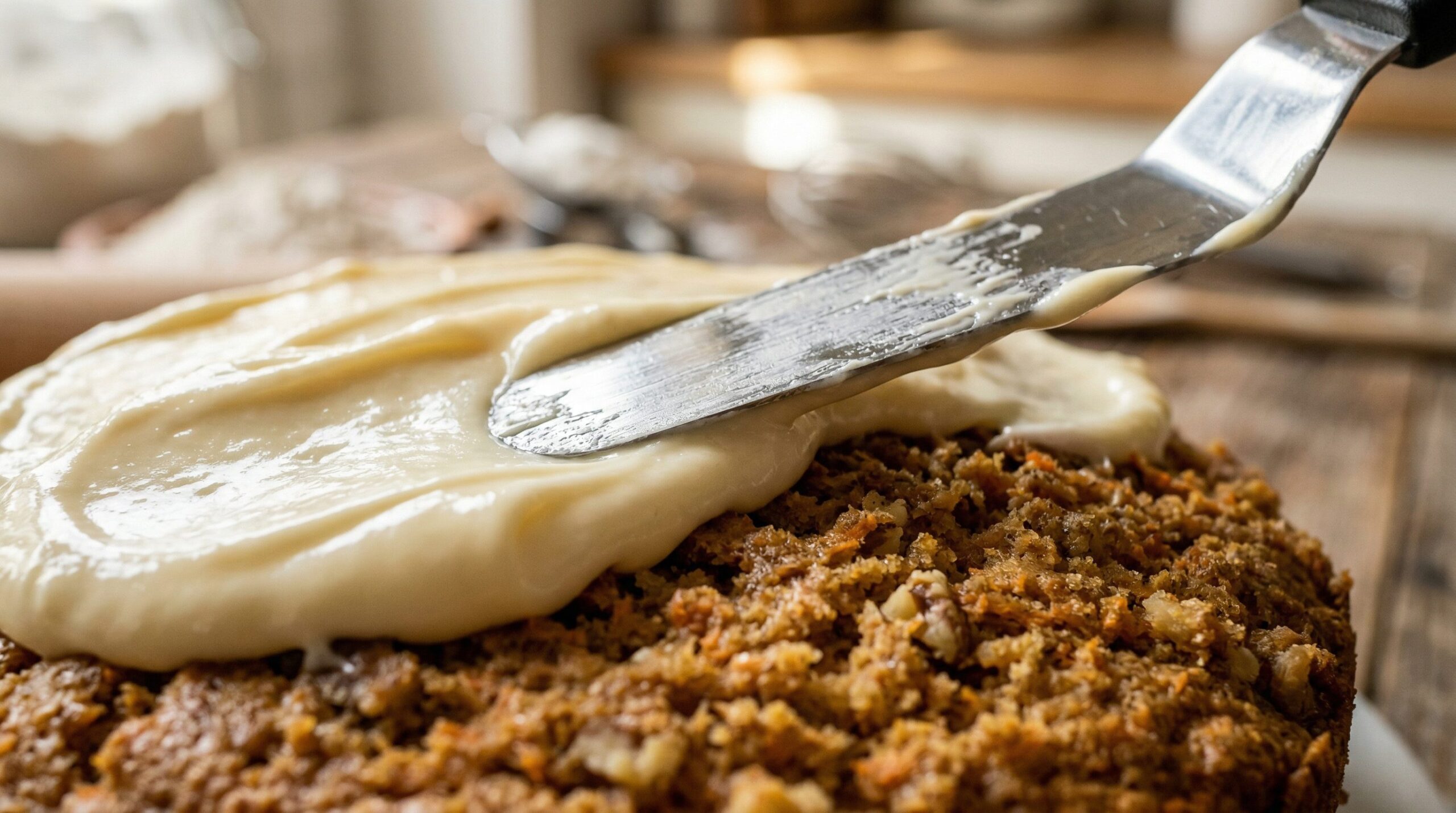
Whip the cream cheese frosting until silky and blanket the cooled cake generously. The gentle tang of the cream cheese is the perfect foil to the sweet, spiced, fruit-laden cake — wait until the cake is fully cool before frosting, and finish with a scatter of coconut or macadamias for a tropical flourish.
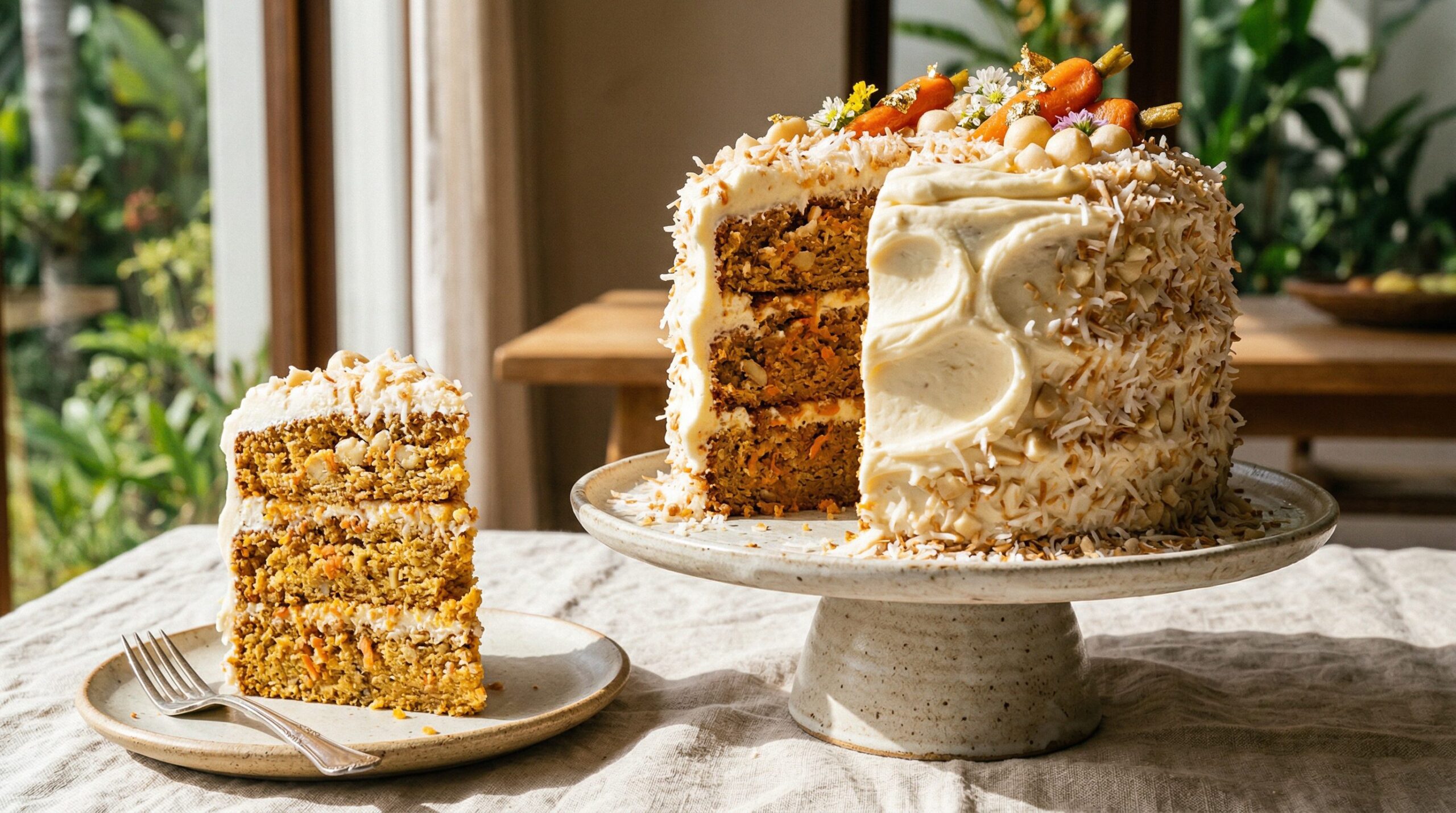
Tropical Carrot & Macadamia Nut Cake
Ingredients
Method
- Preheat the oven to 350°F. Generously coat three (9-inch) round metal cake pans with vegetable oil spray. Line the bottom of each pan with a circle of parchment paper, and spray the paper to ensure a flawless release.
- Place exactly ½ cup of the flour, 1 cup of the sweetened coconut, and the 1 cup of macadamia nuts into the bowl of a food processor.
- Pulse the machine repeatedly until the nuts are finely ground and the mixture resembles coarse, sandy crumbs. Transfer this nut mixture into a large mixing bowl.
- Use a professional whisk to thoroughly blend the remaining 2 cups of flour, baking powder, ground ginger, cinnamon, baking soda, and kosher salt directly into the nut mixture. Set aside.
- In the bowl of an electric stand mixer, combine the granulated sugar and canola oil on medium speed until smooth and fully unified. (Using oil rather than butter ensures an incredibly tender, moist crumb that stays soft even when chilled).
- Add the eggs one at a time, mixing thoroughly after each addition. Stir in the pure vanilla extract.
- Reduce the mixer speed to low. Gradually fold the dry flour and nut mixture into the wet batter.
- Once the flour is just combined, gently fold in the finely grated carrots and the thoroughly drained crushed pineapple. Do not overmix, as overworking the gluten will result in dense, tough cake layers.
- Divide the heavy batter evenly among the three prepared 9-inch cake pans, smoothing the tops with a spatula.
- Bake for exactly 30 minutes, or until a wooden tester inserted into the center of each cake comes out perfectly clean.
- Allow the cakes to cool in their pans for 15 minutes to set their structure. Run a sharp knife around the inner edges, invert the cakes onto wire racks, peel off the parchment paper, and cool completely to room temperature.
- Place the first completely cooled cake layer onto a pristine ceramic cake stand. Spread approximately ¾ cup of frosting evenly across the top.
- Repeat with the second layer. Place the third and final cake on top. Use an offset spatula to frost the top and sides of the entire cake, and finish by heavily pressing the remaining 1 cup of sweetened coconut directly into the frosting.
The Heart of the Table
A moist, richly frosted carrot cake is generous, homey hospitality — it belongs to celebrations and Sunday tables alike. There is a warm, joyful spirit in a cake this abundant and flavorful, the kind that feels like both a comfort and a treat, and that everyone hopes to take a slice of home.
The Art of the Host
Cool the cake fully before frosting so the cream cheese stays firm, and keep leftovers cold, bringing slices to room temperature before serving. A scatter of toasted coconut and chopped macadamias on top makes a beautiful, telling finish.
Neighborly Grace
- The Preparation: This cake keeps beautifully for several days thanks to its moisture, so it is a fine make-ahead. Bake it a day or two early, frost when cool, and keep it covered; it stays moist and only grows more flavorful.
- The Pour: A glass of sparkling wine or a tropical rum punch suits the festive flavors; for a non-alcoholic pairing, a pineapple-coconut sparkling water leans right into the tropical theme.
- The Vibe: Serve it in generous slices from a pretty stand at a celebration or a Sunday gathering. This is warm, tropical baking — a moist, richly spiced twist on a classic, made to taste like a getaway and please a whole table.