
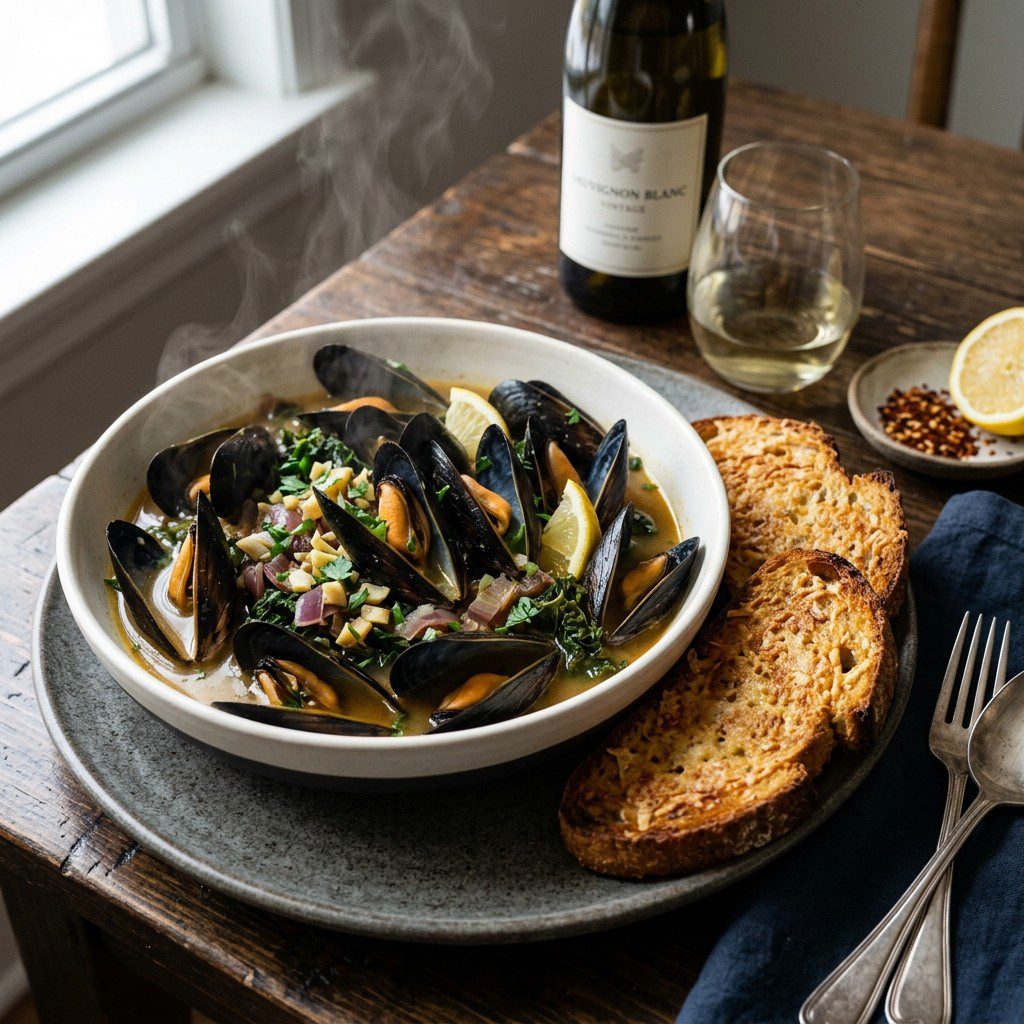
Mussels in Ginger-Garlic Broth
Steam mussels open in a fragrant ginger-garlic broth brightened with greens, and serve them with Parmesan-toasted bread for soaking. It is a fast, elegant dinner for two — sweet mussels, an aromatic broth, and crusty bread — that feels like a bistro splurge but comes together in minutes.
Mussels are one of the great quick luxuries of the kitchen: inexpensive, fast, and impressive, they steam open in minutes into a fragrant, briny feast. Here they open in a broth perfumed with ginger and garlic and brightened with tender greens, with Parmesan-toasted bread alongside to soak up every drop. It is a dinner for two that feels like a night out — the kind of easy, elegant meal that turns a Tuesday into an occasion.
The Aromatic Broth
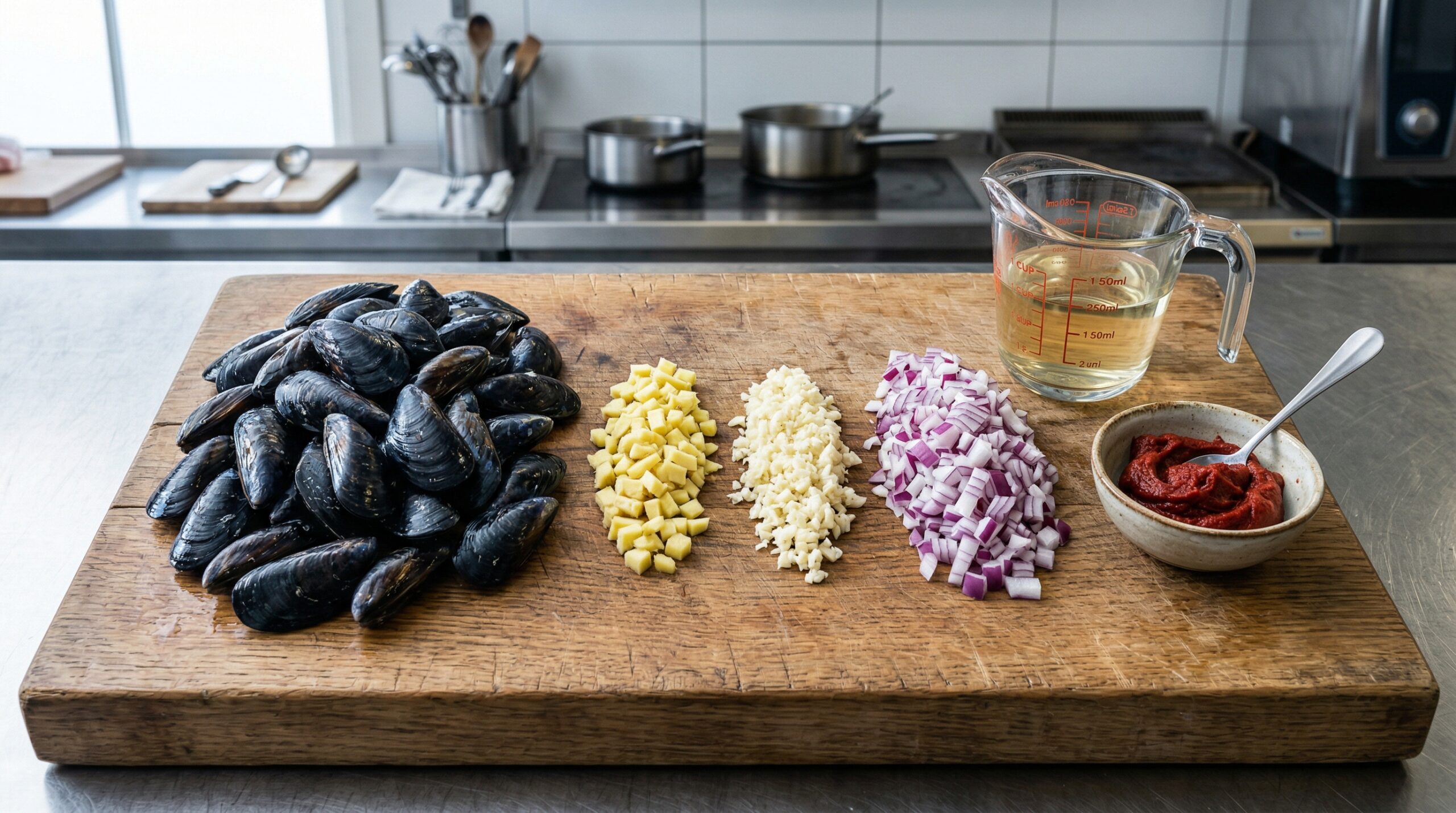
The broth is what the mussels will flavor and be flavored by, so build it fragrant. Sweat ginger and garlic until aromatic, then add the liquid and let it come to a gentle simmer, brightened at the end with tender greens. This aromatic base is what the mussels steam open into, and it becomes, in turn, the briny, savory broth you'll spoon up and sop with bread. Keep it fragrant and well seasoned; it is half the pleasure of the dish.
Steaming the Mussels
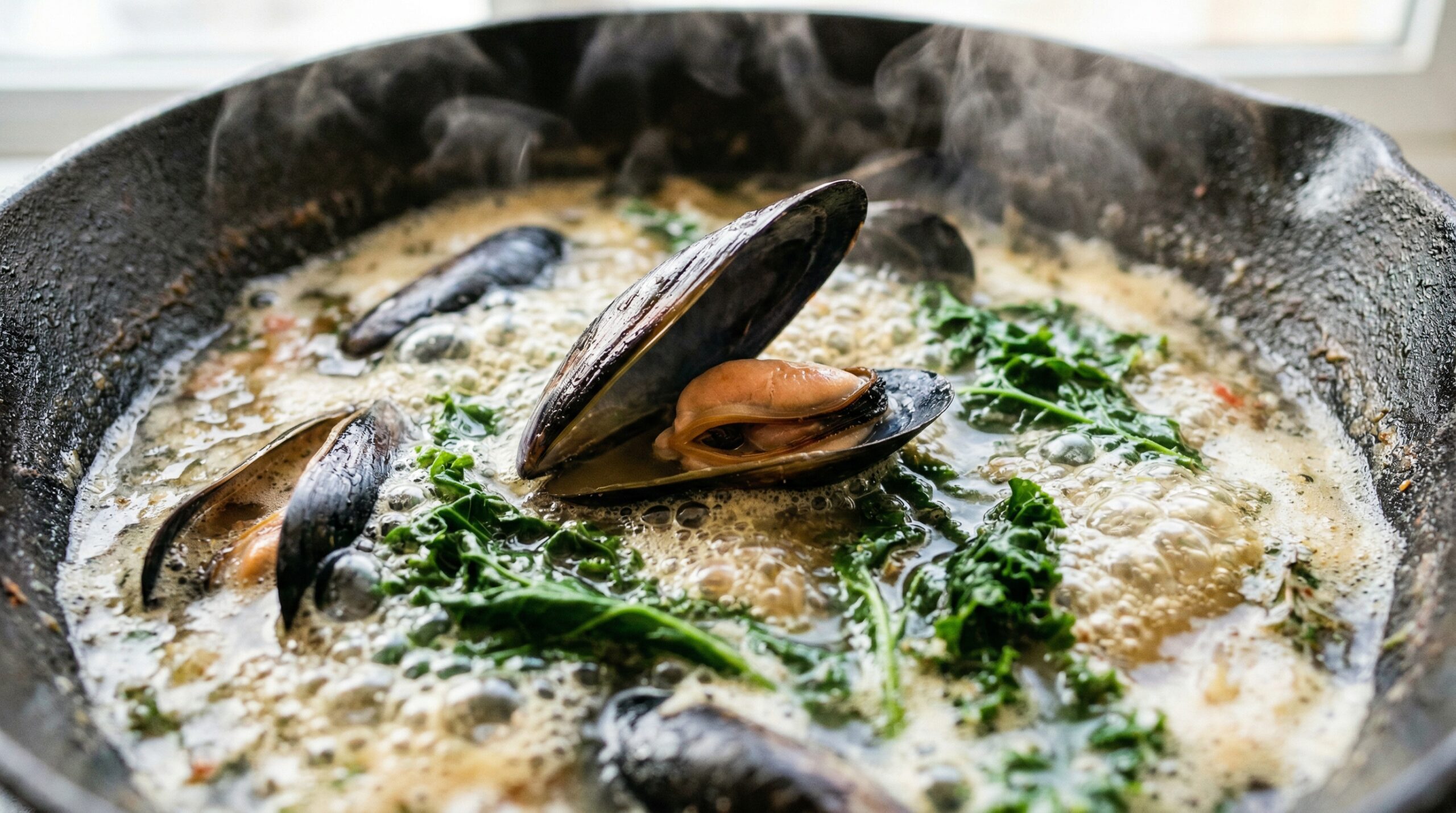
Mussels cook fast and want a gentle hand. Add them to the simmering broth, cover the pot, and steam just until they open — a few minutes is all it takes, and once they've opened, they're done. Overcooking turns them rubbery, so pull them from the heat the moment the shells gape, and discard any that stubbornly stay shut. Toss them in the broth to coat, and serve them steaming in a big bowl with the Parmesan bread for soaking up the fragrant liquid.
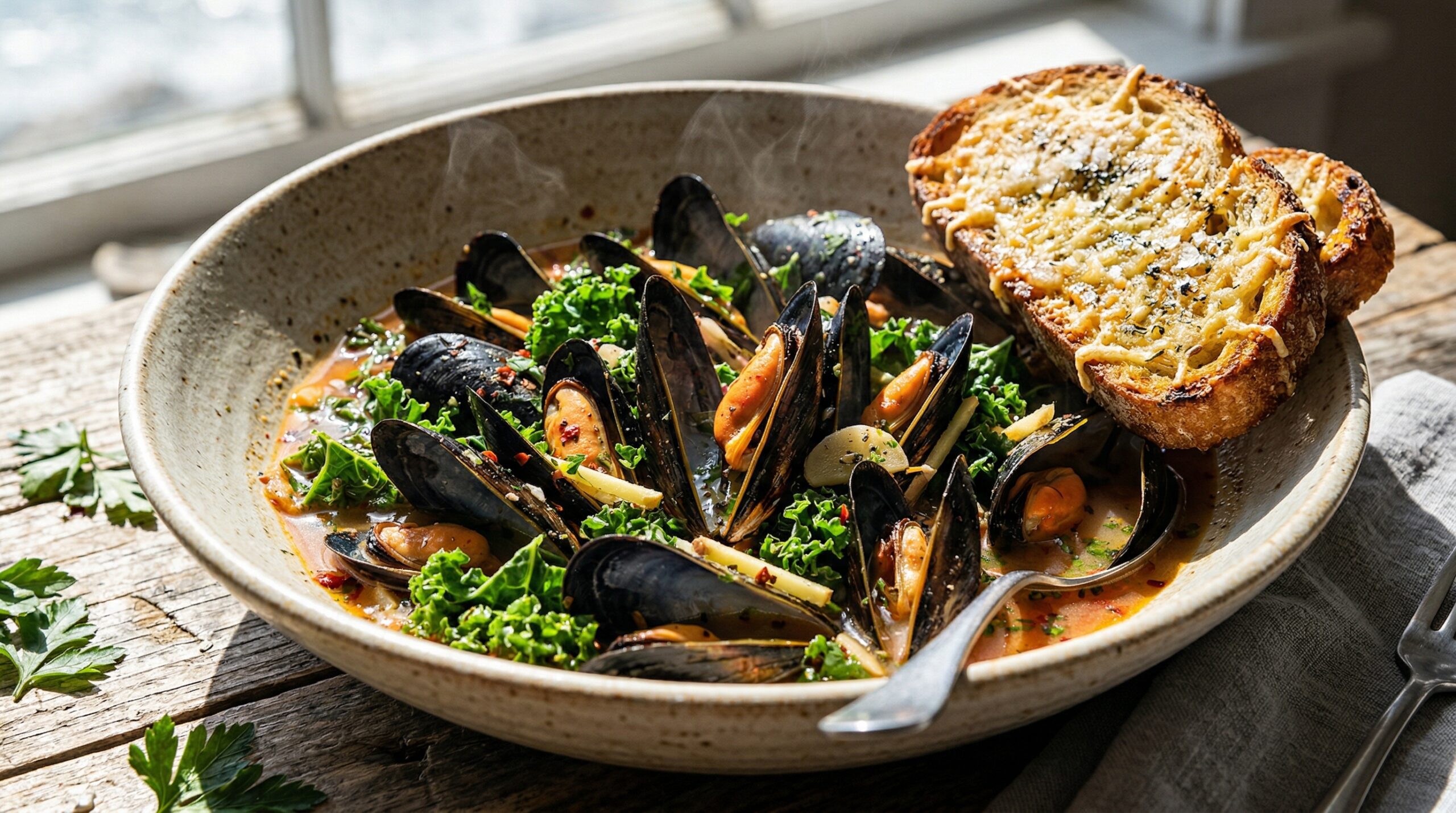
Mussels in Ginger-Garlic Broth
Ingredients
Method
- In a deep, heavy-bottomed pot or large wok with a tight-fitting lid, heat the 2 tablespoons of olive oil over medium heat.
- Add the finely diced red onion, garlic, and fresh ginger. Cook, stirring constantly, until the aromatics soften, release their moisture, and become highly fragrant, about 1 to 2 minutes. (Do not let the garlic burn, or the broth will turn bitter).
- Pour the ½ cup of dry white wine into the pot to deglaze, violently scraping up any browned bits from the bottom. Simmer aggressively to evaporate the sharp alcohol notes and reduce the liquid slightly, about 3 minutes.
- Pour the 2 cups of chicken broth directly into the wine reduction.
- Whisk in the 2 tablespoons of tomato paste until it dissolves, providing a rich, savory backbone and a slight red tint to the liquid.
- Stir in the finely chopped kale. Season the broth with the kosher salt and coarse black pepper.
- Cover the pot with the lid and simmer gently until the kale leaves soften and wilt, about 10 minutes.
- While the broth simmers, preheat the oven to the BROIL setting.
- Place the thick slices of crusty bread onto a metal baking sheet. Brush the tops heavily with olive oil, sprinkle with garlic powder, and coat generously with the grated Parmesan cheese.
- Place the baking sheet under the broiler and watch extremely closely. Toast until the bread is golden and the cheese is bubbling and melted, about 1 to 2 minutes. Remove and set aside.
- Increase the heat under the broth to medium-high to establish a rolling boil.
- Gently drop the cleaned mussels directly into the hot liquid. Immediately cover the pot with the tight-fitting lid to trap the steam.
- Cook undisturbed until the mussels pop their shells wide open, releasing their natural briny liquor into the broth, about 5 minutes. (Discard any mussels that refuse to open).
- Ladle the hot, fragrant broth and the open mussels into wide, shallow ceramic bowls. Serve immediately alongside the warm, Parmesan-crusted bread for dipping.
The Heart of the Table
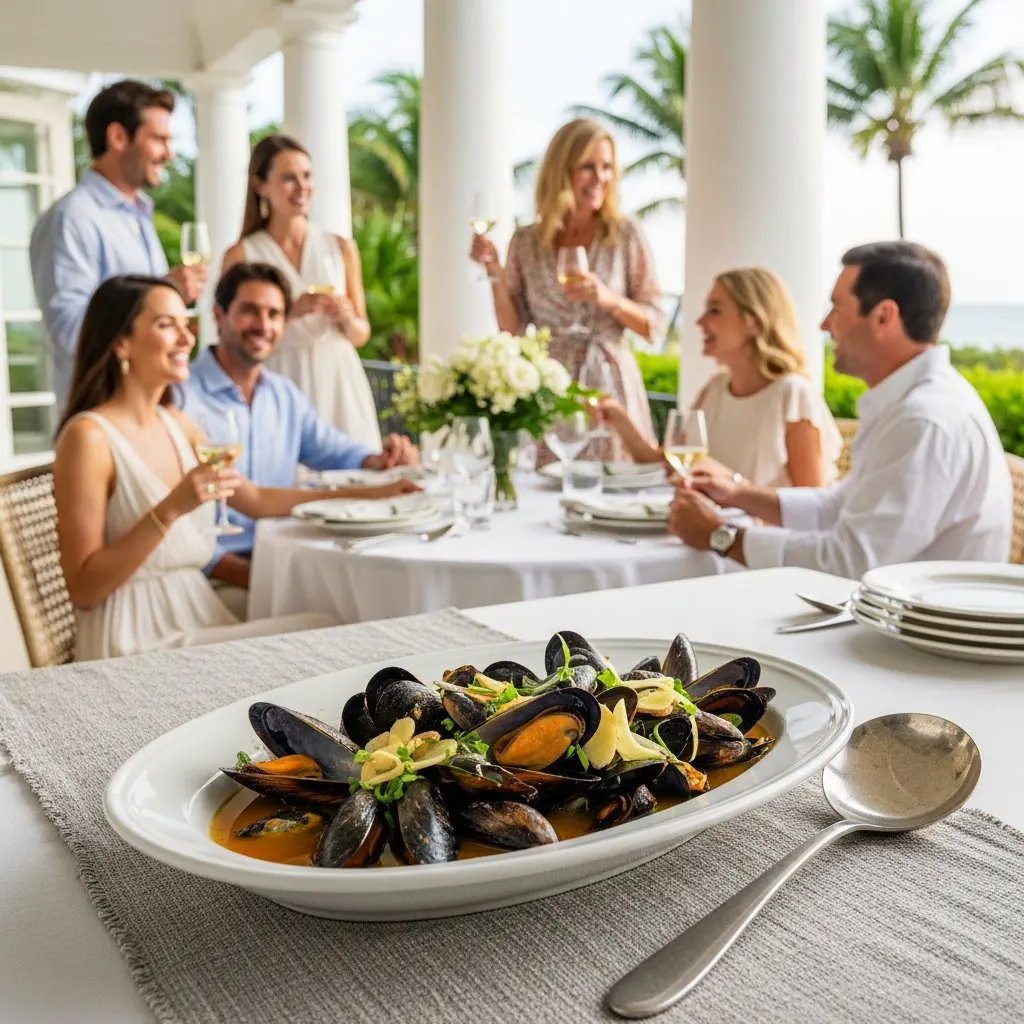
A big bowl of mussels set between two people is an intimate, generous thing — a shared feast eaten with fingers and bread, unhurried and companionable. To steam open something so briny and fragrant for someone you love, and pass the bread back and forth to soak the broth, is warm, easy hospitality, the kind of meal that invites lingering and conversation.
The Art of the Host
A pot with a tight lid is the one essential — it traps the steam that opens the mussels. Scrub and debeard the mussels before cooking, steam them just until they open and no longer, and discard any that don't open. Have the Parmesan bread toasted and ready, since the mussels cook in minutes and are best eaten the moment they're done, with the broth still steaming.
Neighborly Grace
- The Preparation: The broth base can be made ahead and rewarmed, and the Parmesan bread toasted in advance, so the only live step is the quick steam of the mussels — which must be done fresh and served immediately. That makes it a fast, low-stress dinner: get the broth and bread ready, and dinner is minutes away when you're ready to eat.
- The Pour: A crisp, dry white — Muscadet, Picpoul, or a Sauvignon Blanc — is the classic mussels match. For a non-alcoholic option, a sparkling water with lemon or a ginger-lime soda echoes the aromatic broth.
- The Vibe: This is intimate, bistro-style dining for two — set the big bowl of mussels between you with the Parmesan bread and dig in with your fingers. It is a fast, fragrant, romantic dinner that turns an ordinary night into something special.