
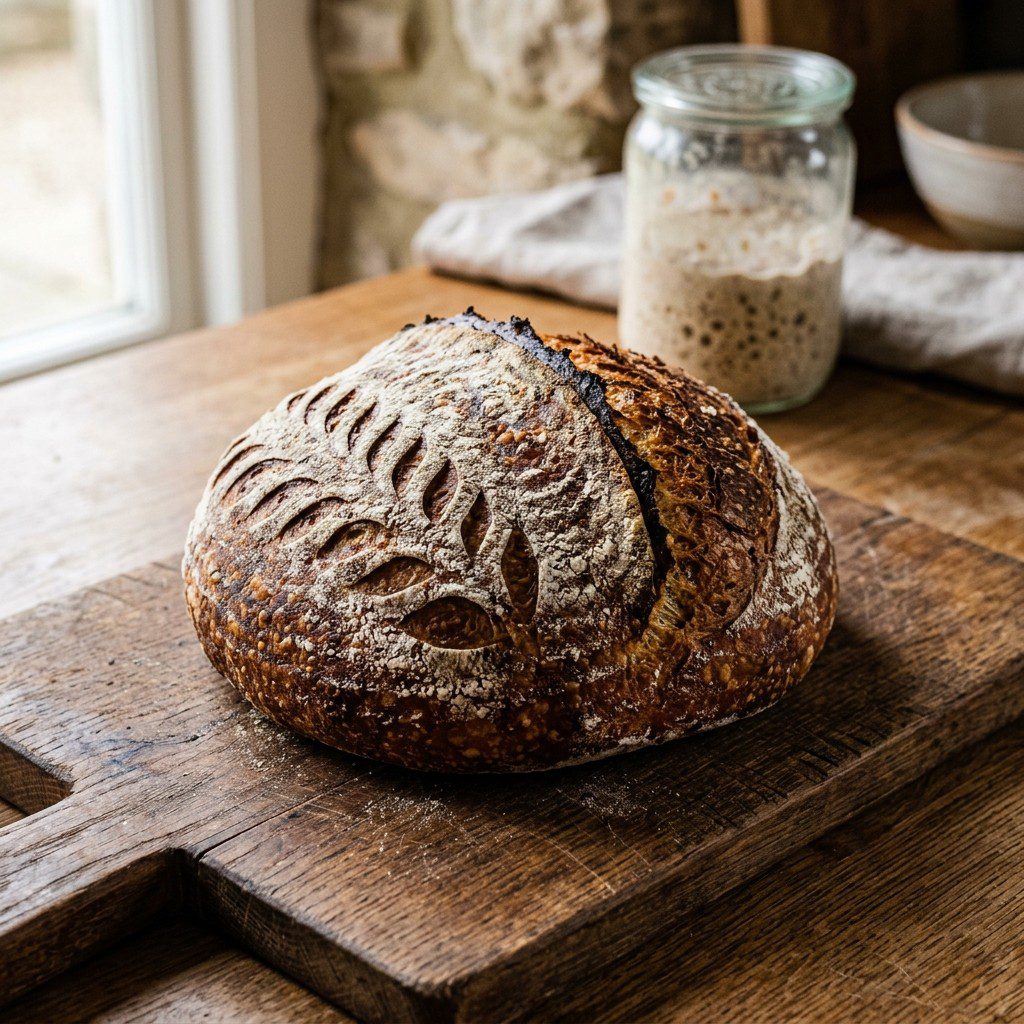
Heritage Sourdough Starter & Artisan Bread
Nurture a sourdough starter and bake it into a crusty, open-crumbed artisan loaf — the deeply satisfying, slow craft of real bread, from living culture to golden crust.
Baking sourdough is less a recipe than a relationship — you tend a living starter, learn its rhythms, and are rewarded with bread of extraordinary character: a crackling crust, an open, tender crumb, and a flavor no commercial yeast can match. This heritage approach walks from starter to finished loaf, the slow and deeply satisfying craft of real bread. It asks for patience and attention, and it gives back one of the most rewarding things a home baker can make.
Nurturing the Starter
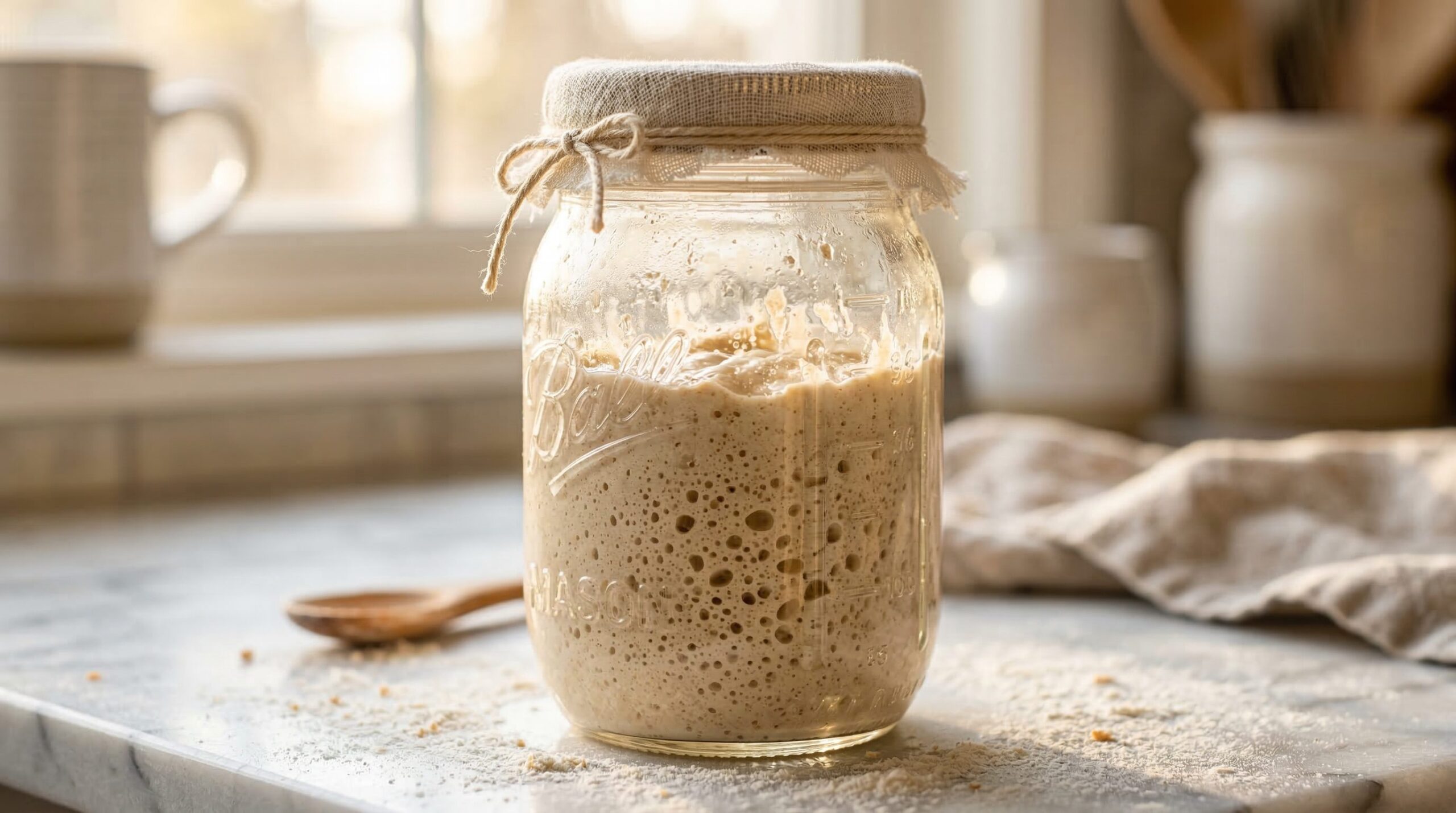
Feed and tend the starter over days until it is lively and bubbling, ready to leaven a loaf. A healthy, active starter is the whole foundation of sourdough — learn to read when it is at its peak, and everything that follows falls into place. This is the patient heart of the craft.
Shaping, Proving, and Baking
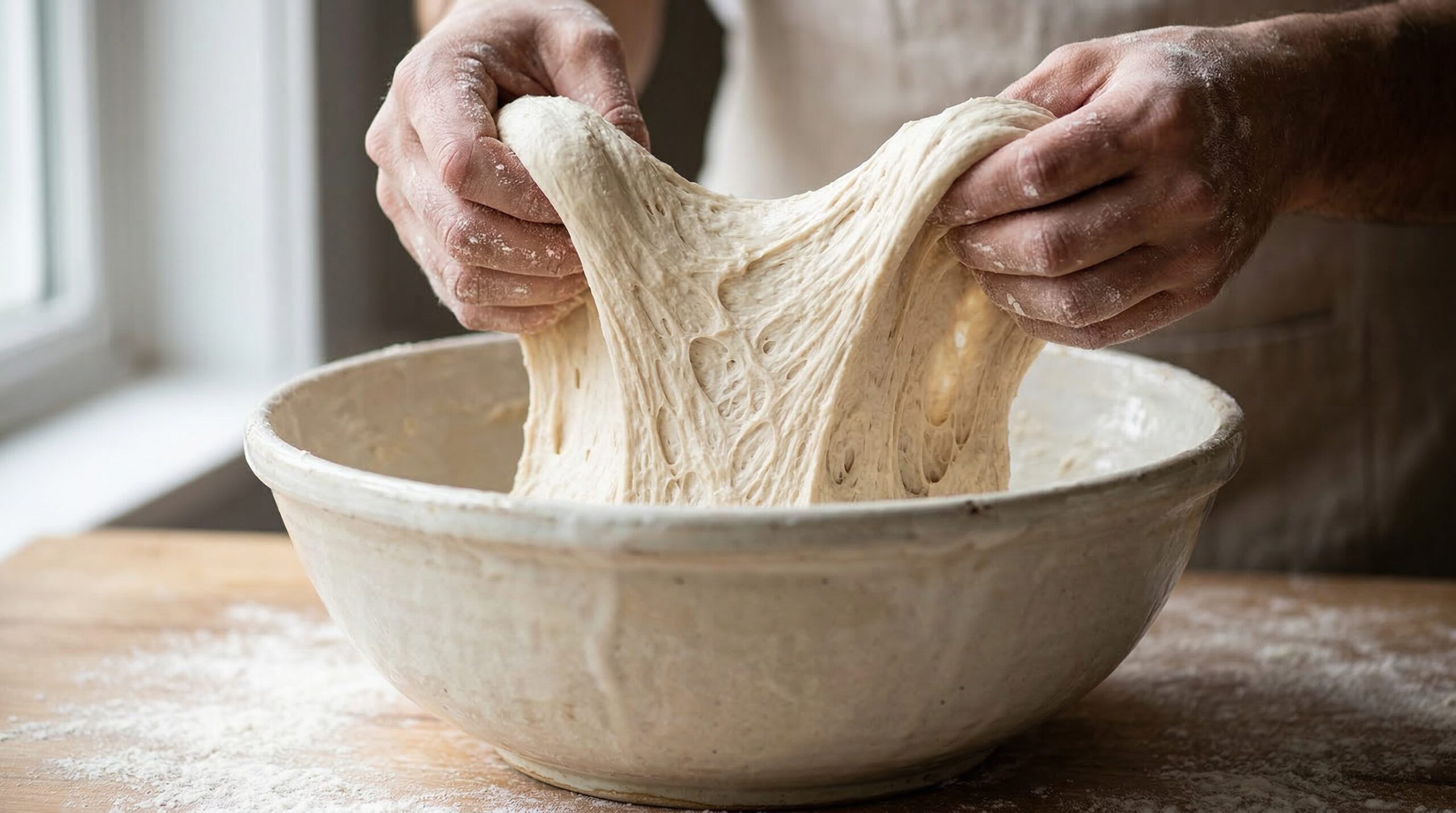
Mix, fold, and shape the dough, give it a long, slow prove, and bake it in a hot oven for a crackling crust and open crumb. The long fermentation is what develops sourdough's signature flavor and texture, so let time do its work — a good loaf cannot be rushed, and the wait is the whole point.
Heritage Sourdough Starter & Artisan Bread
Ingredients
Equipment
Method
- On Day 1, mix the whole wheat flour and cool water in a clean glass mason jar.
- Cover the jar loosely and leave it on your countertop for 24 hours.
- On Day 2, discard half of the mixture from the jar.
- Add ½ cup of water to the remaining starter and stir to thin it out.
- Mix in 1 cup of unbleached all-purpose flour, cover loosely, and wait 24 hours.
- On Day 3, begin feeding the starter every 12 hours (twice a day) using the same ratio: discard half, add ½ cup water, and add 1 cup of unbleached all-purpose flour.
- Continue this twice-a-day feeding schedule until your starter begins to bubble vigorously and doubles in size, which typically takes about 7 days.
- Once your starter is active and bubbly, measure out 200 grams into a large mixing bowl.
- Add the bread flour, water, and salt to the bowl.
- Mix everything together until a shaggy dough forms.
- Cover the bowl with a clean kitchen towel and let the dough rise until doubled in size.
- Preheat your oven to 450°F and place a heavy Dutch oven inside to heat up.
- Carefully transfer the risen dough into the hot Dutch oven lined with parchment paper, or place it in a loaf pan rubbed with olive oil.
- Cover the Dutch oven with its lid and bake for 30 minutes.
- Remove the lid and bake uncovered for a final 15 minutes until the crust is dark, blistered, and caramelized.
- Allow the bread to cool completely before slicing.
The Heart of the Table
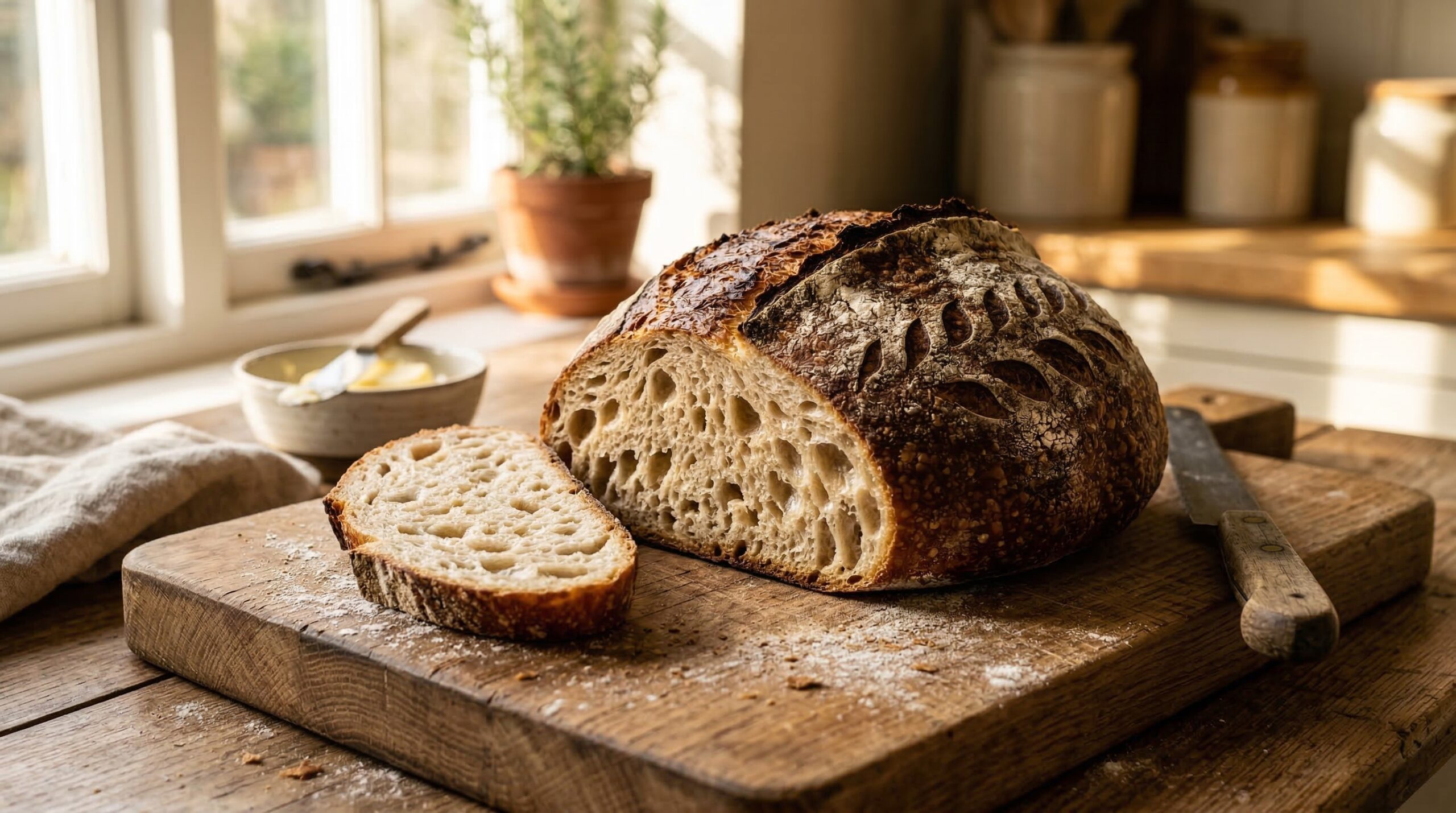
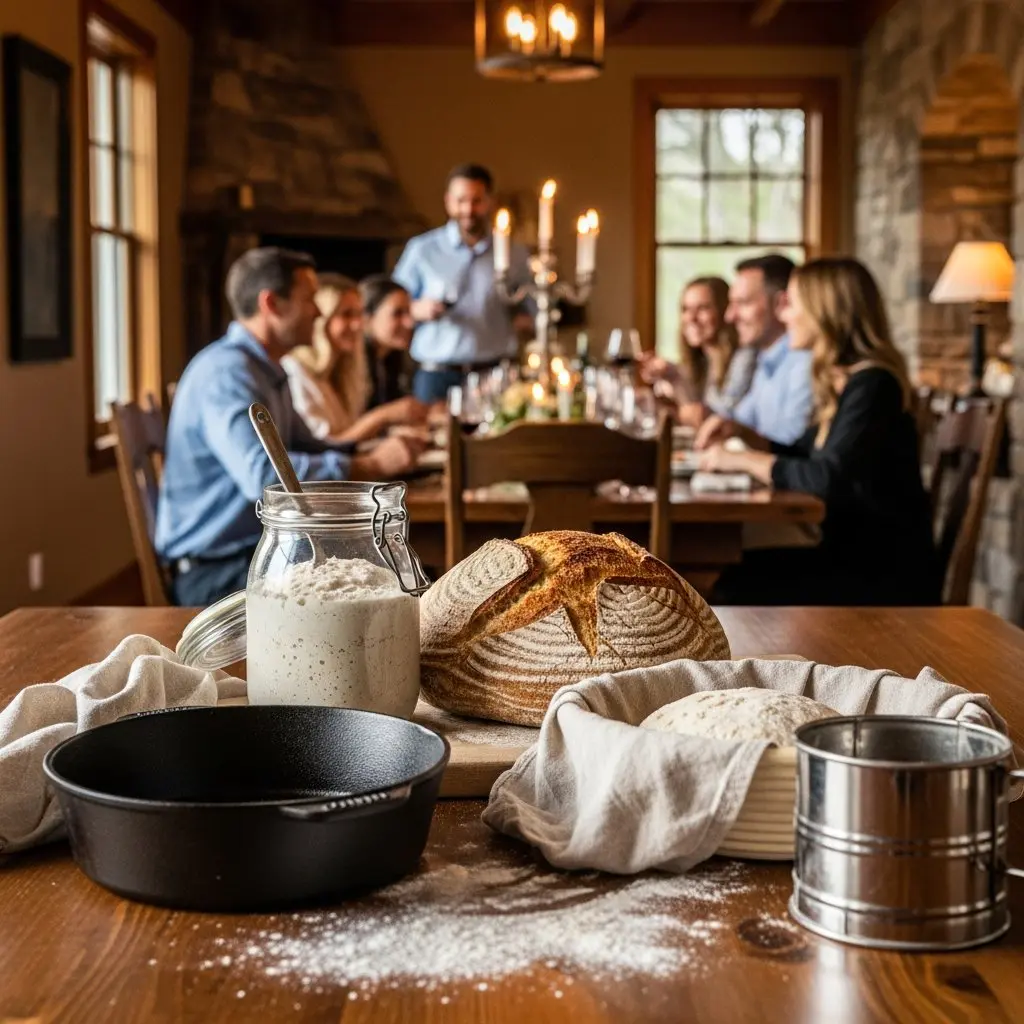
A loaf of homemade sourdough is one of the most generous things to share — it carries hours of patient care in every slice. To break bread you have nurtured from a living culture is deeply hospitable, a slow craft offered up to the table, the kind of bread that makes a simple meal feel profound.
The Art of the Host
Learn to read your starter and the dough rather than the clock, and bake the loaf in a preheated covered pot for the crustiest results. Let it cool completely before slicing so the crumb sets — cutting too soon spoils the texture you worked so patiently to build.
Neighborly Grace
- The Preparation: Sourdough is a slow, ahead-of-time craft by nature — the starter is tended over days and the dough often proofs overnight. Plan the loaf around its long ferment, and the baking itself becomes the simple, satisfying finish to days of quiet work.
- The Pour: A glass of earthy red wine suits a rustic loaf served with dinner; for a non-alcoholic pairing, a robust dark tea or simply good water lets the bread's deep flavor speak for itself.
- The Vibe: Serve it sliced thick with good butter or alongside a soup or supper, its crust crackling and crumb tender. This is slow, artisan baking — the deeply satisfying craft of real bread, made to be shared warm and savored.