
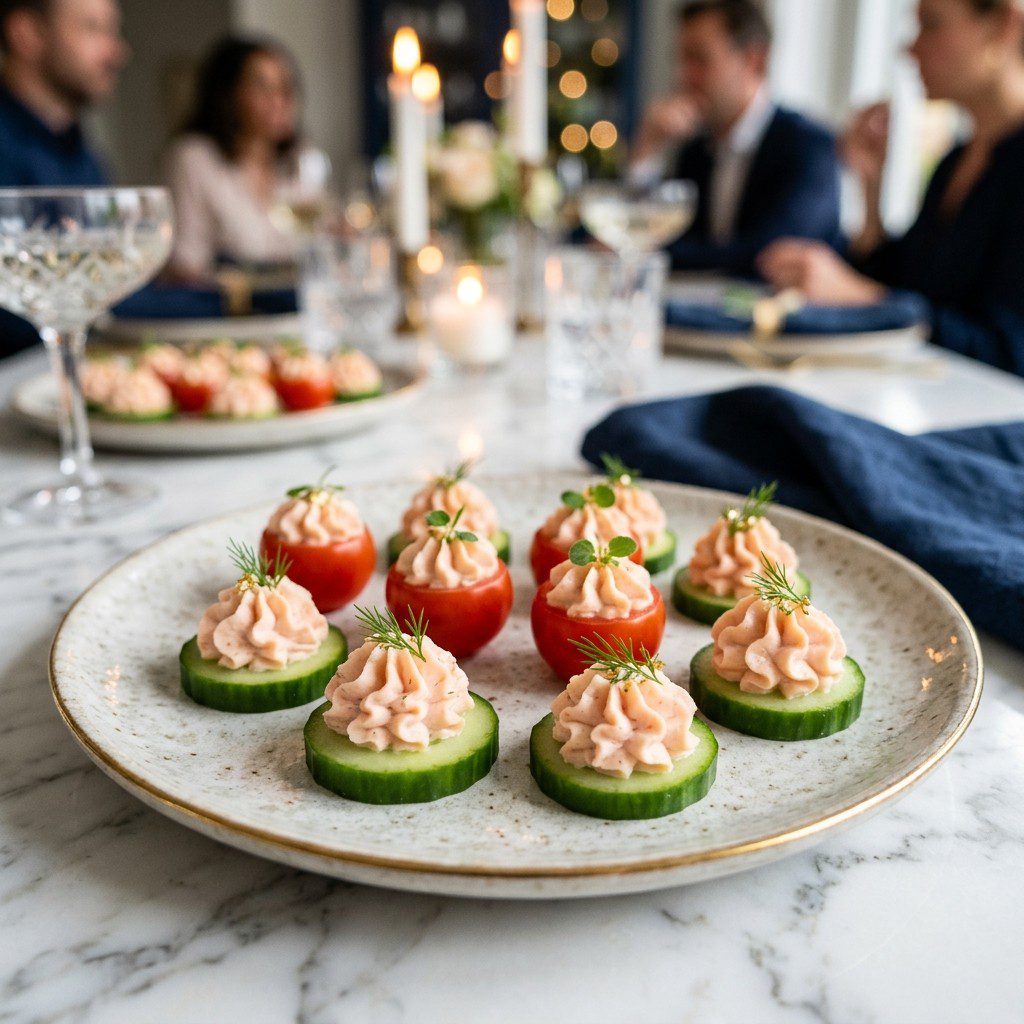
Salmon Mousse
Blend flaked salmon with cream cheese, buttermilk, lemon, and fresh herbs into a light, airy mousse — pulsing just until aerated and pale pink, never into a paste. Chill it firm, then pipe it into hollowed cherry tomatoes, celery, and cucumber rounds for a passed hors d'oeuvre that looks straight out of a grand old dinner party.
Salmon mousse is a touch of old-world glamour — the kind of airy, elegant appetizer that graced every stylish gathering a generation ago and deserves a place at the modern table too. Light, creamy, and bright with lemon and dill, piped into little vegetable vessels, it's refined without being fussy, and a wonderful way to turn leftover salmon (or a humble can) into something that looks genuinely luxurious.
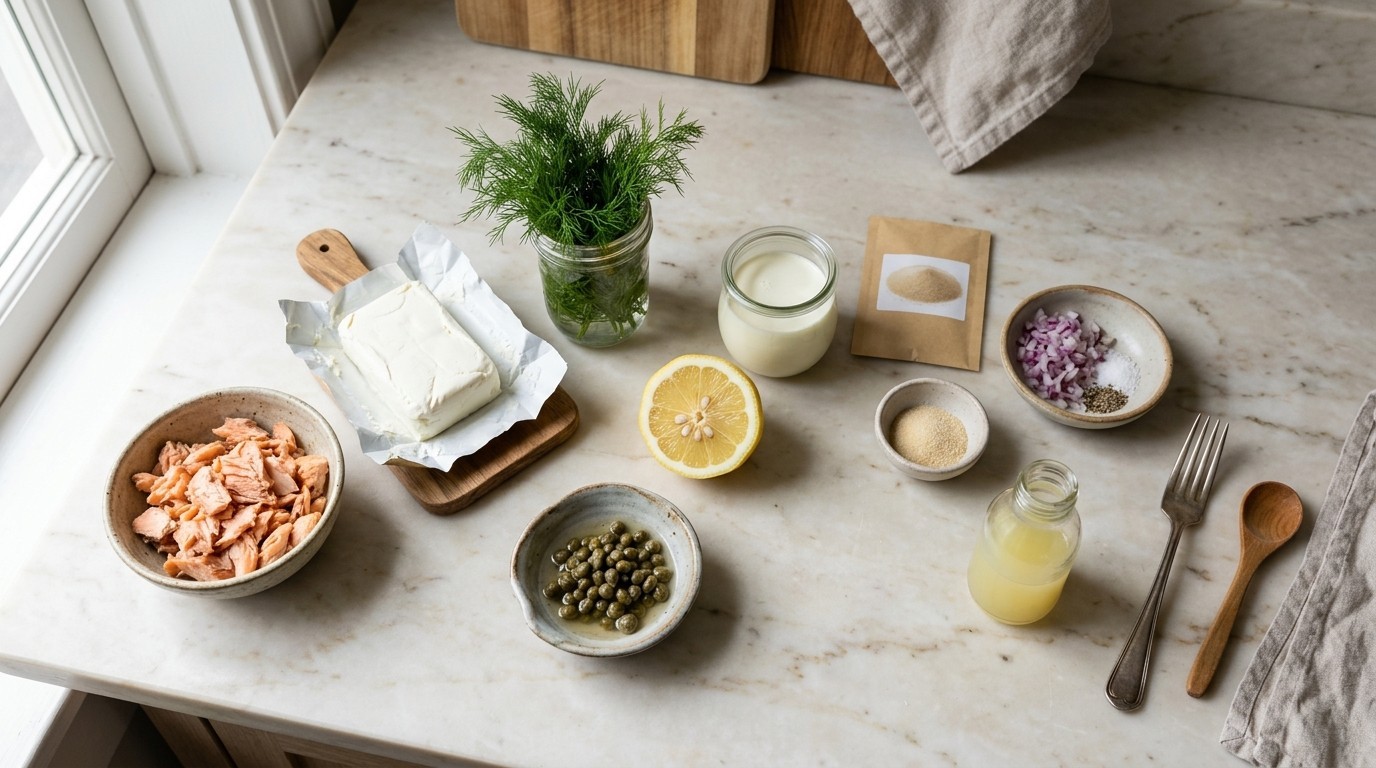
Whipping It Airy
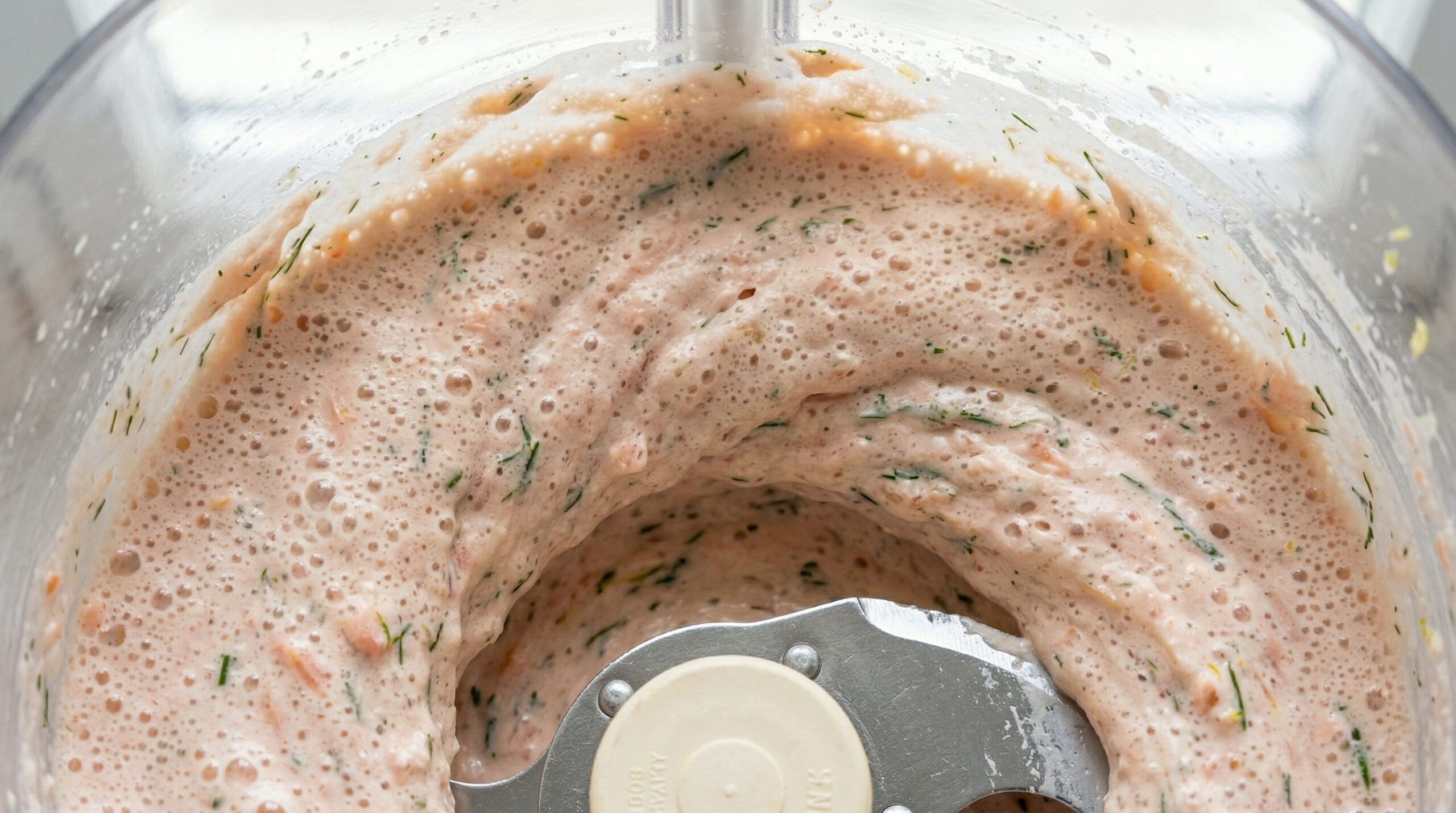
The word mousse is a promise of lightness, and the technique delivers it. Build a smooth cream base first — cream cheese, buttermilk, lemon, Worcestershire, and aromatics blended silky — then add the flaked salmon and fresh herbs and pulse until the mixture turns pale pink, light, and aerated. The critical restraint is knowing when to stop: pulse just to that airy, slightly rustic texture, and don't run the machine into a dense, liquid paste. That bit of air is what makes it a mousse rather than a spread.
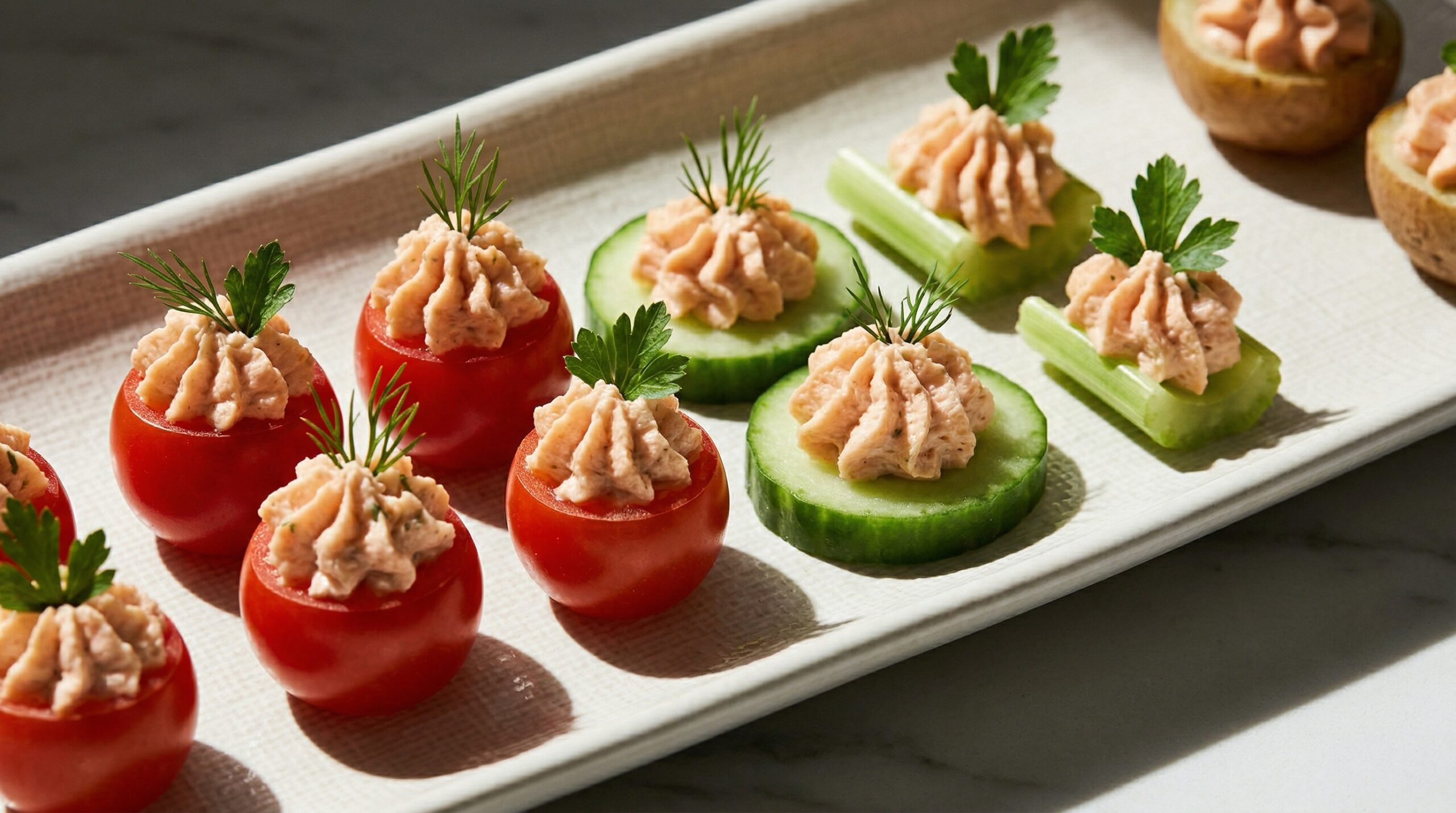
Chill, Then Pipe
Chilling is what makes the mousse pipeable and pretty. Transfer it to a pastry bag fitted with a star tip and refrigerate at least thirty minutes — that rest firms the cream cheese and locks the airy structure in place, so it holds a crisp, decorative shape instead of slumping. Then pipe generous rosettes into hollowed cherry tomatoes, along lengths of celery, and onto cucumber rounds. Each little vessel becomes a two-bite jewel, ready to pass on a tray.
Salmon Mousse
Ingredients
Method
- If using canned salmon, drain it aggressively through a fine-mesh colander. Meticulously remove and discard all skin and bones from the fish. Flake the meat thoroughly with a fork and set aside.
- Place the fully softened cream cheese, buttermilk, chopped green onions, fresh lemon juice, Worcestershire sauce, minced garlic, and prepared mustard into the bowl of a high-capacity food processor.
- Pulse the machine continuously until everything breaks down and comes together into a completely smooth, thick cream base.
- Add the flaked salmon, chopped fresh parsley, fresh dill, onion powder, and garlic powder directly to the processor bowl.
- Pulse the machine repeatedly until the salmon is fully integrated and the mixture becomes light, pale pink, and highly aerated. (Do not overprocess into a pure liquid; retain a slight, rustic texture).
- Stop the machine, taste, and season aggressively with the kosher salt and coarse black pepper. Pulse one final time to combine.
- Transfer the salmon mousse to a professional pastry bag fitted with a large star tip (or an airtight container if serving as a dip).
- Refrigerate for a minimum of 30 minutes. This critical chilling phase solidifies the cream cheese, locking the airy structure in place for flawless piping.
- To serve, pipe the chilled mousse heavily into the hollowed cherry tomatoes, celery sticks, and onto the cucumber rounds. Serve immediately.
The Heart of the Table
There's a gracious, old-fashioned generosity in a passed hors d'oeuvre — something small and beautiful offered from a tray as guests arrive, a signal that the evening is an occasion. Salmon mousse carries that spirit of gentle elegance, and there's real charm in the way it dresses up simple, thrifty ingredients into something that makes people feel they've been welcomed somewhere special.

The Art of the Host
A high-capacity food processor whips the mousse light, and a pastry bag with a large star tip is what elevates it from dip to hors d'oeuvre — the decorative pipe is half the charm. If you'd rather serve it as a dip, an airtight container and a bowl work just as well. Soften the cream cheese fully and chill the finished mousse before piping, or it won't hold its shape.
Neighborly Grace
- The Preparation: Pulse the salmon with cream cheese, buttermilk, lemon, and herbs just until aerated and pale pink, never into a paste, then chill it firm before piping it into cherry tomatoes, celery, and cucumber. Make it the day before.
- The Pour: A dry sparkling wine or a crisp Sauvignon Blanc is the classic match for salmon mousse. For a non-alcoholic option, a sparkling lemon-dill water keeps it elegant.
- The Vibe: This is retro-elegant entertaining — the piped, pale-pink bites look polished and refined, so set them out on a platter and let them feel like a small celebration.