
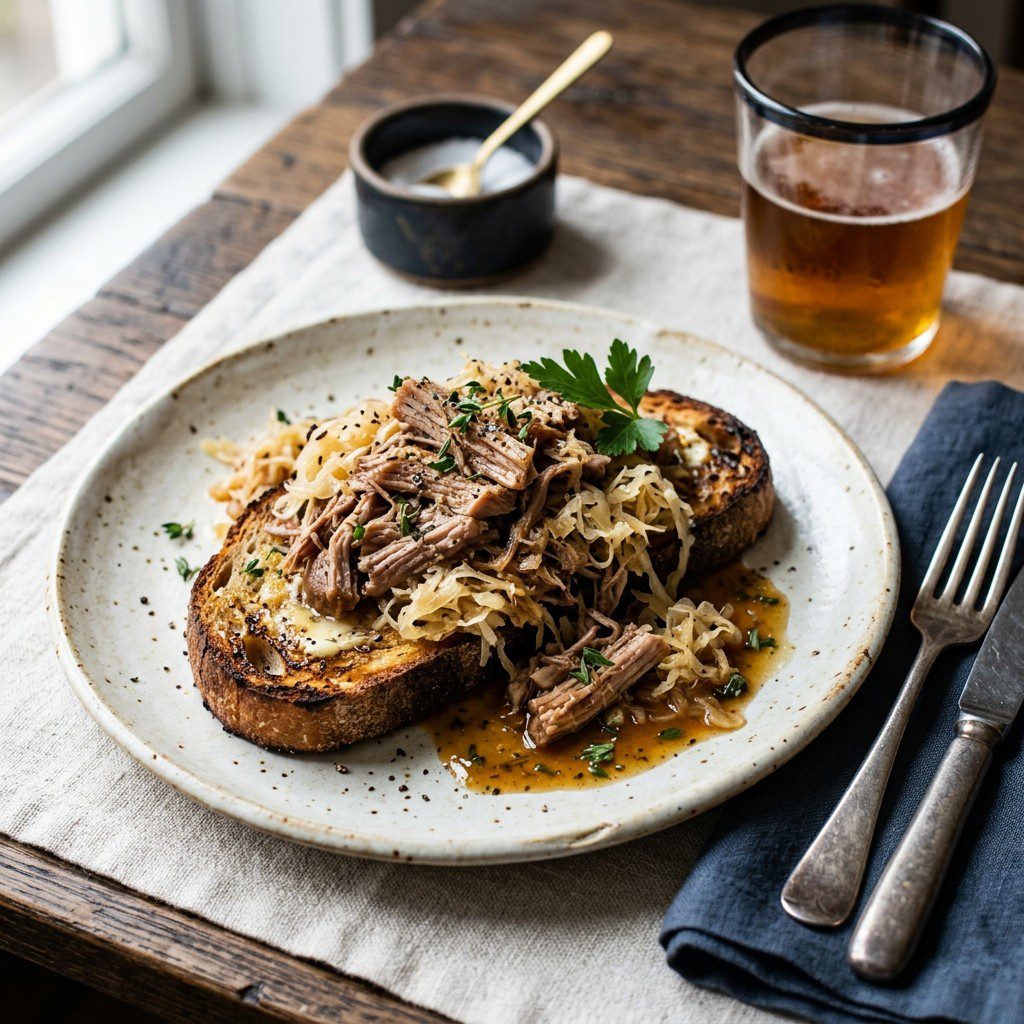
Slow-Braised Pork Shoulder & Kraut
Sear a pork shoulder, then braise it low and slow with sauerkraut until the meat pulls apart tender and the kraut mellows into something rich and savory. It is deep, cold-weather comfort with German and Eastern-European roots — the kind of hearty, tangy braise that fills the house and feeds a table.
There are few things as comforting on a cold day as a pot of pork and sauerkraut, slowly braised until the meat falls apart and the kraut softens into a rich, tangy foil. This is old-world cooking — German, Polish, Alsatian — that turns an inexpensive pork shoulder and a humble jar of kraut into something deeply satisfying. The long, gentle braise does all the work, melding the two into a savory, sour-sweet whole that only gets better as it goes.
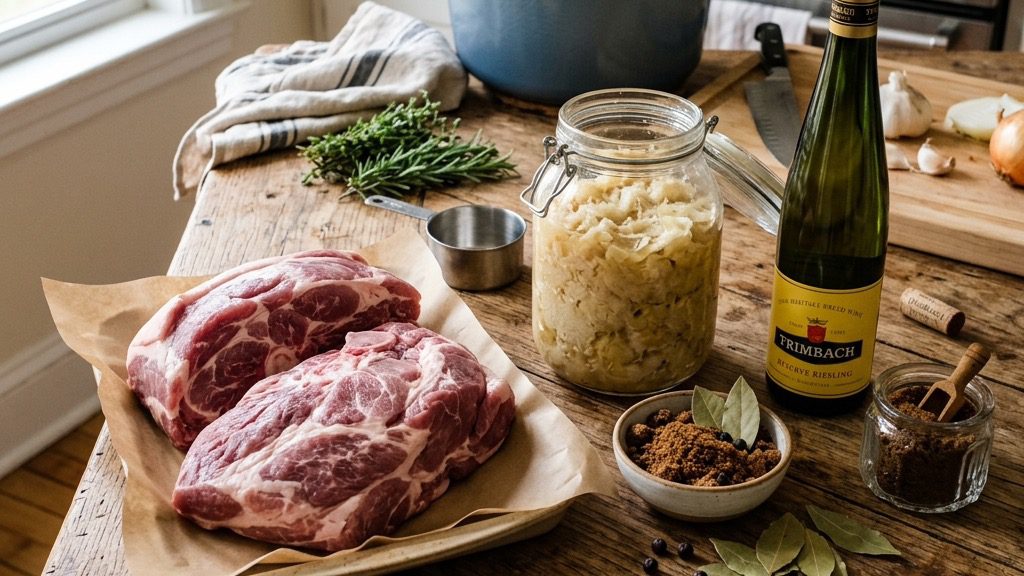
Searing & Building the Braise
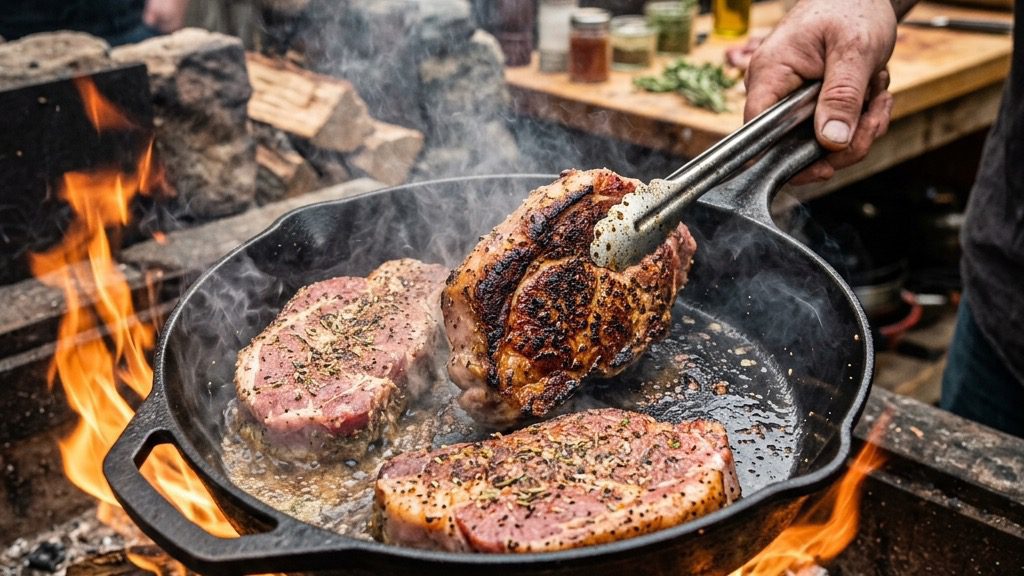
Depth starts with a hard sear. Brown the pork shoulder well on all sides so it develops a deep crust and leaves flavorful browned bits in the pot — that fond is the foundation of the braise. Then build the pot around it, nestling the seared pork into the sauerkraut with aromatics and enough liquid to braise. The kraut's tangy brine will season and tenderize the meat as it cooks, while the pork's richness mellows the kraut's sharpness.
The Low, Slow Braise
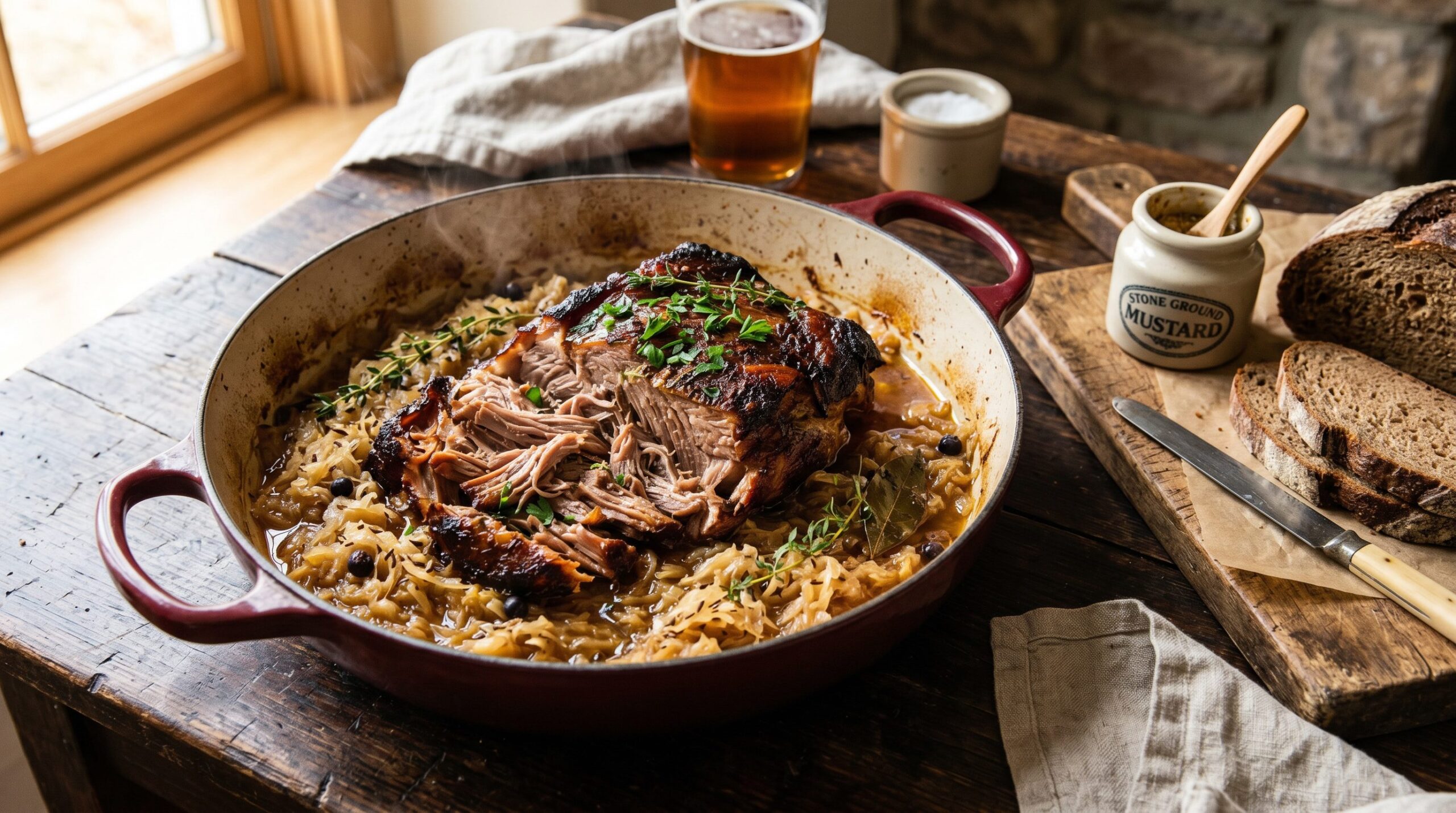
Now patience takes over. Cover the pot and braise it low and slow, on the stovetop or in a gentle oven, for the hours it takes the tough shoulder to break down into meltingly tender, pull-apart meat. As it cooks, the sauerkraut softens and rounds out, losing its raw bite and taking on the savory richness of the pork. Keep the heat gentle so nothing scorches, and let it go until a fork twists cleanly through the meat and the whole pot smells deep and comforting.
Slow-Braised Pork Shoulder & Kraut
Ingredients
Equipment
Method
- Pat the pork cuts completely dry with a paper towel. This ensures a proper crust. Season the meat aggressively on all sides with the kosher salt, black pepper, and smoked paprika.
- Heat the olive oil in a large, heavy skillet over medium-high heat. Sear the pork on all sides until a deep, dark brown crust forms, about 4 minutes per side. Do not cook the pork all the way through; this step is strictly for flavor development.
- Scatter half of the thinly sliced onions and half of the undrained sauerkraut into the bottom of a large slow cooker.
- Nestle the seared pork cuts deeply into the kraut bed. Pour any accumulated resting juices from the searing skillet over the meat.
- In a small bowl, whisk together the white wine (or cider) and brown sugar until dissolved.
- Cover the pork with the remaining sauerkraut and onions. Tuck the bay leaves into the mixture and sprinkle the caraway seeds over the top. Pour the wine and sugar mixture evenly over everything.
- Secure the lid of the slow cooker. Set the machine to LOW and walk away.
- After 6 to 8 hours, carefully remove the lid. The pork should be incredibly tender and practically falling off the bone.
- Use two forks to gently shred the pork directly into the hot sauerkraut, discarding any bones. Serve immediately alongside roasted root vegetables or spooned over thick slices of toasted sourdough.
The Heart of the Table
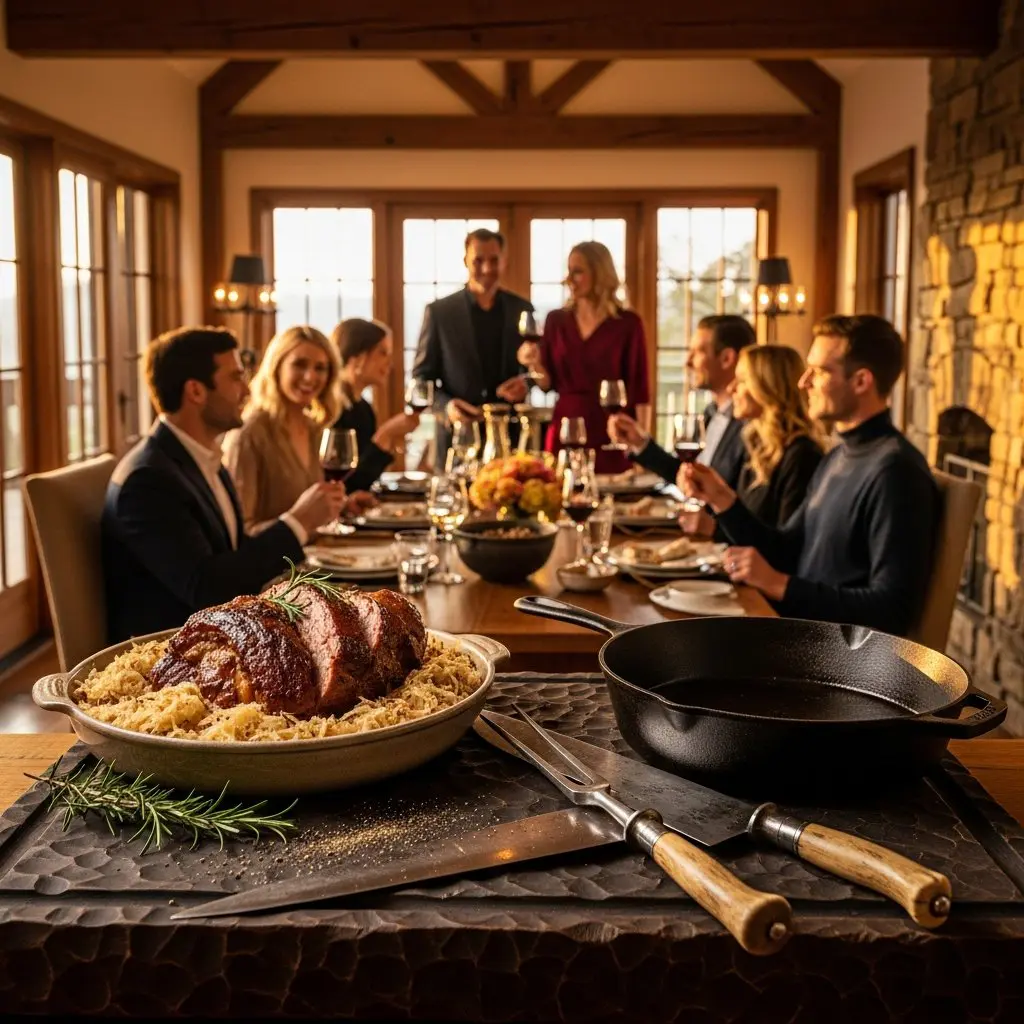
A big, humble braise like this is the essence of old-world hospitality — inexpensive, generous, and made to feed a table with warmth. To give a tough cut the hours it needs and set it, tender and steaming, before the people you love is honest, unhurried care, the kind of cooking that says come in from the cold and stay a while.
The Art of the Host
A heavy Dutch oven is the ideal vessel, holding a steady, gentle heat over the long braise. Sear the pork hard for the deepest flavor, keep the braise at a bare simmer so the meat stays tender, and don't rinse the kraut of all its tang — that brightness is what balances the richness. Like all braises, it is even better the next day.
Neighborly Grace
- The Preparation: This is a make-ahead champion — braise it a day ahead and reheat it gently, and the flavors will only deepen as the pork and kraut meld overnight. It holds and reheats beautifully, and it scales up for a crowd, which makes it an ideal, low-stress centerpiece for a cold-weather gathering.
- The Pour: A crisp Riesling or a German-style lager is the classic, regional match for pork and kraut. For a non-alcoholic option, a sparkling apple cider or a dark ginger beer suits the tangy, savory braise.
- The Vibe: This is hearty, old-world, cold-weather comfort — pile the tender pork and softened kraut onto plates with mustard and good bread or potatoes alongside. It is a warm, generous, stick-to-your-ribs dinner made for a chilly evening and a full table.