
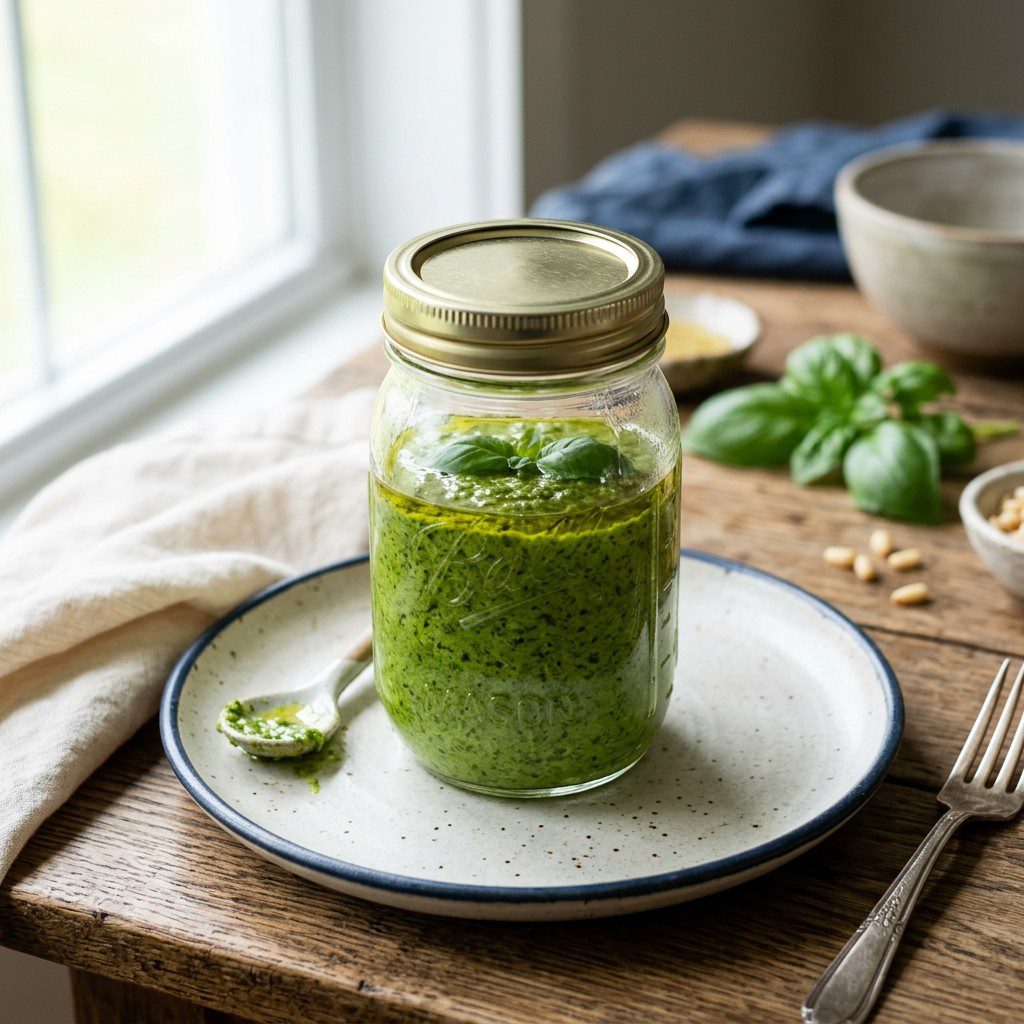
Garlic Scape Pesto with Basil and Pine Nuts
Turn a bunch of garlic scapes into a vibrant, freezer-friendly pesto: pulse the scapes fine, add basil, cilantro, toasted pine nuts, and Parmesan, then stream in olive oil to a creamy paste. Made in twenty minutes, it keeps a week refrigerated and six months frozen — the saucier's way of catching a fleeting seasonal ingredient before it's gone.
Each June, garlic plants send up curling green shoots called scapes — a fleeting farmers-market treasure that vanishes almost as quickly as it appears. The knowing cook grabs them and makes pesto. Milder and sweeter than a raw garlic clove, scapes have all the aromatic backbone and none of the harsh bite, which makes them a natural base for a bright, spreadable green sauce that's endlessly useful and easy to preserve.
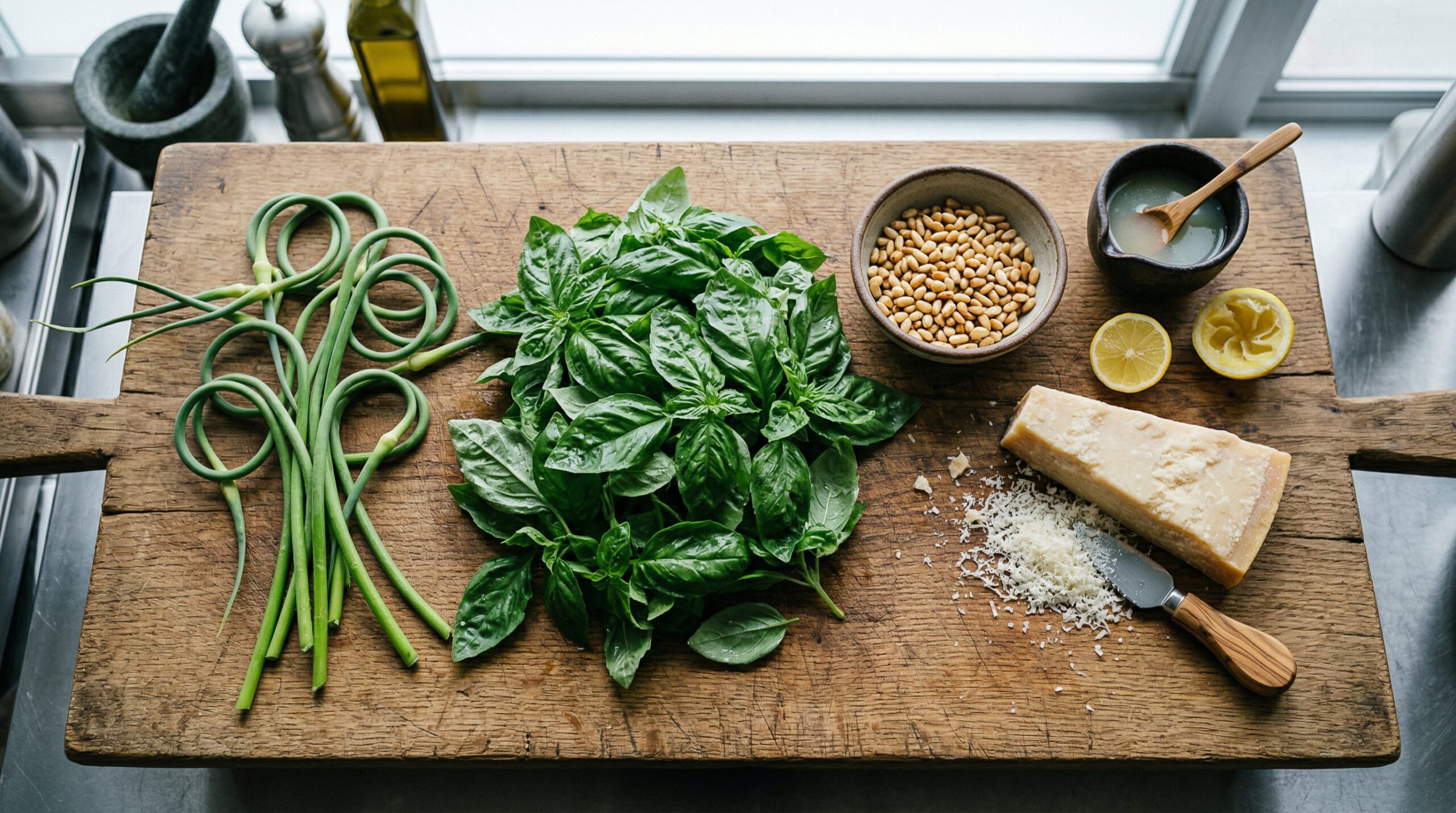
What Are Garlic Scapes
Scapes are the tender flower stalks of hardneck garlic, harvested in early summer so the plant sends its energy back into the bulb. They taste like garlic gentled — green, grassy, aromatic, and sweet rather than pungent. Because they're mild, you can use them generously; a whole bunch, chopped and pulsed fine, gives this pesto its distinctive character without the sharp heat that raw garlic would bring to a no-cook sauce.
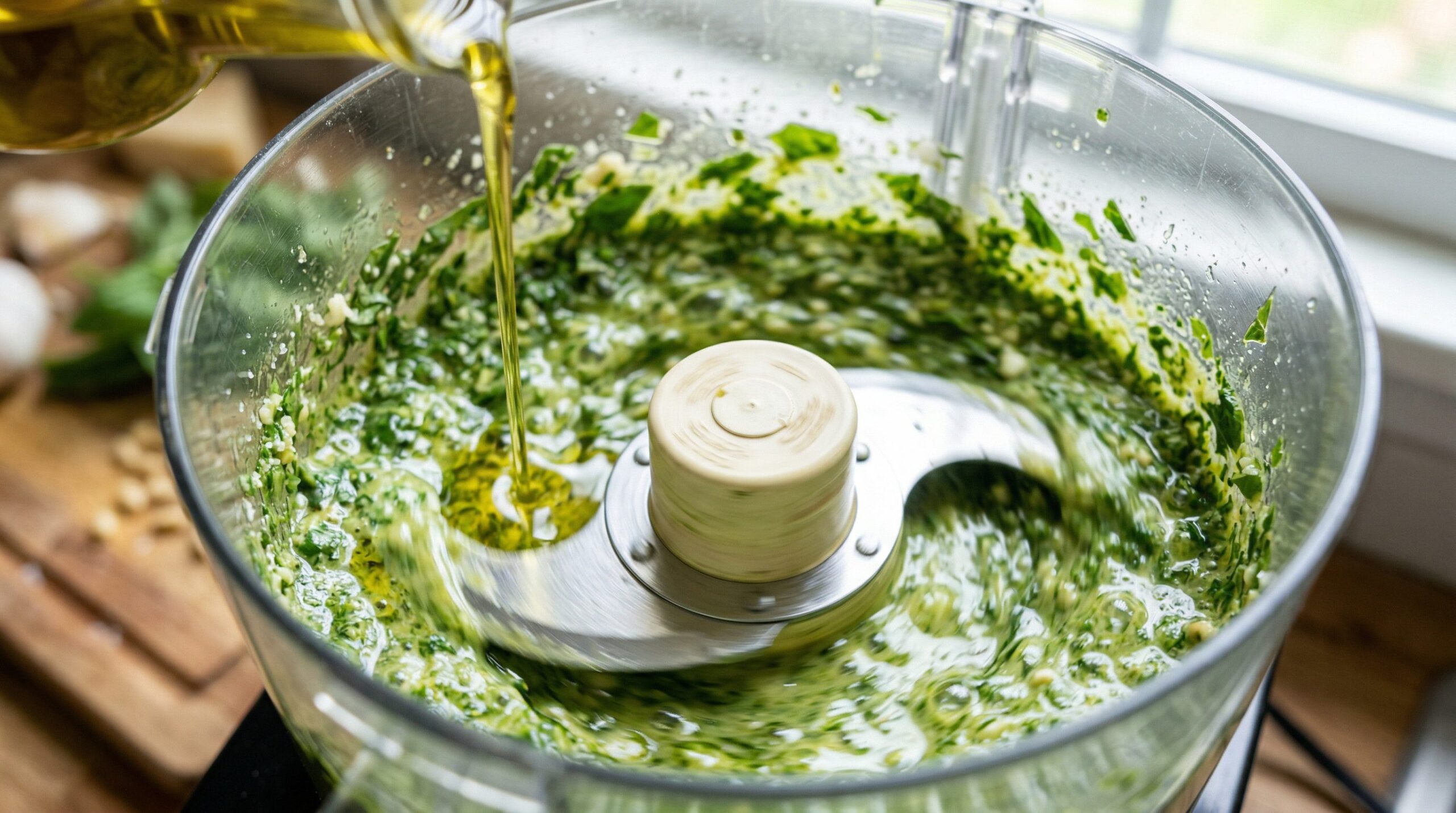
Blending and Storing the Pesto
Build the pesto in stages for the best texture. Pulse the scapes to a fine chop first, then add the basil, cilantro, lemon, Parmesan, and toasted pine nuts and pulse to a coarse, textured blend. With the machine running, stream in the olive oil to blend everything into a smooth, creamy, spreadable paste, and season at the end. To store, press it into a jar and float a thin layer of olive oil on top — that seal keeps it from oxidizing and browning, so it stays vivid green for a week, or six months in the freezer.
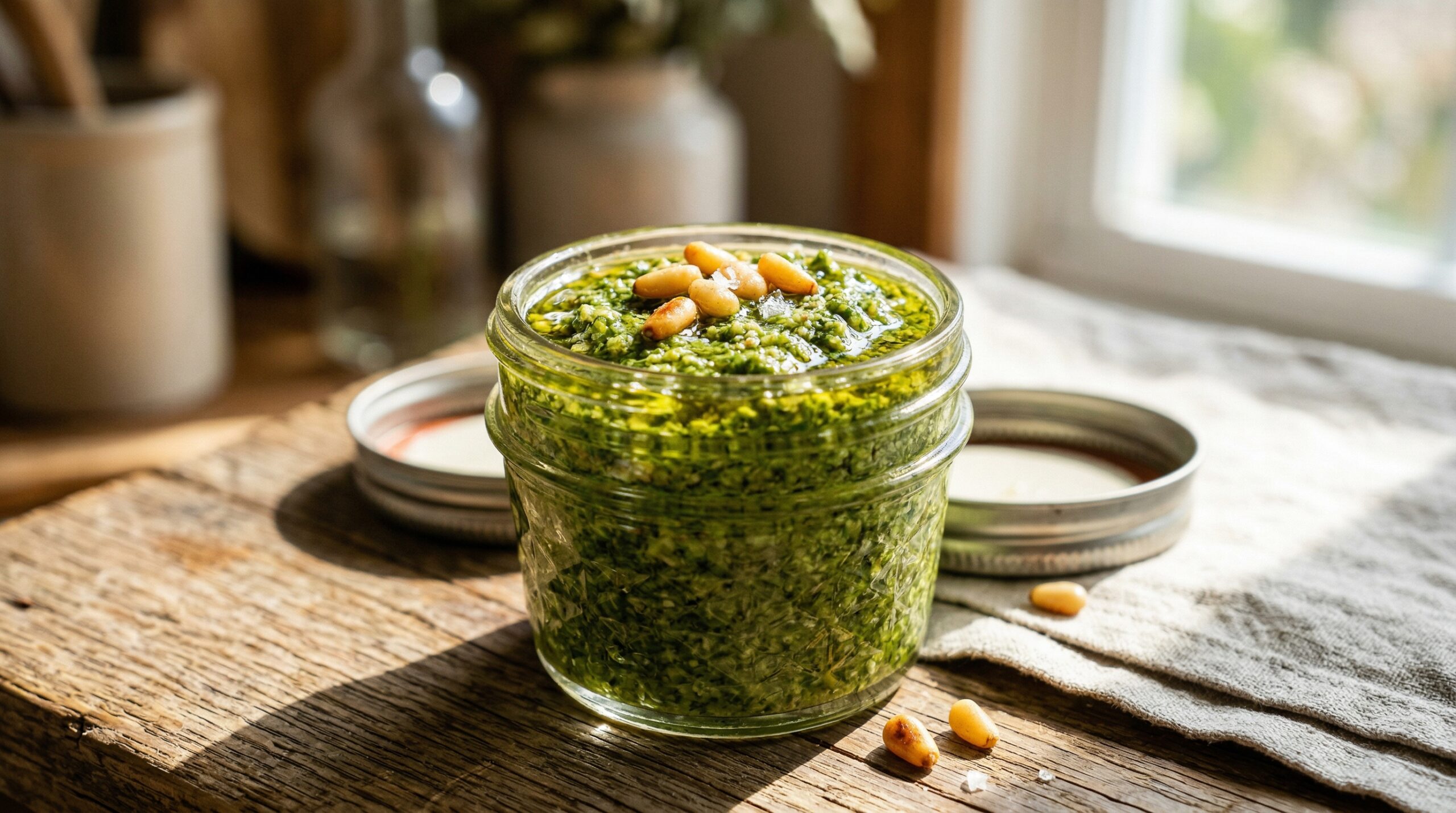
Garlic Scape Pesto with Basil and Pine Nuts
Ingredients
Method
- Place the roughly chopped garlic scapes into the vessel of a high-speed food processor. Pulse several times until a fine, uniform chop is achieved.
- Introduce the fresh basil, microgreen shoots, lemon juice, grated Parmesan, and toasted pine nuts.
- Pulse the mixture until all components are integrated into a textured, smooth state.
- With the processor running at a constant speed, slowly drizzle the olive oil through the feed tube. This creates a smooth, creamy blend and a spreadable paste.
- Stop the machine and introduce the kosher salt and coarse black pepper. Execute one final pulse to incorporate.
- Transfer the pesto to a glass mason jar or resealable container.
- To prevent oxidation, top the surface with a thin layer of olive oil before sealing.
- Store refrigerated for up to 7 days or freeze in small portions for up to 6 months.
The Heart of the Table
There is an old, satisfying wisdom in preserving the season at its peak — capturing something fleeting in a jar so its flavor lasts long after the market stall is gone. A well-stocked larder is a quiet form of hospitality: with a jar of scape pesto on hand, you're always minutes away from feeding someone well, and that readiness is its own kind of generosity.

The Art of the Host
A high-speed food processor is the only real tool required — it does the chopping and blending in one bowl. Toast the pine nuts first for a deeper, nuttier flavor, and keep clean glass jars on hand for storing. The finishing trick is that thin film of olive oil poured over the top before sealing; it's what keeps the pesto bright green instead of dull brown.
Neighborly Grace
- The Preparation: Pulse the scapes fine first, then add the basil, cilantro, pine nuts, and Parmesan and stream in the oil to a creamy paste. It keeps a week in the refrigerator and freezes well, so make a big batch.
- The Pour: However you use it — on pasta, over grilled vegetables — a crisp white wine flatters the fresh, garlicky pesto. For a non-alcoholic option, a sparkling lemon water lets its brightness shine.
- The Vibe: This is the taste of early summer in a jar — vivid green and fragrant, the kind of made-from-scratch staple that quietly elevates whatever it touches.