
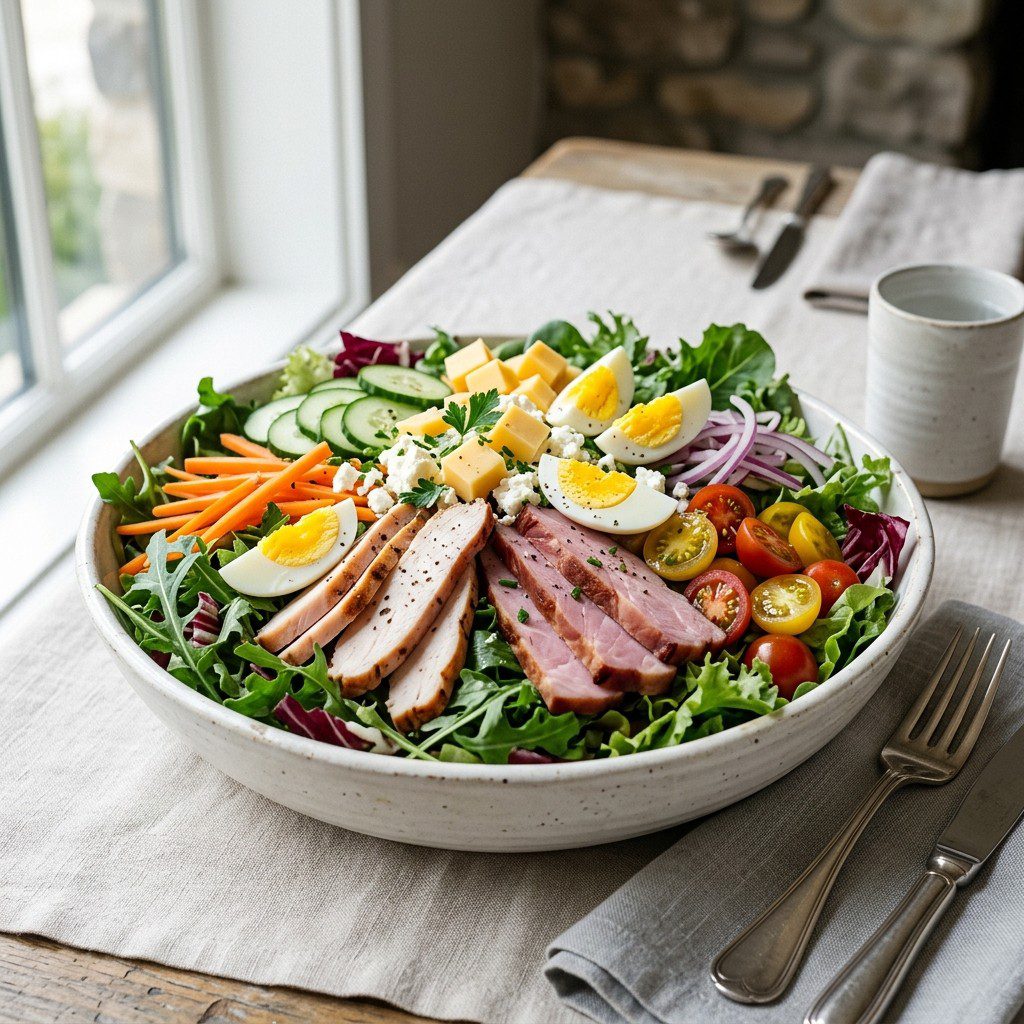
Garden Harvest Chef's Salad
Compose the classic chef's salad rather than tossing it — arrange the ham, turkey, cheese, and egg in neat sections over the greens so it reads as generous and intentional. The upgrade is the dressing: a shallot-and-Dijon white balsamic vinaigrette, whisked to a creamy mixture, that lifts the whole plate above the diner version it descends from.
The chef's salad is a genuine American classic, and like most classics it's usually served carelessly — a heap of cold cuts on tired lettuce. Treated properly, it's a complete and beautiful meal: crisp garden vegetables, savory ham and turkey, sharp cheese, and jammy eggs, composed with care and dressed in a bright house vinaigrette. This is that salad restored to its full, satisfying dignity.
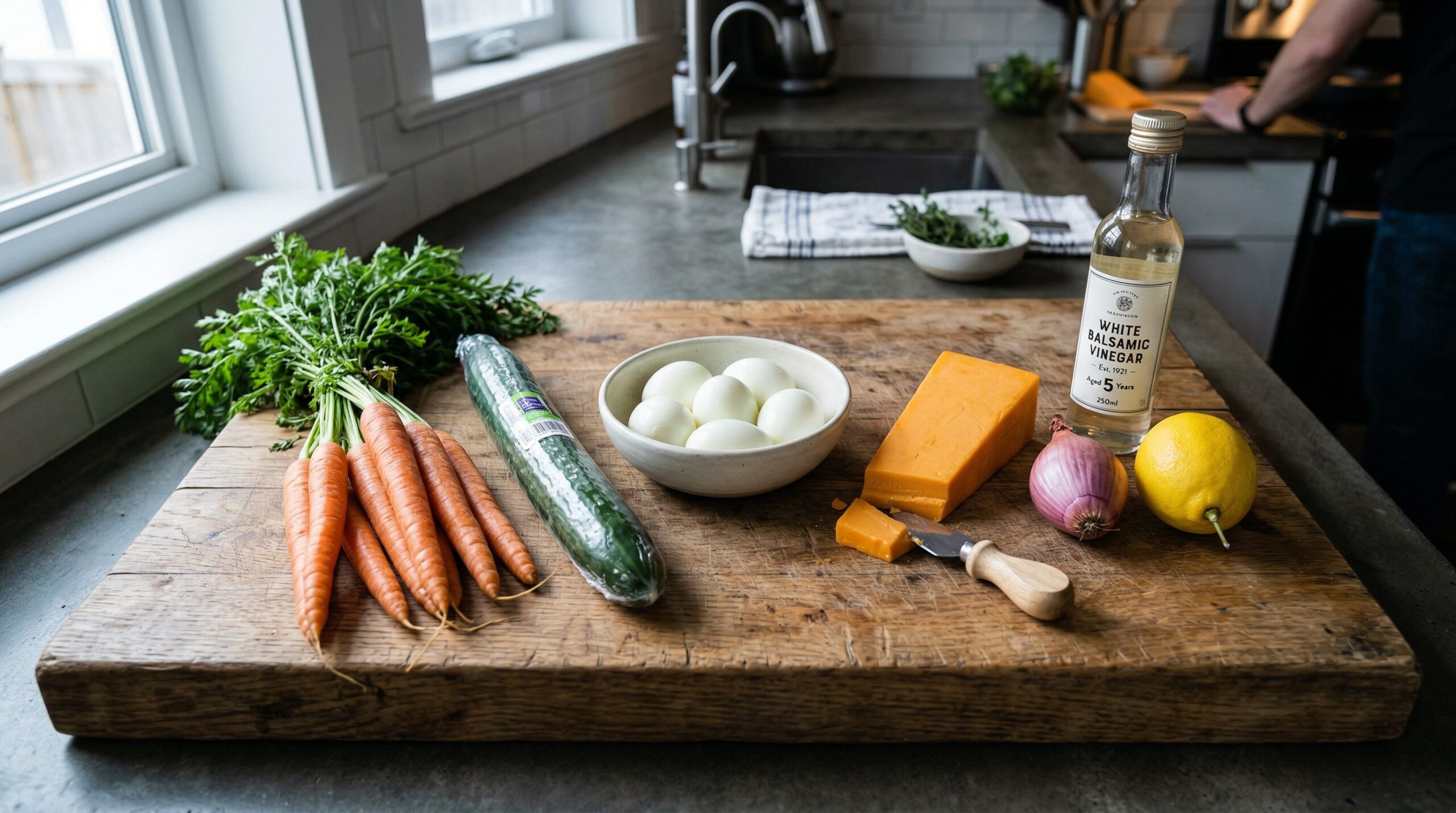
The White Balsamic Vinaigrette
The dressing is what separates a memorable chef's salad from a sad one. Whisk minced shallot, Dijon, lemon, and white balsamic vinegar into a sharp, aromatic base, then stream in olive oil to whisk it into something creamy and clinging rather than thin and oily. Fresh herbs — parsley, chives, or tarragon — give it a garden brightness. White balsamic keeps the vinaigrette pale and delicate so it dresses the greens without dulling their color.
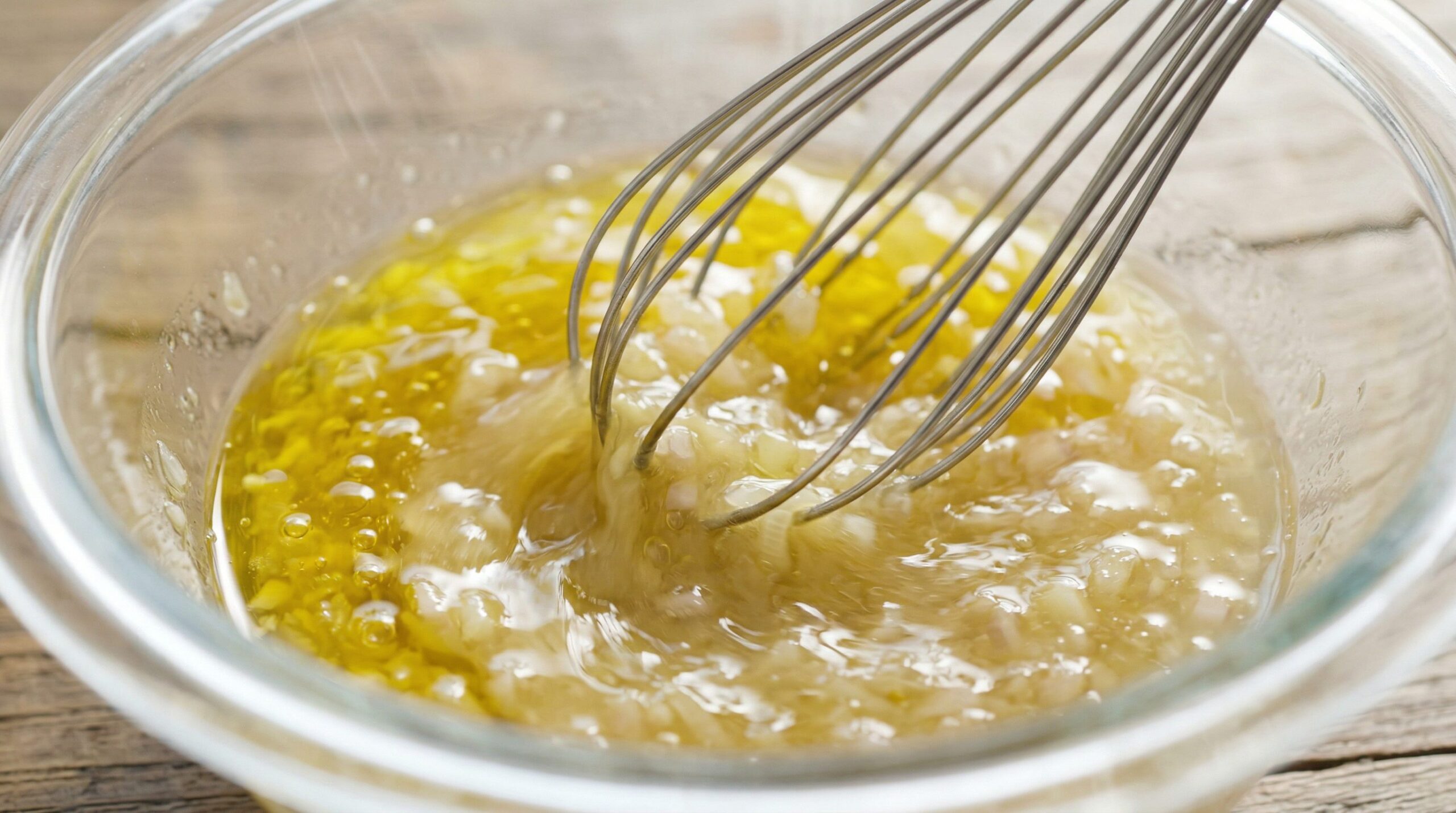
Composing, Not Tossing
A chef's salad is meant to be seen before it's tossed. Build a voluminous foundation of mixed lettuces, then lay the carrots, cucumbers, tomatoes, and onion across the greens and arrange the ham, turkey, and cheese in distinct sections, with the quartered hard-boiled eggs set on top as the final anchor. Presented this way, every guest can see the abundance and take what they like — and the vinaigrette goes on only at the last moment, so nothing wilts before it reaches the table.
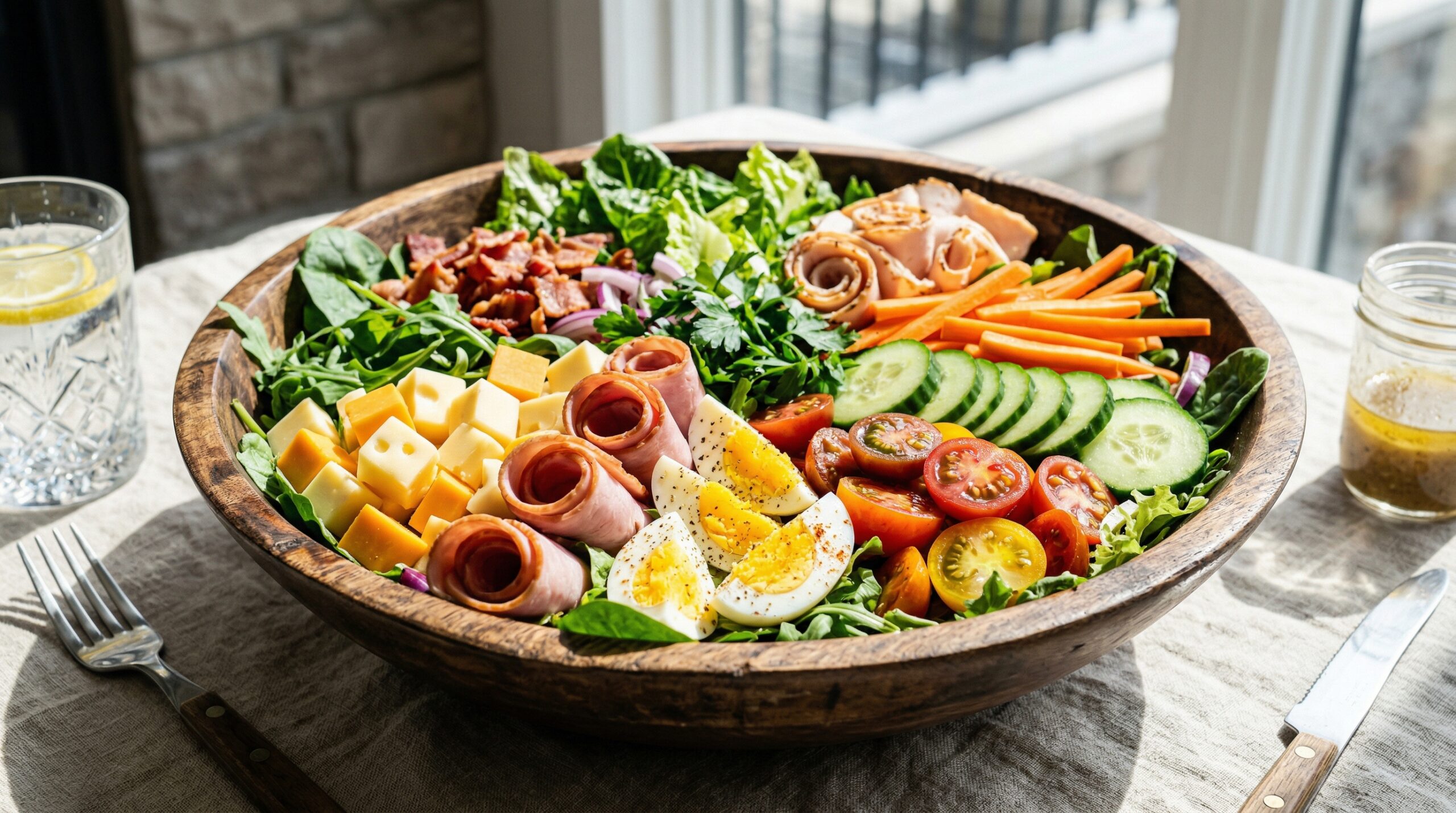
Garden Harvest Chef’s Salad
Ingredients
Method
- In a small glass vessel, combine the minced shallot, Dijon mustard, lemon juice, white balsamic vinegar, and chopped fresh herbs.
- Whisk vigorously to ensure a smooth acid-base.
- While whisking constantly, slowly drizzle in the olive oil to create a smooth, creamy dressing.
- Season with salt and pepper to taste. Transfer to an airtight container and refrigerate until ready for service.
- In a large, chilled wooden or ceramic bowl, arrange the lettuce leaves to create a voluminous foundation.
- Layer the carrots, cucumbers, tomatoes, and red onions across the greens to ensure even distribution.
- Distribute the ham, turkey, and cheese cubes evenly.
- Place the quartered hard-boiled eggs atop the composition to serve as the final protein anchor.
- Drizzle the white balsamic vinaigrette over the salad immediately prior to service, or serve alongside in a glass carafe. Toss gently to coat the greens without wilting them.
The Heart of the Table
A composed salad that's also a full meal is one of hosting's quiet pleasures — it feeds people generously and lightly at once, and it looks like care itself laid out in the bowl. There's a garden-lunch warmth to it, the sense of a table set on a bright afternoon with everything fresh and plentiful and nothing more complicated required than good ingredients arranged with attention.
The Art of the Host
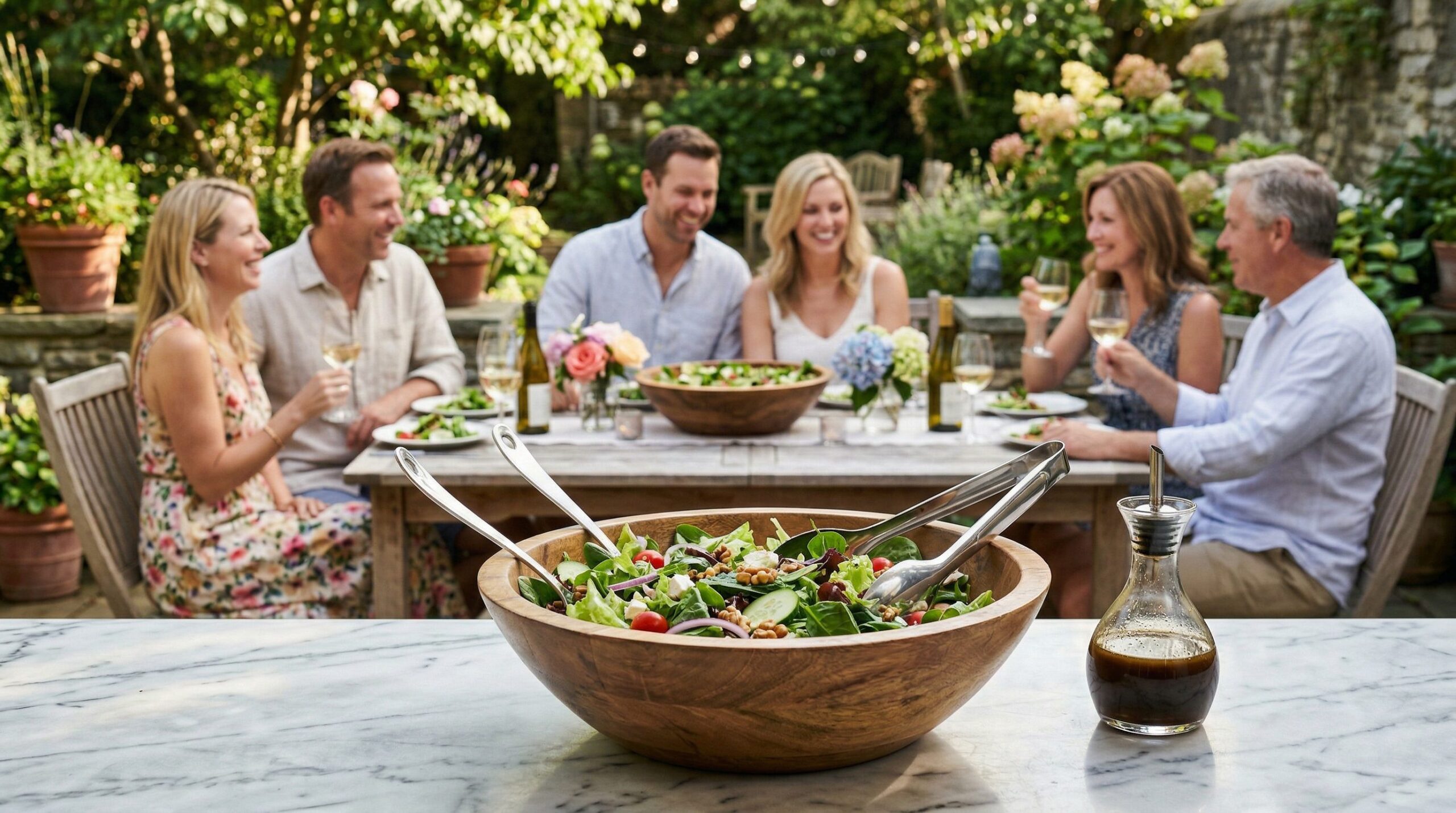
A large, chilled wooden or ceramic bowl keeps the greens crisp and gives you room to compose in sections. A small jar or glass for whisking and storing the vinaigrette is all the equipment the dressing needs. Keep the components separate until just before serving — and if you're serving over time, offer the dressing in a carafe alongside so the salad never sits wilting in it.
Neighborly Grace
- The Preparation: Compose it rather than toss it — arrange the ham, turkey, cheese, and egg in neat sections over the greens so it reads as generous and intentional. Make the vinaigrette and prep the components ahead, then assemble just before serving.
- The Pour: A crisp Sauvignon Blanc or a dry rosé suits the classic chef's salad. For a non-alcoholic option, a sparkling lemon water or an iced herbal tea keeps it clean.
- The Vibe: This is a generous, composed lunch in a bowl — set the big platter down whole and let its neat, abundant sections do the welcoming before anyone lifts a fork.