
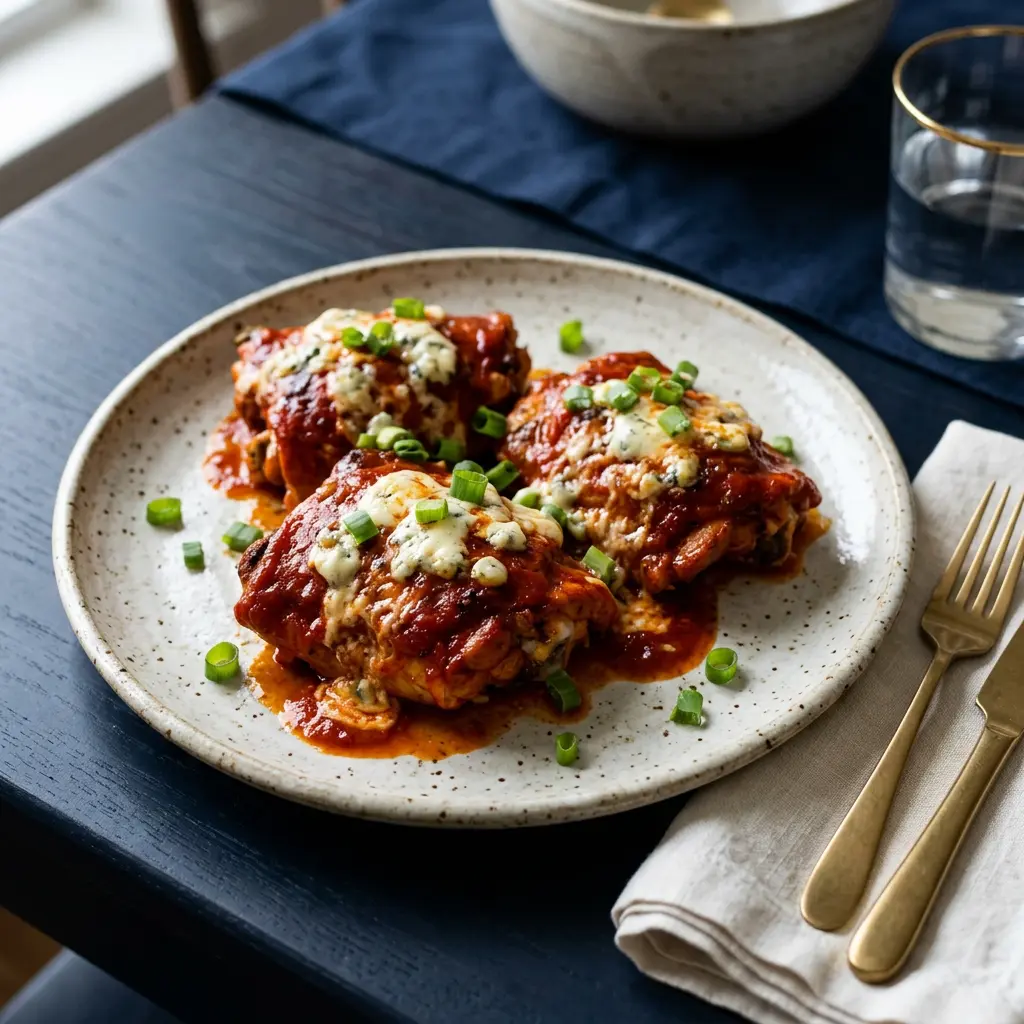
Buffalo Chicken
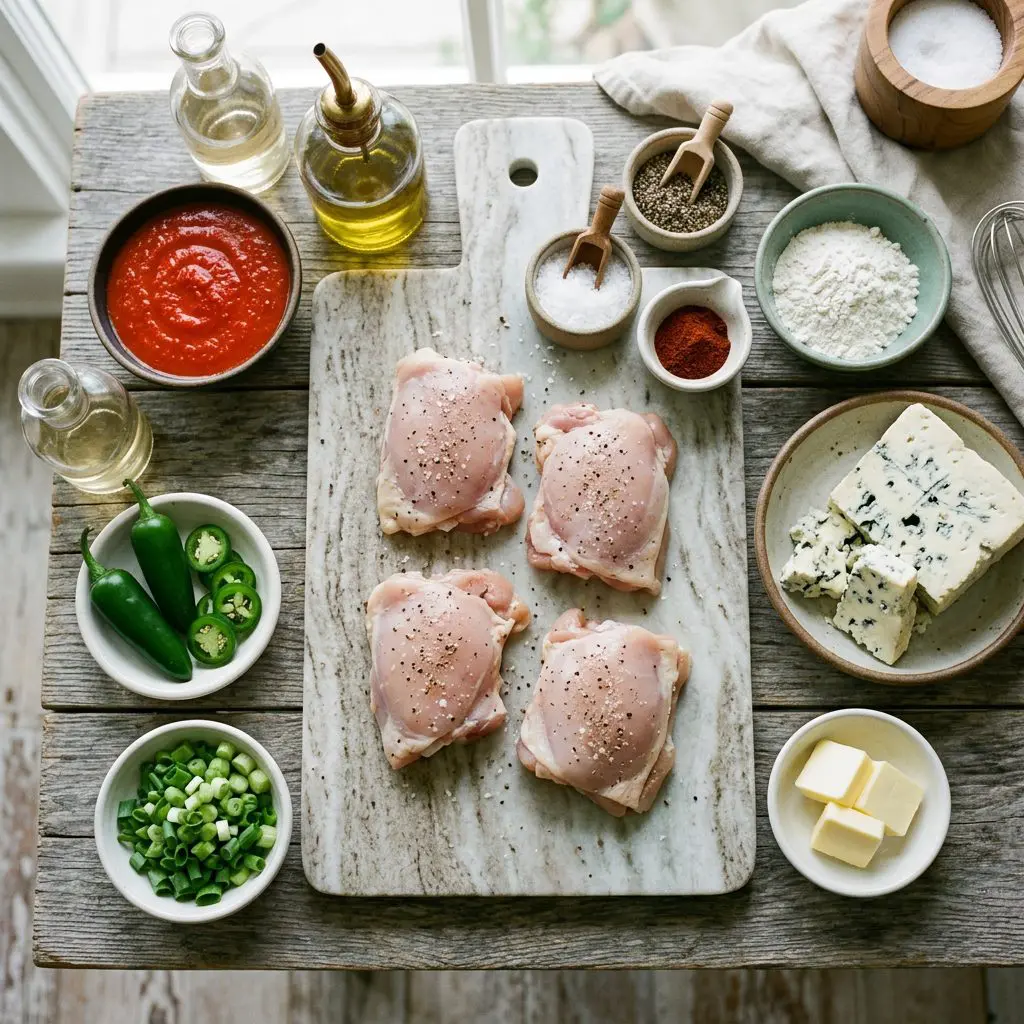
We are taking the aggressive, addictive flavors of classic pub wings and translating them into an incredibly sophisticated, fork-and-knife main course. By tossing boneless thighs in seasoned flour and baking them with a heavy pat of butter, we create a faux-fried texture without the mess of a deep fryer.
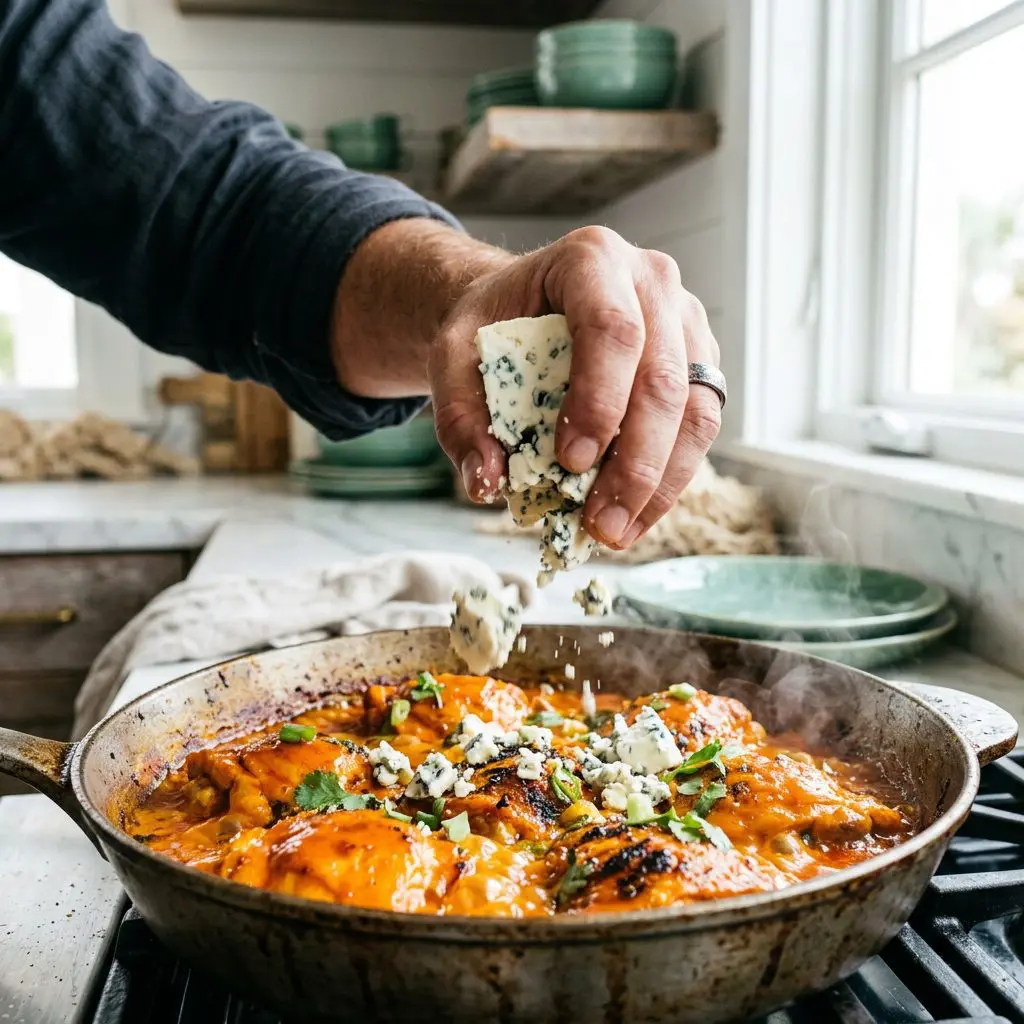
The real elevation, however, happens halfway through the bake when we drown the golden chicken in a bright emulsion of sharp white wine vinegar, olive oil, fresh jalapeños, and classic hot sauce. Finishing the bubbling dish with massive crumbles of cold, pungent blue cheese creates an irresistible contrast in both temperature and texture.
Make It “My Way”:
I like to serve buffalo chicken with potato skins corn off the cobb and sauté in a bit of olive oil Season with chili powder, salt, and pepper. For a baked potato and cut the skins into wedges. salt and pepper. Sprinkle with diced bacon, ha some grated cheddar cheese and bake until th pepper sauce.
The Heart of the Table
This dish is deliberately unpretentious but undeniably chic. It proves that you don’t need to serve caviar to throw a high-end dinner party. Serving this vibrant, spicy, deeply comforting Buffalo Chicken—especially alongside decadent loaded potato skins and fresh jalapeño corn—immediately signals to your guests that this evening is about indulgence, laughter, and serious flavor.
Neighborly Grace
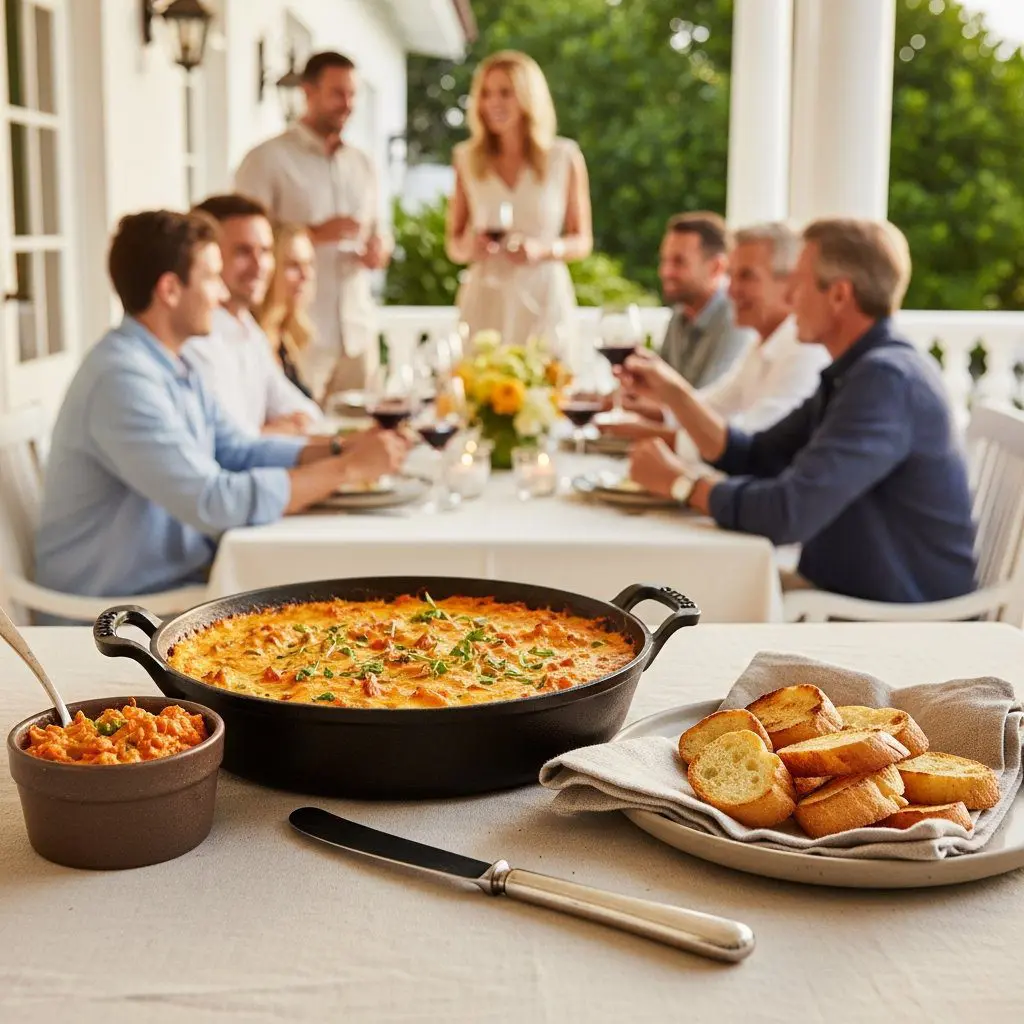
- THE PRESENTATION: Do not transfer this to a delicate platter. Pull the heavy baking dish straight from the oven and set it on the table. Ensure the blue cheese crumbles are thick and cold, melting slightly into the bright orange buffalo sauce. Serve it alongside a massive board of crispy potato skins loaded with prosciutto and cheddar, and a beautiful bowl of sautéed jalapeño corn.
- THE POUR: The sharp vinegar, intense heat, and rich blue cheese demand a wine that can cut through the chaos without clashing. An incredibly cold, off-dry German Riesling or a bright, fruity Rosé will beautifully tame the buffalo sauce. If you prefer beer, a crisp, ice-cold Pilsner served in a frosted glass is absolutely mandatory.
- THE VIBE: Elevated game-day elegance. This is the meal you prepare for an afternoon viewing party on the patio, where the food is just as loud and exciting as the event itself.