
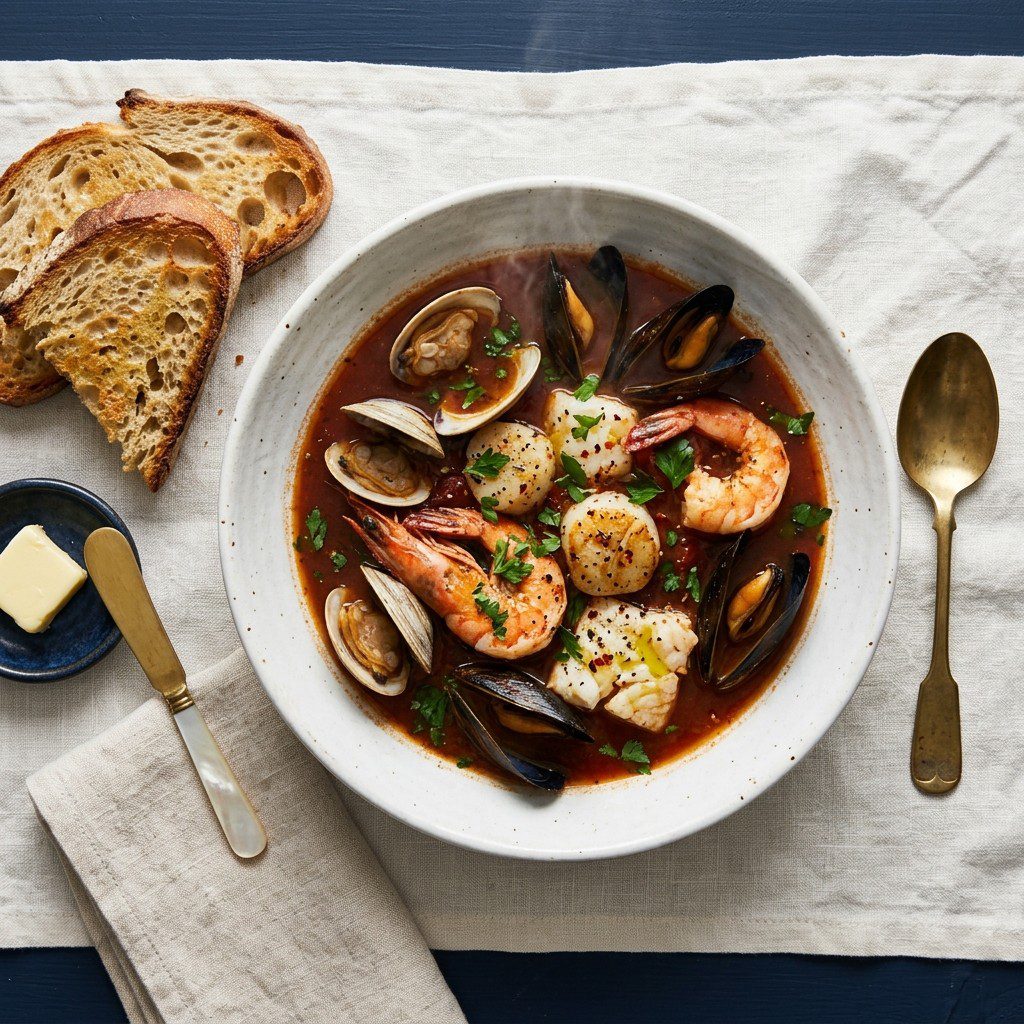
Coastal Seafood Stew
Build a fragrant tomato-and-wine broth, then poach a medley of seafood in it in careful sequence — the pieces that need longer first, the delicate ones last — so everything finishes perfectly tender at once. It is a coastal seafood stew in the spirit of a cioppino or bouillabaisse: rustic, generous, and pure comfort in a bowl.
A great seafood stew is one of the ocean's finest gifts to the table — a fragrant, tomato-rich broth brimming with fish and shellfish, each piece cooked just to tenderness. In the tradition of cioppino and bouillabaisse, it is rustic and generous, meant to be ladled into big bowls and mopped up with crusty bread. The secret is all in the timing: add the seafood in sequence so nothing overcooks, and the reward is a pot that tastes of the whole coast.
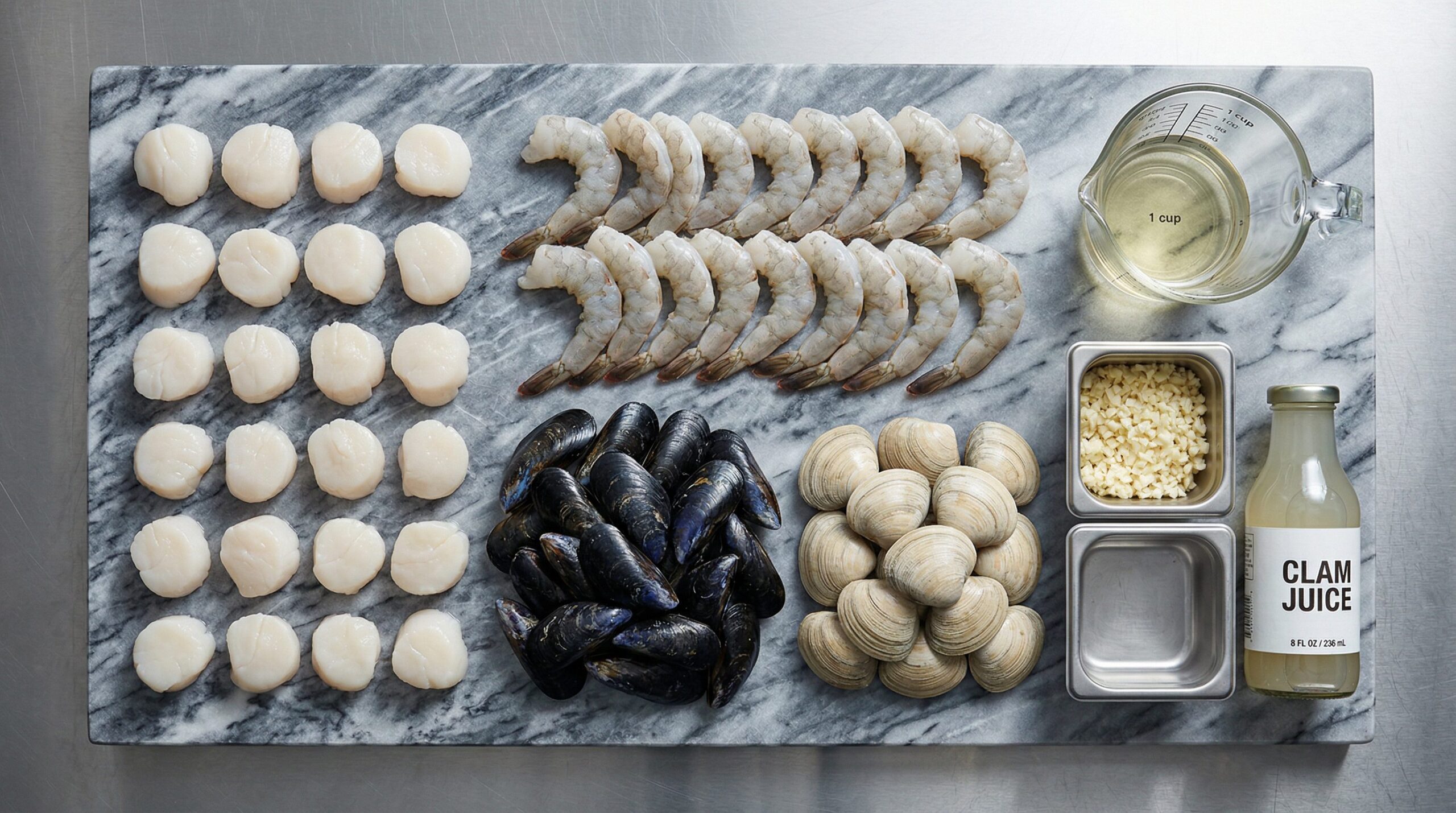
Building the Broth
The broth is the soul of the stew, so build it with care. Sweat the aromatics, deglaze with wine, and simmer with tomatoes, herbs, and stock until it is fragrant and deeply flavored — this is the base every piece of seafood will cook in and take on. Let it develop before any seafood goes in; a well-built broth means even the simplest fish tastes rich and briny. Taste and season it fully now, since the seafood cooks quickly at the end.
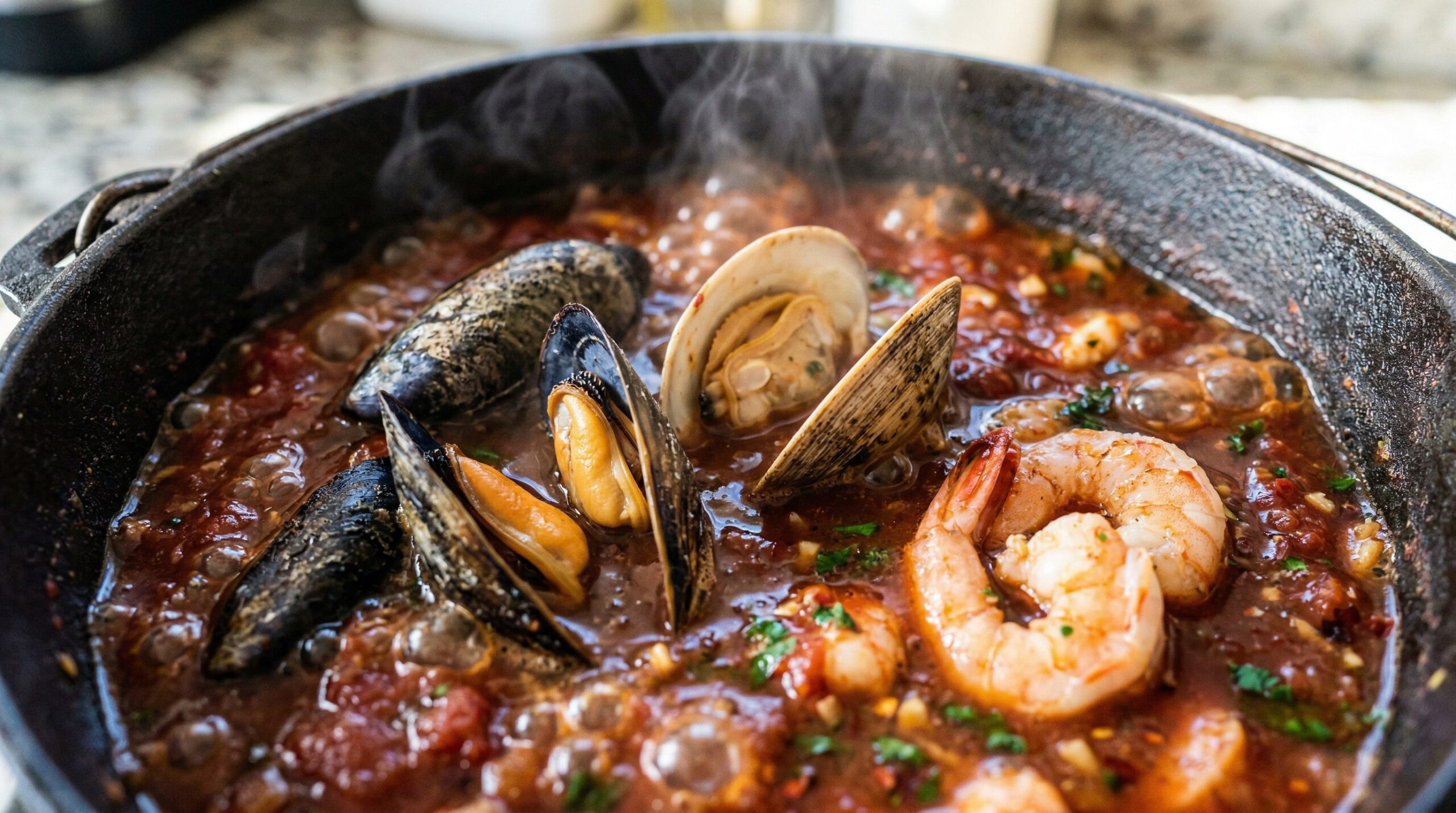
Sequencing the Seafood
The one rule that makes or breaks a seafood stew is order. Different seafood cooks at different speeds, so add it in sequence — the firmer fish and shellfish that need a few minutes first, the delicate, quick-cooking pieces last — so everything reaches perfect tenderness at the same moment. Poach it all gently in the simmering broth rather than boiling, which keeps the seafood silky rather than rubbery. Pull the pot the instant everything is just done.
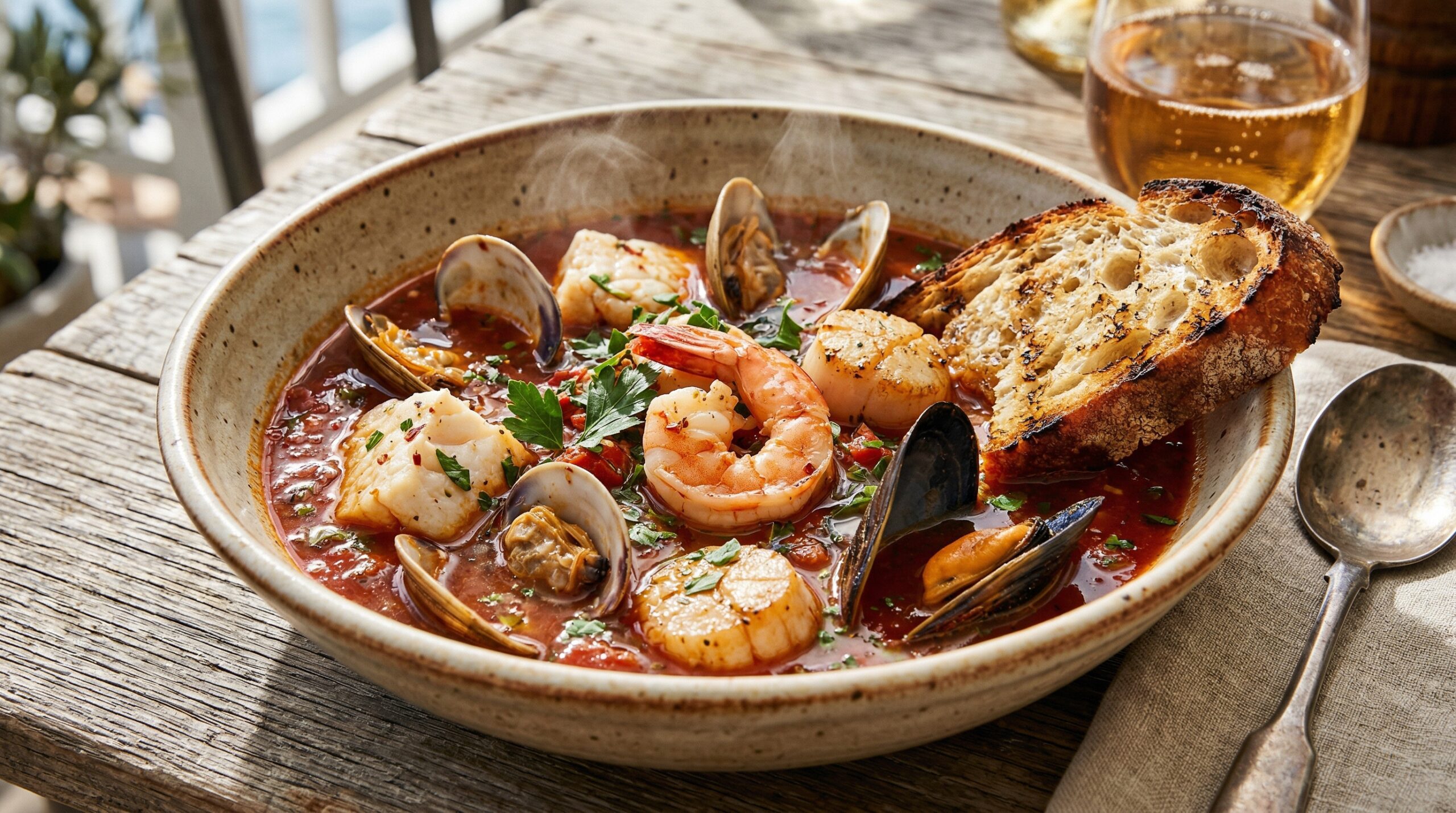
Coastal Seafood Stew
Ingredients
Method
- Heat the 2 tablespoons of olive oil in a large, heavy-bottomed soup pot or Dutch oven over medium-high heat.
- Add the diced yellow onion and minced garlic. Sauté until the vegetables are soft and highly fragrant, about 8 minutes.
- Pour in the diced tomatoes, chicken broth, clam juice, and dry white wine. Bring the entire mixture to a vigorous, rolling boil.
- Stir in the chili sauce, tomato paste, Cajun seasoning, fresh basil, parsley, oregano, and hot pepper sauce.
- Reduce the heat to medium, cover partially, and simmer the broth aggressively for 20 minutes to evaporate the sharp alcohol notes and deeply concentrate the flavors. Season to taste with kosher salt and coarse black pepper.
- The success of the stew relies on staggering the addition of the seafood based on their required cooking times. First, gently place the hard-shell clams and mussels directly into the simmering sauce. Cover and simmer for exactly 3 minutes.
- Next, fold the peeled shrimp and the sea scallops into the hot liquid. Cover and simmer for an additional 3 minutes.
- Finally, gently fold the cubed white fish (snapper or cod) into the stew. Simmer for a final 3 to 5 minutes.
- The stew is finished the absolute moment the fish turns fully opaque and flakes gently, the shrimp are bright pink, and the clams and mussels have opened their shells wide. (Discard any clams or mussels that refuse to open).
- Remove the pot from the heat immediately to prevent the delicate seafood from becoming tough and rubbery.
- Ladle the deeply fragrant stew into wide, shallow bowls and serve immediately alongside thick slices of crusty bread to absorb the rich, complex broth.
The Heart of the Table
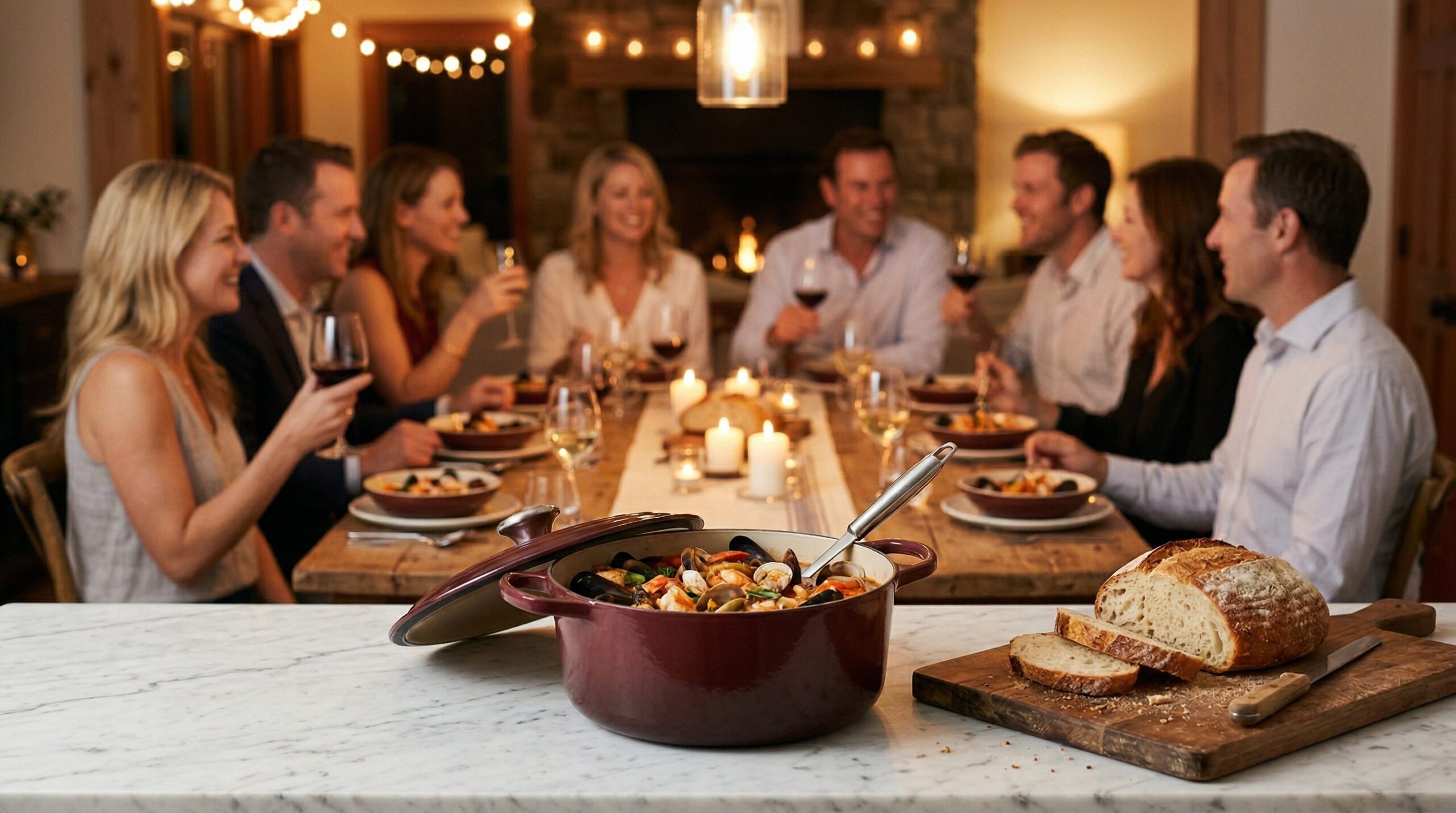
A great pot of seafood stew is abundance itself — a generous, brimming bowl that says the table is welcome to a feast. To simmer the sea into a fragrant broth and ladle it out, steaming and full, is warm and open-handed hospitality, the kind of communal, mop-up-the-bowl meal that draws everyone close and keeps them lingering.
The Art of the Host
A wide, heavy pot and a good sense of timing are the essentials. Build the broth fully before the seafood goes in, add the seafood in order of how long it takes to cook, and poach it gently rather than boiling so it stays tender. Have plenty of crusty bread on hand for the broth — it is half the pleasure — and taste the broth for salt before serving.
Neighborly Grace
- The Preparation: The broth is a make-ahead dream — build it a day early and let it deepen, then bring it to a simmer and add the seafood fresh just before serving. That split makes the stew far more relaxed for a gathering: the flavorful base waits patiently, and the quick, final poach happens at the last moment for perfectly cooked seafood.
- The Pour: A crisp white — a coastal Vermentino, Albariño, or a dry rosé — is the classic seafood-stew match. For a non-alcoholic option, a sparkling water with lemon or a citrusy soda keeps it bright and briny.
- The Vibe: This is generous, gather-round coastal comfort — ladle the brimming stew into big bowls with plenty of crusty bread for the broth. It is a rustic, communal feast made for a relaxed table and a slow, happy meal by the water or the fire.