

Jalapeno Corn Bisque
Sweat corn, leek, and jalapeño, reduce a full cup of sherry down to almost nothing to concentrate the flavor, then simmer and blend the soup velvety-smooth. Thicken it to a true bisque with a little beurre manié — a butter-and-flour paste whisked in at the end. Sweet summer corn meets gentle heat in a bowl that feels genuinely luxurious.
Bisque usually means seafood and occasion — but the technique that makes it so silky and luxurious works just as beautifully on the humble ear of corn. Here, peak-summer sweet corn is coaxed into something velvety and refined, warmed with jalapeño and deepened with sherry, then finished to a proper bisque's satiny thickness. It's the garden's sweetest crop, given the full luxury treatment.
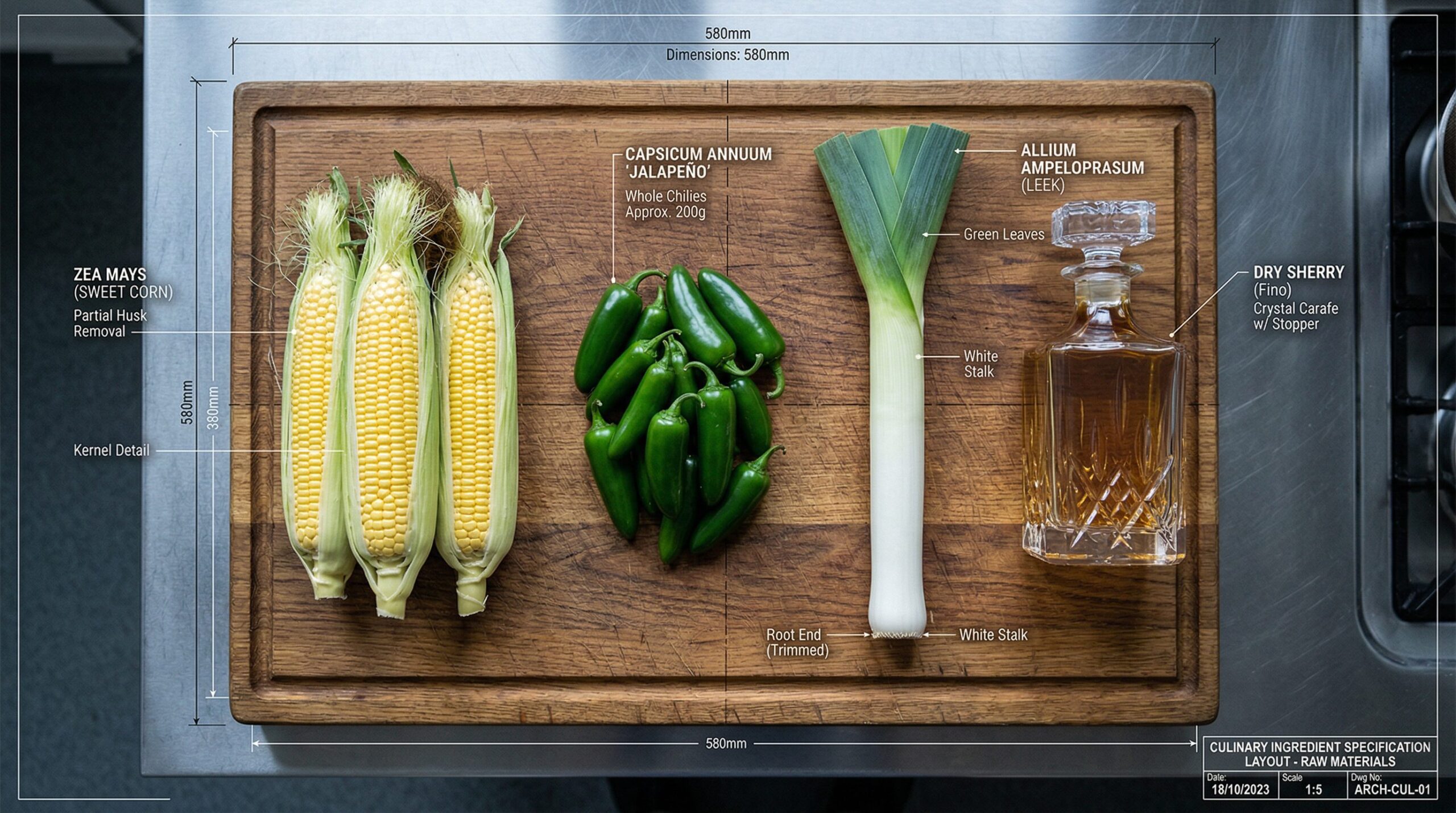
Building Sweetness and Heat
The flavor is layered from the base up. Sweat onion, leek, and diced jalapeño to soften, then add the corn kernels and let them sauté until their sugars begin to develop — that brief caramelization is where the sweetness concentrates. Bloom cumin and garlic powder in, then pour in a full cup of dry sherry and cook it down by nearly ninety percent. That aggressive reduction is the secret, concentrating the sherry's nutty depth into a backbone that makes the finished bisque taste far more complex than its ingredient list.
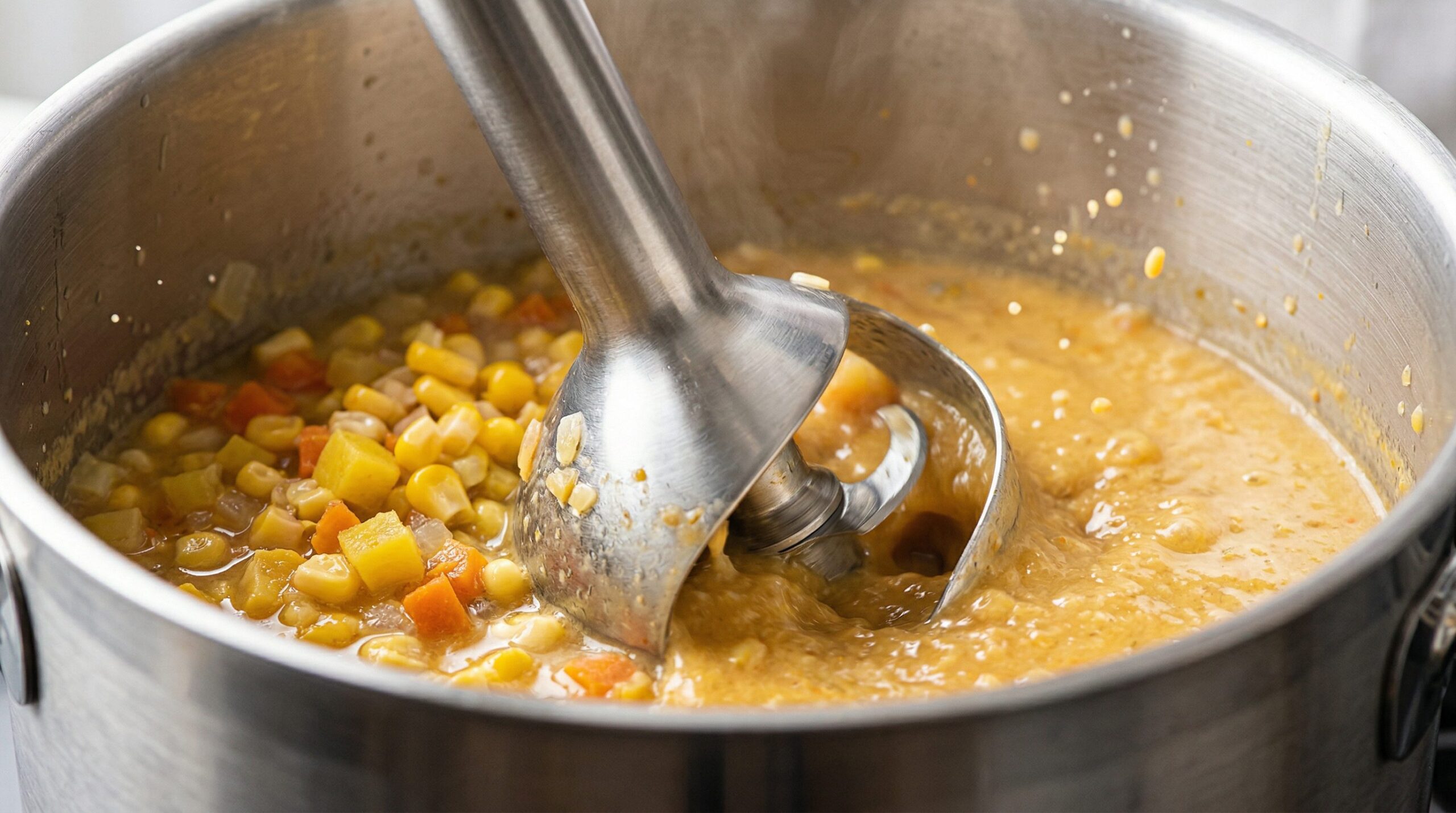
The Beurre Manié Finish
Simmer the vegetables tender in stock, then blend the soup completely smooth and stir in half-and-half for creaminess. To reach a true bisque's luxurious body, finish with beurre manié — equal parts room-temperature butter and flour kneaded into a paste. Whisked into the simmering soup in small pieces, it thickens the bisque gently and evenly to exactly the consistency you want, without the raw taste or lumps a dumped-in flour slurry would leave behind.
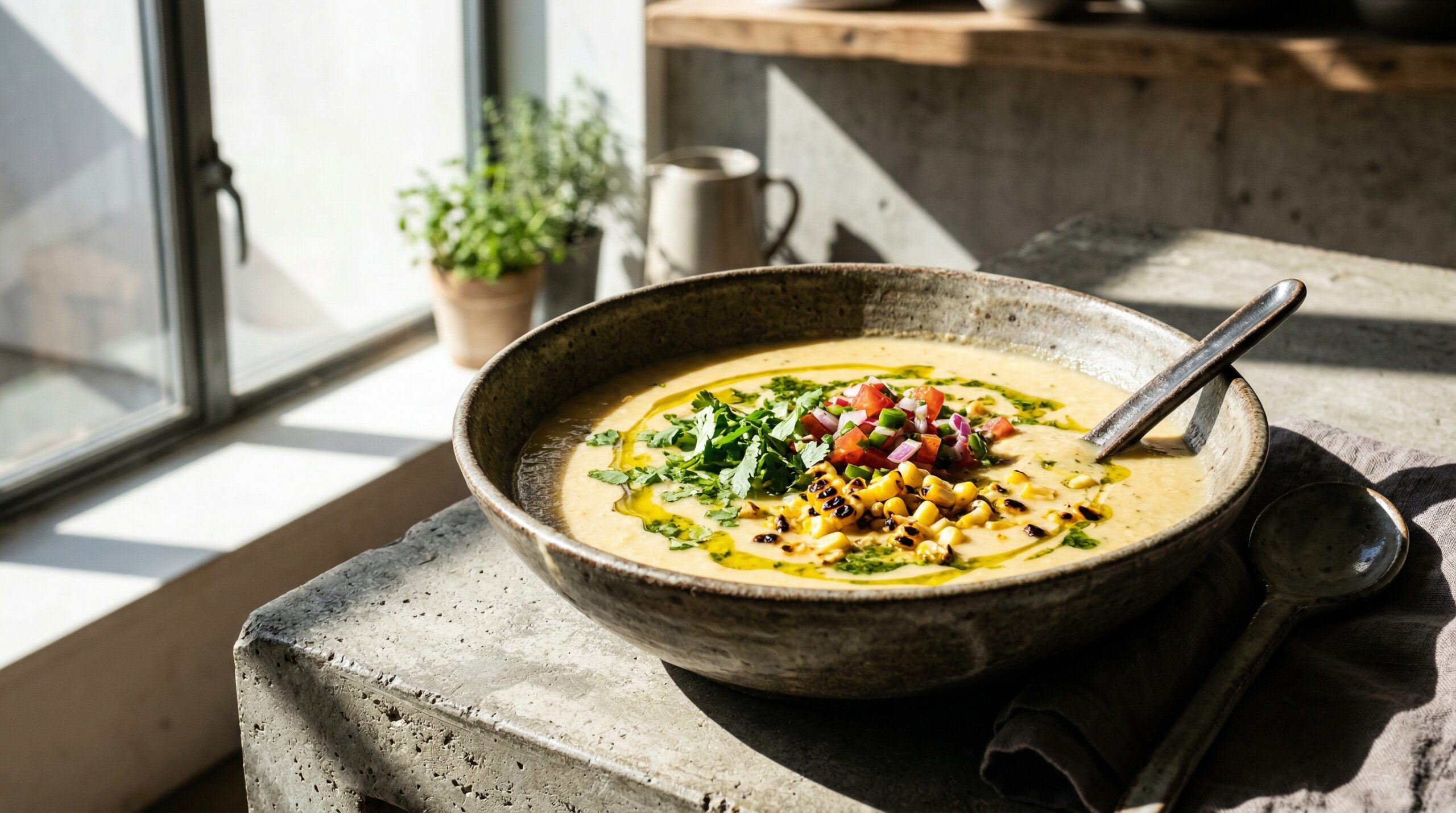
Jalapeno Corn Bisque
Ingredients
Method
- Heat the olive oil in a deep soup pot over medium-high heat. Introduce the onion, leek, and jalapenos, sautéing until the cell walls begin to soften, about 3 minutes.
- Add the corn kernels and continue to sauté for 5 minutes, allowing the sugars to begin their development.
- Season with salt, pepper, cumin, and garlic powder.
- Pour in the Sherry and cook until the liquid has reduced by nearly 90%, concentrating the acidity and depth of flavor.
- Add the chicken stock and cover the pot. Reduce heat to medium and simmer until all vegetables have reached full tenderness, approximately 20 minutes.
- Remove the pot from the heat. Use an immersion blender (or work in batches in a high-speed blender) to execute a complete blending until the soup is entirely smooth and velvety.
- Return the soup to low heat. Whisk in the half and half to achieve the desired creaminess.
- In a small bowl, combine the room-temperature butter and flour into a uniform paste (beurre manié).
- Whisk small pieces of the beurre manié into the simmering soup to initiate starch gelatinization, thickening the bisque to your preferred consistency.
- Transfer the bisque to warm bowls. Garnish with fresh cilantro, cheddar cheese, salsa, or crisped bacon as desired. Serve immediately.
The Heart of the Table
There's a particular delight in taking something humble — a few ears of corn from the garden — and treating it with enough care that it arrives at the table feeling like a luxury. That transformation is a gift a host gives: the sweet familiarity of summer corn elevated into something silky, warming, and quietly special, the kind of bowl that makes an ordinary night feel considered.

The Art of the Host
A deep soup pot and an immersion blender give you the velvety texture at the heart of a bisque, and a small bowl to knead the beurre manié is the only other thing required. Cut the kernels from fresh ears if you can — their sweetness is the soul of the soup — and reduce the sherry patiently; rushing that step leaves the bisque tasting sharp instead of deep.
Neighborly Grace
- The Preparation: Reduce a full cup of sherry down to almost nothing to concentrate the flavor, then simmer and blend the soup velvety-smooth, thickening it to a true bisque with a little beurre manié. It reheats beautifully, so make it ahead.
- The Pour: A crisp white or a light lager balances the gentle jalapeño warmth. For a non-alcoholic option, a sparkling limeade or a cold corn-sweet agua fresca keeps it lively.
- The Vibe: This is silky, sophisticated comfort with a whisper of heat — ladle it into warm bowls, garnish with charred corn, and let it feel a little special.