The Estate Bakery
Seeded Whole Grain Bread
The Strategy:
This recipe wholly rejects mass-produced sandwich loaves in favor of deeply textured, highly involved artisan baking. By utilizing a complex cold-fermentation process and aggressively kneading a massive amount of roasted seeds directly into the whole-grain dough, the bread develops a staggeringly profound, nutty flavor. Implementing a violent steam-bake with melting ice cubes guarantees a fiercely shatter-crisp crust that dramatically contrasts the wildly soft, seed-studded interior.
Ingredients
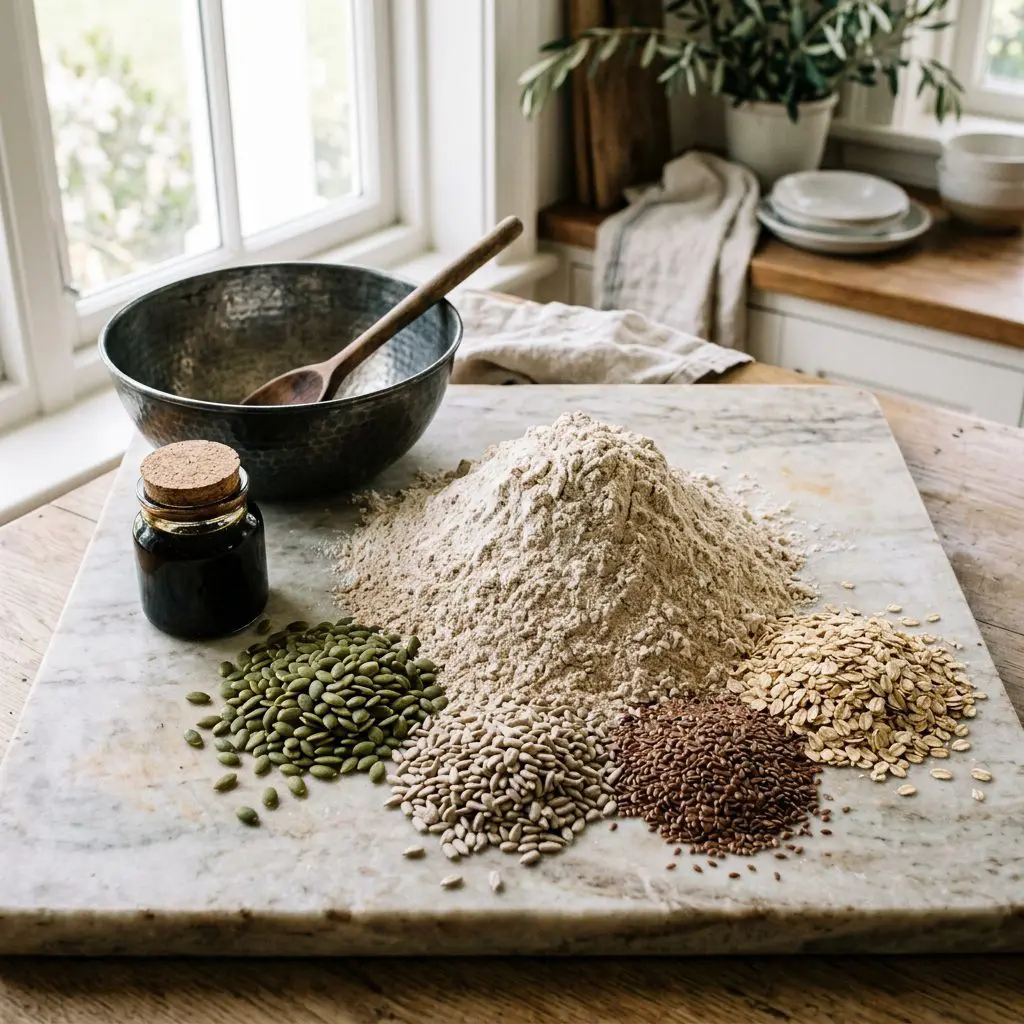
- 1 (.25-ounce) package active dry yeast, 2 ¼ teaspoons
- 2 tablespoons sorghum syrup (substitute with maple syrup or honey)
- 2 cups whole wheat pastry flour
- 1 ¾ cups unbleached all-purpose flour
- 2 teaspoons salt
- 2 tablespoons roasted sunflower seeds
- 2 tablespoons pepita seeds
- 2 tablespoons old-fashioned rolled oats
- 1 tablespoon flaxseed

Instructions
- Pour 1 ½ cups warm water into the bowl of an electric mixer fitted with a dough hook. Add the yeast and sorghum. Let sit until the liquid is foamy, about 10 minutes.
- Add both flours and the salt. Mix everything together with a spatula to form a shaggy dough.
- Using the dough hook attachment, start the mixer on low speed and mix until the dough becomes smooth and pulls away from the side of the bowl. This will take several minutes. You can increase the speed as the flour works itself into the dough. If the dough is too sticky, add a small amount of flour a little bit at a time.
- Once the dough begins to wrap around the hook, increase the speed to high and knead for 5 minutes.
- Transfer the dough to a bowl that has been lightly coated with vegetable oil spray. Roll the dough around in the bowl to coat all sides.
- Cover and let rise at room temperature for 2 hours.
- After the dough has risen, transfer the bowl to the refrigerator and let rise for another 2 hours or as much as overnight.
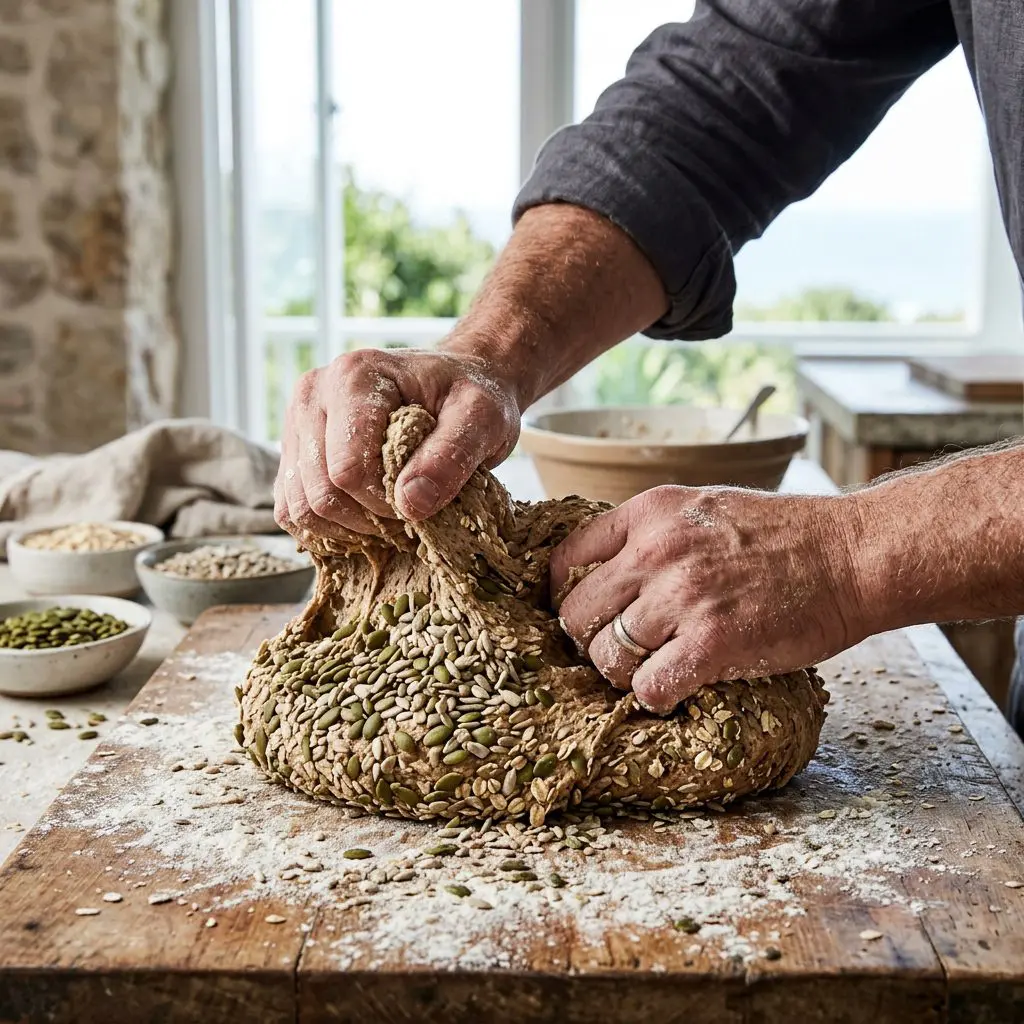
- Use your fingers to make a well in the center of the dough. Pour the seeds and oats into the well.
- Transfer the dough to a lightly floured board. Knead the seeds into the dough, turning about 2 dozen times.
- Form the dough into a loaf and lay in a (9 x 5 x 3-inch) loaf pan. Dust the top of the loaf with flour to keep the dough moist.
- Cover and let rise at room temperature for another hour.
- Preheat your oven to 425°.
- When the oven is almost fully preheated, place a baking sheet with rim onto the bottom shelf.
- Once the oven is ready and the dough has risen for the last time, cut ½-inch deep slits into the top of the bread.
- Place the loaf pan into the oven on the center shelf. Carefully add several ice cubes to the hot baking sheet. The ice cubes will instantly melt! Close the oven door. This will create steam to help give your loaf a great crust.
- Bake for 30 minutes. You will know that your loaf is finished when the crust is golden brown and when you tap the top of the bread, it sounds hollow.
- Remove the loaf from the pan and transfer to a rack. Cool completely before slicing.
Thing to Note:
The key to breadmaking success is proper dough consistency. Generally, dough should feel soft, smooth, and not tacky or moist. It should never be dry or crumbly, but instead elastic and resilient, so that when you push your hand into it, the dough will spring back. To experiment with different ingredients, start with your favorite recipes and make one substitution at a time. For example, rye flour for some of the wheat flour, maple syrup for honey, or milk for water. A good rule of thumb when creating your own special loaf is to substitute dry for dry and wet for wet. Cheese should be considered a wet ingredient.
Dough rises in both warm and cold places. In fact, many bakers use the fridge to let dough rise overnight. The chill slows down the fermentation process. There is science behind this, but for our purposes, what cold proofing does is allow you to prepare the dough, pop it in the fridge overnight, and bake your loaf in the morning!
The full recipe lives in the Vault
Ingredients, method and every chef-tested detail are in the Vault. Join the Estate Registry for $79 a year: six printed dinner-party editions mailed to you, and the Vault opens as our gift.
Join the Registry · $79What’s included · Member Sign In
The Heart of the Table
Placing a massive, deeply scored, violently crusty whole grain loaf directly onto a heavy wooden board instantly commands the kitchen. The deeply complex, fiercely earthy scent of toasted pepitas, dark sorghum syrup, and hot whole wheat forces guests to eagerly gather around, aggressively reaching for heavy serrated knives to slice through the wildly crisp crust.
Neighborly Grace
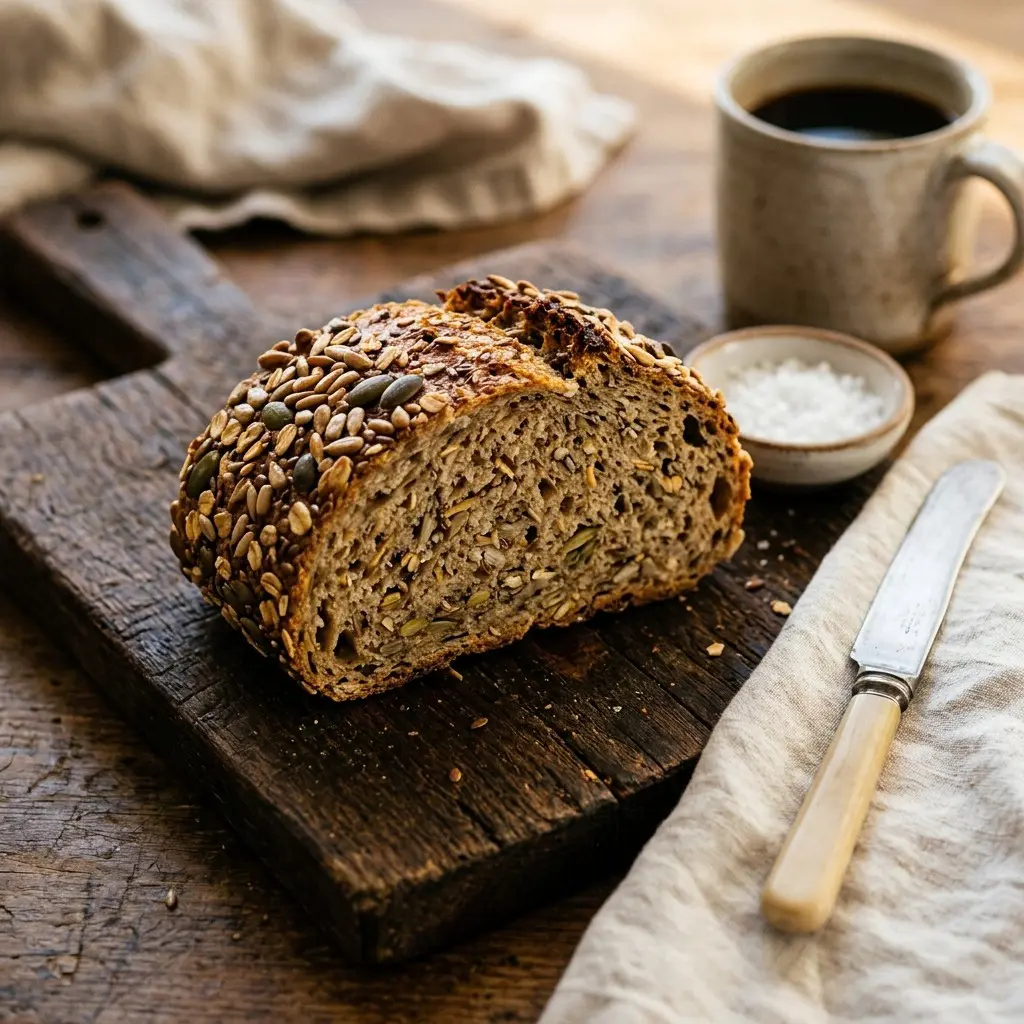
- THE PRESENTATION: Never hide this bread in a basket. Present the massive, heavily scored loaf completely whole on a deeply scarred cutting board, allowing the intense crust to remain highly visible. Provide thick slabs of aggressively chilled European butter and heavily textured coarse sea salt for guests to violently smash onto their freshly cut, wildly steaming slices.
- THE POUR: The deeply nutty, fiercely complex flavor of the seeds and whole wheat demands a robust, deeply grounded pairing. A wildly dark, heavily iced cold-brew coffee or a sharply bitter, highly carbonated amber ale perfectly slices through the rich butter while deeply enhancing the toasted seeds.
- THE VIBE: Deeply intentional, slow-living coastal mornings. This is the wildly impressive project you execute after a long overnight cold-proof, served directly from the hot oven to the sun-drenched breakfast room, demanding an atmosphere of quiet, incredibly relaxed, and fiercely unpretentious indulgence.