
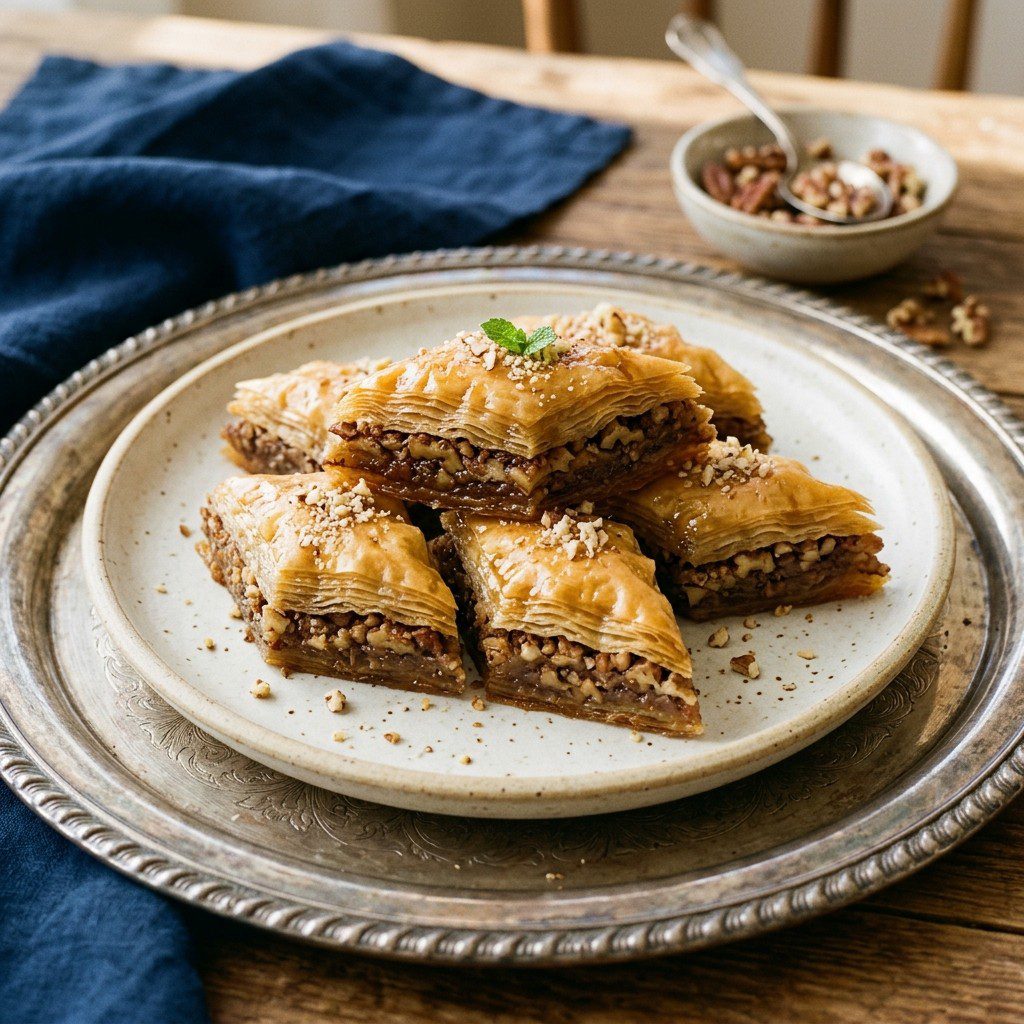
Southern Walnut and Pecan Baklava
Layer crisp, buttery phyllo with a spiced walnut and pecan filling and soak it in sorghum syrup — the classic baklava given a Southern soul, rich and sticky and irresistible.
Baklava is one of the great pleasures of the baking world — shatteringly crisp layers of buttery phyllo wrapped around a spiced nut filling, soaked in sorghum syrup until sticky and rich. This Southern take swaps in walnuts and pecans for a homey, regional twist, their toasty depth marrying beautifully with the sorghum and spice. It takes a patient hand with the delicate phyllo, but the result is a jewel-cut tray of baklava that keeps for days and disappears diamond by sticky diamond.
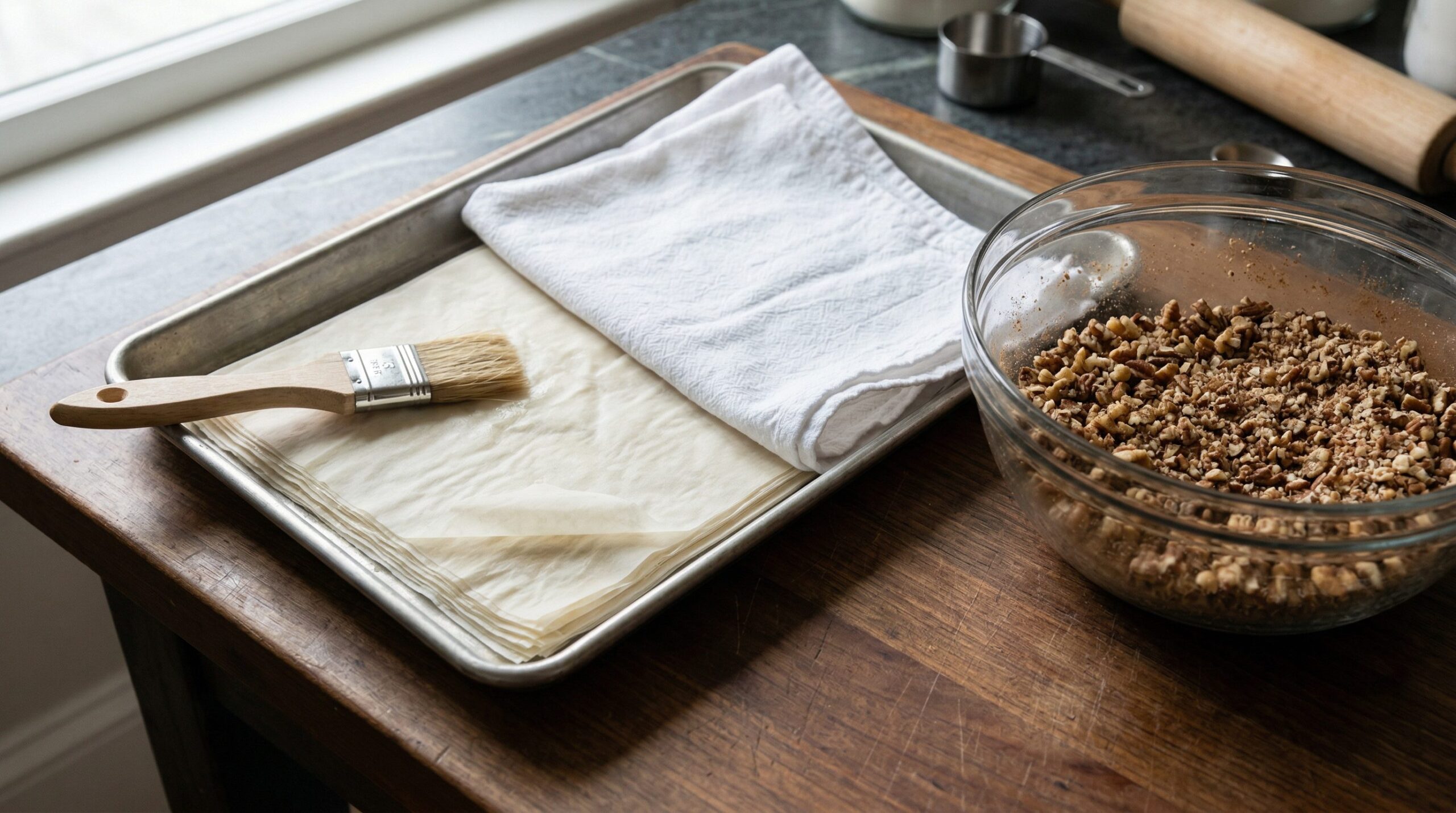
Layering the Phyllo and Nut Filling
Brush each sheet of phyllo with butter and layer them with a spiced walnut and pecan filling in between. Working with phyllo asks for patience — keep the sheets covered so they do not dry out, and brush each with butter for those signature crisp, flaky layers that shatter at the fork.
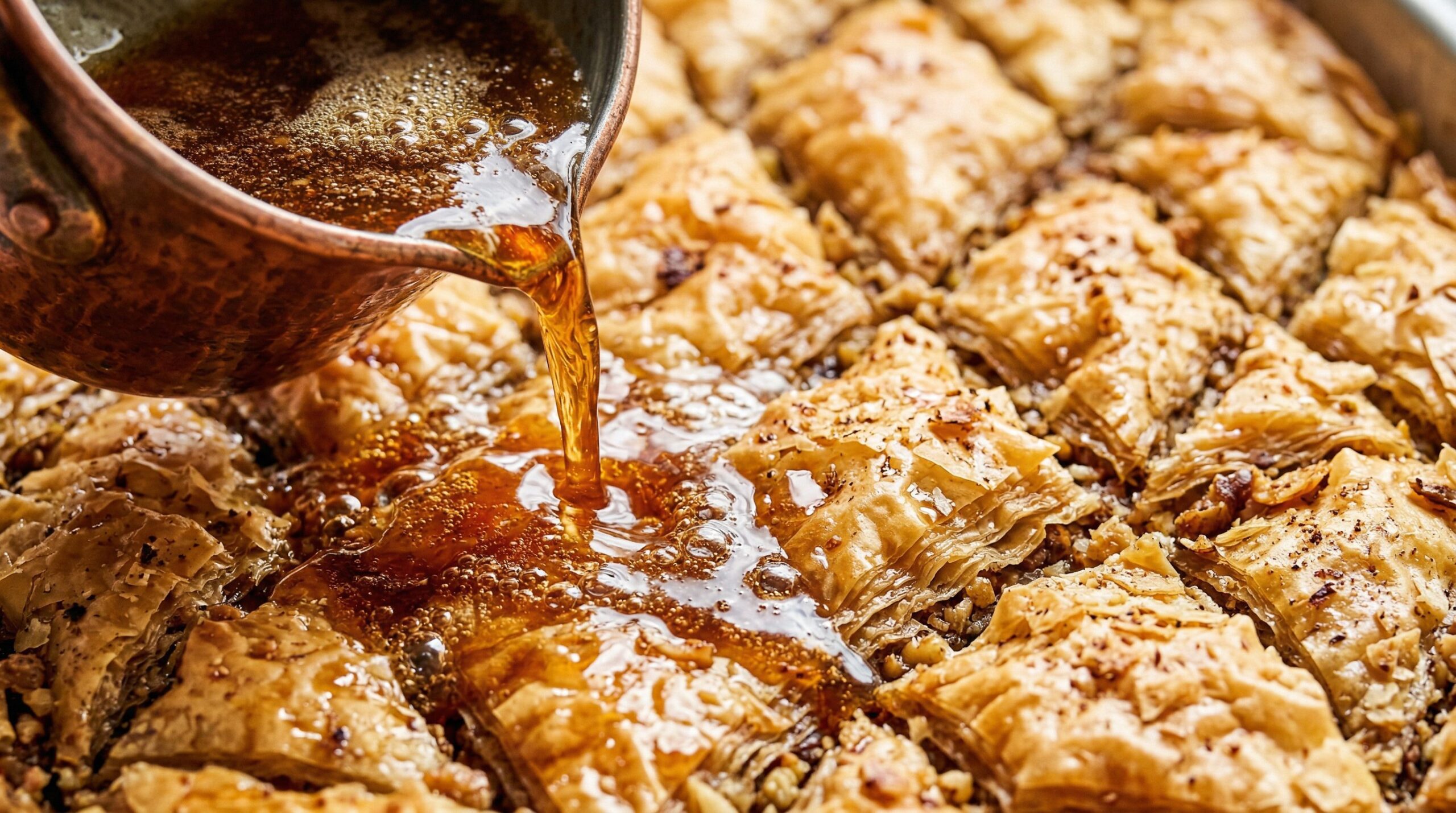
The Bake and Sorghum Syrup Soak
Cut the assembled baklava into diamonds before baking so it is easy to portion, then bake until deep golden and pour the warm sorghum syrup over the whole tray. Soaking the hot baklava in syrup is what makes it sticky and rich, so pour it on generously and let it drink it in — a rest of several hours lets the flavors meld into perfection.
Southern Walnut and Pecan Baklava
Yields about 2 dozen pieces • 30 Minute Prep; 40 Minute Baking; at least 2 Hours to Cool
For Baklava
½ pound frozen phyllo dough, thawed • 2 cups walnuts • 2 cups pecans • 1 teaspoon ground cinnamon • ½ teaspoon ground nutmeg • 1 cup butter, melted 2 sticks
For Syrup
½ cup butter, 1 stick • 2 cups sorghum syrup • 1/2 cup granulated sugar • 1 tablespoon pure vanilla extract
Method
1. Thaw the phyllo dough in the fridge overnight or by leaving the package (rolled up) on the counter top for about 2 hours. Do not unroll it until you are ready to rock and roll!
2. Place the nuts into the bowl of a food processor. Pulse to form coarse crumb size pieces. Add the cinnamon and nutmeg, and pulse one to two times more.
3. Preheat the oven to 350°. Melt two sticks of butter. Use a pastry brush to butter the bottom and sides of an 11 x 7 x 2-inch baking pan.
4. Dampen a clean dish towel. Roll out the phyllo dough on your work surface and cover with the damp towel. (Phyllo dough is a bit tricky. If you leave it out, it can dry up and become very difficult to work with. Keeping a damp towel on top of the sheets will prevent this.)
5. Brush the top sheet of phyllo with butter. Use the sheet below it to help you lift both sheets into the pan, butter side down. Repeat this process so that you have a total of 6 phyllo sheets in the bottom of the pan. Now, cover the remaining phyllo sheets with your damp towel.
6. Cover the phyllo sheets in the pan with a layer of chopped nuts. Remove the towel from the unused sheets, and brush the top sheet of phyllo with butter. Again, use the sheet below it to lift two sheets of phyllo on top of the nuts, butter side down. Do this again, so that you have four sheets of phyllo on top of the nuts. Cover the remaining phyllo dough with your damp towel.
7. Keep layering buttered phyllo sheets and nuts until all the nuts are gone; you should have 4 sheets of phyllo left. Brush the top sheet of phyllo with butter, and use the sheet below it to lift the two sheets into the pan, butter side down. Repeat with the final two sheets, but this last time leave the buttered side up.
8. Use a sharp knife to carefully cut the baklava into pieces. Start in one corner and cut to the opposite corner. Repeat the process to create an “X”. Continue to cut diagonally, creating 2-inch diamond shape pieces. Bake until the baklava is golden brown, about 35 to 40 minutes.
9. Make the syrup by placing 1 stick of butter, sorghum syrup, granulated sugar, vanilla and ½ cup water into a sauce pan over medium heat. Cook until the butter melts and the sauce begins to boil. Reduce the heat to very low and simmer for 5 minutes. The syrup will turn a caramel color and thicken slightly. Keep the sauce warm until the pastry comes out of the oven.
10. Remove the baking pan from the oven. Pour half of the syrup over the entire pan of baklava. Wait a minute or two while the pastry sucks up the syrup. Pour the rest of the syrup over the pastry. Let the baklava cool in the pan, uncovered for several hours. Slice the pieces again, using the same cuts you made earlier. Carefully remove the pieces to a serving platter. Try not to lick your fingers until after all the slices have been removed!
The Heart of the Table
A tray of baklava is generous, celebratory hospitality — rich and sticky and meant to be shared in small, sweet pieces. There is a warm, festive spirit in baking something so labor-loving for a crowd, the kind of treat that anchors a holiday table or a special gathering and leaves everyone reaching for one more diamond.
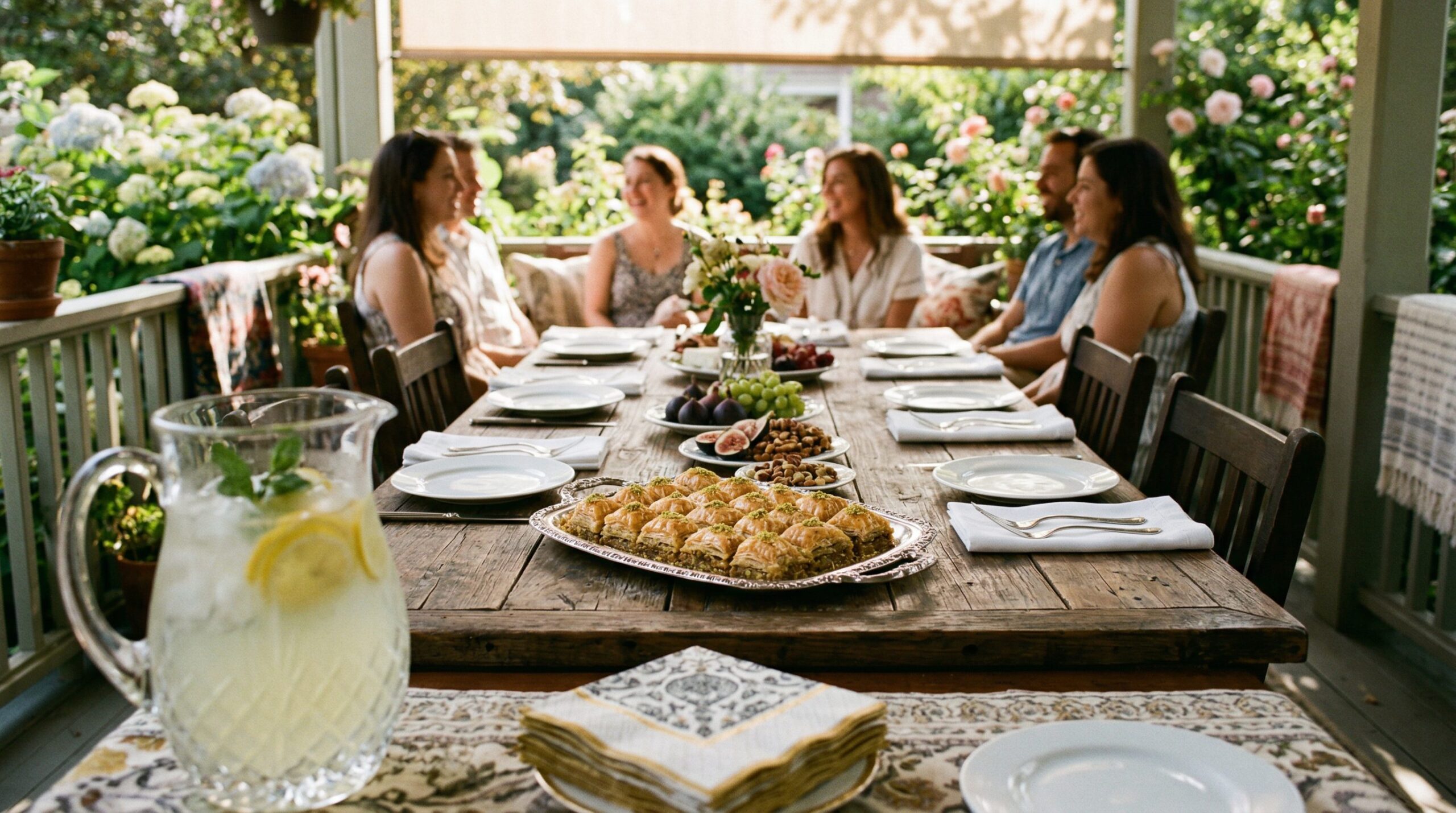
The Art of the Host
Keep the phyllo covered while you work so it stays pliable, and pour the syrup over the hot baklava for the best absorption. Let it rest several hours or overnight before serving so the flavors meld and the pieces cut cleanly.
Neighborly Grace
- The Preparation: Baklava is a wonderful make-ahead, keeping for a week or more at room temperature and only improving as it sits. Make it a day or two before your gathering, and it will be perfectly rested and sticky by the time you serve.
- The Pour: A cup of strong coffee or mint tea is the traditional pairing; for a non-alcoholic option, a spiced chai or a pot of black tea balances the sweetness beautifully.
- The Vibe: Arrange the diamonds on a platter for a holiday table, a party, or a homemade gift. This is rich, celebratory baking — crisp, sorghum-sweet, and Southern-hearted, made to be shared in small, irresistible pieces.