
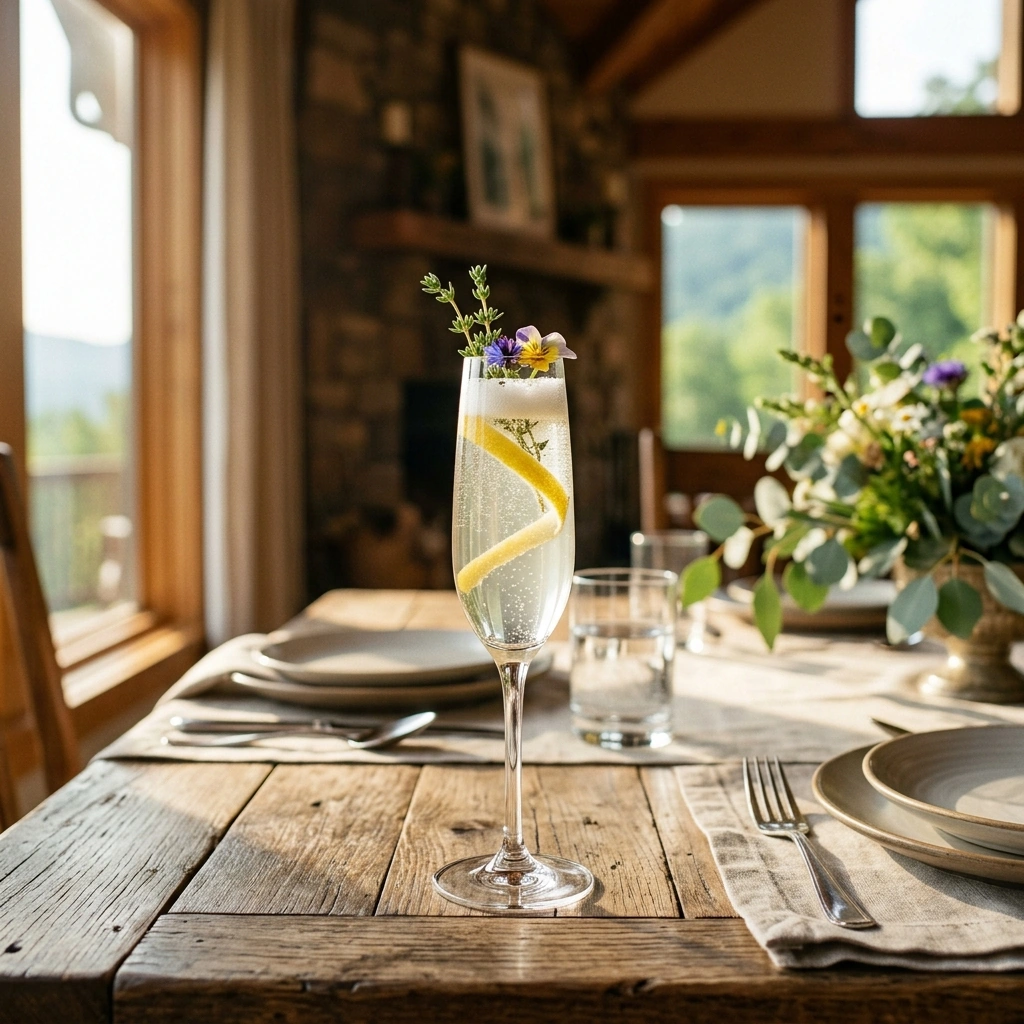
French 75
A French 75 is gin, fresh lemon, and a little sugar shaken cold, then lengthened with Champagne — a cocktail that drinks like a celebration and takes ninety seconds to build. One rule decides whether it sparkles or falls flat: shake the gin, lemon, and simple syrup hard over ice first, strain into a chilled flute, and add the Champagne last, poured slow so the bubbles lift the drink instead of collapsing it. Hand one to a guest the moment they arrive, and the evening starts on an upward note.
Few drinks carry as much occasion in as little effort. The French 75 has been starting good evenings since the First World War, and it still does the same quiet work today: something cold and sparkling, pressed into a hand at the door, that says the night has begun.
Why the French 75 Works
It is built on tension — juniper-dry gin, bright lemon acid, a whisper of sugar, and the yeasty snap of Champagne — held so no single part shouts. Use fresh lemon juice, never bottled; the cocktail is small and there is nowhere for a dull, flat sourness to hide. Keep the simple syrup restrained, because the Champagne brings its own soft sweetness, and the goal is crisp, not candied.
Building It Without Losing the Bubbles
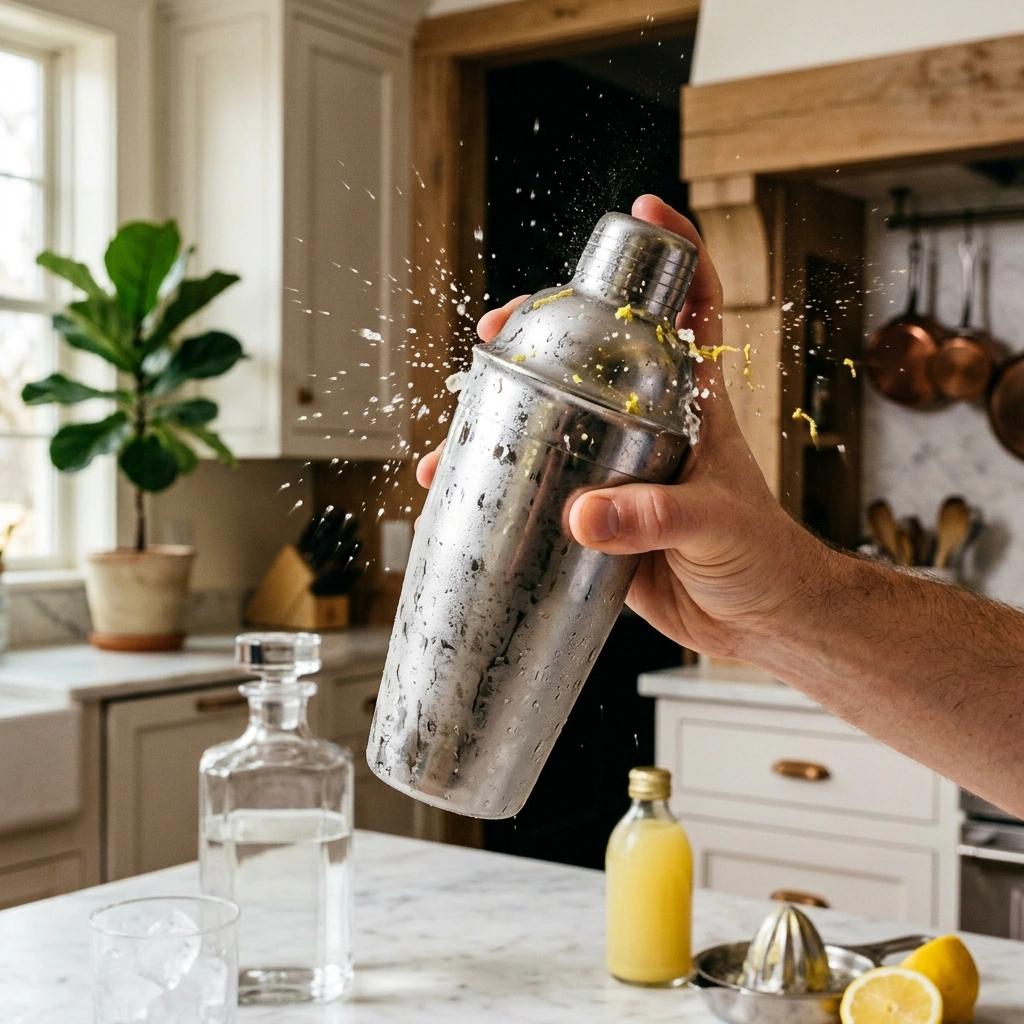
Shake only the gin, lemon, and syrup — never the Champagne — with plenty of ice, hard enough to frost the tin. Strain into a flute you have chilled in the freezer, then top slowly with cold Champagne, letting the foam settle once before you finish the pour. Finish with a long lemon twist expressed over the surface so its oils catch in the bubbles. Serve at once; a French 75 waits for no one.
French 75
Ingredients
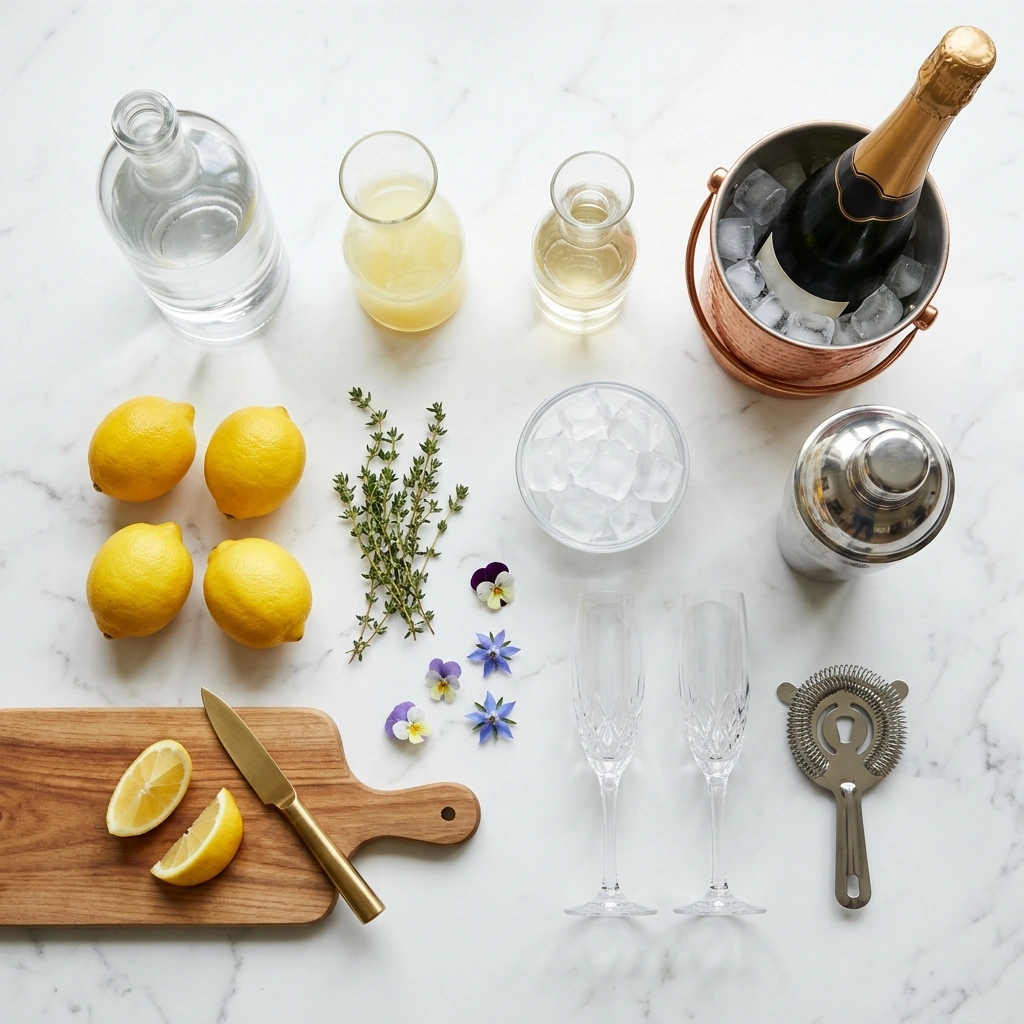
Equipment
Method
- Fill a cocktail shaker with ice. Add gin, fresh lemon juice, and simple syrup. Shake vigorously until well chilled.
- Strain evenly into two chilled Champagne flutes.
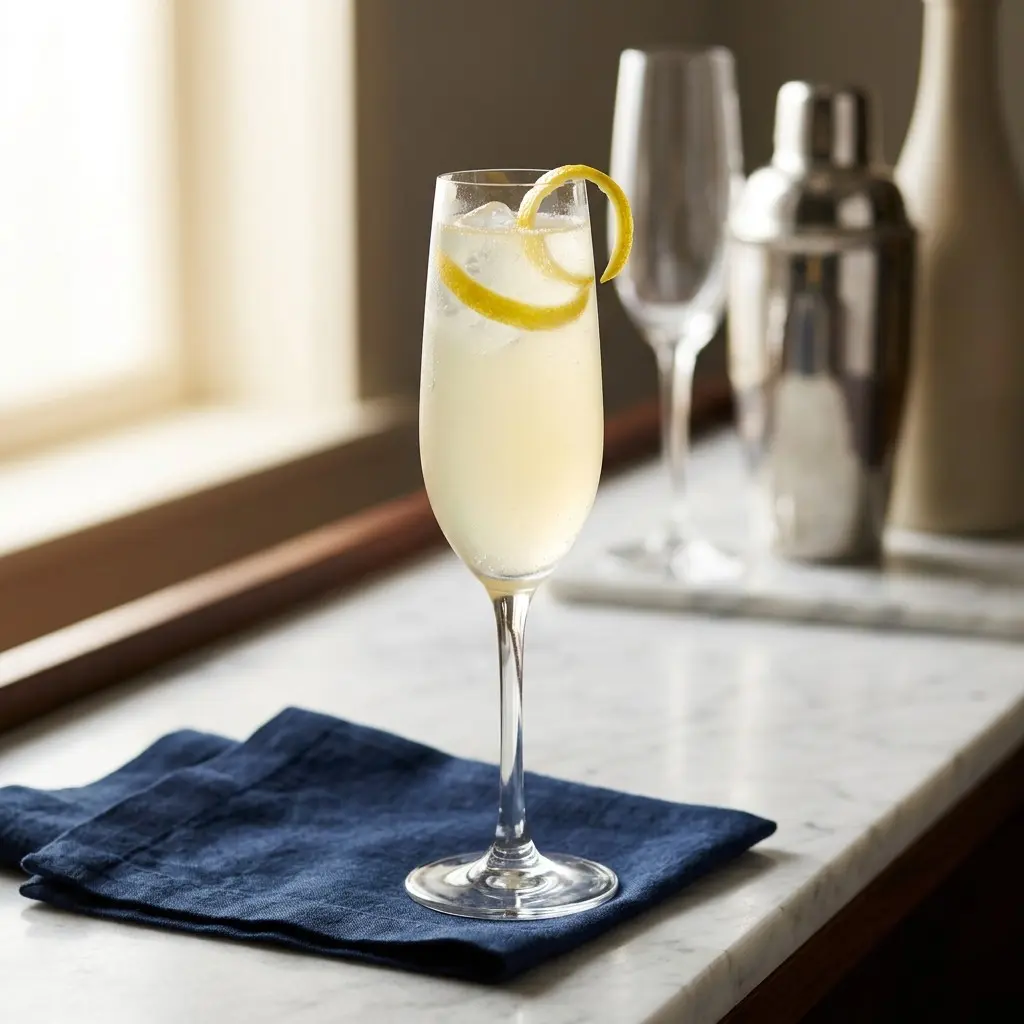
- Slowly top each glass with chilled Champagne, allowing the bubbles to gently blend the cocktail.
- Garnish with a long lemon twist, thyme sprig, or edible flower, and serve immediately.
The Heart of the Table
This is the drink you pour to say the night has begun. It asks nothing of a guest but a raised glass — no acquired taste, no explanation — just something cold and celebratory that tells them they were expected, and they are welcome.
The Art of the Host
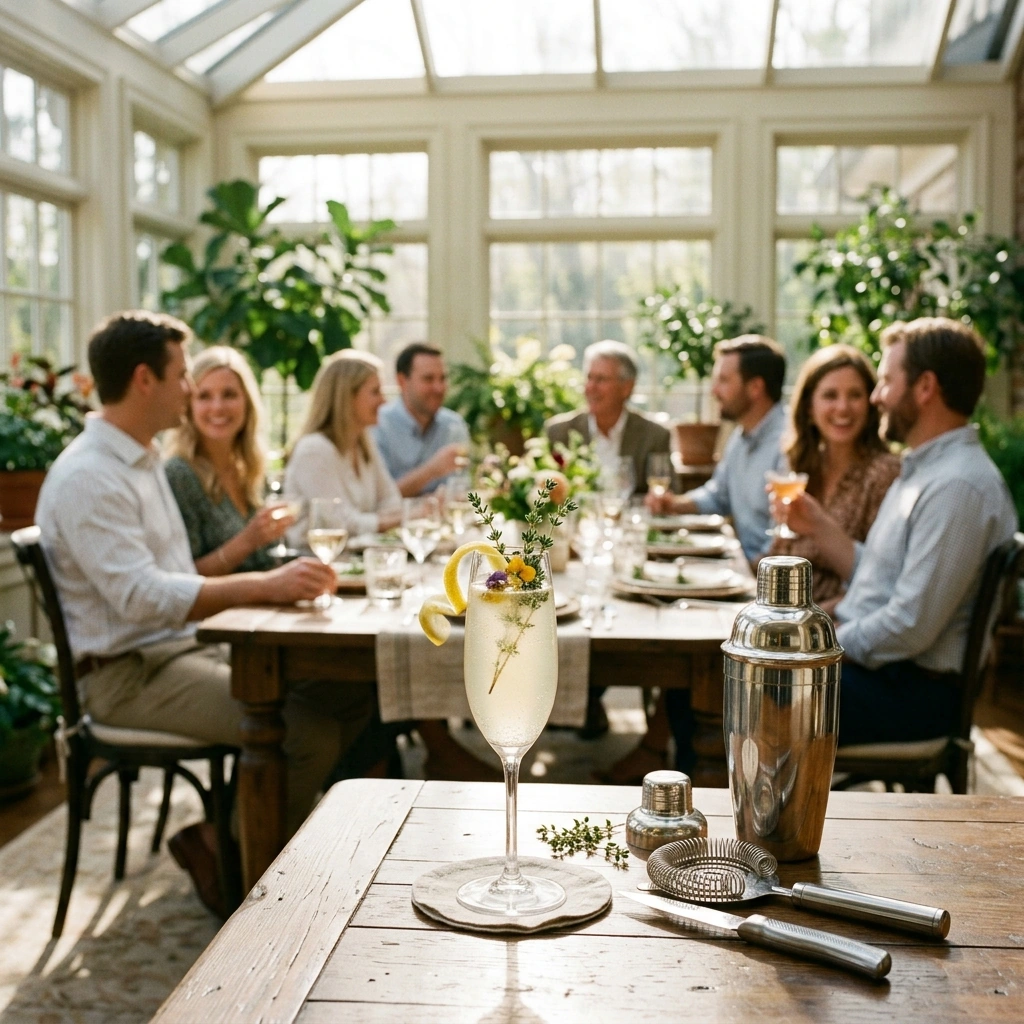
To pour a round for a table of friends, keep within reach a weighted cocktail shaker, a jigger for honest measures, a fine strainer, and a channel knife for those long lemon twists. Chill a set of Champagne flutes in the freezer ahead of time, keep a bucket of good ice close, and have the Champagne colder than you think it needs to be.
Neighborly Grace
- The Presentation: Chill the flutes until they frost, and pour the Champagne tableside — the rising foam and the citrus oil lifting off the twist are half the pleasure, and they are meant to be witnessed, not prepared out of sight.
- The Vibe: Early evening, low gold light, the first toast before dinner. Keep it unhurried and a little glamorous — this is the drink that makes an ordinary Tuesday feel like an occasion worth dressing for.
- The Flourish: Mix the gin, lemon, and simple syrup hours ahead and keep it cold; when guests arrive you shake, top, and never leave the room. From that same base come the variations worth knowing: a Palm Beach 75 with a half-ounce of passion fruit purée, a French 76 built on vodka, a Rosé 75 poured with sparkling rosé, or an Elderflower 75 with half the syrup swapped for St-Germain. For anyone skipping alcohol, a botanical zero-proof spirit and nonalcoholic sparkling wine pours just as bright.