Estate Dinners
Cast-Iron Steak with Thyme-Garlic Butter Baste
The Strategy:
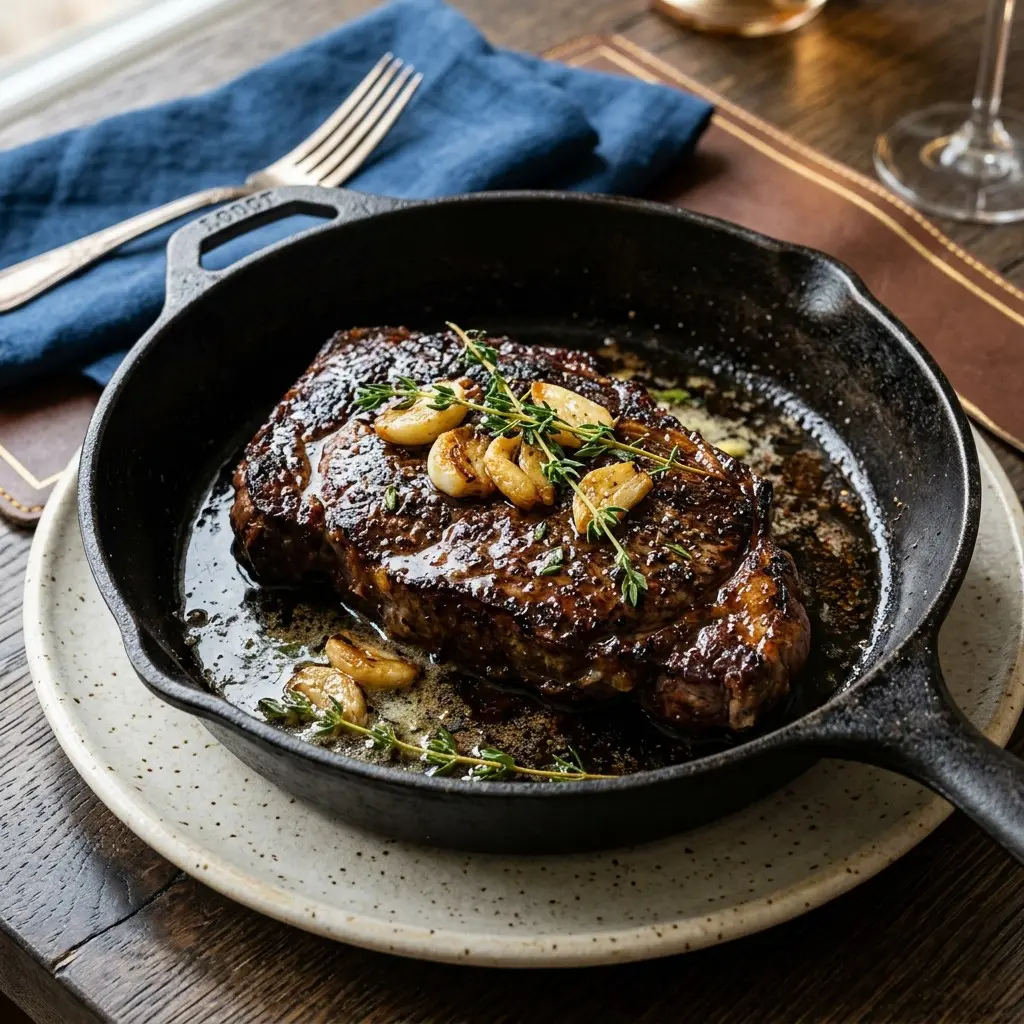
Who doesn’t love a sizzlin’ hot steak, cooked just right with juices oozing out on the first cut? When entertaining, I usually splurge on a prime sirloin strip, since the flavor and tenderness of the meat makes it completely worth the price. Searing it in a screaming hot cast-iron skillet and continuously basting it with rich, melted butter, crushed garlic, and fresh thyme creates a masterful, steakhouse-quality crust.
Ingredients
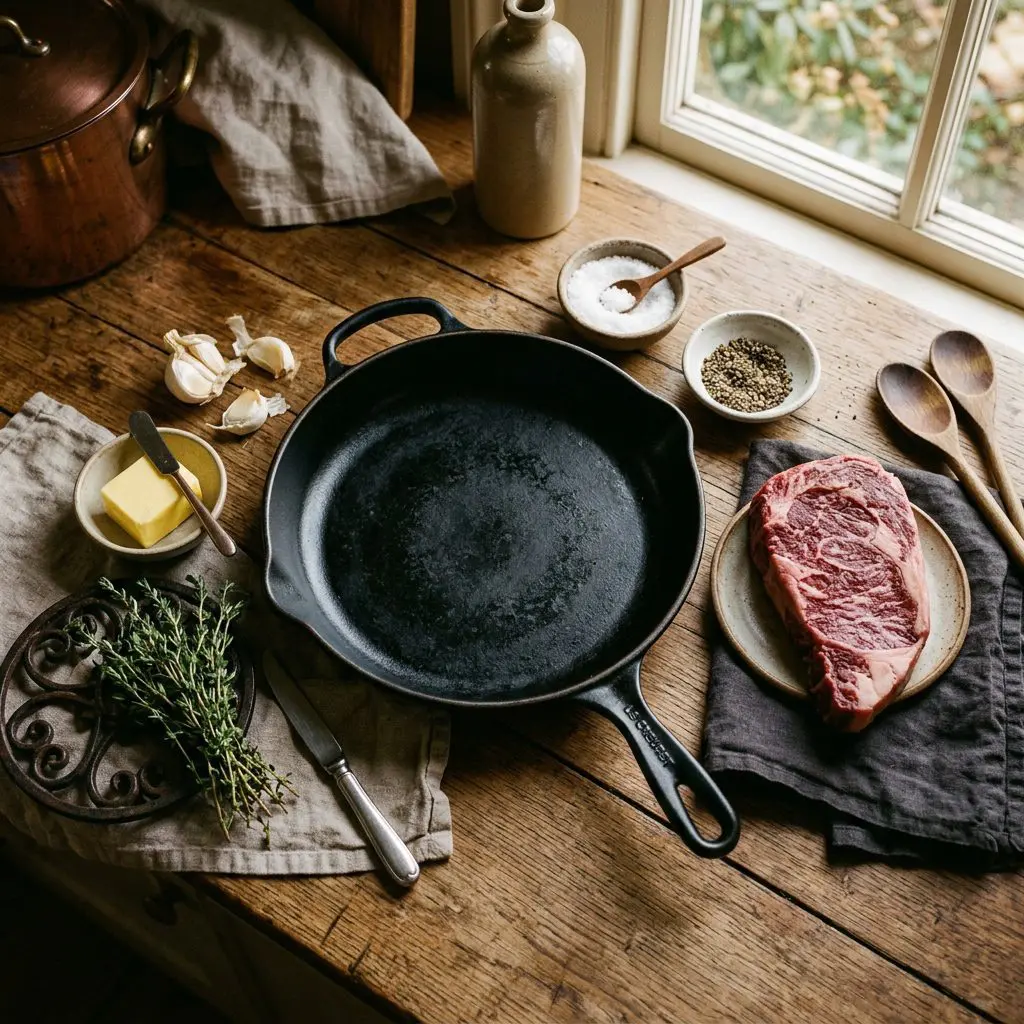
- 1 (12-ounce) sirloin strip steak, cut 2 inches thick
- 1 teaspoon kosher salt
- 1 teaspoon coarse black pepper
- 2 tablespoons butter
- 3 to 4 garlic cloves, peeled and smashed, about 2 tablespoons
- thyme sprigs

Instructions
- Let the steak rest for 30 minutes at room temperature before cooking.
- Pat the steak dry with paper towels. Season with salt and pepper.
- Coat the bottom of a cast-iron skillet with vegetable oil spray and heat on high. Once the skillet is screaming hot, add the steak. Cook, without moving it around, until you see a browned, crisp edge forming on the bottom, about 3 to 4 minutes. Flip and continue cooking for about 3 to 4 minutes more. Reduce the heat to medium.
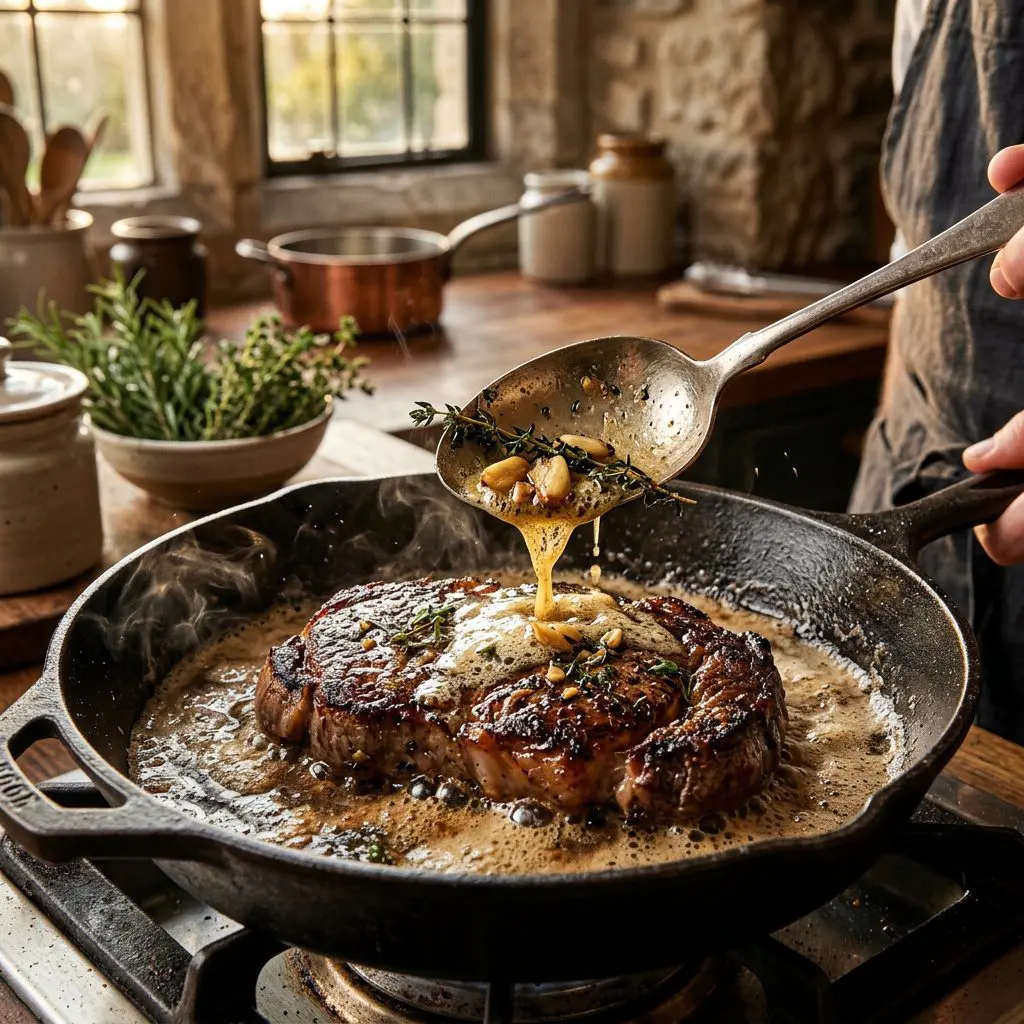
- Add the butter. While the butter melts, add the smashed garlic and thyme sprigs. Carefully tilt the pan to gather the butter with a spoon. The handle will be hot, so use a potholder!
- Spoon the butter over the steak to baste. Do this several times while the steak continues to cook. Test for doneness. Medium-rare works best for this steak, which means the internal temperature ranges between 130° and 140°.
- Transfer the steak to a platter. Spoon on the remaining juices. Let rest for 5 minutes before slicing into strips.
Thing to Note:
Here’s how you can test for doneness without a meat thermometer. Touch your finger to the palm of your hand, below your thumb. It feels soft and a little mushy, allowing your finger to sink in a bit. This is what raw steak should feel like when you touch it. Now bring your thumb towards your pointer finger and touch the two together. Touch that same part of your palm again. This is even firmer—how a rare steak should be. Touch your thumb to your middle finger. Notice how it gets firmer again? This is what a medium-rare steak feels like. Move your thumb over to your ring finger. Touch the same place again—that’s a medium cook. Bring your thumb all the way to your pinky finger. Now that part of your palm will feel firm when you poke it. This is what a well-done steak feels like when you touch it. The advantage of “getting a feel” for doneness is that you won’t need to jam a thermometer into the steak—losing some of those yummy juices in the process.
The full recipe lives in the Vault
Ingredients, method and every chef-tested detail are in the Vault. Join the Estate Registry for $79 a year: six printed dinner-party editions mailed to you, and the Vault opens as our gift.
Join the Registry · $79What’s included · Member Sign In
The Heart of the Table
There is an undeniable romance to cooking a premium steak in a cast-iron skillet. It requires your complete, undivided attention—listening to the vigorous sizzle, watching the butter foam and brown, and inhaling the intoxicating aroma of roasted garlic and thyme. Serving a beautifully carved steak is an expression of deep hospitality and generosity; it tells your guests that they are worth the very best you have to offer.
Neighborly Grace
- THE PRESENTATION: Do not serve the steak whole. Let it rest properly, then slice it into thick, juicy strips before arranging it on a warmed, rustic platter. Immediately spoon the dark, rich pan drippings—complete with the roasted garlic and thyme sprigs—over the carved meat just before bringing it to the table.
- THE POUR: A bold, structured Cabernet Sauvignon or a peppery Syrah. The powerful tannins and dark fruit of a big red wine are essential for cutting through the rich, buttery fat and the intense, salty crust of a perfectly seared prime steak.
- THE VIBE: Opulent yet grounded. This dish anchors the entire evening with a sense of occasion and quiet luxury, ensuring a deeply satisfying, memorable dining experience.