
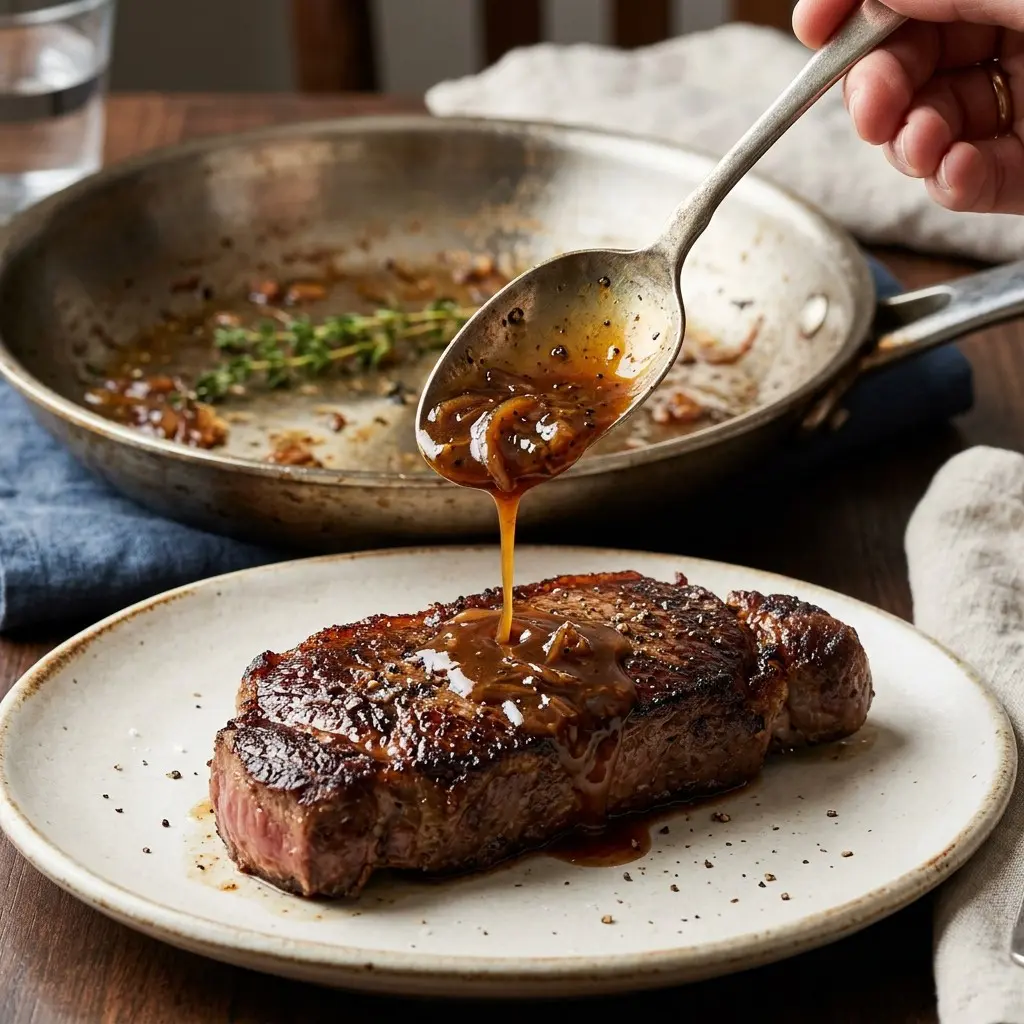
Master Pan Sauce: Quick Weeknight Sauce
Master one simple sequence — deglaze, reduce, finish with butter — and you can turn the browned bits in any pan into a glossy, restaurant-worthy sauce in minutes. This is the master pan sauce, the single most useful weeknight technique a cook can learn, and it makes everything you sear taste like more.
If there is one technique that separates home cooks from those who cook like restaurants, it is the pan sauce. Every time you sear a steak, a chicken breast, or a pork chop, you leave behind a pan full of browned bits — pure, concentrated flavor — and this simple sequence transforms them into a glossy, savory sauce in the minutes your meat rests. Learn it once and you will never look at an empty pan the same way again.
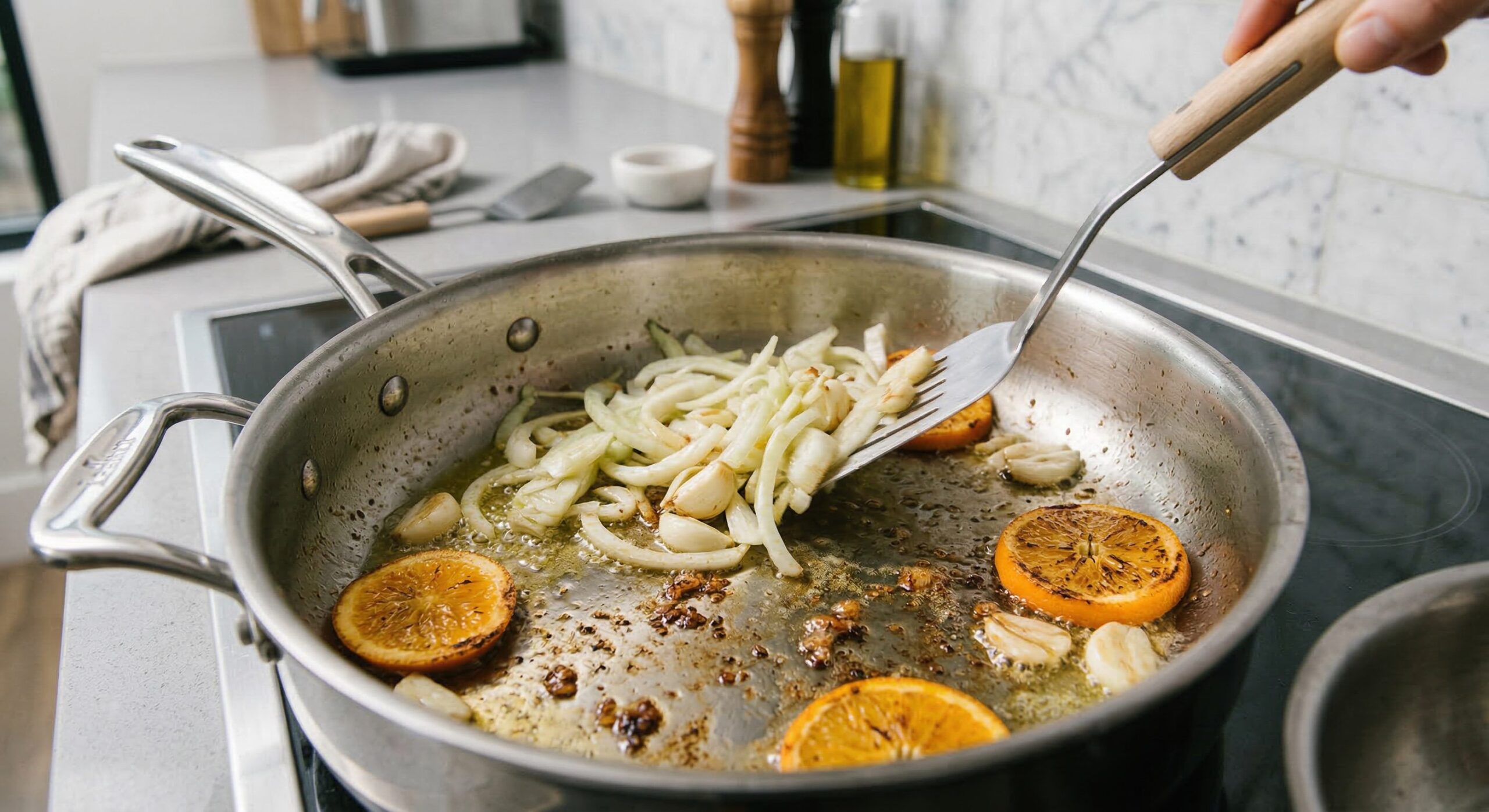
Deglaze & Reduce
The magic begins with those browned bits, the fond, stuck to the bottom of the pan after searing. Pour in a splash of liquid — wine, stock, or both — and scrape hard as it bubbles, dissolving all that concentrated flavor into the liquid. Then let it reduce, simmering until it cooks down and concentrates into something deeper and more intense. This is where the sauce gets its body and its soul, so let it go until it has thickened noticeably and tastes rich.
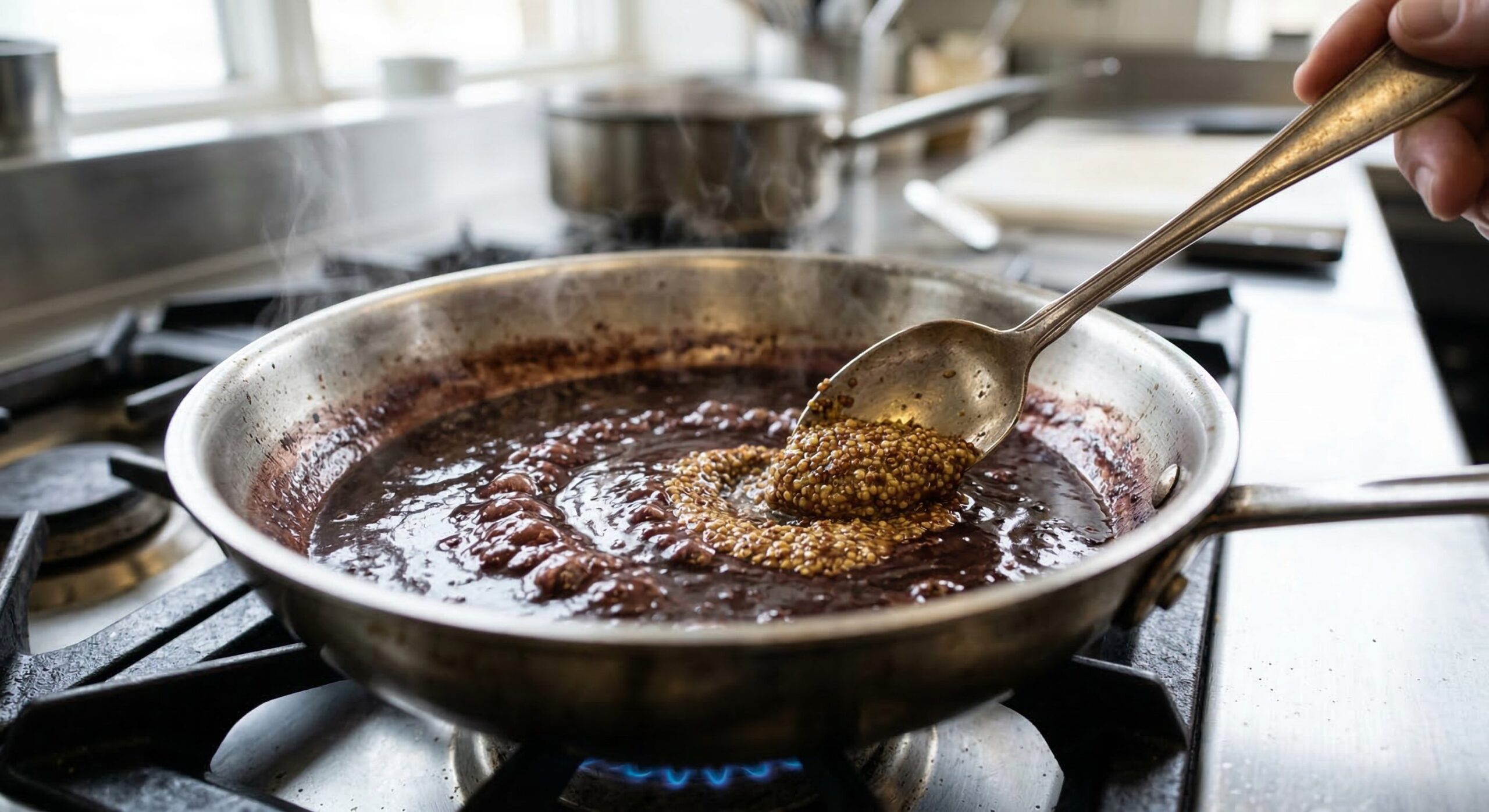
The Velvet Finish
The finishing move is what makes a pan sauce glossy and luxurious: cold butter, swirled in off the heat. Take the reduced sauce off the burner and whisk in a knob or two of cold butter until it melts into a silky sheen that coats the back of a spoon. This final step gives the sauce its velvety body and glossy shine. Taste, adjust the seasoning, and spoon it over your rested meat — the whole thing takes about the time your protein needs to rest.
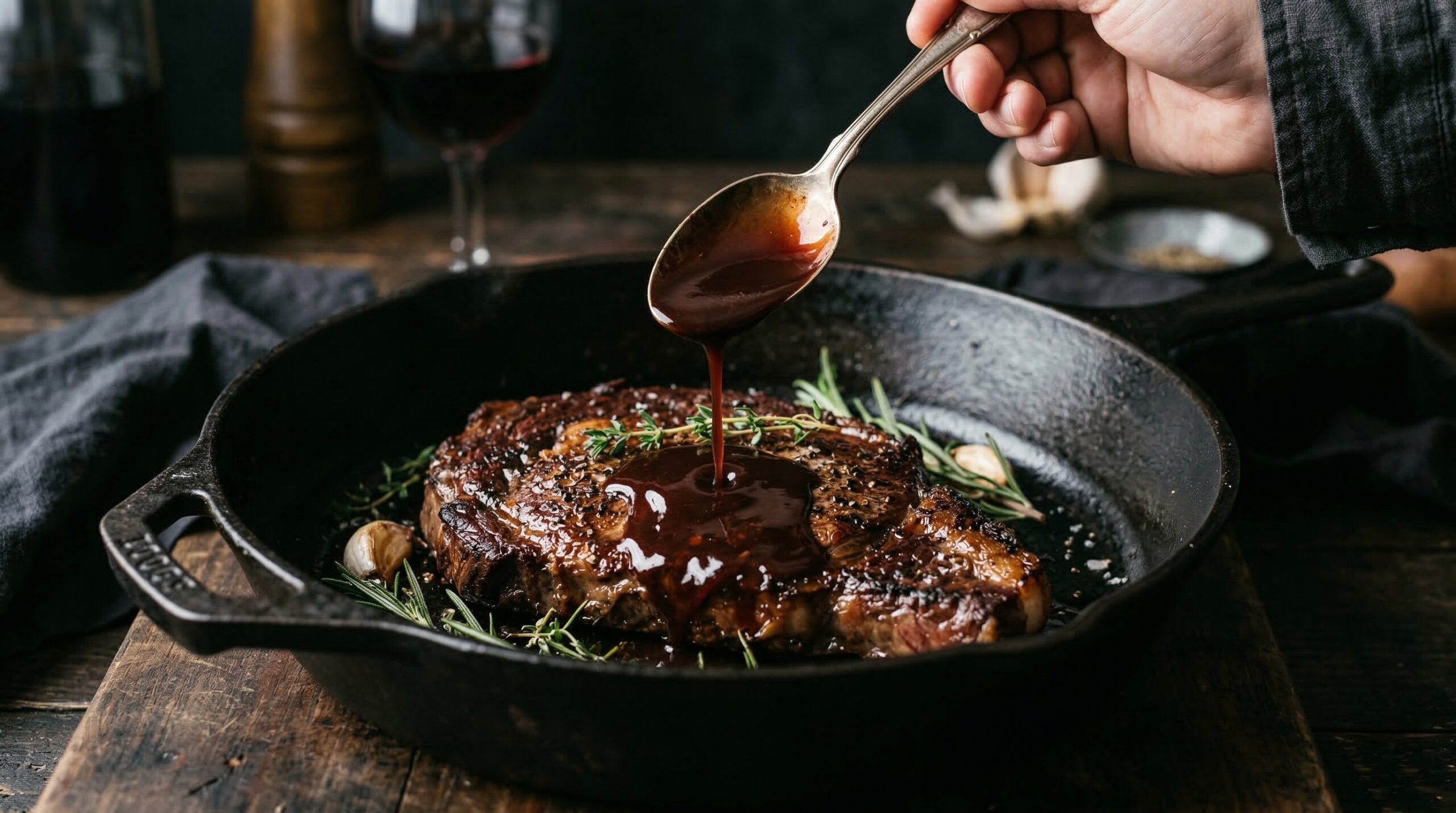
The Master Pan Sauce: A Parisian Shortcut for the Weeknight Host
Ingredients
Equipment
Method
- After searing your protein, remove it from the skillet to rest, leaving the drippings and fond in the pan.
- Saute the finely minced shallot in the remaining drippings over medium heat until softened and fragrant.
- Pour in the dry wine and vigorously scrape the bottom of the pan with a wooden spoon to lift the caramelized fond into the liquid.
- Add the high-quality stock (and the fresh herbs, if making the White Wine Remix) and increase the heat slightly.
- Simmer the liquid until it has reduced by half, transforming into a deep color with a slightly syrupy consistency.
- Remove the pan completely from the heat.
- Slowly whisk in the cold, cubed unsalted butter one piece at a time until fully melted.
- Continue whisking until the sauce comes together into a thick, glossy glaze that coats the back of a spoon. (If making the White Wine Remix, finish with a fresh squeeze of lemon juice now).
- Spoon the warm sauce immediately over your rested protein.
The Heart of the Table
To turn the humble leavings of a pan into a sauce worthy of a restaurant is a quiet, generous kind of cooking — a small mastery that makes an ordinary weeknight dinner taste like something special. There is warmth in that attention to detail, in the spoonful of glossy sauce over the meat, a sign that the cook cared enough to make the everyday feel a little elevated.

The Art of the Host
A good heavy skillet — the same one you seared in — is the only tool required. Don't wash away the fond; it is the whole point. Deglaze with a bit of wine or stock and scrape well, reduce until the sauce has body, and finish off the heat with cold butter for that velvety shine. Taste and season at the very end, since a reduced sauce concentrates the salt.
Neighborly Grace
- The Preparation: This is a live, cook-to-order technique by nature — it comes together in the few minutes your protein rests, so there is little to make ahead. But mastering it is the make-ahead, so to speak: once it is in your hands, you can build a great sauce from any sear, any night, with whatever wine and stock you have.
- The Pour: Pour whatever suits the dish the sauce is finishing — a pan sauce flatters almost any main. On its own merits, a medium red or a crisp white matches its savory richness; for a non-alcoholic option, a sparkling water with lemon keeps the palate clean.
- The Vibe: This is the quiet secret weapon of a good cook — spoon the glossy sauce over a simple seared protein and watch an ordinary plate turn restaurant-worthy. It is less a dish than a skill, the one that makes everything else you cook taste better.