
Collard Greens & Slow-Roasted Pork Belly
The bright bitterness of collards, embraced by the silken caress of slow-roasted pork belly, whispers of life's most exquisite harmony. This unexpected harmony of earth and richness leaves an indelible trace, making the memory of your table truly unforgettable.
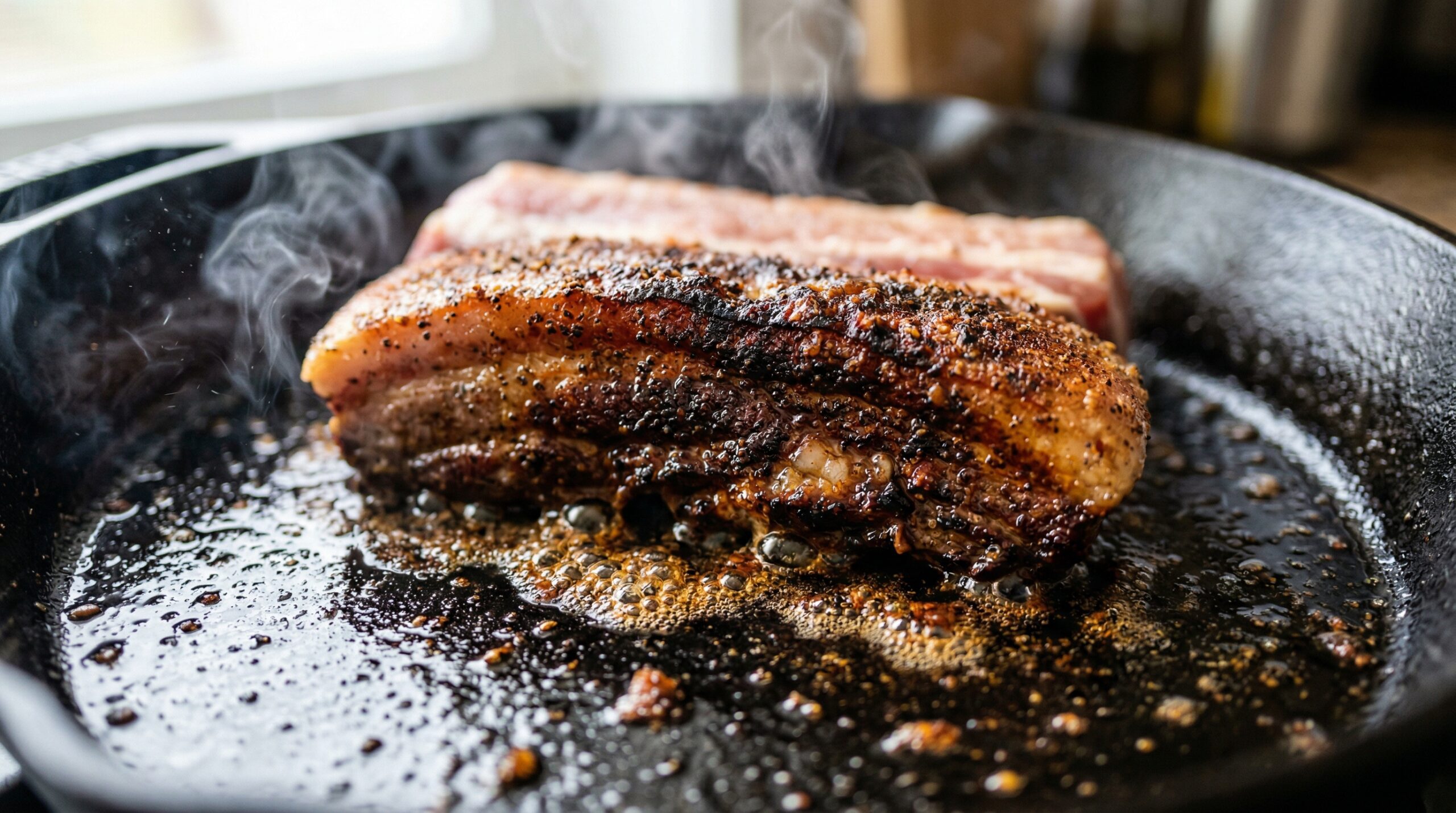
Transforming tough, fibrous greens and a highly fatty cut of pork into a cohesive, melt-in-your-mouth centerpiece requires precise thermal management and lipid extraction. The architectural foundation begins by aggressively searing a heavily spiced slab of pork belly in a heavy cast-iron Dutch oven. This initiates the caramelized browning reaction, developing a deeply caramelized crust while rendering the rich, savory pork fat down into the pot.
The slow-roast phase is critical. By transferring the seared pork to a low-heat oven environment (275°F to 300°F), the tough connective tissues gradually break down over several hours. This controlled thermal breakdown results in a protein so impossibly tender that it yields completely to the side of a fork.
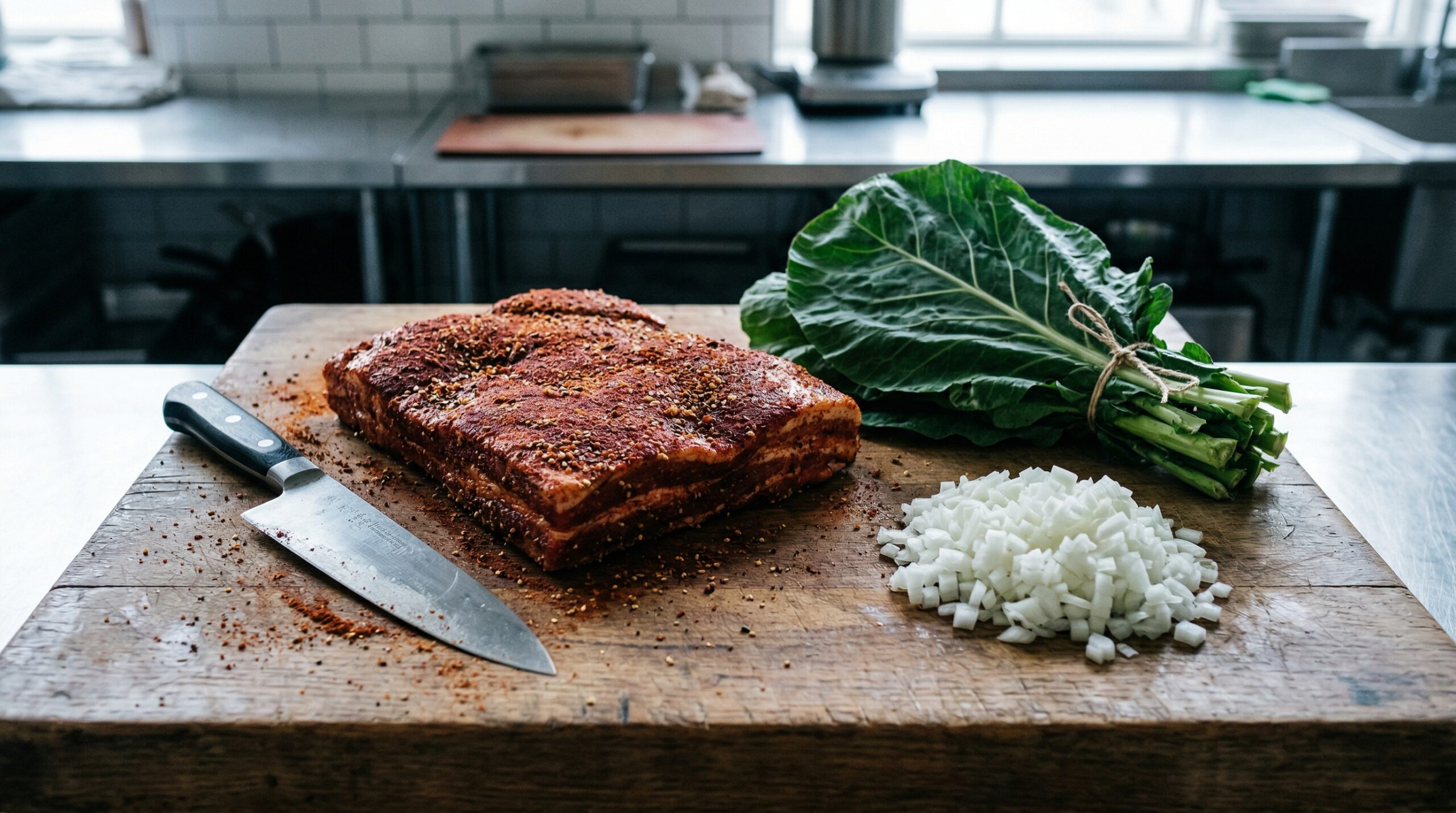
The Mechanics of a Syrupy Braise
While the pork roasts, the collard greens undergo a simultaneous transformation. Folding the tough, chopped leaves directly into the residual, spiced pork fat and sweated onions coats them in a highly concentrated lipid barrier. Slow-braising the greens in chicken stock forces their cellular structure to collapse and soften, reducing the liquid into a deeply flavorful, syrupy potlikker.
The defining architectural stroke of this dish is the acidic finish. To counter the immense, heavy richness of the pork fat and the earthy greens, a sharp pour of dark balsamic vinegar is stirred into the pot just before serving. This creates a brilliant acidic bridge that perfectly balances the plate, elevating a humble Southern staple into a sophisticated estate-quality dinner.
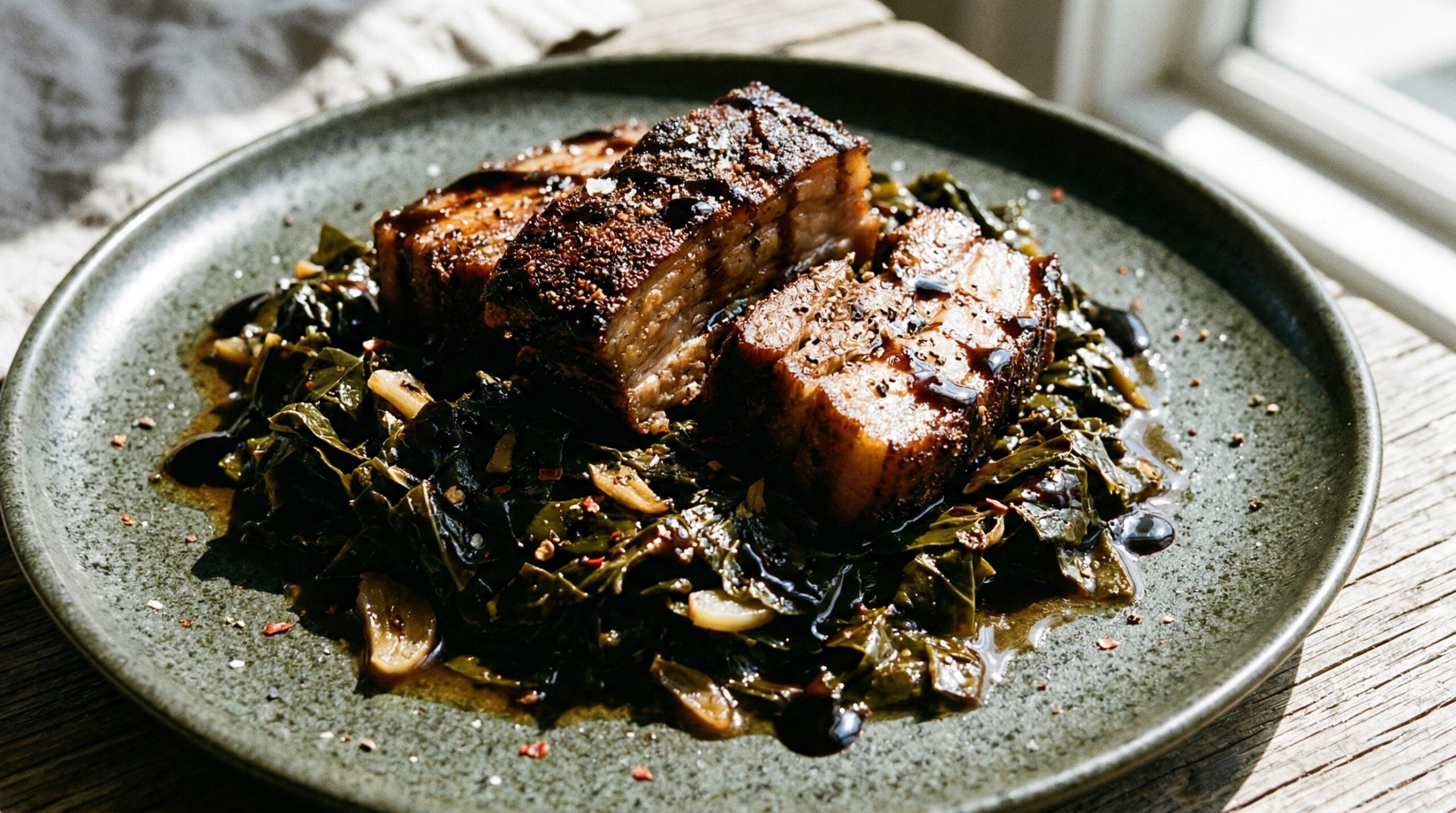
Collard Greens with Slow Roasted Pork Belly
Ingredients
Method
- In a small ceramic bowl, vigorously whisk together the onion powder, garlic powder, chili powder, kosher salt, and coarse black pepper to create a concentrated dry rub.
- Generously season both sides of the pork belly with the spice mixture, reserving exactly 1 tablespoon of the rub for the collard greens.
- Heat a heavy-bottomed Dutch oven over medium-high heat. Place the seasoned pork belly into the hot pot and sear aggressively until a dark, caramelized crust forms, about 5 minutes per side.
- Transfer the seared pork belly to a ceramic baking dish. Cover tightly with aluminum foil and roast in the oven at 275°F to 300°F for several hours (approximately 3 to 4 hours), until the meat is incredibly tender and easily falls apart when pulled with a fork.
- While the pork roasts, return to the Dutch oven containing the rendered pork fat on the stovetop. Add the diced white onion and cook over medium heat until softened and translucent, about 5 minutes.
- Add the chopped collard greens to the pot, stirring well to coat the tough leaves in the rendered fat and onions. Season with the reserved 1 tablespoon of spice rub.
- Pour in 2 cups of the chicken broth. Cover the pot with a tight-fitting lid and transfer it to the oven alongside the pork belly to braise.
- Continue slow-cooking the greens, adding more chicken broth 1 cup at a time as needed, until the collards are incredibly soft and the liquid reduces into a thick, syrupy potlikker.
- Just before serving, stir the 2 tablespoons of balsamic vinegar directly into the hot greens to provide a sharp, acidic counterpoint to the rich pork fat.
- Serve the tender collard greens immediately on a warm platter, topped with large, pull-apart pieces of the slow-roasted pork belly. Drizzle the residual pan juices heavily over the top.
The Heart of the Table
The bright bitterness of collards, embraced by the silken caress of slow-roasted pork belly, whispers of life's most exquisite harmony. This unexpected harmony of earth and richness leaves an indelible trace, making the memory of your table truly unforgettable.
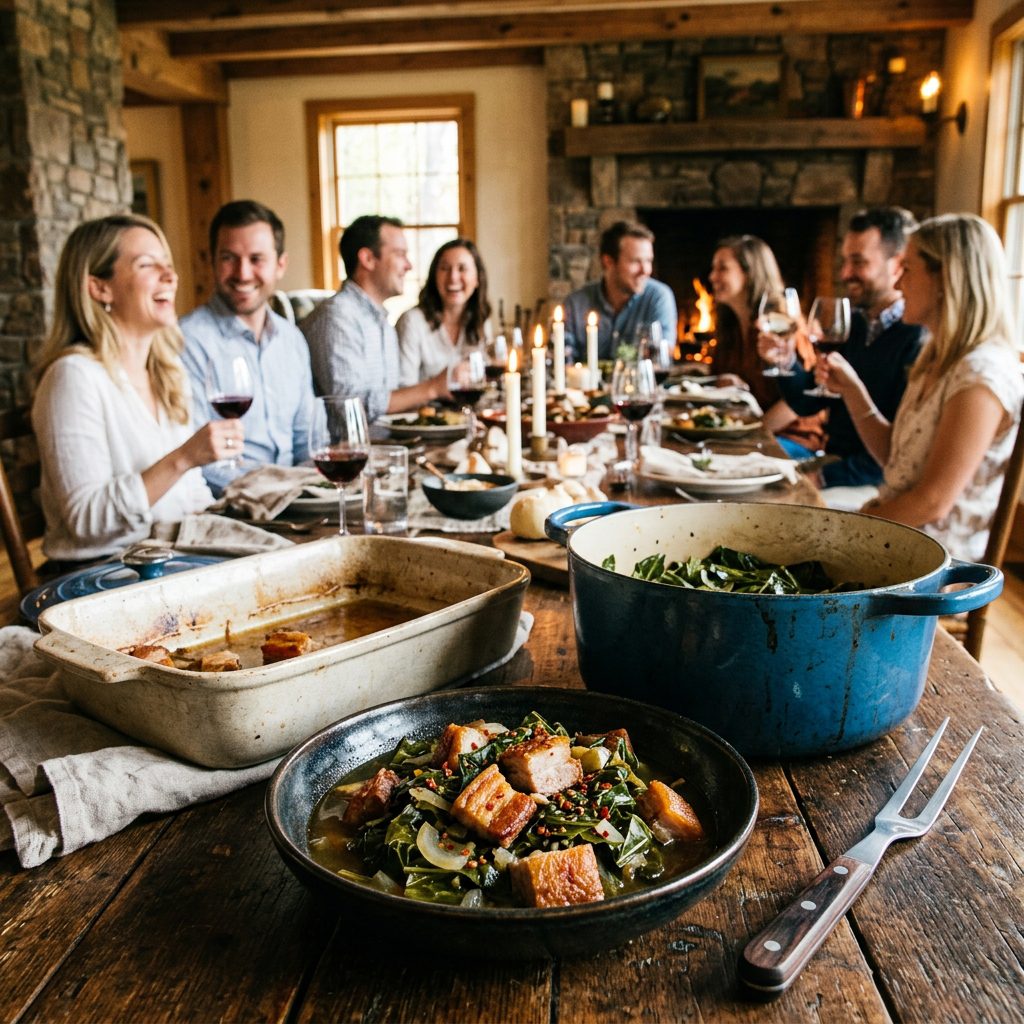
The Art of the Host
- Heavy-bottomed enameled cast-iron Dutch oven
- Large Gracious Linen ceramic baking dish
- Professional stainless steel meat fork
- Heavy wooden prep board
- Precision chef's knife
- Large ceramic serving platter
Neighborly Grace
- THE PRESENTATION: Create a striking visual presentation by layering the dark, syrupy collard greens across a large, warmed ceramic platter first. Gently pull the slow-roasted pork belly into large, rustic chunks and arrange them directly over the greens, finishing the dish with a heavy drizzle of the residual balsamic pan juices.
- THE POUR: A bright, high-acid white wine like an off-dry Riesling or an ice-cold, effervescent Pilsner provides the absolute essential palate-cleansing contrast needed to slice through the heavy pork fat and the deep, earthy greens.
- THE VIBE: Cultivate a warm, highly insulated dining sanctuary. Dim the primary lighting, rely on the ambient glow of the table, and curate a background of soulful, acoustic blues or Americana to match the deeply traditional, comforting soul of the meal.