
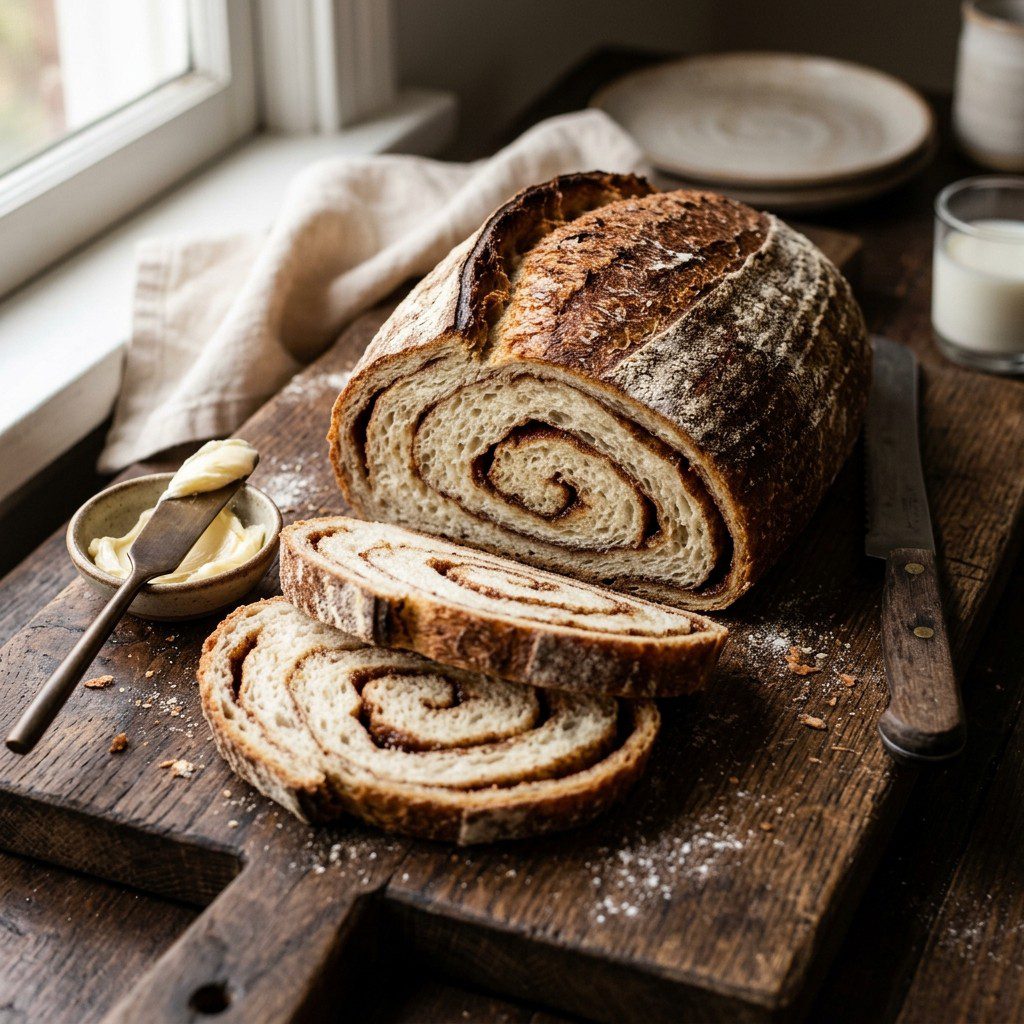
Swirled Cinnamon Artisan Bread
Swirl cinnamon sugar through a rustic, crusty artisan loaf for a bread that is beautiful sliced and unbeatable toasted — the cozy comfort of cinnamon in a proper, hand-shaped loaf.
This is cinnamon bread grown up — not a soft sandwich loaf but a rustic, crusty artisan bread with a gorgeous cinnamon sugar swirl running through its open crumb. It takes the patience of a yeasted dough and a hand-shaped loaf, but the reward is a bread that is beautiful when sliced, showing off its spiral, and absolutely unbeatable toasted with a little butter. It is the cozy comfort of cinnamon in a proper artisan form, the kind of loaf that makes a slow morning feel like a small luxury.
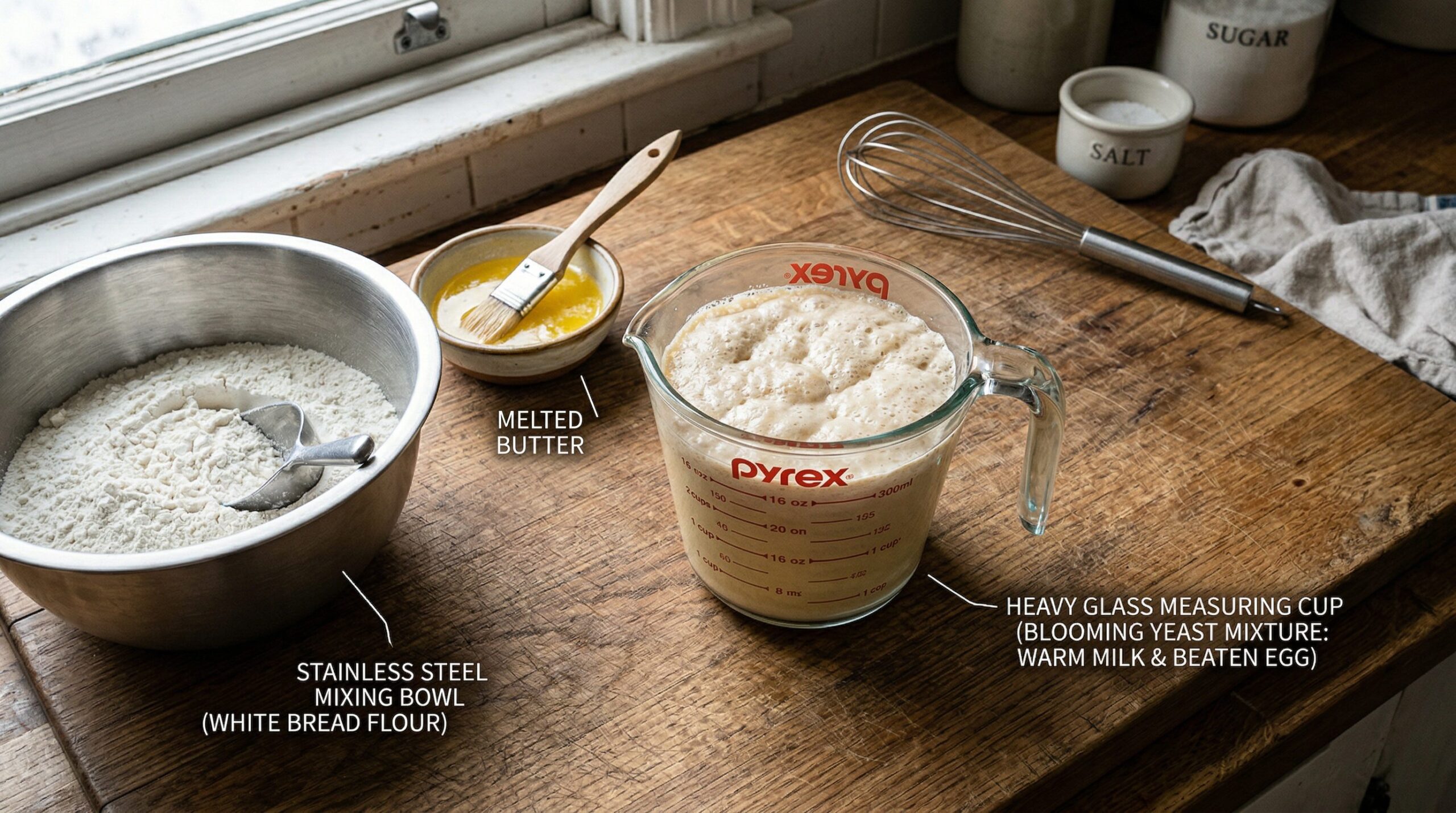
The Artisan Dough
Mix and prove a rustic dough with a good, long rise for the open, chewy crumb of an artisan loaf. A slow fermentation develops both flavor and that lovely open texture, so give the dough time and do not rush it — the patience is what separates a proper artisan bread from an ordinary loaf.
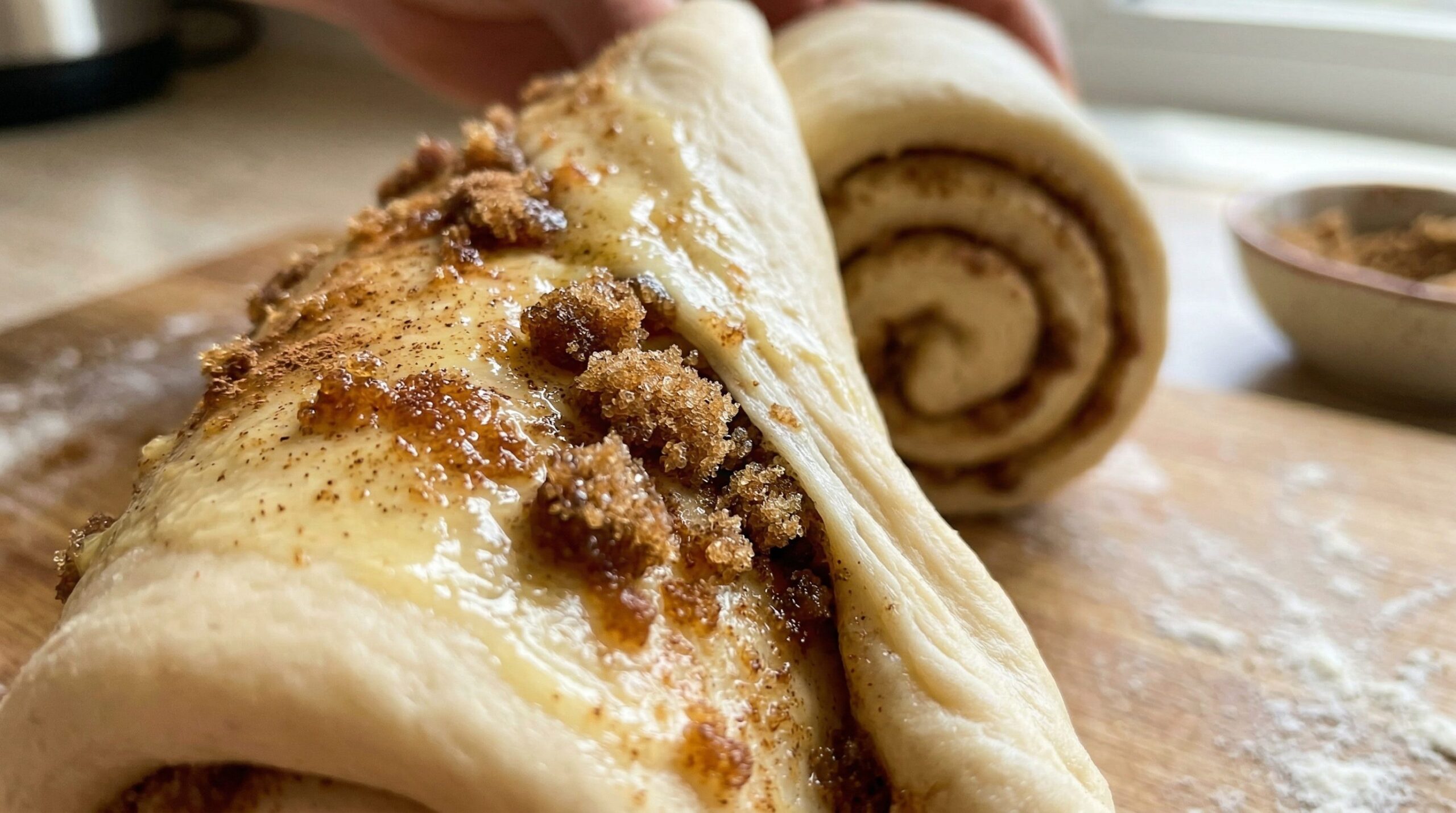
The Cinnamon Swirl and Bake
Roll out the risen dough, spread it with cinnamon sugar, and roll it up before shaping and baking so the spice runs through in a beautiful spiral. Bake it until the crust is deep and crackling and the kitchen fills with the smell of cinnamon — that swirl of spice through the rustic crumb is the whole cozy charm of this loaf.
Swirled Cinnamon Artisan Bread
Makes 1 loaf • about 25 minutes active, plus rising
The Dough
3 1/2 cups bread flour • 1 1/4 teaspoons active dry yeast • 1 1/4 teaspoons salt • 2 tablespoons sugar • 1 1/4 cups warm water • 2 tablespoons olive oil
The Cinnamon Swirl
1/3 cup granulated sugar • 2 tablespoons ground cinnamon • 1 egg white, lightly beaten (for brushing)
Method
1. Combine the flour, yeast, salt, and sugar, then add the warm water and olive oil and mix into a shaggy dough.
2. Knead until smooth and elastic, about 8 minutes, then cover and let rise until doubled, 1 to 1 1/2 hours.
3. Stir together the cinnamon and sugar for the swirl.
4. Roll the dough into a rectangle, brush lightly with egg white, and sprinkle the cinnamon sugar evenly over the surface.
5. Roll up tightly from a short end into a log, tucking the ends, and place seam-side down on a lined sheet or in a loaf pan.
6. Cover and let rise 40 minutes, until puffed.
7. Bake at 375°F for 35 to 40 minutes, until deep golden and hollow-sounding. Cool fully before slicing.
The Heart of the Table
A homemade cinnamon loaf carries a warmth no store bread can match — the smell of it baking is hospitality itself. To slice a rustic loaf like this, its spiral of cinnamon on display, is to offer real comfort, the kind of generous, from-scratch care that makes a house feel like a home and a morning feel special.
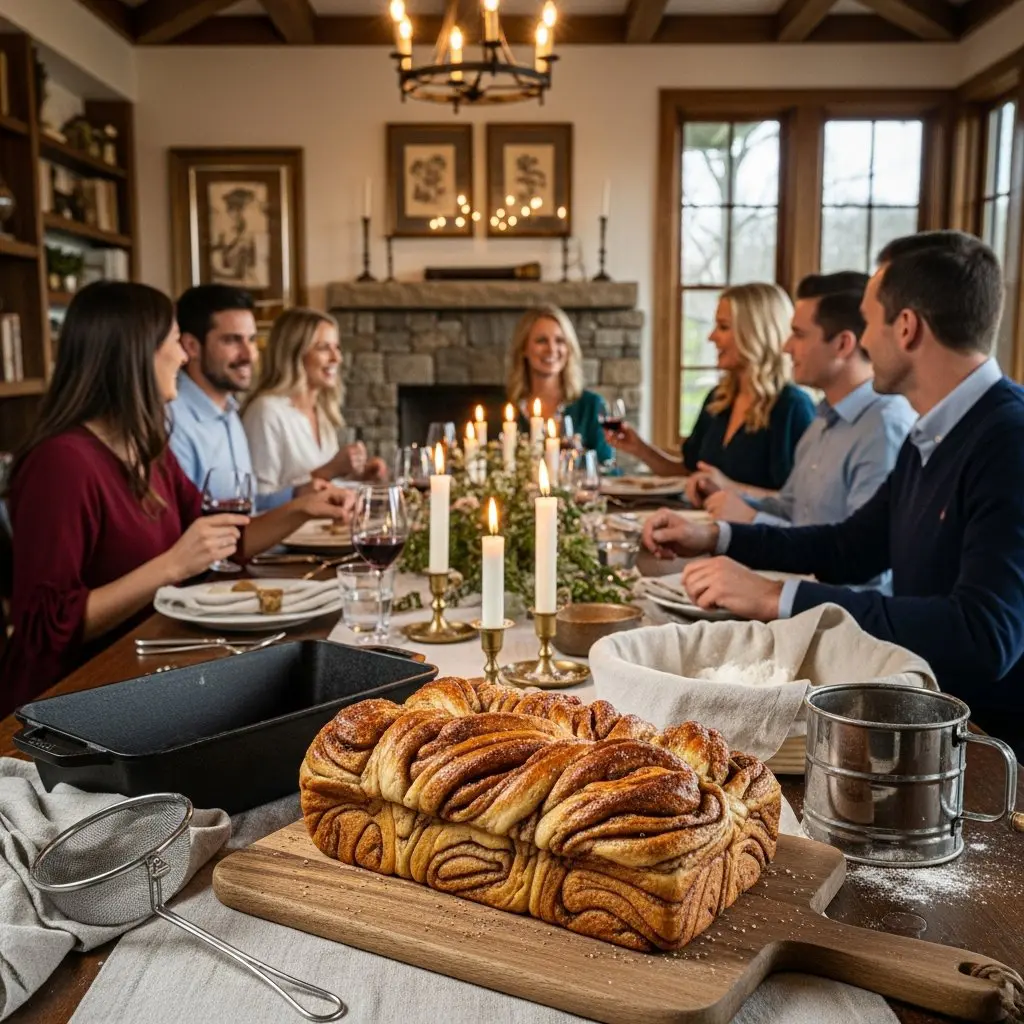
The Art of the Host
Give the dough a full, patient rise for an open crumb, and cool the loaf completely before slicing so the swirl sets. It toasts beautifully — a slice under the broiler with butter is the perfect way to enjoy any that lasts past the first day.
Neighborly Grace
- The Preparation: The dough can be mixed and given a slow, overnight rise in the refrigerator so you can bake a fresh loaf in the morning. The baked bread keeps and toasts well for several days.
- The Pour: A cup of coffee or a mug of chai is the natural partner to a slice; for a cozy non-alcoholic pairing, warm spiced steamed milk carries the same comforting warmth.
- The Vibe: Serve it sliced and toasted with butter for breakfast, or plain to show off its swirl. This is cozy, rustic baking — the comfort of cinnamon in a proper artisan loaf, made to fill the house with warmth and make a slow morning feel like a luxury.