
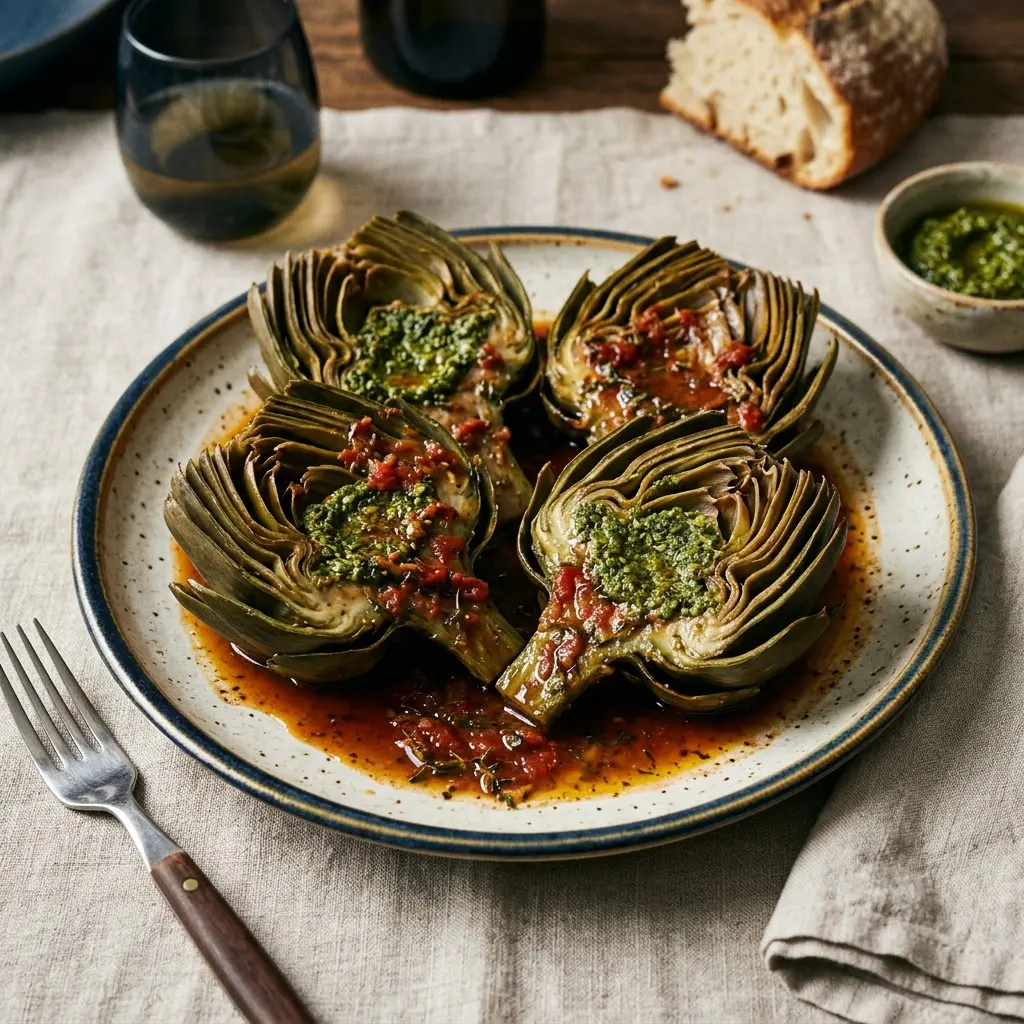
Tomato Braised Artichokes with Anchovy Pesto Rub
Pour tomatoes, wine, vegetable broth, and olive oil into a roasting pan and season with salt and crushed red pepper. Pulse anchovies, garlic, and basil in a food processor, then pour in olive oil to make a thick paste. Trim and halve the artichokes, remove the choke, and rub lemon over each cut. Brush the anchovy pesto on both sides, place the artichokes cut-side down in the pan, bring to a boil, then cover and simmer over low heat, turning several times, until a fork easily pierces the hearts.
A whole fresh artichoke intimidates many cooks — all those thorny leaves and that mysterious choke. But learn to trim one, and a world of rustic Italian cooking opens up. Here, trimmed artichoke halves are rubbed with a punchy anchovy pesto and braised in a rich tomato broth until meltingly tender, drinking up all that savory, garlicky flavor. It's a dish that turns a formidable-looking vegetable into a deeply satisfying centerpiece.
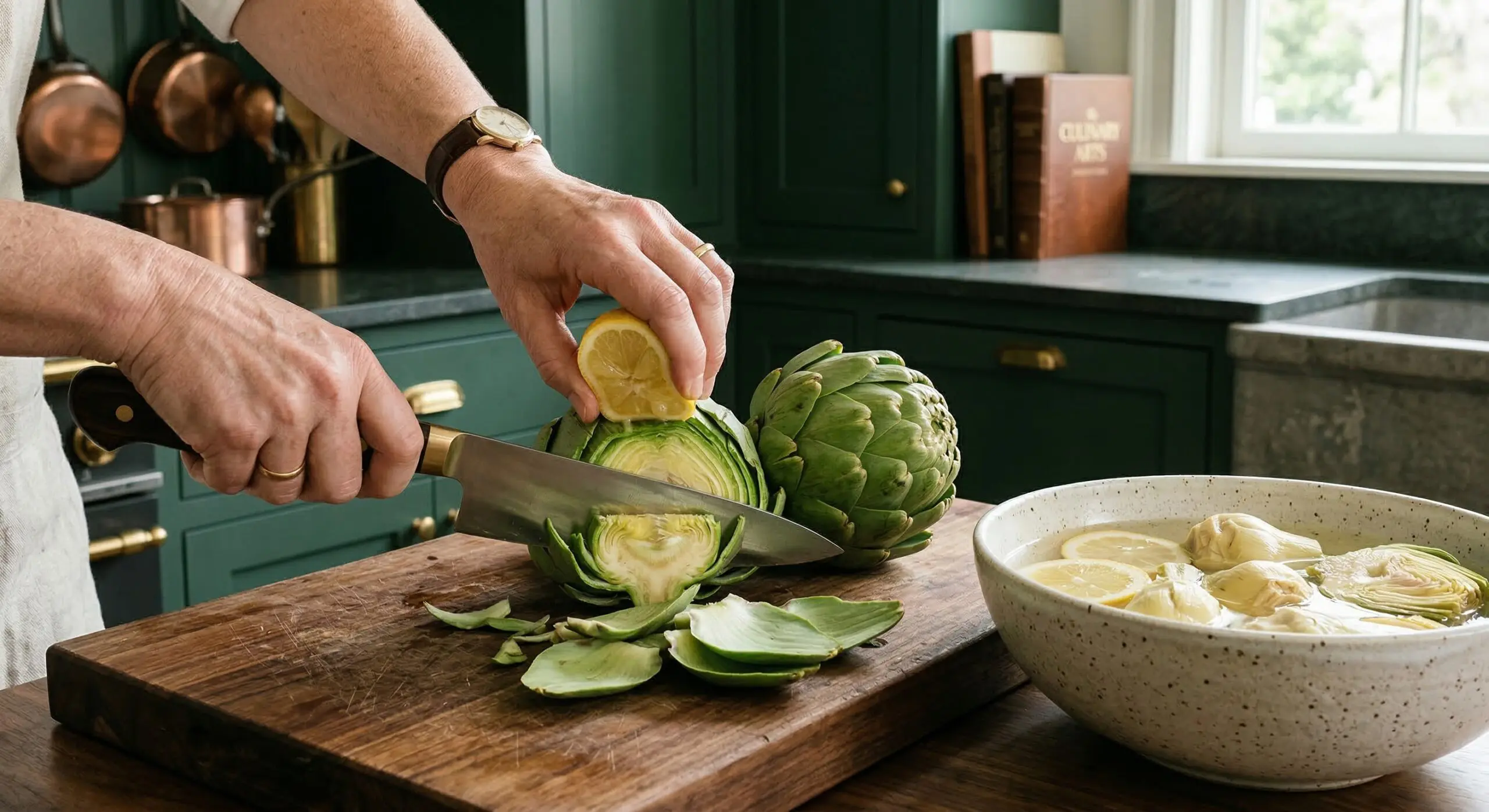
Trimming a Fresh Artichoke
The prep is the part worth mastering, and it's methodical rather than difficult. Pull away the tough dark outer leaves until you reach the pale tender ones, peel the fibrous skin from the stem and base, and cut off the top third of thorny tips. Rub every cut surface with lemon immediately, since artichokes brown the moment they're exposed to air. Halve them lengthwise, scoop out the fuzzy choke with a spoon, and hold them in lemon water until you're ready to braise.
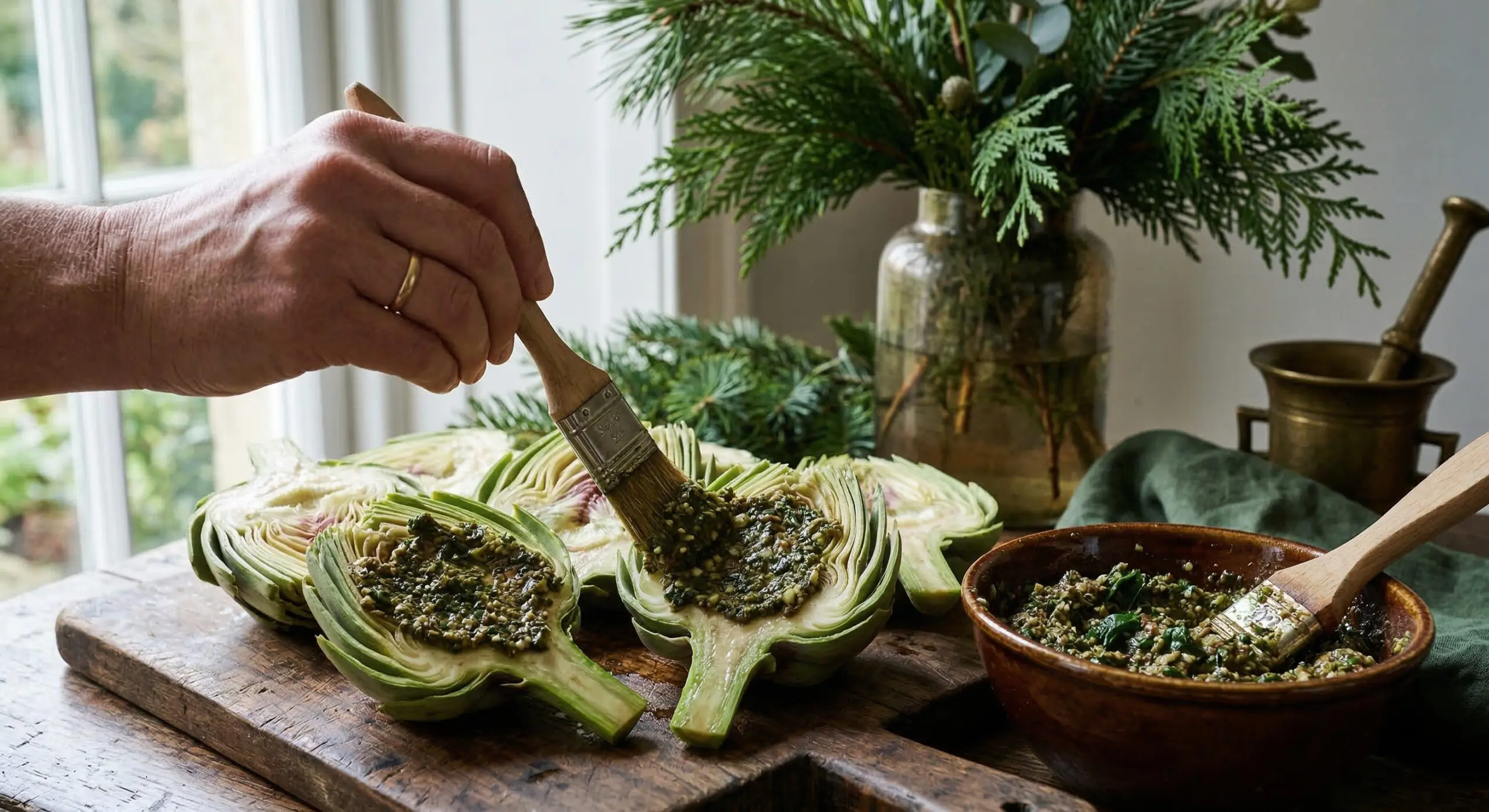
The Anchovy Pesto & Tomato Braise
The flavor comes from two bold moves. First, the rub: anchovies, a whole head of garlic, and fresh basil blitzed with olive oil into a thick, savory pesto that gets brushed over every cut surface — don't fear the anchovies, which melt into pure umami. Then the braise: nestle the artichokes cut-side down in a tomato, white wine, and stock broth, cover, and simmer low and slow for the better part of an hour, turning them to coat, until the hearts are fork-tender and the sauce has concentrated around them.
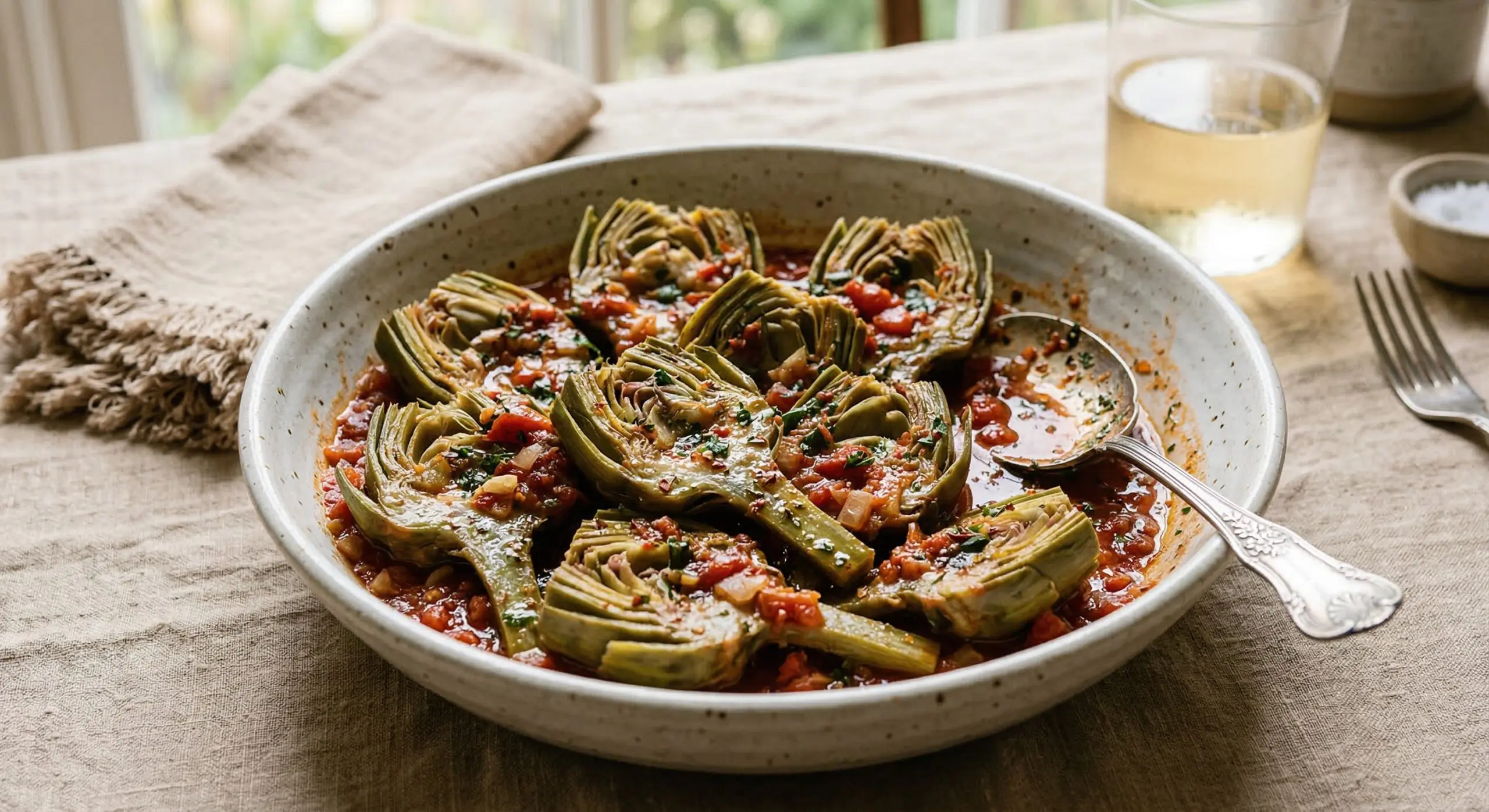
Tomato Braised Artichokes with Anchovy Pesto Rub
Ingredients
Equipment
Method
- Pour the tomatoes, wine, vegetable broth and ¼ cup olive oil into a large roasting pan. Season with some of the salt and crushed red pepper. Set the pan on the counter while you move on to make the pesto rub.
- Place the anchovies, garlic, and basil into the bowl of a food processor. Pulse to combine.
- With the bowl running, slowly pour in ½ cup olive oil to make a thick paste.
- Trim the first artichoke by first pulling off the thick, dark green outer leaves, leaving the tender green leaves in place. You’ll lose about a fourth of the leaves. Use scissors to cut off the thorny tip of the remaining leaves.
- Cut off the top third of the remaining artichoke leaves and discard. Use a vegetable peeler to trim the stem removing the tough partial leaves from the bottom of the artichoke. Cut off the tough end of the stem, leaving about 1 to 2 inches of freshly peeled, tender stem.
- With every cut or peel that you make, rub lemon over the cut ends.
- Slice the artichokes in half. Use a spoon to remove the spiny choke from the center. Pull out the spiky inner leaves. You’ll see these. They have, prickly little points on the end of the purple leaves. You don’t want to eat these.
- Place the trimmed artichoke into a bowl of cold water with lemon slices. Repeat with the remaining artichokes.
- Remove the artichokes from the lemony water one at a time.
- Brush anchovy pesto on both sides of the artichoke and place cut-side down into the pan with tomato-wine sauce.
- Place the pan on the stove top and bring the sauce to a boil over medium-high heat.
- Reduce the heat to medium-low and cover the pan with a lid (or with aluminum foil). Simmer the artichokes, low and slow (over low heat and for a long time).
- Turn the artichokes in the sauce several times to coat while they simmer. Continue cooking until a fork easily pierces the artichoke hearts and the sauce reduces and thickens, about 45 to 60 minutes.
- If the sauce evaporates too quickly, pour in more stock.
- Arrange the artichokes on a large platter. Spoon the concentrated pan juices over the top and serve warm.
The Heart of the Table
There's a deep, old-world generosity in a dish that takes real effort — the trimming, the braising, the patience — and lays it before people as if it were nothing. Cooking something a little challenging for the sheer pleasure of feeding others well is hospitality at its most sincere. A platter of these glossy, tender artichokes says the cook gave their afternoon so the table could have something extraordinary.

The Art of the Host
A large roasting pan holds the artichokes and broth, a food processor makes quick work of the anchovy pesto, and plenty of lemon is essential — both for rubbing the cut surfaces and for the acidulated water that keeps the trimmed hearts from browning. A vegetable peeler is the right tool for the tough stems. Braise low and slow, adding a splash of stock if the sauce reduces too far before the hearts are tender.
Neighborly Grace
- The Preparation: Artichokes braise beautifully ahead and only deepen overnight — a gracious way to get the fussy trimming done long before anyone arrives. Reheat them gently in their sauce and spoon the concentrated juices over just before serving, adding a splash of stock if the braise has reduced too far.
- The Pour: A dry white — the same Vermentino or Pinot Grigio you braised with — keeps the whole dish bright and Italian. For a non-alcoholic option, sparkling water with lemon and a few basil leaves, or a chilled fennel-citrus soda, cuts the richness just as cleanly.
- The Vibe: This is trattoria hospitality — a glossy, red-flecked platter set in the middle of the table with plenty of crusty bread for the broth, and everyone reaching in. Rustic, generous, and clearly made with real care.