
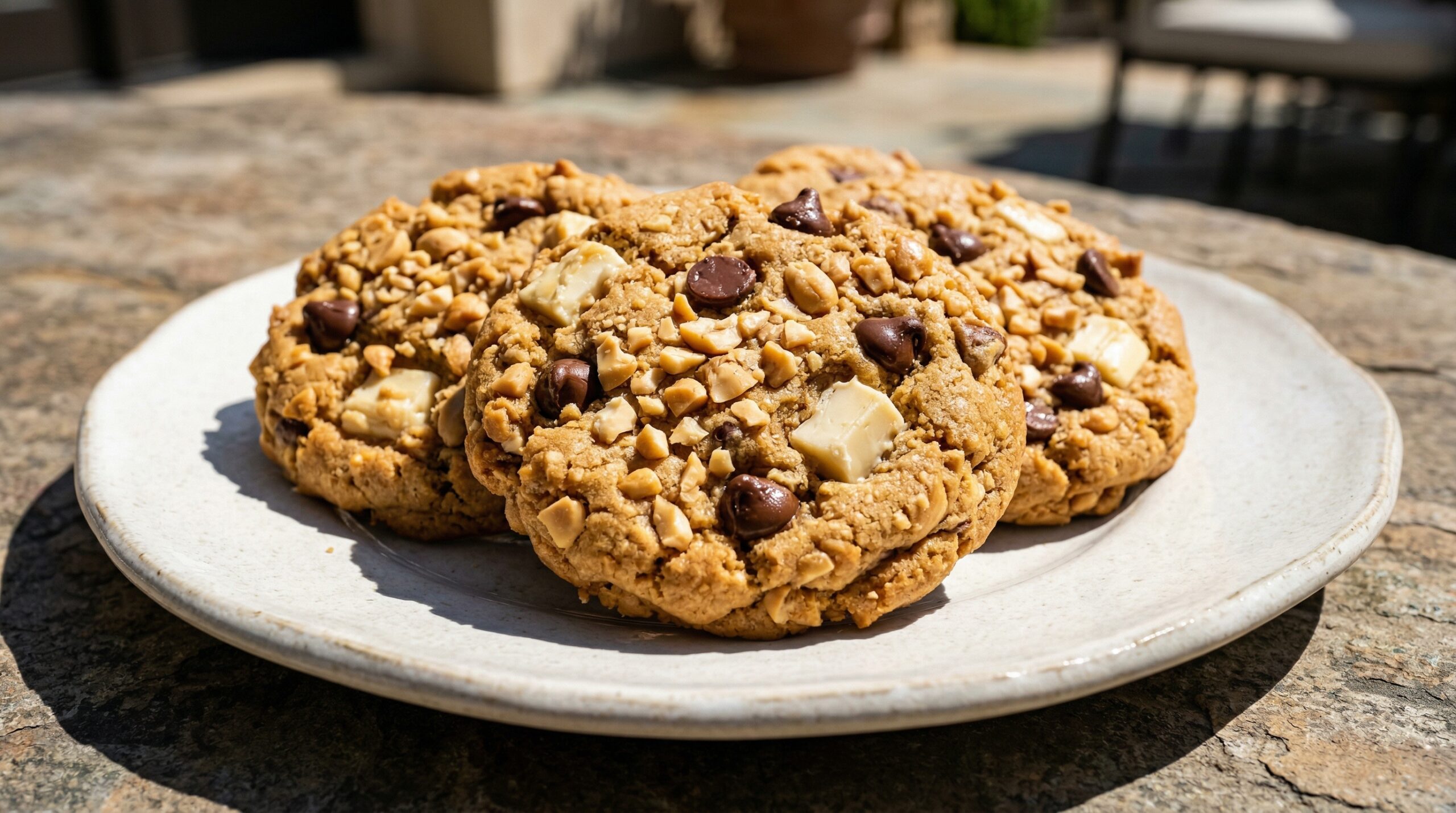
Peanut Butter Chunk Cookies
A masterclass in lipid substitution and crumb architecture. By utilizing margarine to restrict gluten development and relying on a high-density peanut butter emulsion, these intensely chunky cookies flawlessly support massive inclusions of white chocolate, semi-sweet chips, and rolled oats.
Constructing a cookie capable of supporting a massive volume of heavy inclusions—oats, peanuts, and massive chocolate chunks—requires a deliberate architectural shift in lipid selection. While butter provides a classic flavor profile, its water content causes cookies to spread rapidly in the oven. Substituting butter with high-quality margarine restricts this thermal spread, forcing the dough to bake upward and outward uniformly, yielding a distinctly thick, chunky structure.
This structural foundation is reinforced by a highly aerated emulsion. Vigorously creaming the margarine with a dense, smooth peanut butter and a blend of granulated and dark brown sugars creates a deeply caramelized, elastic dough matrix. This heavy dough effortlessly suspends the dense inclusions, ensuring they remain evenly distributed rather than sinking to the bottom of the cookie.
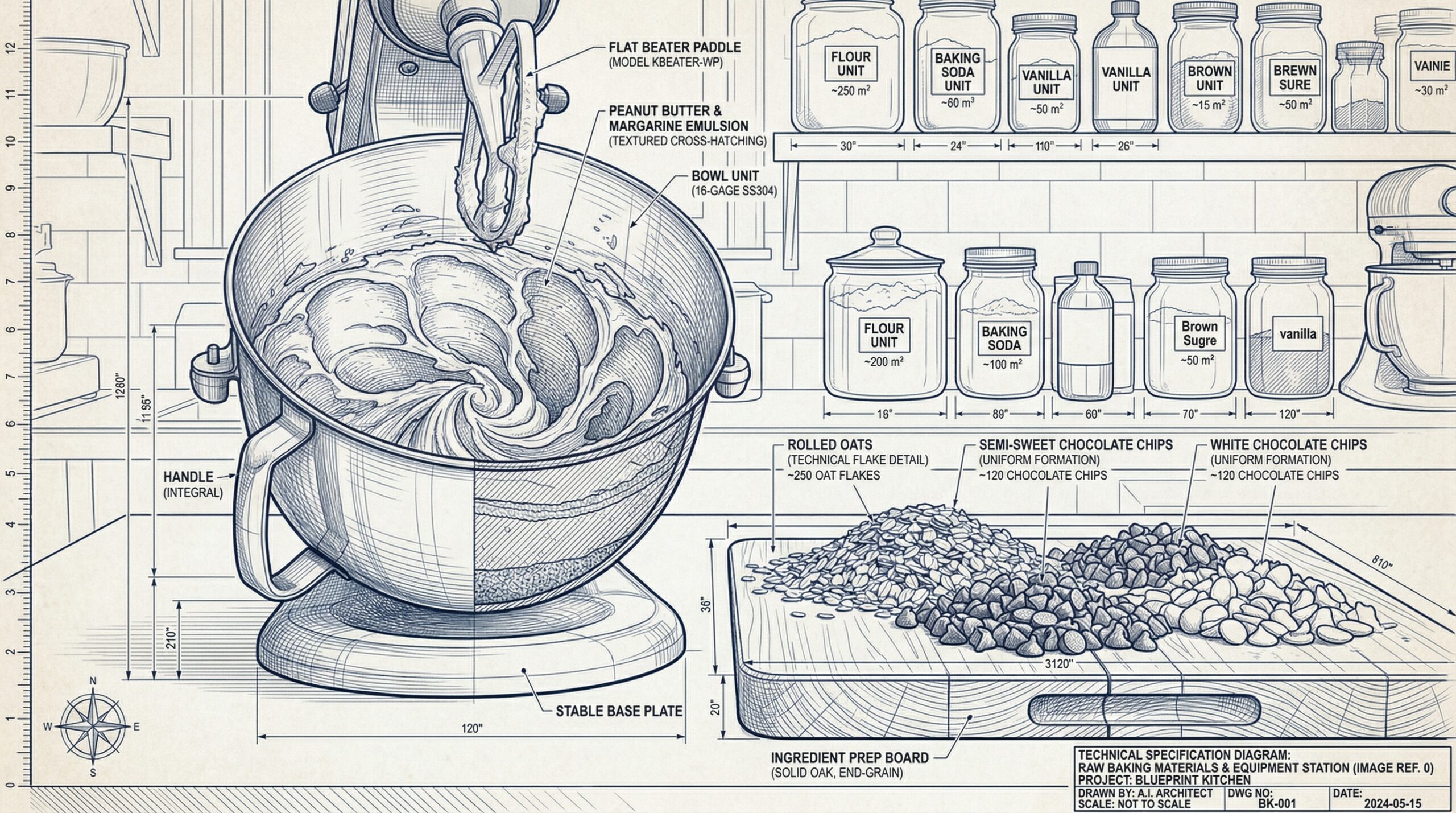
The Mechanics of Crumb Architecture
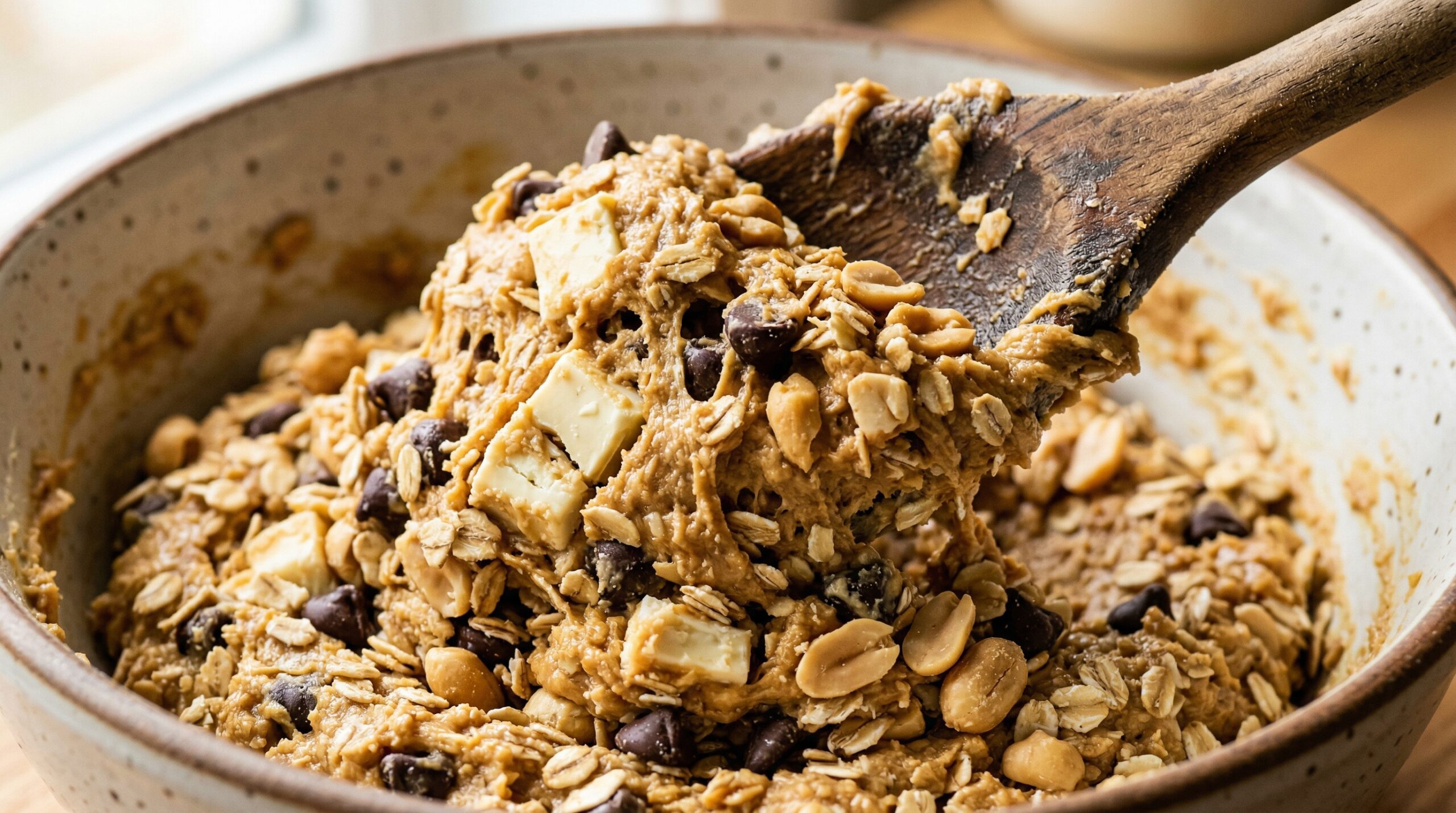
To preserve the delicate gluten network established by the flour, the heavy inclusions must be folded in strictly by hand. Using a professional wooden spoon to aggressively fold the rolled oats, chopped peanuts, and dual chocolate chunks prevents the dough from toughening, ensuring the interior remains profoundly tender and yielding.
The defining technical step occurs immediately after the bake. Removing the heavy metal baking sheets from the oven and allowing the golden-brown cookies to rest directly on the hot metal for five minutes utilizes residual thermal energy. This critical resting phase allows the dense, molten crumb to structurally set before the cookies are transferred to a cooling rack, preventing them from breaking under their own weight.
Peanut Butter Chunk Cookies
Ingredients
Method
- Preheat the oven to 375°F. Line two heavy-duty metal baking sheets with parchment paper or fiberglass silicone baking mats (Silpats).
- In a medium bowl, vigorously whisk together the flour, table salt, and baking soda to ensure the leavening agents are perfectly distributed.
- In the bowl of an electric stand mixer, combine the softened margarine, smooth peanut butter, granulated sugar, and dark brown sugar. Beat on medium-high speed until the mixture becomes highly aerated, pale, and fluffy. (Using margarine limits the spread of the cookie, ensuring a thick, chunky architecture).
- Reduce the mixer speed to low and stream in the eggs and pure vanilla extract, mixing until completely unified and smooth.
- Gradually fold the dry flour mixture into the wet peanut butter emulsion. Mix only until the flour is just combined to prevent overworking the gluten, which leads to tough cookies.
- Remove the bowl from the mixer. Using a heavy wooden spoon, aggressively fold the rolled oats, chopped peanuts, semi-sweet chocolate chips, and chopped white chocolate into the dense dough until the heavy inclusions are evenly suspended throughout the matrix.
- Use a heavy-duty ice cream scoop to drop rounded tablespoons of the batter onto the prepared baking sheets, forming 2-inch balls. Leave 2 inches of space between each.
- Using the palm of your hand, gently flatten the top of each cookie slightly to encourage even baking.
- Bake in the preheated oven until the cookies are puffed and deeply golden brown on the edges, about 10 to 12 minutes.
- Do not move the cookies immediately. Allow them to cool directly on the hot baking sheets for 5 minutes. This critical resting phase allows the dense, chocolate-heavy crumb to structurally set before transferring them to a wire rack to cool completely.
The Heart of the Table
A towering platter of thick, chocolate-studded cookies inherently disarms a room. Serving these deeply nostalgic, highly architectural pastries at the conclusion of an evening or during a casual afternoon visit signals a playful, unhurried hospitality. It encourages guests to lean in, share in the sweetness, and anchor the gathering in effortless, grounded connection.
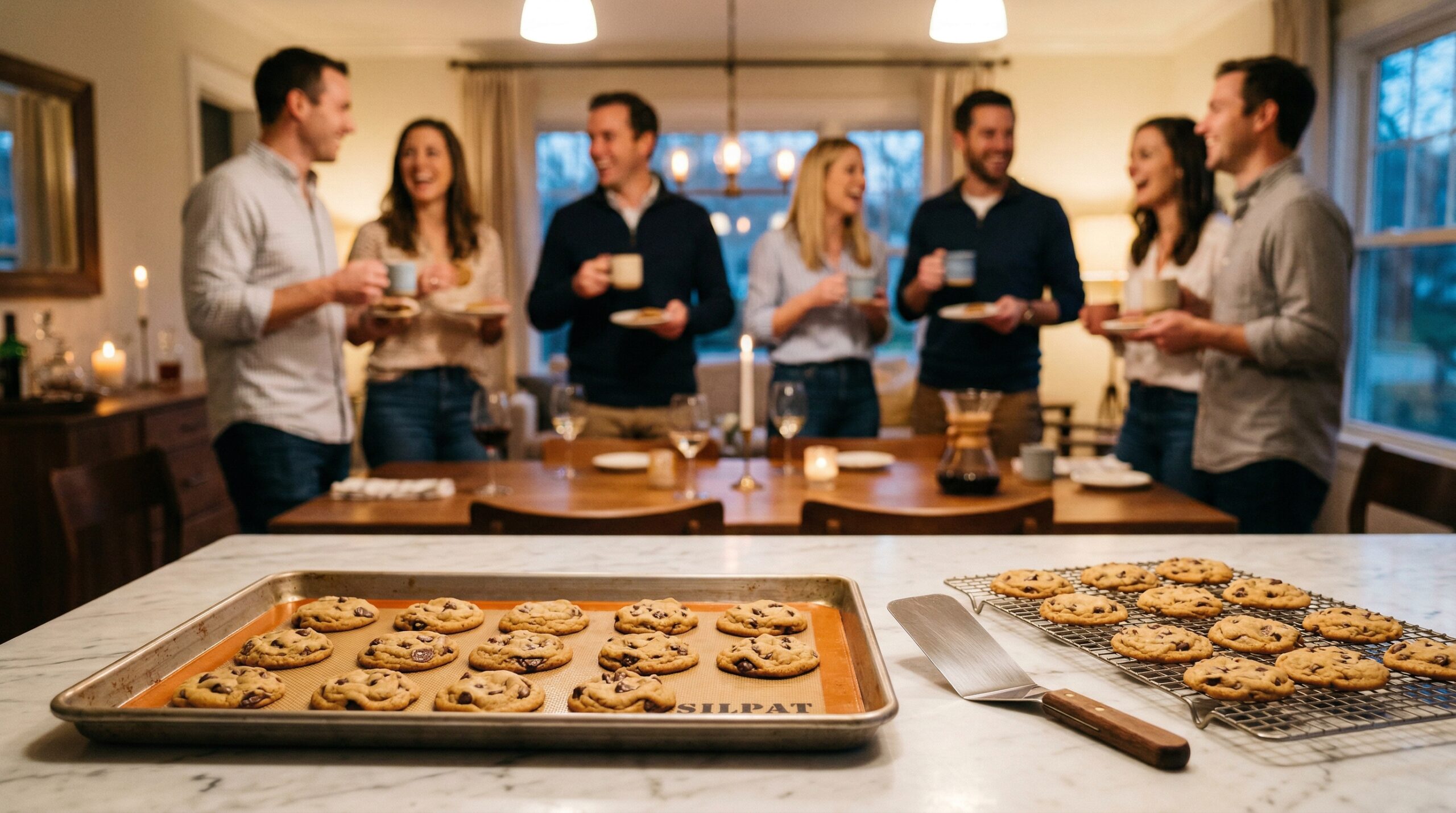
The Art of the Host
- Heavy-duty metal baking sheets (half-sheet pans)
- Fiberglass silicone baking mats (Silpats)
- Heavy-duty electric stand mixer
- Professional wooden stirring spoon
- Heavy wire cooling racks
- Gracious Linen ceramic dessert plates
Neighborly Grace
- THE PRESENTATION: Do not stack the cookies until the massive chocolate chunks have entirely re-solidified at room temperature. Arrange them in a striking, overlapping geometric pattern on a chilled Gracious Linen ceramic platter to command the center of the coffee table or dessert station.
- THE POUR: An ice-cold glass of whole milk, a stark, bitter double espresso, or a robust dark roast French press coffee provides the essential cooling or astringent counterpoint needed to brilliantly balance the concentrated sweetness of the dual chocolates and rich peanut butter.
- THE VIBE: Cultivate a relaxed, sophisticated evening sanctuary. Keep the living space bathed in the warm, ambient glow of lamps and taper candles, clear the counters of any baking clutter, and curate a background of slow, acoustic jazz or soulful Americana to match the deeply comforting soul of the dessert.